About Au Pair in America

Au Pair in America is the nation's first legal au pair program. Since 1986, we have provided the best child care opportunities to host families across the US and au pairs from around the world.

Au Pairs

Winter Sports & Sports Insurance

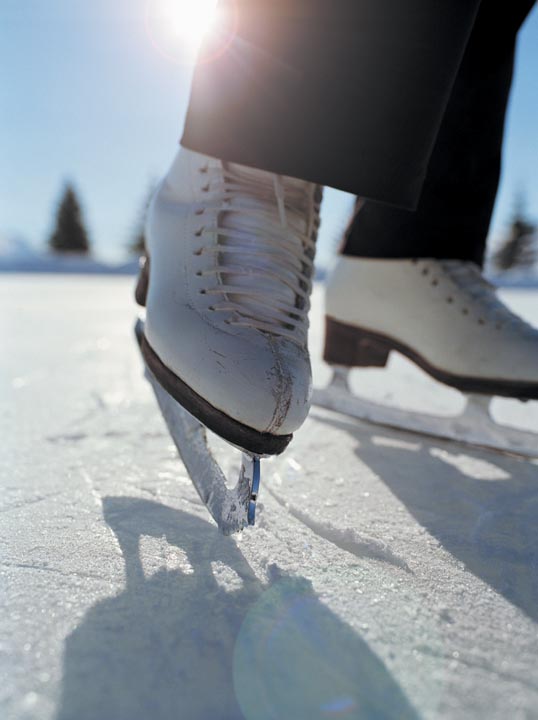
ice-skate Is it risky to do winter sports without the sports insurance?

Yes. If you have to pay your own hospital bills for a broken bone, you might be shocked at how much that would cost. I checked this website for some cost estimates.

Here are a couple examples:

  • Without medical coverage, to treat a broken arm or leg (that does not require surgery) it could cost up to $2500.
  • Without medical coverage, to treat a broken arm or leg (requiring surgery) it could cost $16,000 or more.
  • I wanted to make sure everyone understands how the medical coverage works for sports related injuries. There is a list of “high-risk sports/activities” that are not covered with the basic or upgrade medical insurance plans. Those activities are only covered with the Sports Insurance Package (also known as Option A.)

    The Sports Insurance Package was available pre-departure and may also be purchased at any time during your year. It takes effect within 48 hours of your enrollment and it is good for the remainder of the year. The cost will be the same ($60) whether you have a month left or your whole year ahead of you. I recommend you pay for it early on, if you didn’t already purchase it. You never know when an opportunity might present itself and you don’t want to miss out on an adventure. You also don’t want to take a risk on getting injured and being responsible for the bill on your own.

    Below is a partial list of sports that are only covered with the sports insurance package:
    Football, Rugby, Scuba diving, Ski-doo,  Wakeboarding, Skydiving, Parachuting, Rock climbing, Zip line, Skate boarding, Rollerblading, Roller skating, Ice Skating, Skiing, Snowboarding, Snowmobiles & Snowshoeing.  View the full list on page 3 of the insurance brochure HERE.
    Note: Injuries sustained while partaking in these sports are covered with purchase of the Sports Insurance ONLY.

    How to register for the Sports Insurance
    Download the form HERE and follow the instructions.

    First Day of Winter

    Stashabella on FlickrDecember 22 is the first day of winter.

    Animals handle cold winter weather in a variety of ways. Some travel to a warmer climate. Others grow thicker fur coats so they can stay warm and active during the winter. Many animals hibernate during the coldest weather – they spend the warmer months eating and storing as much body fat as they can and then live off this extra weight as they sleep.

    Au pairs *** do not *** hibernate this winter-call a new au pair or someone you haven’t met yet and go get a hot chocolate.

    Photo: Stashabella (Flickr)

    Chanukkah Begins at Sundown

    ChanukahWe have host families from a wide variety of backgrounds and faiths.  Some celebrate Christmas, some Chanukkah, some Kwanzaa and some celebrate more than one of those or none of the above.  That is something that makes America special, we can all be different, but still one united together.

    I wanted to give a brief overview of Chanukkah and some of the customs you might observe.  Something important to note is that Chanukkah is not the Jewish equivalent of Christmas.  From a religious standpoint, it is a relatively minor holiday.  So, the amount of emphasis put on Chanukkah and how it is celebrated will vary from one family to the next.

    You may see Chanukkah spelled in a variety of ways: Chanuka, Hanukkah, Hanukka and more. Part of the reason for this confusion may be due to the fact there is no exact English translation of the Hebrew word for Chanukkah.

    If your host family celebrates Chanukkah and you don’t, I would encourage you to take part and experience the customs of another religion.  This can be a great opportunity for culture sharing.  The same is true, if you are a host family and your au pair celebrates a different holiday than you.

    Here is a simple explanation from Judaism 101:

    Chanukkah is the festival of lights, commemorating the rededication of the Temple in Jerusalem after a successful revolt against the Seleucid Greeks. As part of the rededication, the victorious Jews needed to light the Temple’s menorah (candelabrum), but they had only enough oil to last one day and it would take eight days to prepare more oil. Miraculously, the one-day supply of oil lasted for eight days. The miracle of the oil is commemorated with this eight-day candle lighting holiday.

    Chanukkah begins between Thanksgiving and Christmas. About half of the time, it overlaps with Christmas, but there are many years when Chanukkah ends long before Christmas. In 2002, for example, Chanukkah began on Thanksgiving and ended in the first week of December, but that is unusual.

    Almost all Jews light candles with their families for at least some nights of the holiday, so people like to be at home during this holiday. Although almost nobody takes off from work or school for this holiday, many may not want to work nights or travel during the holiday so they can light candles with the family, and accommodations should be made for this.

    Here are some links for more info and children’s activities:

    Celebrate the Holidays Safely

    I hope you all have a wonderful time celebrating the holidays.  I just want to remind you to please make good safe decisions.

    New-Year-Champagne-Greetings

    Don’t drink and drive.

    • Take public transportation -metro, bus or a cab.
    • Metro and buses will run until 2 am on New Year’s Eve and New Year’s Day. View the holiday schedule HERE.
    • One friend can be the designated driver (and not drink alcohol, so she can drive everyone home safely.)
    • Sober Ride Home – Take this number with you in case you find yourself without a safe ride home. 1-800-200-TAXI
    2011 Holiday Sober Ride program will be offered nightly from 10:00 pm to 6:00 am beginning Friday, December 16, 2011 and running until January 1, 2012. To receive a free cab ride home (up to a $30.00 fare), please call 800-200-8294 (TAXI) or #8294 (TAXI) on your AT&T wireless phone.    You must be 21 or older to use the SoberRide service.
    All calls must originate in Montgomery and Prince George’s Counties in Maryland; the Cities of Rockville, Bowie, College Park, Gaithersburg, Greenbelt and Takoma Park in Maryland; the District of Columbia; Arlington, Fairfax, Prince William and Eastern Loudoun Counties in Virginia; and the Cities of Alexandria, Falls Church, Fairfax, Manassas and Manassas Park in Virginia.

    The offer is good for fares up to $30. The service is available through the SoberRide phone number: 800-200-TAXI. You cannot call a taxi company directly to get the free ride.

    Don’t Drink Alcohol if You are Under 21 – It is against the law and if you are caught, you will have to purchase your own ticket and return home.

    If You are Over 21, Drink Alcohol Wisely – Know your limits and don’t drink to the point of becoming ill.

    Keep Your Eyes on Your Drinks – Don’t let someone you don’t know get a drink from the bar for you.  When you order a drink take it straight from the bartender and keep it with you.  If you leave your glass sitting where you can’t see it, someone can put a drug in your drink.  If you

    Protecting Your Personal Health & Safety – It is safest to be together with friends.  Be careful not to put yourself in dangerous situations with people you don’t know.  Consider carefully what information you give to people you have just met.

    Making Plans for New Year’s Eve in Times Square?

    New-Yorks-Times-Square-on-004

    If you are planning to visit NYC during the holidays, check out all the links on the right side of the page under “Travel Links for Au Pairs.” There are lots of links with info on visiting NYC.

    I just found out that Times Square has it’s own website with lots of great information. Check out the FAQs (Frequently Asked Questions) HERE.

    Safety Tips for Holiday Shopping

    It is easy to get distracted at this time of year and when you are distracted you are at a greater risk for holiday crime.  Here are some tips that are always a good idea, but especially important to remember at this time of year.

    holiday shopping

    • Always pay attention to your surroundings.  Avoid distractions like using cell phone or listening to your iPod when you are coming and going from stores.
    • Avoid carrying large amounts of cash.  Take just the amount you need or use debit or credit cards.
    • Keep your money in a front pocket.  Pay close attention to your wallet when you are in crowded places like buses, metro and elevators.
    • Be careful not to lay your purse or bags down on the floor or out of your sight at the mall.
    • Save your most expensive purchases for the end of your shopping when you will be going straight to the car.
    • Whenever possible, shop during daylight hours and if you must shop after dark, go with a friend.
    • If you are not driving yourself to go shopping, use the Metro Trip Planner before going out, to minimize time waiting at the bus stop or metro station.  Never accept a ride from a stranger.
    • Be aware of strangers approaching you for any reason. Criminals will use different methods to distract you and steal your belongings.
    • Look around the parking area when you are leaving.
    • Do not approach your car alone if there are suspicious people in the area.  You can go back into the store and ask security to walk out with you or wait for a family or other group of people to walk out at the same time with you.
    • Trust your instincts, if something seems suspicious or unsafe, you are probably right.  Following the saying, “Better Safe Than Sorry.”

    APIA Advantage Course – UCLA Extension Program

    gaThe next UCLA APIA Advantage Course will run from February 6 – June 11. Registration is already open at www.uclaextension.edu/aupairs

    The cost of the class is $500 and it satisfies the education requirement for au pairs or half the requirement for EduCare companions.

    This 19-week course, specifically designed for au pairs who are required to continue their education as a part of their experience in the U.S., is offered in a blended format–partially a media-rich, self-paced online environment and partially an instructor-led, cohort-based model.

    The interdisciplinary course of study includes:

    • U.S. History: Eras 1-5 (up to Civil War and Reconstruction), including mini-modules on economics and geography
    • English-language study, including weekly reading and writing exercises
    • Arts in the U.S., including virtual field trips and activities reflective of historical eras studied by participants
    • U.S. literature: the readings which reflect the eras studied in the U.S. history module
    • Career counseling and interest inventories to determine future directions for the participants.

    Participants read lessons, write, share resources, network with one another, and collaborate on special projects, as well as explore web links, play games, and take virtual field trips, all designed to further their understanding of U.S. culture.

    The Community Involvement segment of the program takes the au pairs into face-to-face contact with the community. Au pairs will relate these experiences to their academic coursework in American Studies Online.

    For further information call (310) 206-6671 or email online@uclaextension.edu

    What to Do After a Car Accident

    car-accident-cartoonHaving a car accident is a very upsetting, stressful situation. Being prepared and knowing what to do can make things a little bit easier. Make sure you know which host parent to call in case of an accident.

    Make sure you have all the necessary documents in your car glove box. Read this post on What to Keep in the Car Glove Box for a detailed list.

    If you have an accident: (from Edmunds.com)

    1. Keep Safety First. Drivers involved in minor accidents with no serious injuries should move cars to the side of the road and out of the way of oncoming traffic. Leaving cars parked in the middle of the road or busy intersection can result in additional accidents and injuries. If a car cannot be moved, drivers and passengers should remain in the cars with seatbelts fastened for everyone’s safety until help arrives. Make sure to turn on hazard lights and set out cones, flares or warning triangles if possible.
    2. Exchange Information. After the accident, exchange the following information: name, address, phone number, insurance company, policy number, driver license number and license plate number for the driver and the owner of each vehicle. If the driver’s name is different from the name of the insured, establish what the relationship is and take down the name and address for each individual. Also make a written description of each car, including year, make, model and color — and the exact location of the collision and how it happened. Finally, be polite but don’t tell the other drivers or the police that the accident was your fault, even if you think it was.
    3. Photograph and Document the Accident. Use your camera to document the damage to all the vehicles. Keep in mind that you want your photos to show the overall context of the accident so that you can make your case to a claims adjuster. If there were witnesses, try to get their contact information; they may be able to help you if the other drivers dispute your version of what happened.

    Daylight Saving Time Ends This Weekend

    Daylight Saving Time
    During DST, clocks are turned forward an hour, effectively moving an hour of daylight from the morning to the evening.  Today, approximately 70 countries worldwide utilize Daylight Saving Time in at least some portion of the country.  If you don’t come from one of those countries, I am guessing that the idea may seem strange.

    Spring Forward, Fall Back
    Most of the United States begins Daylight Saving Time at 2:00 a.m. on the second Sunday in March and reverts to standard time on the first Sunday in November. In the U.S., each time zone switches at a different time.

    What do I do?
    Enjoy an extra hour of sleep. In the fall, we get back the hour that we lost in the spring.  Although, the official change occurs at 2 am, you can turn your clock back one hour before you go to bed on Saturday night.

    A Safety Reminder
    Many fire departments encourage people to change the batteries in their smoke detectors when they change their clocks because Daylight Saving Time provides a convenient reminder. “A working smoke detector more than doubles a person’s chances of surviving a home fire,” says William McNabb of the Troy Fire Department in Michigan. More than 90 percent of homes in the United States have smoke detectors, but one-third are estimated to have dead or missing batteries.
    Information from webexhibits.org

    Halloween Health and Safety Tips

    From cdc.gov

    halloween cdc.govFor many people, autumn events like Halloween and Harvest Day are fun times to dress up in costumes, go trick-or-treating, attend parties, and eat yummy treats. These events are also opportunities to provide nutritious snacks, get physical activity, and focus on safety.

    Below are tips to help make the festivities fun and safe for trick-or-treaters and party guests.

    Going trick-or-treating?

    Alphabet letter S Swords, knives, and similar costume accessories should be short, soft, and flexible.
    Alphabet letter A Avoid trick-or-treating alone. Walk in groups or with a trusted adult.
    Alphabet letter F Fasten reflective tape to costumes and bags to help drivers see you.
    Alphabet letter E Examine all treats for choking hazards and tampering before eating them. Limit the amount of treats you eat.
    _________________________________________________________________
    Alphabet letter H Hold a flashlight while trick-or-treating to help you see and others see you. Always WALK and don’t run from house to house.
    Alphabet letter A Always test make-up in a small area first. Remove it before bedtime to prevent possible skin and eye irritation.
    Alphabet letter L Look both ways before crossing the street. Use established crosswalks wherever possible.
    Alphabet letter L Lower your risk for serious eye injury by not wearing decorative contact lenses.
    Alphabet letter O Only walk on sidewalks whenever possible, or on the far edge of the road facing traffic to stay safe.
    Alphabet letter W Wear well-fitting masks, costumes, and shoes to avoid blocked vision, trips, and falls.
    Alphabet letter E Eat only factory-wrapped treats. Avoid eating homemade treats made by strangers.
    Alphabet letter E Enter homes only if you’re with a trusted adult.
    Alphabet letter N Never walk near lit candles or luminaries. Be sure to wear flame-resistant costumes.

    Next Page »