
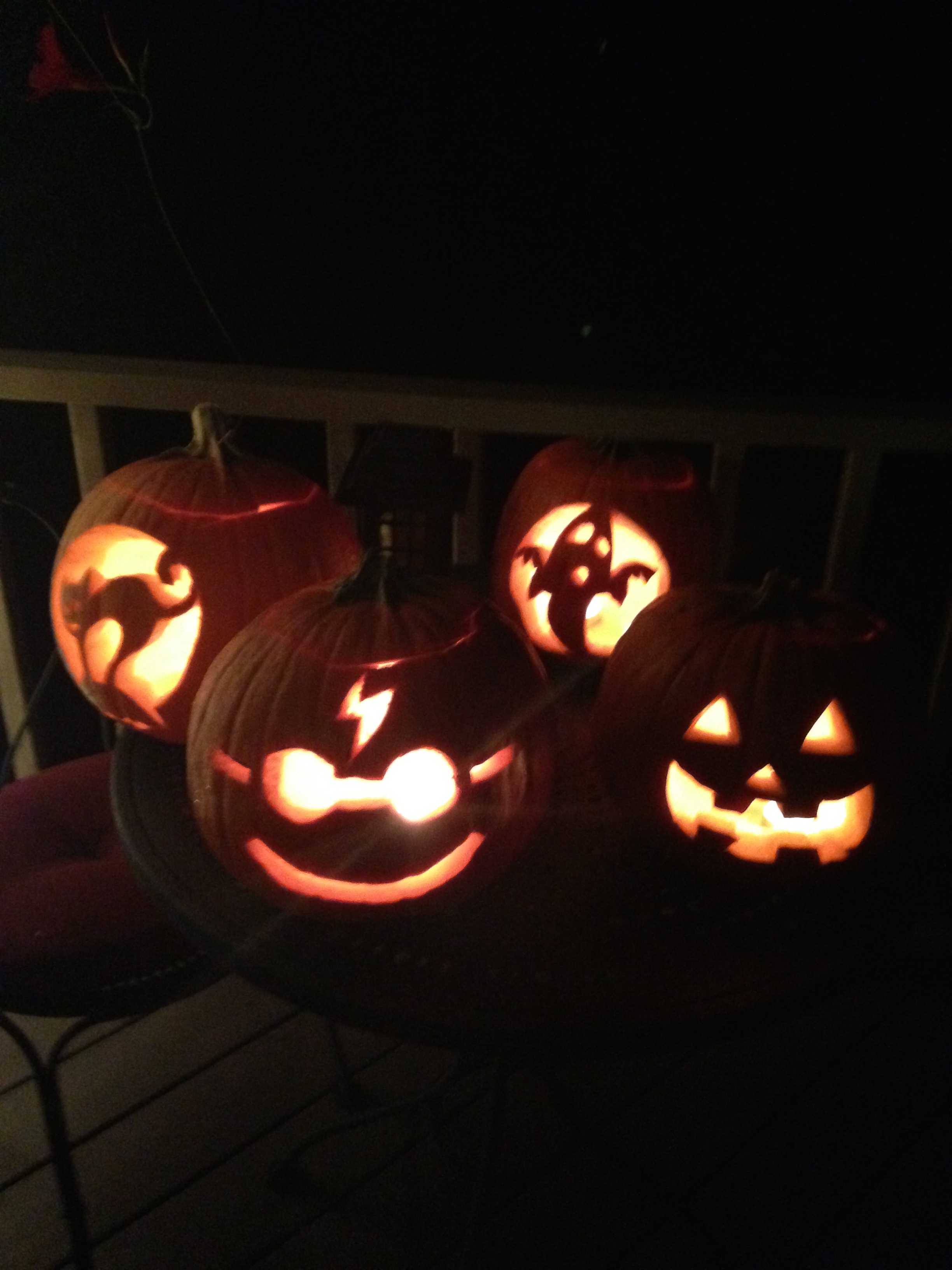
 Our October meeting was a first for many of the au pairs. They had never carved a pumpkin and never tasted pumpkin pie! GIrls got to do both. As for the pie – it was a success!
The pumpkin carvings were just AMAZING!
Our October meeting was a first for many of the au pairs. They had never carved a pumpkin and never tasted pumpkin pie! GIrls got to do both. As for the pie – it was a success!
The pumpkin carvings were just AMAZING!
Halloween is a wonderful holiday, but because of increased foot traffic and that Trick-or-Treaters are out at night, the potential for automobile related accidents with young pedestrians increases four times on this night according to a CDC (Center for Disease Control) study.
In many areas, people drive their kids into subdivisions and let them out to walk from house to house. Usually the parent follows behind in the car. This can cause traffic jams in small areas and much confusion as kids dart between cars on the streets going from house to house. A driver is already distracted because they are trying to keep an eye on their own kids and usually aren’t paying attention to much else.
Children and adults tend to be preoccupied and may not pay as much attention to safety as they should. They may not see your vehicle or just assume that you see them automatically. Stay on the defensive and you shouldn’t have a problem while driving on Halloween night
* Don’t use a cell phone or other electronic device while driving on Halloween night. You shouldn’t be doing this anyway, the rate of cell phone related auto accidents has jumped dramatically since the use of cell phones and texting has risen so high. Some states have already made laws concerning this and others are working on it.
Make sure your child carries a flashlight, glow stick or has reflective tape on their costume to make them more visible to cars. Left them know if they carry a flash light to never shine itin the eyes of a driver. This can cause blindness on the drivers part temporarily and they may not see your child
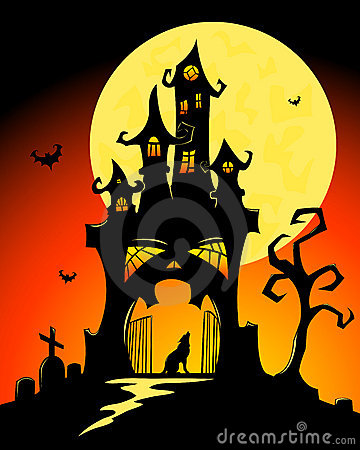 Haunted Happenings in October
The month of October brings exciting activities to the city of Salem, Massachusetts. There are many activities relating to the city’s history and penchant for things macabre, including walking tours, haunted houses, trolley rides, spooky performances, exhibits, harbor cruiss and more. Visit their website for all the details: http://www.hauntedhappenings.org/
In Westford MA, visit Witches Woods http://witchswoods.com . Haunted Hayride and Halloween Screampark – open Thursday – Sunday nights 6:30-10:30.

New England Patriots
It is played everywhere across the states. Whether it is on the field or in your own backyard, it has become the center of many people’s lives. The more you know about this All-American sport, the more you will be able to enjoy it as part of your American experience.
American Football Simplified:
A football field is 100 yards long. There is a Goal Post at each end of the field, in the End Zone, one for each team. A Football Game is made up of 60 minutes of play time. The 60 minutes is divided into four Quarters of 15 minutes each. At the end of two Quarters, there is a break called Half Time. On the Scoreboard you can see the minutes and seconds running out. The team with the most points at the end of four Quarters wins.
Each team has an Offense and a Defense. If the Offense has the ball and tries to score by getting it across the Goal Line – the line where the playing field and the End Zone meet. The Defense tries to stop them.
The Offense gets four tries to move the ball 10 yards toward their own goal post. These are called Downs. If they make the 10 yards or more, they get another four tries to move the ball another 10 yards. If they don’t move the ball 10 yards in four tries, the ball goes to the other team, or the team “loses the ball.”
The Super Bowl is the final game of the Football season when two teams play each other for the championship. The game takes place in late January or early February. For some people the TV commercials are the best part of the Super Bowl.
Visit http://aupairinamerica.com/resources/life_in_the_us/football.asp for the full rules of American Football and http://www.patriots.com/games/index.cfm?ac=gamedetails&eid=3663 for the game schedule.

Ripe for the picking!
Consider taking the kids to Honey Pot Orchard in Stow. Not only can you pick berries in the patch, you can have fun in the Hedge and tunnel maze, and picnic by the barnyard animals.
The blueberry patch is open for picking with lot’s of berries. Go to the store to get information about container sizes (which they provide) and price. The containers take a long time to fill so if you’re with little ones be careful about the size you buy!
Cider donuts and caramel apples made fresh daily and can also be purchased at their store.

race to the center!
The Hedge Maze
Go and have lots of fun getting lost in the Hedge maze, the exact replica of the famous ‘Hampton Court’ Maze in England. Great fun for the kids, ages 4 thru 11. There is also a Tunnel maze for children (no adults) to crawl through. All for $1.50 per person.
At the Barnyard!
Visit with the barnyard animals – “3 little pigs”, 10 energetic goats playing on their goat walk,
the never ending cock-a-doodle-doo
roosters,
bunnies
and ducks.
 Take Steps to Stay Safe Around Water
Swimming is the most popular summer activity.
Follow these safety tips whenever you are in, on or around water with you.

To Honor our Heroes
Memorial Day is observed on the last Monday of May. It was formally known as Decoration Day and commemorates all men and women, who have died in military service for the United States. Many people visit cemeteries and memorials on Memorial Day and it is traditionally seen as the start of the summer season.

Children love to care for other living things, and plants are an easy choice that can give a great sense of accomplishment. Check with your host parents about where you can garden. Ideally, your little garden will have at least six hours of sun a day.
For outdoor gardening you will need to buy some seeds. If your garden has less than six hours of sun, choose seeds that can grow in “partial” sun. Select flower seeds that germinate quickly. The back of the seed packet will tell you how long before the plants sprout. Marigolds and morning glories are easy to grow and will come up quickly. Buying vegetable seeds will allow children to eat and share what they grow. Radishes are the fastest growing vegetable – from seed to salad in just three weeks. Green beans, tomatoes, summer squash and cucumbers are other good choices, but they do take longer. Be sure to plant extra seeds because not every one will germinate. This is an important lesson for children – mistakes are natural and an inevitable part of life. If you are starting late and want to make sure you will have a vegetable harvest, you can also buy small plants at a local plant nursery.
Before you plant the seeds, use a shovel, trowel or spade to loosen the soil. Remove weeds, stones and grass from the area. If the soil is very hard (like clay) or very sandy, it would be a good idea to add peat moss or compost to the soil. You will also need a hose or a watering can so that the children can water the earth when it doesn’t rain. If the plants look droopy or the soil feels dry, it is time to water. It is very important to water even before the plants sprout. It is best to water early in the morning or in the late afternoon.
Gardening includes other simple science lessons, all concepts that children can understand. Plants lean or turn towards light. Plants use water, but some of it evaporates into the air. What happens to the water that has evaporated? Without water plants will dry up and die. Plants come from other parts of the world, and sometimes their form gives clues to their origin. Can you find seeds that are native to your country?
When you go out into the garden, take care of the plants, pulling up weeds gently and also any sprouted seeds that are growing too close to another plant. But also look around and look closely at the ground to find birds and bugs that are a part of gardening. You can discuss how living things rely on plants to live, and how the plants need their animal friends. Birds spread seeds; earthworms loosen the dirt for the roots of the plants. What do bees do?
Look for books about gardening in the library. Carrot Seed by Ruth Krauss is a wonderful book for very young children. Take photographs of your gardening project. It will be surprising and satisfying to look at the starting photos at the end of the harvest. And don’t forget to put on sunscreen before you do your gardening!
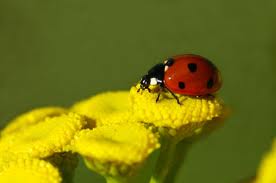
Lady Bug
Talking to children about insects is a fun activity in the summer when there are so many around!
Some easy facts for you to know:
Outside Activity: To learn more about insects, go on a hunt outside. Collect the insects you find in a jar and then examine them with a magnifying glass.
Recipe: Make a snack of “ants on a log.” Spread peanut butter on a stick of celery and then add raisins on the top.
Read: Children up to age seven will enjoy “The Very Hungry Caterpillar” by Eric Carle. Look for it in the library.
Inside activities:

Never forget MOM
Mother’s Day in the United States is annually held on the second Sunday of May. It celebrates motherhood and it is a time to appreciate mothers and mother figures. Many people give gifts, cards, flowers, candy, a meal in a restaurant or other treats to their mother and mother figures, including grandmothers, great-grandmothers, stepmothers, and foster mothers.
Help your kids make something special for mom this year!
Check out these crafts on Pinterest
This year again Au Pair in America will have a team and join the Walk for Hunger
A Regional Event with au pairs from the greater Boston area.
All au pairs and host families who would like to join our team please register on the link below
Team name: Au Pair in America
It’s free to register but you can certainly donate as much as you want. Please ask you host family, friends or neighbors if they would donate money to your team.
|
 The tradition of Valentine’s Day originated in Rome in the 5th century as a tribute to St. Valentine, a Catholic bishop who was beheaded by Emperor Claudius on February 14, 270 A.D. The story goes that the Emperor banned marriage in his empire and put Valentine to his death when he found out that Valentine was secretly marrying young people.