Yearly Archives: 2015

Christmas Firsts

Here is a little bit about the history of Christmas traditions in America, from Christmas trees to greeting cards, that we all know and love today.

decorated christmas tree wirh presents isolatedChristmas Trees

The first American Christmas tree can be credited to a Hessian soldier by the name of Henrick Roddmore, who was captured at the Battle of Bennington in 1776. He then went to work on the farm of Samuel Denslow in Windsor Locks, Connecticut, where for the next 14 years he put up and decorated Christmas trees in the Denslow family home.
The first Christmas tree retail lot was established in 1851 by a Pennsylvanian named Mark Carr, who hauled tow ox sleds loaded with Christmas trees from the Catskill Mountains to the sidewalks of New York City.
The first president to set up a Christmas tree in the White House was Franklin Pierce, and the first president to establish the National Christmas Tree Lighting Ceremony on the White House lawn was Calvin Coolidge.
In 1882, the first tree lights were sold in New York City.

Martha’s Great Cake

Although not the first Christmas cake, this is a recipe from our first First Lady, Martha Washington. These are the exact words in which it was written for celebrating what she called “a true Virginia Christmas” at Mount Vernon:

“Take 40 eggs and divide the whites from the yolks and beat them to a froth, start to work four pounds of butter to cream and put the whites of eggs to it a spoon full at a time till it is well worked. Then put four pounds of sugar finely powdered to it in the same way, then put in the yolks of eggs, and five pounds of flower, and five pounds of fruit. Two hours will bake it. Add to it half an ounce of mace, one nutmeg, half a pint of wine, and some French brandy.”

Holiday Cards

The first American to print and sell Christmas cards was Louis Prang of Roxbury, Massachusetts, who began publishing cards in 1875.
President Dwight D. Eisenhower is given credit for sending the first “official” Christmas card from the White House. An art print also became the standard Christmas gift for the president’s staff, a practice continued to this day.

Here comes Santa Claus. . .

The first department store Santa was James Edgar, who, during Christmas seasons beginning in 1890, would wander about his store (the Boston Store) in Brockton, Massachusetts, dressed as Santa Claus, talking to the children of customers.

Holiday Survival

The Holidays should be a time of joy and excitement.  From our experience, we have noticed they can also be a time of stress and disappointment for Host Families and Au Pairs.  We would like to offer some ideas and insights that we hope can broaden everyone’s understanding.

Homesickness

First, let’s face the issue of homesickness.  Host Families, this can be a problem at this time of year even if it hasn’t been in the past. Important people and places are missed.  Our traditions and activities seem “different” just at a time when an Au Pair craves the “familiar” celebration.  My observation has been that an Au Pair’s emotions are closer to the surface during the holidays.  Her highs are higher, her lows are lower.  The enormity of what she is accomplishing…actually living and working in another culture, (which is an amazing thing when you think about it!)… can induce a self-protective mode.  You can help her through this unfamiliar territory by talking to her about what your specific family activities will be such as when the candles will be lit, the stockings hung, the gifts given, the meals prepared and eaten, the relatives arriving, etc.. Let her know what you will be doing, when you will be doing it, and what she can expect.  Talk to her about what must be accomplished and get her involved. Ask her if she has any favorite holiday foods or traditions that could be incorporated into your celebration. Give her some clear, agreed-upon assignments. Remember, her parents have probably handled the organization in previous years, so don’t expect her to “know” what needs to be done. Make her feel a part of things.  And, let her know her contribution is needed and appreciated.  Try to cut a little slack, then be pleased with progress.

Au Pairs, regarding homesickness…you knew when you came for a year that family and religious holidays would be a part of that year.   If you get involved and active in the family’s plans, I assure you that next year you will be thinking about this family and missing their celebrations!  Your Host Family will make many efforts to assure that this holiday in America is special for you.  It is important to your Host Family that you acknowledge their efforts.  Show your appreciation and participate, participate, participate!!!  Look for ways to help.  If you aren’t certain, ask!  Thinking about someone other than yourself is the best way to manage homesickness.

Routine Changes

Host Families, another problem to consider is how the dynamics of the established relationships and routines change during the holidays.  Parents are home more and this demands adjustment for the children as well as the Au Pair.  Different work expectations may be needed since the kids may prefer to hover around the parents.  This can make an Au Pair feel unwanted and unsure of what is expected of her.  She may not see the specific needs of the children other than the usual.  The high emotions and energy of the children (compared to their more reasonable behavior during the rest of the year, I’m sure) may be difficult to handle even for the most confident Au Pair.  Assure her that this behavior is temporary and will be back to normal soon.  In the meantime, suggest specific things she can do to help.  Encourage her to roll with the punches and enjoy the energy of the season.  The quantity of gifts given to the children and the excesses of gifts, food, decorations, etc. can be overwhelming.  In everyone’s best interest, make sure there is some quiet, meaningful time together when the true spirit of the holidays is shared.

Au Pairs, life will be busy and, perhaps, stressful for the Host Family as they do all that they would like during the holiday season.  Celebrations don’t just “happen”…there is a lot of work involved in having fun!  Your Orientation information from Connecticut, under “Policies and Procedures” very clearly states under “Holidays” that there are no automatic  “holidays off.”  You are expected to help with the work and responsibility. Your Host Family may not be at their usual jobs, but they are putting in great effort to prepare for the family celebration.  Your Host Parents are very successful day to day, but, these same people will be in an absolute panic trying to prepare holiday meals, get all of the toys assembled and wrapped, and create a “perfect” day for their family AND for you.  Find ways to help!   Play games with the children, bundle them up and take them for walks, visit the library with them, use up some of their energy.  This can free the parents for other things.  If the children want to be in the middle of the action, then find other ways to help.  You can keep the kitchen floor swept, do the extra laundry, prepare lunch when parents are busy.  BE CREATIVE about what you can do.  During your free time all year, you have the choice to be one of the children or one of the adults in your family…this is definitely the time to be one of the adults!  Keep your eyes and hearts open for moments to help out!

Social Life

Host Families, remember that socially, the holidays are a time when Au Pairs want to be with their friends.  Christmas Eve, in some countries, is spent with friends rather than family.  New Year’s Eve in America is a very special occasion to them.  Discuss your plans and expectations with each other.  Be as generous with free time as possible.

Au Pairs, if you treat family holidays as a time to disappear every evening, and sleep all day, you can expect to disappoint your family.  If you came to learn family customs, then please know that our customs during the holidays include working together, sharing responsibility, and spending time with the extended family.  As for  ‘New Years Eve,’ all of you would like to have this night off to celebrate, but many of you will be asked to work.  If this is part of your responsibility, do it with good grace and cooperation.  It is only one night out of your 13 months here!   If your Host Parents make arrangements so you can be free, express your appreciation.

Host Families and Au Pairs, these are important days ahead. They will involve adjustment, but will create fun-filled memories if you let them.  This is a time of love and understanding.  Please do your part to reflect these priorities.

Wishing all of you a wonderful holiday season!

HAPPY HANUKKAH

Festival of Lights

Festival of Lights

Hanukkah, the Festival of Lights, is one of the most joyous times of the Jewish year. The reason for the celebration is twofold (both dating back to c. 165 BC and the miraculous military victory of the small, ill-equipped Jewish army over the ruling Greek Syrians, who had banned the Jewish religion and desecrated the Temple and the miracle of the small cruse of consecrated oil, which burned for eight days in the Temple’s menorah instead of just one.

Hanukkah is often celebrated by:

  • Lighting a menorah for eight nights with olive oil or wax candles; one on the first night and an additional one each succeeding night, so that the last night has eight lights
  • Eating food fried in oil, especially potato pancakes and jelly doughnuts
  • Playing with a dreidle, a four-sided top; the player wins or loses money depending on which side it lands on (each is marked with a different Hebrew letter)
  • Celebrating with family and friends

Here are some websites with activities for the kids:

Hanukkah Coloring Pages

Crafts and Activities

THANKSGIVING

entertain-children-during-thanksgiving-120X120

Time for Family & Friends

In The United States Thanksgiving tradition began in 1621 after the first harvest by the Pilgrims who came from England.  New York was the first state to celebrate Thanksgiving in 1817 and in 1863 it became an official holiday.

Thanksgiving is generally seen as a time to get together with loved ones, eat a ridiculously large amount of food, watch some football, and of course give thanks for all the blessings in our lives. Many homes will be decorated with horns of plenty, dried corn, and other ‘symbols’ of Thanksgiving.  Schoolchildren across America will ‘reenact’ Thanksgiving by dressing as either pilgrims or Wampanoag Indians.

230512-Royalty-Free-RF-Clipart-Illustration-Of-Happy-Pilgrim-Children-Serving-A-Thanksgiving-Turkey Start a Thankful List with the children:

Have each child write a list of things he or she is thankful for and hang it on the refrigerator.  Keep adding to the list by asking the children at least once a day what they were thankful for that day. If the child is too young to write, have the child tell you what he/she is thankful for and you write it down.

This could be shared with the family at the Thanksgiving table!

HALLOWEEN IS COMING OCTOBER 31st !

HALLOWEEN FUN AND SAFETY!
batsHistory –    Halloween, celebrated each year on October 31, is a mix of ancient Celtic practices, Catholic  and Roman religious rituals and European folk traditions that blended together over time to create the holiday we know today. Straddling the line between fall and winter, plenty and paucity and life and death, Halloween is a time of celebration and superstition. Halloween has long been thought of as a day when the dead can return to the earth, and ancient Celts would light bonfires and wear costumes to ward off these roaming ghosts. The Celtic holiday of Samhain, the Catholic Hallowmas period of All Saints’ Day and All Souls’ Day and the Roman festival of Feralia all influenced the modern holiday of Halloween. In the 19th century, Halloween began to lose its religious connotation, becoming a more secular community-based children’s holiday. Although the superstitions and beliefs surrounding Halloween may have evolved over the years, as the days grow shorter and the nights get colder, people can still look forward to parades,                                                                                                                      costumes and sweet  treats to usher in the season.
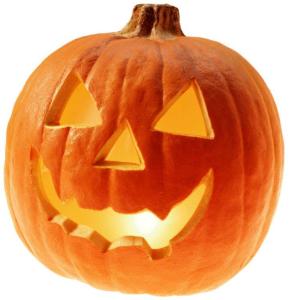
pumpkin Pumpkins and the Legend of Stingy Jack

Jack-o-lanterns are an Irish tradition brought to America by early Irish immigrants. But early jack-o-lanterns were not pumpkins, they were turnips, rutabagas or gourds that were hollowed out. Lights were placed in them to ward off evil spirits and to keep “Stingy Jack” (the legendary Irish drunkard and prankster, believed to have made a deal with the devil and condemned to walk the earth upon death, whose namesake has been given to modern day, carved pumpkins) away. It was not until the 1800’s when Irish immigrants came to America and found pumpkins to be so plentiful and easier to carve, that the tradition was altered.

Tick-or-treating – why we do it

The American Halloween tradition of “trick-or-treating” probably dates back to the early All Souls’ Day parades in England. During the festivities, poor citizens would beg for food and families would give them pastries called “soul cakes” in return for their promise to pray for the family’s dead relatives.

Trick or Treat

Trick or Treat

The distribution of soul cakes was encouraged by the church as a way to replace the ancient practice of leaving food and wine for roaming spirits. The practice, which was referred to as “going a-souling” was eventually taken up by children who would visit the houses in their neighborhood and be given ale, food, and money.

The tradition of dressing in costume for Halloween has both European and Celtic roots. Hundreds of years ago, winter was an uncertain and frightening time. Food supplies often ran low and, for the many people afraid of the dark, the short days of winter were full of constant worry. On Halloween, when it was believed that ghosts came back to the earthly world, people thought that they would encounter ghosts if they left their homes. To avoid being recognized by these ghosts, people would wear masks when they left their homes after dark so that the ghosts would mistake them for fellow spirits. On Halloween, to keep ghosts away from their houses, people would place bowls of food outside their homes to appease the ghosts and prevent them from attempting to enter.


Our Favorite Halloween website for crafts and cooking ideas

Visit this Disney site for great Halloween crafts and cooking fun.   –
http://familyfun.go.com/halloween/

Spirit Jugs


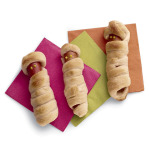
Yummy Mummy Dogs

Yummy Mummy Dogs

Au Pairs helping children stay Safe on Halloween   halloween-safety-4
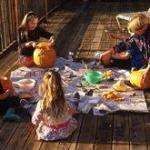


  1. Make sure to inspect the children’s Trick Or Treat candy to make sure everything is in a sealed wrapper and appears safe.
  2. Small children should not eat hard candy because of chocking.
  3. Children should be supervised when they go Trick-or-Treating.  Many parents will come home early from work on the day to go with their children.  Check with Host Parents about this.


Halloween Safety Tips for Drivers

Halloween is a wonderful holiday, but because of increased foot traffic and that Trick-or-Treaters are out at night, the potential for automobile related accidents with young pedestrians increases four times on this night according to a CDC (Center for Disease Control) study.

Streets are literally crawling with all sorts of witches, ghosts, goblins, vampires and all other sorts of costumed people. This makes for added responsibility for drivers to make sure that they drive safer than normal.

In many areas, people drive their kids into subdivisions and let them out to walk from house to house. Usually the parent follows behind in the car. This can cause traffic jams in small areas and much confusion as kids dart between cars on the streets going from house to house. A driver is already distracted because they are trying to keep an eye on their own kids and usually aren’t paying attention to much else.

Children and adults tend to be preoccupied and may not pay as much attention to safety as they should. They may not see your vehicle or just assume that you see them automatically. Stay on the defensive and you shouldn’t have a problem while driving on Halloween night

* Don’t use a cell phone or other electronic device while driving on Halloween night. You shouldn’t be doing this anyway, the rate of cell phone related auto accidents has jumped dramatically since the use of cell phones and texting has risen so high. Some states have already made laws concerning this and others are working on it.

Make sure your child carries a flashlight, glow stick or has reflective tape on their costume to make them more visible to cars. Left them know if they carry a flash light to never shine itin the eyes of a driver. This can cause blindness on the drivers part temporarily and they may not see your child.

Drive below the posted speed limit in residential areas during trick-or-treating hours. This will allow you time to break if you see a child dart in front of you.
.

HAVE SOME FUN THIS MONTH

house90Haunted Happenings in October


The month of October brings exciting activities to the city of Salem, Massachusetts. There are many activities relating to the city’s history and penchant for things macabre, including walking tours, haunted houses, trolley rides, spooky performances, exhibits, harbor cruiss and more. There will be the Derby Street Carnival on October 15 and a free concert on Saturday, October 30, starting at 8PM on a stage on Washington Street. Visit their website for all the details: http://www.hauntedhappenings.org/

In Westford MA, visit Witches Woods   http://witchswoods.com .  Haunted Hayride and Halloween Screampark – open Thursday – Sunday  nights 6:30-10:30.

In Southern New Hampshire, you will find Canobie Lake Park’s SCREEMFEST. The fun amusement park has been taken over by goblins and ghosts! It runs on weekends through the month of October. Visit here for all their details: http://www.canobie.com/SCREEEMFEST/index.html

HAPPY HALLOWEEN!

First Day of Fall – September 22nd

fall_Fall is a magical time of year!

The leaves change colors, the air is crisp and cool and Halloween and Thanksgiving are just around the corner.   Try it to get in the mood for fall!

When the crisp fall air invites you outside for a walk gather some brightly colored leaves.  Press them in sheets of newspaper under heavy books for a few weeks.  When they have dried they will still have their     bright colors and can be glued onto paper.

Make leaf prints by painting one side of a leaf with tempera paint and then pressing it down gently into paper to form the leaf pattern.  Make designs for fun, or use large sheets of paper (tissue paper, brown paper or even newspaper) and save the painted paper to use as gift-wrap.  FallLeaves_SM_000

Place some leaves between pieces of wax paper and iron.  This will keep them from crumbling and give the leaves a glossy sheen.  You can then glue them onto paper – try adding bits of bark or seeds too.

Try putting leaves between pieces of clear contact paper.  You can hang them in the window or use them as place mats.

This Wednesday, September 22 is the Autumnal Equinox, which marks the first day of fall! The sun will be directly over the Earth’s equator, and there will be equal hours of day and night.  After Wednesday, the days will get shorter.

Happy Fall!


Labor Day

labor.day.2015What is this Holiday – Labor Day?

The first Monday of September is known as Labor Day in The United States of America.

It is a holiday very similar to May Day, as it honours the achievements of workers. But unlike May Day, which is a tribute to working class only, Labor Day is a tribute to the entire workforce.

Labor Day originated in Toronto in April 1872 with the first workingmen’s demonstration organized by the Toronto Trades Assembly. Ten years later, in July, a parade took place in Toronto and Peter J. McGuire of New York was invited to hold a speech. Upon his return to NY he proposed an official celebration to honor workers, and in September 1882 Central Labor Union held its first Labor Day celebration in New York City.

In 1884 first Monday of September officially became Labor Day and over the years it has been celebrated with parades, fireworks and festivals; slowly losing its political connotations and becoming an unofficial end of summer holiday.

BACK TO SCHOOL

school-bus-stop-color

It is that time of year again when students of all ages get ready for the first day of school.  Here are some tips to assist with the “back to school” transition and hopefully great start to the new school year.

MAKING THE FIRST DAY EASIER

  • Remind your child that she is not the only student who is a bit uneasy about the first day of school. Teachers know that students are anxious and will make an extra effort to make sure everyone feels as comfortable as possible.
  • Point out the positive aspects of starting school: It will be fun. She’ll see old friends and meet new ones. Refresh her positive memories about previous years, when she may have returned home after the first day with high spirits because she had a good time.
  • Find another child in the neighborhood with whom your youngster can walk to school or ride with on the bus.
  • If you feel it is appropriate, drive your child (or walk with her) to school and pick her up on the first day.

BACKPACK SAFETY

  • Choose a backpack with wide, padded shoulder straps and a padded back.
  • Pack light. Organize the backpack to use all of its compartments. Pack heavier items closest to the center of the back. The backpack should never weigh more than 10 to 20 percent of the your child’s body weight.
  • Always use both shoulder straps. Slinging a backpack over one shoulder can strain muscles.
  • Consider a rolling backpack. This type of backpack may be a good choice for students who must tote a heavy load. Remember that rolling backpacks still must be carried up stairs, and they may be difficult to roll in snow.

Activities-to-Keep-Your-Kids-Busy-This-Summer-1Top Ten – How to Manage Longer Days with Children – When School is out and
APs should always check with their host parents to seek approval for any childcare activities.

10. Start A Summer Scrapbook!

Include drawings, pictures, and journal entries of activities from the summer. It will be special because children and their au pair created it together. This could be a hard version, a computer generated one, a movie of daily clips set to music…..they could even make 2 copies – one for her and one for them to keep!

9. Have a picnic!

Spread the planning and preparation across a few days to get them excited!
First, decide on a location, and have a few choices from which the children can pick. For example, their backyard, a town park or near a pond. Include a rain plan – will they choose an alternate in door solution or go on another date? Create ballots and let them vote!

Make the picnic ‘basket’ —- use a plain box and let the children decorate it!
Then, decide on a menu — look up recipes and shop for the ingredients together….prepare anything that can be done ahead of time — and then when it is “the day,” finish the picnic packing and go!

8. Switch It UP

Have dinner for breakfast and breakfast for dinner! Plan the menu and prepare together!
Who doesn’t like pancakes for dinner???? (If your host parents don’t, then ignore this one!)

7. Have a Pajama Day!

Plan an indoor PJ day. Choose books to read, cookies to make, a movie to watch, indoor tent with blankets and go! Think of it as a snow day (on a rainy day) in the summer!

6. Two websites with nifty ideas!
Scavenger Hunt

Bubble Mania

5. Park it!

Make a list of area parks. After each visit, have the children critique it….what was good, what did they like about it….what didn’t they like? Create a chart with applicable headings including a rating system. At the end of their comparison, their chart will show them where they like to go for what activities, etc. This is a great hand down tool as well for subsequent au pairs or the parents themselves!

4. Taste Test Day!

Buy several brands of vanilla – and try one bite of each and see what they like best! Or do flavors – let the children choose! Different versions….yogurt tasting, cheese/crackers, salsas or red vs. green grapes!

3. Make a Diorama!

Have children re-create a scene from their favorite book, zoo or outing.

Make a Diorama

2. Have a home book club!

Everyone read the same book – and compare your thoughts on it.
Here are some ideas: http://www.scholastic.com/ups/campaigns/src- 2015

1. AP Day!

Once a week — have a Day dedicated to the AP’s country! Eat some foods from her country…and have share typical summer activities you did growing up. You can read the children a book in your native language as well as teach them how to sing and count! As the children get the hang of it – they can make a list of things they would like you to teach or tell them.

EARTH DAY

Mobilize the Earth. Earth Day. 4.22.15

Earth-Day-Bulletin-Board1On April 22, more than one billion people around the globe will participate in Earth Day 2012 and help Mobilize the Earth™. People of all nationalities and backgrounds will voice their appreciation for the planet and demand its protection. Together we will stand united for a sustainable future and call upon individuals, organizations, and governments to do their part.

Attend a local Earth Day event and join one of our Earth Day campaigns as we collect A Billion Acts of Green® and elevate the importance of environmental issues around the world. Together we will Mobilize the Earth™ on April 22 and demand change

Each year, Earth Day — April 22 — marks the anniversary of what many consider the birth of the modern environmental movement in 1970.

The height of hippie and flower-child culture in the United States, 1970 brought the death of Jimi Hendrix, the last Beatles album, and Simon & Garfunkel’s “Bridge Over Troubled Water”. Protest was the order of the day, but saving the planet was not the cause. War raged in Vietnam, and students nationwide increasingly opposed it.

At the time, Americans were slurping leaded gas through massive V8 sedans. Industry belched out smoke and sludge with little fear of legal consequences or bad press. Air pollution was commonly accepted as the smell of prosperity. “Environment” was a word that appeared more often in spelling bees than on the evening news.  Although mainstream America remained oblivious to environmental concerns, the stage had been set for change by the publication of Rachel Carson’s New York Times bestseller Silent Spring in 1962.  The book represented a watershed moment for the modern environmental movement, selling more than 500,000 copies in 24 countries and, up until that moment, more than any other person, Ms. Carson raised public awareness and concern for living organisms, the environment and public health.

Earth Day 1970 capitalized on the emerging consciousness, channeling the energy of the anti-war protest movement and putting environmental concerns front and center.