Author Archives: Patti Estabrook

Blueberry Picking

Ripe for the picking!

Ripe for the picking!

It is time for blueberries – picking is ripe!

Consider taking the kids to Honey Pot Orchard in Stow.  Not only can you pick berries in the patch, you can have fun in the Hedge and tunnel maze, and   picnic by the barnyard animals.

Honey Pot Hill

THE BLUEBERRY PATCH

The blueberry patch is open for picking with lot’s of berries.   Go to the store to get information about container sizes (which they provide) and price.   The containers take a long time to fill so if you’re  with little ones be careful about the size you buy!

Cider donuts and caramel apples made fresh daily and can also be purchased at their store.

race to the center!

race to the center!

The Hedge Maze

Go and have lots of fun getting lost in the Hedge maze, the exact replica of the famous ‘Hampton Court’ Maze in England. Great fun for the kids, ages 4 thru 11.  There is also a Tunnel maze for children (no adults) to crawl through.  All for $1.50 per person.

Barnyard Animals

At the Barnyard!

At the Barnyard!

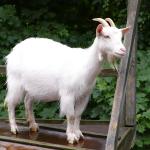
Visit with the barnyard animals – “3 little pigs”, 10 energetic goats playing on their goat walk,
the never ending cock-a-doodle-doo
roosters,
bunnies
and ducks.

Water Safety Tips from the Red Cross

IloveSwimming Take Steps to Stay Safe Around Water

Swimming is the most popular summer activity.

Follow these safety tips whenever you are in, on or around water with you.

Make Water Safety Your Priority

  • Swim in designated areas supervised by lifeguards.
  • Always swim with a buddy; do not allow anyone to swim alone. Even at a public pool or a lifeguarded beach, use the buddy system!
  • Ensure that everyone in the family learns to swim well. Enroll in age-appropriate Red Cross water orientation and Learn-to-Swim courses.
  • Never leave a young child unattended near water and do not trust a child’s life to another child; teach children to always ask permission to go near water.
  • Have young children or inexperienced swimmers wear U.S. Coast Guard-approved life jackets around water, but do not rely on life jackets alone.
  • Establish rules for your family and enforce them without fail. For example, set limits based on each person’s ability, do not let anyone play around drains and suction fittings, and do not allow swimmers to hyperventilate before swimming under water or have breath-holding contests.
  • Even if you do not plan on swimming, be cautious around natural bodies of water including ocean shoreline, rivers and lakes. Cold temperatures, currents and underwater hazards can make a fall into these bodies of water dangerous.
  • If you go boating, wear a life jacket! Most boating fatalities occur from drowning.
  • Avoid alcohol use. Alcohol impairs judgment, balance and coordination; affects swimming and diving skills; and reduces the body’s ability to stay warm.

Prevent Unsupervised Access to the Water

  • Install and use barriers around your home pool or hot tub. Safety covers and pool alarms should be added as additional layers of protection.
  • Ensure that pool barriers enclose the entire pool area, are at least 4-feet high with gates that are self-closing, self-latching and open outward, and away from the pool. The latch should be high enough to be out of a small child’s reach.
  • If you have an above-ground or inflatable pool, remove access ladders and secure the safety cover whenever the pool is not in use.
  • Remove any structures that provide access to the pool, such as outdoor furniture, climbable trees, decorative walls and playground equipment.
  • Keep toys that are not in use away from the pool and out of sight. Toys can attract young children to the pool.

Maintain Constant Supervision

  • Actively supervise kids whenever around the water—even if lifeguards are present. Do not just drop your kids off at the public pool or leave them at the beach—designate a responsible adult to supervise.
  • Always stay within arm’s reach of young children and avoid distractions when supervising children around water.

Know What to Do in an Emergency

  • If a child is missing, check the water first. Seconds count in preventing death or disability.
  • Know how and when to call 9-1-1 or the local emergency number.
  • If you own a home pool or hot tub, have appropriate equipment, such as reaching or throwing equipment, a cell phone, life jackets and a first aid kit.
  • Enroll in Red Cross home pool safety, water safety, first aid and CPR/AED courses to learn how to prevent and respond to emergencies.

Memorial Day in the United States

To Honor our Heroes

To Honor our Heroes

Monday, May 26th

Memorial Day is observed on the last Monday of May. It was formally known as Decoration Day and commemorates all men and women, who have died in military service for the United States. Many people visit cemeteries and memorials on Memorial Day and it is traditionally seen as the start of the summer season.

Gardening & Learning about insects

banner_teddy_watering

Gardening

One way to spend time outside with the children (any age from two up) is to work in the garden. A garden is more than just plants. It’s also a home for birds, bees, butterflies, earthworms and other creatures that help the garden grow.

Children love to care for other living things, and plants are an easy choice that can give a great sense of accomplishment. Check with your host parents about where you can garden. Ideally, your little garden will have at least six hours of sun a day.

For outdoor gardening you will need to buy some seeds. If your garden has less than six hours of sun, choose seeds that can grow in “partial” sun. Select flower seeds that germinate quickly. The back of the seed packet will tell you how long before the plants sprout. Marigolds and morning glories are easy to grow and will come up quickly. Buying vegetable seeds will allow children to eat and share what they grow. Radishes are the fastest growing vegetable – from seed to salad in just three weeks. Green beans, tomatoes, summer squash and cucumbers are other good choices, but they do take longer. Be sure to plant extra seeds because not every one will germinate. This is an important lesson for children – mistakes are natural and an inevitable part of life. If you are starting late and want to make sure you will have a vegetable harvest, you can also buy small plants at a local plant nursery.

Before you plant the seeds, use a shovel, trowel or spade to loosen the soil. Remove weeds, stones and grass from the area. If the soil is very hard (like clay) or very sandy, it would be a good idea to add peat moss or compost to the soil. You will also need a hose or a watering can so that the children can water the earth when it doesn’t rain. If the plants look droopy or the soil feels dry, it is time to water. It is very important to water even before the plants sprout. It is best to water early in the morning or in the late afternoon.

Gardening includes other simple science lessons, all concepts that children can understand. Plants lean or turn towards light. Plants use water, but some of it evaporates into the air. What happens to the water that has evaporated? Without water plants will dry up and die. Plants come from other parts of the world, and sometimes their form gives clues to their origin. Can you find seeds that are native to your country?

When you go out into the garden, take care of the plants, pulling up weeds gently and also any sprouted seeds that are growing too close to another plant. But also look around and look closely at the ground to find birds and bugs that are a part of gardening. You can discuss how living things rely on plants to live, and how the plants need their animal friends. Birds spread seeds; earthworms loosen the dirt for the roots of the plants. What do bees do?

Look for books about gardening in the library. Carrot Seed by Ruth Krauss is a wonderful book for very young children. Take photographs of your gardening project. It will be surprising and satisfying to look at the starting photos at the end of the harvest. And don’t forget to put on sunscreen before you do your gardening!
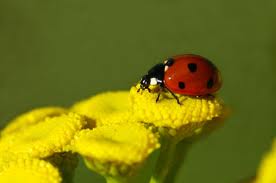

Lady Bug

Lady Bug

Learning about insects

Talking to children about insects is a fun activity in the summer when there are so many around!

Some easy facts for you to know:

  • There are more kinds of insects than any other kind of animal.
  • They live all over the world, even in ice and snow.
  • They never have more than 3 pairs of legs. If it has more, it’s not an insect!
  • All insects come from eggs.

Outside Activity: To learn more about insects, go on a hunt outside. Collect the insects you find in a jar and then examine them with a magnifying glass.

Recipe: Make a snack of “ants on a log.” Spread peanut butter on a stick of celery and then add raisins on the top.

Read: Children up to age seven will enjoy “The Very Hungry Caterpillar” by Eric Carle. Look for it in the library.

Inside activities:

  • Make a caterpillar from a cardboard egg carton cut in half lengthwise. Turn each section upside down to paint with water-based paint. Use pipe cleaners to make the antennae. Draw or glue eyes and a mouth.
  • Make a butterfly by putting small pieces of colored tissue paper in a clear sandwich bag. Seal the bag. Squeeze the bag in half with the sealed edge at the top. Twist a tie around the middle and adjust the end of the twist tie to make antennae.


Mother’s Day

Never forget MOM

Never forget MOM

Sunday, May 11, 2014

Mother’s Day in the United States is annually held on the second Sunday of May. It celebrates motherhood and it is a time to appreciate mothers and mother figures. Many people give gifts, cards, flowers, candy, a meal in a restaurant or other treats to their mother and mother figures, including grandmothers, great-grandmothers, stepmothers, and foster mothers.

Help your kids make something special for mom this year!

Check out these crafts on Pinterest

Gifts for Mom

BOSTON WALK FOR HUNGER

Print

This year again Au Pair in America will have a team and join the Walk for Hunger

A Regional Event with au pairs from the greater Boston area.

All au pairs and host families who would like to join our team please register on the link below

Boston Walk for Hunger

Team name: Au Pair in America

It’s free to register but you can certainly donate as much as you want. Please ask you host family, friends or neighbors if they would donate money to your team.

Valentine’s Day!

Saint Valentine’s Day

teddy-heartThe tradition of Valentine’s Day originated in Rome in the 5th century as a tribute to St. Valentine, a Catholic bishop who was beheaded by Emperor Claudius on February 14, 270 A.D. The story goes that the Emperor banned marriage in his empire and put Valentine to his death when he found out that Valentine was secretly marrying young people.


Originally, the day was marked by sending poems and gifts (such as flowers) but it became quite commercialized already in the 1800’s.

Today, Valentine symbols include Cupid, flowers, chocolates and hearts.

Sending a valentine in the United States is not a serious declaration of love as in some other countries. Children usually send valentines to the other children in their class and to the teacher. Friends and relatives exchange valentines.

Check out the APIA Pinterest

Valentine’s Day

You also might like this site  below for some fun valentine crafts to make with your kids

Valentine Crafts for Kids

Martin Luther King Day

Dr. Martin Luther King

Dr. Martin Luther King

“I have a dream that my four little children will one day live in a nation where they will not be judged by the color of their skin, but by the content of their character.”

– Martin Luther King, I Have a Dream Quote

Nearly 50 years after his death it is King’s words and deeds that live on in the American memory .

Below are some links about the history of this holiday including a biography of Dr. King

Dr. Kings Bio

To read the full “I Have a Dream” speech click here Dr. Kings Speech

Au Pair insurance – What you should know

Is it risky to do winter sports without the sports insurance?


YES!! If you have to pay your own hospital bills for a broken bone, you might be shocked at how much that would cost. I checked this website for some cost estimates.

Here are a couple examples:

  • Without medical coverage, to treat a broken arm or leg (that does not require surgery) it could cost up to $2500.
  • Without medical coverage, to treat a broken arm or leg (requiring surgery) it could cost $16,000 or more.
  • I wanted to make sure everyone understands how the medical coverage works for sports related injuries. There is a list of “high-risk sports/activities” that are not covered with the basic or upgrade medical insurance plans. Those activities are only covered with the Sports Insurance Package (also known as Option A.)

    The Sports Insurance Package was available pre-departure and may also be purchased at any time during your year. It takes effect within 48 hours of your enrollment and it is good for the remainder of the year. The cost will be the same ($60) whether you have a month left or your whole year ahead of you. I recommend you pay for it early on, if you didn’t already purchase it. You never know when an opportunity might present itself and you don’t want to miss out on an adventure. You also don’t want to take a risk on getting injured and being responsible for the bill on your own.

    Below is a partial list of sports that are only covered with the sports insurance package:
    Football, Rugby, Scuba diving, Ski-doo,  Wakeboarding, Skydiving, Parachuting, Rock climbing, Zip line, Skate boarding, Rollerblading, Roller skating, Ice Skating, Skiing, Snowboarding, Snowmobiles & Snowshoeing.  View the full list on page 3 of the insurance brochure HERE
    Note: Injuries sustained while partaking in these sports are covered with purchase of the Sports Insurance ONLY.

    How to register for the Sports Insurance
    Download the form SPORTS INSURANCE FORM and follow the instructions.

    Harvard University Tour 2013

    Touching John Harvard's shoe for luck!

    Touching John Harvard's shoe for luck!

    Au Pairs from the Boston area gather each year to tour the hallowed grounds of Harvard University.  On a beautiful September day over 80 girls came to Cambridge to learn about student life and the diversity of one Americas oldest and most prestigious schools.

    Tour guides provided us with historical facts and stories.  Did you know that the statue of John Harvard (which by the way is not John Harvard, but a student who was asked to model, in the absence of any known pictures of John) is the 3rd most photographed statue in the country?   Want to guess what the top two are?    Needless to say the day was full of interesting facts and sights of Harvard!

    click here for pictures  —-> Harvard Tour 2013