Author Archives: Christine Connally

Preventing Dehydration in Hot Weather

Dehydration means that the body lacks the necessary amount of fluid. Infants and small children are more likely to become dehydrated than older children or adults, because they can lose relatively more fluid quickly.

Here are some steps to take to make sure children remain hydrated in the summer months:

  • Encourage your child to drink plenty of water. On hot days, children should drink significantly more water than usual, as they are losing more due to the heat.
  • Do not wait until your child is thirsty to give him water. By the time they feel thirsty, they are already becoming dehydrated.
  • If your child is resistant to drinking enough water, have other liquids on hand for your child to drink throughout the day.
  • Be alert to changes in behavior. A child may act confused or more irritable when they are becoming dehydrated/overheated. Get them into cooler temperatures and drinking more fluids.
  • Dress your child in lightweight clothing in the summer months, particularly if she’ll be playing outdoors in warm weather. You may also consider clothes that are well ventilated as they do not trap heat close to the body.
  • When there are heat and/or air quality advisories because the weather is dangerously hot, you should avoid taking the children outdoors. Check with your host parents for further guidance on this topic.

Remember to follow these tips for yourself too, so you stay well hydrated.

Photo: Darwin Bell (Flickr)

Holiday & Vacation Reminders

“Rest and be thankful.” – William Wordsworth

Holidays and vacations are a great opportunity to rest, recharge and explore the U.S.

Memorial Day Weekend is the unofficial start of summer travel season. Here are some reminders about program rules regarding holidays and vacations.

Holidays

  • Host families are not required to give au pairs any specific holidays.
  • Each host family will make different arrangements on holidays, some au pairs will be off and others will be required to work.
  • Au pairs should not make plans for holidays without checking with your host family first.

Vacations

  • Au pairs earns 2 weeks of paid vacation during the course of her year.
  • Vacation time should be mutually agreed upon.
  • All vacation should be preplanned (at least 4 weeks in advance.)
  • All au pair’s friends and/or family visits/vacations should be pre-approved prior to purchasing tickets.
  • If an au pair travels with her host family, it should be discussed in advance whether this is the au pair’s vacation or if she is working.
  • If an au pair travels with the host family to work, the host family is required to pay for her transportation, lodging and meals.

Important: If an au pair is traveling outside of the U.S., she must have her DS2019 signed (travel validation) PRIOR to her departure from the US. More information about this may be found here on the Au Pair in America website.

Photo: torbakhopper (Flickr)

Helping Young Children Learn Language

Being an au pair is an important role in a child’s life. When you are caring for a young child up to 45 hours per week, there are lots of opportunities to help them learn language. Many host parents are eager for their children to be exposed to foreign language. If this is true of your host parents, you can try the suggestions below, in both English and your native language.

Below are a few tips to start with, for more ideas, check out Ready at Five.

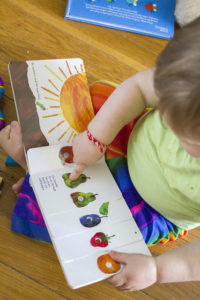
  • Read – Read to them daily, point out pictures and ask questions. Even if they can’t answer the questions, this is still modeling conversation.
  • Talk – Point out objects around them, names of their body parts, explain what you are doing and places you are going. Long before babies can speak, they benefit greatly from being spoken to.
  • Sing – You can sing childhood classics or make up your own silly songs. If you are looking for song ideas, HERE is a great website with lists of songs, lyrics and links to YouTube videos* of the songs.  Children’s music is also available at the public library and even on iTunes.
  • Words – As children move from toddlers to preschoolers begin to point out written language.
  • Writing – Toddlers and preschoolers can begin to learn pre-writing skills by drawing with crayons or doing finger paints.

*The American Academy of Pediatrics recommends no screen time for babies under 18 months of age. For children 18 months to 5 years they recommend no more than 1 hour of high quality content. You can play the songs on youtube for the audio and not necessarily show the screen to the child.

Photo: Quinn Dombrowski (Flickr)

Handling Expenses

Host parents often ask for suggestions on how best to handle common expenses that occur as au pairs are caring for the children.

Miscellaneous Expenses

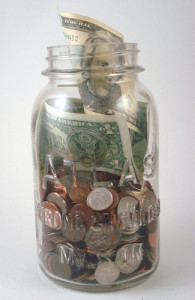
There are different ways to handle the little day to day expenses that come up.  Things like when an au pair takes the kids out for ice cream or picks up a gallon of milk.  Some families keep a cookie jar fund, a little cash that they set aside weekly or monthly for these types of expenses. Others give their au pair a prepaid debit card for this purpose. Below are some suggestions for avoiding problems with expenses.

Host Families

  • It’s important to be clear about how long this money should last and what types of expenses are approved.
  • Let the au pair know whether or not you expect receipts.

Au Pairs

  • Only spend the money on approved expenses.
  • If it is something you are not sure about, ask first.
  • Put your receipts in the cookie jar in place of the money to avoid any confusion.

Gas and Fare Cards 

Host families are responsible for the au pair’s transportation costs: to and from classes, cluster meetings and when driving the kids.

It is a good idea to figure out how much gas an au pair will use for these trips and either put gas in the car or give a gas allowance.   If your au pair is riding to classes or cluster meetings with another au pair, you should offer to share the cost of gas.

Au pairs are responsible for their own transportation at all other times.  You should replace the amount of gas used for personal use.

Photo: Andrea Travillian

Nutritional Foods And Snacks For Kids

Healthy food 2
According to the American Dietetic Association children should eat 6-11 servings of grains (bread, pasta,
rice, cereal), 3-5 servings of vegetables (about 1/2 cup is a serving for a child), 2-4 servings of fruit (again,
about 1/2 cup), 2-3 servings of meat, poultry, fish or dried beans, and 2-3 dairy servings every day.
However, experts agree that children will eat when they are hungry and shouldn’t be forced to eat. Give
children small portions which won’t overwhelm them, and remind them that they can always have more.
Snacks between meals should be nutritious (fruits, vegetables, cheese, bread, crackers, yogurt, or juice).
Keep fruits and vegetables at children’s eye level in the refrigerator or in a bowl on the table so they will be
able to take them easily when they are hungry. Blend juice, chopped fruit and yogurt in the blender for a
quick and delicious fruit smoothie. Add a touch of honey to sweeten.
Involving children in meal planning, grocery shopping and food preparation can help them to become more
interested in what they eat. Have them cut out pictures from grocery store flyers to make a picture shopping
list, and then they can help find the items in the store. Help them to choose foods in each of the five food
groups listed above. Serve food in a pretend restaurant with homemade placemats and menus, or create
your own grocery store with empty boxes or cans (if you plan on using cans, open from the bottom and then
check for sharp edges).
Many children need to eat more often than three times per day. If a child becomes cranky or irritable, it may
be time for a snack. Sugary foods make many children excitable.
Food safety:
• to avoid choking, never offer food unless the child is sitting upright.
• toddlers are just learning to chew – celery, carrots, grapes, apples, and hot dogs must all be cut up,
peanut butter should be spread thinly on bread or a cracker, and children under four should not eat
raisins, hard candy, nuts or popcorn, as they are all easy to choke on.
• food storage customs in the United States may be different from those in other countries. Generally,
eggs, dairy products and all meats should never be left at room temperature. If meat is frozen, it should
be defrosted in the refrigerator or in the microwave, not on the counter. All cutting boards and knives
should be well washed after preparing chicken. Fruit will ripen at room temperature, but if it is already
ripe, it will keep better in the refrigerator. The one exception is bananas – the refrigerator will turn them
black.
• before opening a can, rinse the lid so the dirt from the outside of the can doesn’t get into the food.
Remember, adults should set a good example with the food they eat, and where and how they eat it.

Rainy Day Project!

Rain Sticks

Rain_Stick_H

Kids can create this fun craft that mimics the rainy day outside. Gather up a paper towel tube, crayons, tinfoil, masking tape, dry rice, and a long pipe cleaner. Have your child color and decorate the paper towel tube. Next, fasten tinfoil to one end with masking tape. Coil the pipe cleaner and fit it into the tube, along with the rice. Secure the other end of the tube with tinfoil and tape.  Your child’s rain stick is now ready to make soothing rain sounds!

Cooking with Kids

aprons,children,cooking,eggs,enjoyment,food,frying,girls,happiness,hats,kids,pans,people,smiling,spatulas

1.  Burns: If you are cooking with older kids and also have an infant in your care, the only safe place for him/her while you are cooking is in the play pen, high chair or crib.

2. If a child does get burned, put cold water on the burned area immediately.  Then cover the burn loosely with a bandage or clean cloth.  Call the doctor for all burns.

BE PREPARED – know where the First Aid Kit is in your house

Cooking With Kids

Cooking with children has many benefits.  It is a wonderful way for adults and children to have fun together while the children learn important skills.  Cooking activities can: help to develop hand-eye coordination, help to improve small motor skills, encourage the ability to do things in a logical order, and build reading and math skills.  Through cooperation it can give the children an important sense of accomplishment.  There is no other way we can see, smell, taste and share the results of our efforts.

Children as young as a year can begin to help in the kitchen doing very simple tasks such as putting ingredients into a bowl.  By the time children are 3 or 4 they can start to use a knife, but it must always be with adult supervision.  Cooking on the stove should be limited to older children.  Use the back burner whenever you can, and make sure pot handles don’t stick out where little hands can reach them, or where they can accidentally be knocked off the stove.  Make sure that children wash their hands before cooking, and if theyr are handling meat or eggs they should always wash afterwards as well.   Remember to teach children that clean-up is part of cooking.  Here are some recipes to get you started:

Soft Pretzels

1 package yeast

1 tsp. salt

4 cups flour

1 1/2 cups warm water

1 Tbs. sugar

1 egg, beaten

Stir yeast into water.  Add the sugar and salt.  Blend in flour.  Knead until smooth.  Cut into pieces and roll long and skinny.  Let the children make balls, worms, letters, etc.  Put on foil lined greased cookie sheet.  Brush with egg.  Bake at 425 degrees for 12-15 minutes.

Fruit Smoothie

1 cup orange juice

1/2 cup plain or vanilla yogurt

1/2 tsp. vanilla extract

1 banana and/or pieces of most any other fruit – melon, berries, peach, etc.

2 tsp honey

dried mint or a sprinkle of cinnamon if you wish.

Put all ingredients in the jar of a blender – don’t fill it to the top, as it needs space to blend.  Blend until smooth.  You can also blend in some ice for a frosty treat

Muddy Hand Cookies

2/3 cup butter

1 cup sugar

2 tsp. vanilla

2 eggs

2 1/2 cups flour

1/2 cup unsweetened cocoa mix

1/2 tsp baking soda

1/4 tsp. salt

Cream butter, sugar and vanilla together.  Add eggs and mix well.  Add dry ingredients, blending thoroughly.  Chill dough until firm.  Roll dough out to 1/4 inch thick.  Lay you hand on the dough and cut around it to make your hand print.  Bake on an ungreased cookie sheet at 350 degrees for 6-8 minutes

English Muffin Pizza

6 English Muffins, split

1 package shredded mozzarella cheese

1 can or jar pizza sauce

Line a cookie sheet with foil and place English muffin halves on it.  Spread with the pizza sauce.  Sprinkle with the cheese.  Bake at 450 degrees for 12 minutes.  Add other toppings (vegetables or meat) if you wish

Back to School

school-bus-stop-color

It is that time of year again when students of all ages get ready for the first day of school.  Here are some tips to assist with the “back to school” transition and hopefully great start to the new school year.

MAKING THE FIRST DAY EASIER

  • Remind your child that she is not the only student who is a bit uneasy about the first day of school. Teachers know that students are anxious and will make an extra effort to make sure everyone feels as comfortable as possible.
  • Point out the positive aspects of starting school: It will be fun. She’ll see old friends and meet new ones. Refresh her positive memories about previous years, when she may have returned home after the first day with high spirits because she had a good time.
  • Find another child in the neighborhood with whom your youngster can walk to school or ride with on the bus.
  • If you feel it is appropriate, drive your child (or walk with her) to school and pick her up on the first day.

BACKPACK SAFETY

  • Choose a backpack with wide, padded shoulder straps and a padded back.
  • Pack light. Organize the backpack to use all of its compartments. Pack heavier items closest to the center of the back. The backpack should never weigh more than 10 to 20 percent of the your child’s body weight.
  • Always use both shoulder straps. Slinging a backpack over one shoulder can strain muscles.
  • Consider a rolling backpack. This type of backpack may be a good choice for students who must tote a heavy load. Remember that rolling backpacks still must be carried up stairs, and they may be difficult to roll in snow.

Tips from the American Academy of Pediatrics.