Category Archives: Child Care

Focus on Play: New Ideas for Some Classic Toys

It is good to offer kids a balance of independent play time and play where you are actively engaging with them. You can make toys they may be bored with, feel new and exciting, by suggesting different ways to play with them. Try some of the ideas below as a starting point.

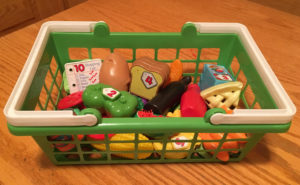
Play Food/Dishes

  • Teach your host children how to say the names of some of the food and dishes in your language.
  • Using English and/or your language play games where you are ordering food like in a restaurant. Take turns with who will be the waiter and who is the customer.
  • Come up with silly food combinations.  For example: Who wants pickles on their slice of cake?
  • Play a guessing game where the children have to figure out what food you are talking about.  For example: I grow under the ground in the dirt.  People eat me fried, mashed and baked.  What am I? (a potato)
  • Play a game with setting the table using your language to ask for the different items (plate, spoon, etc.)
  • Ask the children to divide the foods up into the different food groups (vegetables, meat, dairy, etc.)

Lego Blocks and Other Building Toys

  • Divide up all of the blocks between the people playing, by taking turns for each person to select block by block.
  • Suggest specific things to build (robots, houses, mountains etc.) and build together.
  • Challenge everyone to use all of their blocks.
  • Sort the blocks by color or shape and make patterns with them (red, blue, red, blue or square, triangle, rectangle.)  You can create a pattern and ask the child to fill in what comes next to continue the pattern.
  • Make the tallest block tower you can and let them knock it down (over and over again, if like most kids, they like destroying things.)

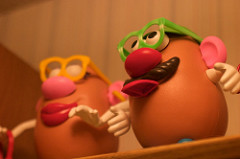
Mr. Potato Head

  • Teach your host children the names of the different parts in your language and play a game asking them to put on the body parts by name.
  • Play Hide and Seek with Mr. Potato Head. Have the children cover their eyes and count, while you hide Mr. Potato Head, then they go looking for him. Switch things up by letting them hide Mr. Potato Head and then you are the one to locate him.
  • Play the same game above, but using Simon Says.  Simon Says is a game where the leader gives commands by saying “Simon says” first. For example, “Simon says, put on the nose.”  The players are only to follow the commands when the leader says “Simon says.”  If the leader doesn’t say “Simon says” first and just says, “put on the nose,”  and the player follows the command, they are out of the game.  Repeat the game multiple times, so all kids get a turn to be the leader at least once.

Photos:  Lisa Maxwell (top) & Tom Smalls (bottom)

Avoiding Homesickness this Holiday Season

Homesickness can be a problem during the holidays, even if it hasn’t been at any other time of the year. Au pairs often miss their friends and family, familiar places and their own traditions and customs. The holiday activities in the United States seem, and may actually be, different just at a time when an au pair would welcome something familiar. 

It is common for au pairs’ emotions to be close to the surface during the holidays. Her highs are higher, her lows are lower. The enormity of what she has done–actually living in another country (which is an amazing thing when you think about it!)–hits her and throws her into a self-protective mode.

Host parents can help her through this unfamiliar territory by talking to her about what your specific family activities will be (gifts, meals, visitors, religious services, in-home traditions, or none of these, as the case may be.) In the spirit of cultural exchange, ask her if she has any favorite holiday traditions or foods that you might be able to incorporate into your family’s celebration of the season. Let her know what you will be doing, when you will be doing it, and what she can expect. Talk to her about what has to be accomplished and get her involved and interested. Don’t expect her to just “know” what needs to be done. Give her some clear, agreed upon assignments. Make her feel a part of things. And, let her know her contribution is needed and appreciated.

Photo: Sheila Sund (Flickr)

5 Thanksgiving Tips for Au Pairs & Host Parents

Thanksgiving is celebrated on the fourth Thursday of November each year. Even though a few other countries also celebrate Thanksgiving, it’s still considered a uniquely American holiday, one that the au pairs look forward to experiencing. You can learn more about it here.

“I really enjoyed Thanksgiving with my host family. It was as I imagined! So much food to try. Everyone got dressed up and shared what they were thankful for. It was so warm and special. The next day we began to prepare for Christmas. It was magical.” Selina from Germany

Below you will find some tips to help you have a terrific Thanksgiving experience.


Host Parents

1.  Please plan to include your au pair in your Thanksgiving celebration, if at all possible. Thanksgiving with an au pair offers an opportunity to consider the relevance of the history and meaning of Thanksgiving as you compare the hospitality offered by the Native Americans to the recently arrived Pilgrims and the hospitality you offer your au pair.

2.  If you are traveling or will not be able to invite your au pair to join you for Thanksgiving, give her plenty of notice and help her make alternate plans. You don’t want to leave your au pair alone over the holiday.

Au Pairs

3.  If you are invited to attend dinner, please let your family know within 5 days of the invitation, whether you are planning to attend. It is considered rude in America to accept the invitation for dinner and then change your mind later in the month. Please be thoughtful.

4.  Make sure to discuss time off during this holiday weekend. Many host families work the Friday after Thanksgiving so do not assume you have this day off or the entire weekend. Talk to your host family, BEFORE you make any plans.

5.  If your host family is unable to include you in their Thanksgiving plans, please let me know if you have trouble making other plans. You may be able to join a friend and their host family for the holiday dinner.

Bonus Tip for the Kids

If you are looking for a fun recipe to make with your au pair, check out these turkey cupcakes. Find more fun activities and recipes on the Au Pair in America Fall Holidays pinboard.

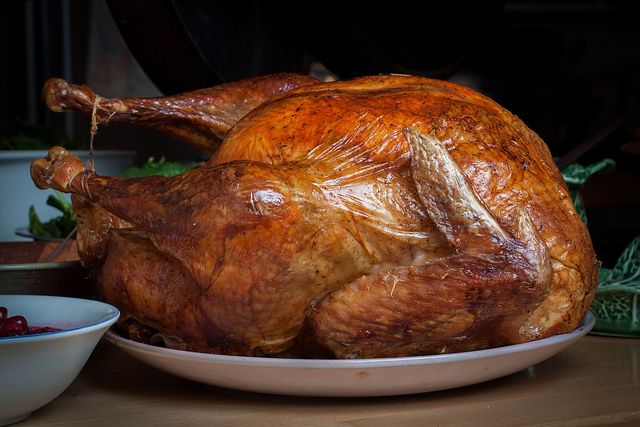
Photo: Tim Sackton (Flickr)

Hints for Success – Overcoming Homesickness

Almost everyone experiences homesickness and culture shock to some degree, when they come to live in a completely new environment. So much is different and it takes time to adjust.

It is normal to miss your own family, at home. Try to remember that they support you and want you to make the most of this experience. They will enjoy learning more about the U.S., through your eyes, as you share your adventures with them.

Top 5 Tips for Dealing with Homesickness

1. Make Friends – Don’t wait for other au pairs to reach out to you, reach out to them. There are other lots of new au pairs who are feeling the same way you are right now. Set a goal to reach out to a few of them each day. Some will respond and some will not. Don’t let that discourage you. No one will ever be mad at you for sending them a message to say hello or ask if they want to do something together. Make friends from various countries and you will also get a chance to practice your English skills together.

2. Stay in touch with your home country, but not too much. Skyping or talking on the phone every day with your family and/or friends back home normally makes homesickness worse. Try emailing instead and reduce the Skype and phone calls to once a week, until you feel stronger. It’s much harder seeing the faces and hearing the voices of those you miss.

3. Get out of the house (or your room specifically) – Go to cluster meetings, have coffee or movies with other au pairs, join a gym, go to the library, go for a walk, visit the mall, get a manicure, visit a museum. If someone invites you out, say “yes.” Also, don’t be afraid to do the inviting. If your host family invites you to do things with them, say “yes.” This will help you get to know each other and contribute to your overall happiness.

4. Realize that it definitely gets better – All au pairs experience homesickness and the vast majority of them get through it, stay and have a successful year (some even extend for a second year!) So, it must get better, right? Once you get past the initial homesickness, most au pairs report how quickly the year goes by.

5. Make Plans – Create your own Au Pair Bucket List (places you want to go, new foods to try, new things to experience during your year in the U.S.) and start doing them now. Post on our cluster Facebook group to find others who may want to join you on your adventures.

Photo by:  Shimelle Laine (Flickr)

SaveSaveSaveSaveSaveSaveSaveSave

Preventing Dehydration in Hot Weather

Dehydration means that the body lacks the necessary amount of fluid. Infants and small children are more likely to become dehydrated than older children or adults, because they can lose relatively more fluid quickly.

Here are some steps to take to make sure children remain hydrated in the summer months:

  • Encourage your child to drink plenty of water. On hot days, children should drink significantly more water than usual, as they are losing more due to the heat.
  • Do not wait until your child is thirsty to give him water. By the time they feel thirsty, they are already becoming dehydrated.
  • If your child is resistant to drinking enough water, have other liquids on hand for your child to drink throughout the day.
  • Be alert to changes in behavior. A child may act confused or more irritable when they are becoming dehydrated/overheated. Get them into cooler temperatures and drinking more fluids.
  • Dress your child in lightweight clothing in the summer months, particularly if she’ll be playing outdoors in warm weather. You may also consider clothes that are well ventilated as they do not trap heat close to the body.
  • When there are heat and/or air quality advisories because the weather is dangerously hot, you should avoid taking the children outdoors. Check with your host parents for further guidance on this topic.

Remember to follow these tips for yourself too, so you stay well hydrated.

Photo: Darwin Bell (Flickr)

Holiday & Vacation Reminders

“Rest and be thankful.” – William Wordsworth

Holidays and vacations are a great opportunity to rest, recharge and explore the U.S.

Memorial Day Weekend is the unofficial start of summer travel season. Here are some reminders about program rules regarding holidays and vacations.

Holidays

  • Host families are not required to give au pairs any specific holidays.
  • Each host family will make different arrangements on holidays, some au pairs will be off and others will be required to work.
  • Au pairs should not make plans for holidays without checking with your host family first.

Vacations

  • Au pairs earns 2 weeks of paid vacation during the course of her year.
  • Vacation time should be mutually agreed upon.
  • All vacation should be preplanned (at least 4 weeks in advance.)
  • All au pair’s friends and/or family visits/vacations should be pre-approved prior to purchasing tickets.
  • If an au pair travels with her host family, it should be discussed in advance whether this is the au pair’s vacation or if she is working.
  • If an au pair travels with the host family to work, the host family is required to pay for her transportation, lodging and meals.

Important: If an au pair is traveling outside of the U.S., she must have her DS2019 signed (travel validation) PRIOR to her departure from the US. More information about this may be found here on the Au Pair in America website.

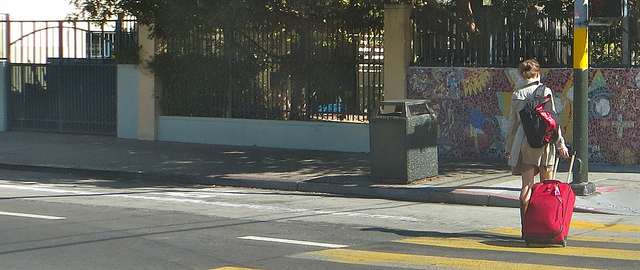
Photo: torbakhopper (Flickr)

Helping Young Children Learn Language

Being an au pair is an important role in a child’s life. When you are caring for a young child up to 45 hours per week, there are lots of opportunities to help them learn language. Many host parents are eager for their children to be exposed to foreign language. If this is true of your host parents, you can try the suggestions below, in both English and your native language.

Below are a few tips to start with, for more ideas, check out Ready at Five.

  • Read – Read to them daily, point out pictures and ask questions. Even if they can’t answer the questions, this is still modeling conversation.
  • Talk – Point out objects around them, names of their body parts, explain what you are doing and places you are going. Long before babies can speak, they benefit greatly from being spoken to.
  • Sing – You can sing childhood classics or make up your own silly songs. If you are looking for song ideas, HERE is a great website with lists of songs, lyrics and links to YouTube videos* of the songs.  Children’s music is also available at the public library and even on iTunes.
  • Words – As children move from toddlers to preschoolers begin to point out written language.
  • Writing – Toddlers and preschoolers can begin to learn pre-writing skills by drawing with crayons or doing finger paints.

*The American Academy of Pediatrics recommends no screen time for babies under 18 months of age. For children 18 months to 5 years they recommend no more than 1 hour of high quality content. You can play the songs on youtube for the audio and not necessarily show the screen to the child.

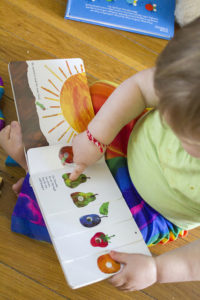
Photo: Quinn Dombrowski (Flickr)

Handling Expenses

Host parents often ask for suggestions on how best to handle common expenses that occur as au pairs are caring for the children.

Miscellaneous Expenses

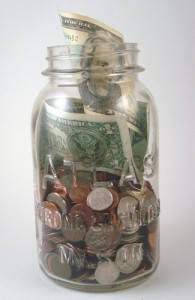
There are different ways to handle the little day to day expenses that come up.  Things like when an au pair takes the kids out for ice cream or picks up a gallon of milk.  Some families keep a cookie jar fund, a little cash that they set aside weekly or monthly for these types of expenses. Others give their au pair a prepaid debit card for this purpose. Below are some suggestions for avoiding problems with expenses.

Host Families

  • It’s important to be clear about how long this money should last and what types of expenses are approved.
  • Let the au pair know whether or not you expect receipts.

Au Pairs

  • Only spend the money on approved expenses.
  • If it is something you are not sure about, ask first.
  • Put your receipts in the cookie jar in place of the money to avoid any confusion.

Gas and Fare Cards 

Host families are responsible for the au pair’s transportation costs: to and from classes, cluster meetings and when driving the kids.

It is a good idea to figure out how much gas an au pair will use for these trips and either put gas in the car or give a gas allowance.   If your au pair is riding to classes or cluster meetings with another au pair, you should offer to share the cost of gas.

Au pairs are responsible for their own transportation at all other times.  You should replace the amount of gas used for personal use.

Photo: Andrea Travillian

HALLOWEEN IS COMING OCTOBER 31st !

HALLOWEEN FUN AND SAFETY!

batsHistory –    Halloween, celebrated each year on October 31, is a mix of ancient Celtic practices, Catholic  and Roman religious rituals and European folk traditions that blended together over time to create the holiday we know today. Straddling the line between fall and winter, plenty and paucity and life and death, Halloween is a time of celebration and superstition. Halloween has long been thought of as a day when the dead can return to the earth, and ancient Celts would light bonfires and wear costumes to ward off these roaming ghosts. The Celtic holiday of Samhain, the Catholic Hallowmas period of All Saints’ Day and All Souls’ Day and the Roman festival of Feralia all influenced the modern holiday of Halloween. In the 19th century, Halloween began to lose its religious connotation, becoming a more secular community-based children’s holiday. Although the superstitions and beliefs surrounding Halloween may have evolved over the years, as the days grow shorter and the nights get colder, people can still look forward to parades,                                                                                                                      costumes and sweet  treats to usher in the season.
pumpkin Pumpkins and the Legend of Stingy Jack –

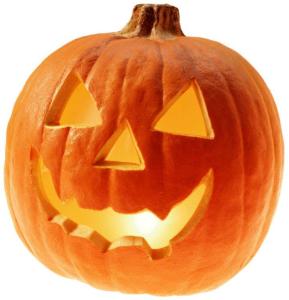
Jack-o-lanterns are an Irish tradition brought to America by early Irish immigrants. But early jack-o-lanterns were not pumpkins, they were turnips, rutabagas or gourds that were hollowed out. Lights were placed in them to ward off evil spirits and to keep “Stingy Jack” (the legendary Irish drunkard and prankster, believed to have made a deal with the devil and condemned to walk the earth upon death, whose namesake has been given to modern day, carved pumpkins) away. It was not until the 1800’s when Irish immigrants came to America and found pumpkins to be so plentiful and easier to carve, that the tradition was altered.

Tick-or-treating – why we do it

The American Halloween tradition of “trick-or-treating” probably dates back to the early All Souls’ Day parades in England. During the festivities, poor citizens would beg for food and families would give them pastries called “soul cakes” in return for their promise to pray for the family’s dead relatives.

Trick or Treat

Trick or Treat

The distribution of soul cakes was encouraged by the church as a way to replace the ancient practice of leaving food and wine for roaming spirits. The practice, which was referred to as “going a-souling” was eventually taken up by children who would visit the houses in their neighborhood and be given ale, food, and money.

The tradition of dressing in costume for Halloween has both European and Celtic roots. Hundreds of years ago, winter was an uncertain and frightening time. Food supplies often ran low and, for the many people afraid of the dark, the short days of winter were full of constant worry. On Halloween, when it was believed that ghosts came back to the earthly world, people thought that they would encounter ghosts if they left their homes. To avoid being recognized by these ghosts, people would wear masks when they left their homes after dark so that the ghosts would mistake them for fellow spirits. On Halloween, to keep ghosts away from their houses, people would place bowls of food outside their homes to appease the ghosts and prevent them from attempting to enter.


Our Favorite Halloween website for crafts and cooking ideas

Visit this Disney site for great Halloween crafts and cooking fun.   –

http://familyfun.go.com/halloween/

Spirit Jugs


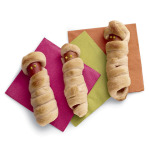
Yummy Mummy Dogs

Yummy Mummy Dogs

Au Pairs helping children stay Safe on Halloween   halloween-safety-4



  1. Make sure to inspect the children’s Trick Or Treat candy to make sure everything is in a sealed wrapper and appears safe.
  2. Small children should not eat hard candy because of chocking.
  3. Children should be supervised when they go Trick-or-Treating.  Many parents will come home early from work on the day to go with their children.  Check with Host Parents about this.


Halloween Safety Tips for Drivers

Halloween is a wonderful holiday, but because of increased foot traffic and that Trick-or-Treaters are out at night, the potential for automobile related accidents with young pedestrians increases four times on this night according to a CDC (Center for Disease Control) study.

Streets are literally crawling with all sorts of witches, ghosts, goblins, vampires and all other sorts of costumed people. This makes for added responsibility for drivers to make sure that they drive safer than normal.

In many areas, people drive their kids into subdivisions and let them out to walk from house to house. Usually the parent follows behind in the car. This can cause traffic jams in small areas and much confusion as kids dart between cars on the streets going from house to house. A driver is already distracted because they are trying to keep an eye on their own kids and usually aren’t paying attention to much else.

Children and adults tend to be preoccupied and may not pay as much attention to safety as they should. They may not see your vehicle or just assume that you see them automatically. Stay on the defensive and you shouldn’t have a problem while driving on Halloween night

* Don’t use a cell phone or other electronic device while driving on Halloween night. You shouldn’t be doing this anyway, the rate of cell phone related auto accidents has jumped dramatically since the use of cell phones and texting has risen so high. Some states have already made laws concerning this and others are working on it.

Make sure your child carries a flashlight, glow stick or has reflective tape on their costume to make them more visible to cars. Left them know if they carry a flash light to never shine itin the eyes of a driver. This can cause blindness on the drivers part temporarily and they may not see your child.

Drive below the posted speed limit in residential areas during trick-or-treating hours. This will allow you time to break if you see a child dart in front of you.
.

HAVE SOME FUN THIS MONTH

house90Haunted Happenings in October


The month of October brings exciting activities to the city of Salem, Massachusetts. There are many activities relating to the city’s history and penchant for things macabre, including walking tours, haunted houses, trolley rides, spooky performances, exhibits, harbor cruiss and more. There will be the Derby Street Carnival on October 15 and a free concert on Saturday, October 30, starting at 8PM on a stage on Washington Street. Visit their website for all the details: http://www.hauntedhappenings.org/

In Westford MA, visit Witches Woods   http://witchswoods.com .  Haunted Hayride and Halloween Screampark – open Thursday – Sunday  nights 6:30-10:30.

In Southern New Hampshire, you will find Canobie Lake Park’s SCREEMFEST. The fun amusement park has been taken over by goblins and ghosts! It runs on weekends through the month of October. Visit here for all their details: http://www.canobie.com/SCREEEMFEST/index.html

HAPPY HALLOWEEN!

First Day of Fall – September 22nd

fall_Fall is a magical time of year!

The leaves change colors, the air is crisp and cool and Halloween and Thanksgiving are just around the corner.   Try it to get in the mood for fall!

When the crisp fall air invites you outside for a walk gather some brightly colored leaves.  Press them in sheets of newspaper under heavy books for a few weeks.  When they have dried they will still have their     bright colors and can be glued onto paper.

Make leaf prints by painting one side of a leaf with tempera paint and then pressing it down gently into paper to form the leaf pattern.  Make designs for fun, or use large sheets of paper (tissue paper, brown paper or even newspaper) and save the painted paper to use as gift-wrap.  FallLeaves_SM_000

Place some leaves between pieces of wax paper and iron.  This will keep them from crumbling and give the leaves a glossy sheen.  You can then glue them onto paper – try adding bits of bark or seeds too.

Try putting leaves between pieces of clear contact paper.  You can hang them in the window or use them as place mats.

This Wednesday, September 22 is the Autumnal Equinox, which marks the first day of fall! The sun will be directly over the Earth’s equator, and there will be equal hours of day and night.  After Wednesday, the days will get shorter.

Happy Fall!