Category Archives: Host Family Tips

Avoiding Homesickness this Holiday Season

Homesickness can be a problem during the holidays, even if it hasn’t been at any other time of the year. Au pairs often miss their friends and family, familiar places and their own traditions and customs. The holiday activities in the United States seem, and may actually be, different just at a time when an au pair would welcome something familiar. 

It is common for au pairs’ emotions to be close to the surface during the holidays. Her highs are higher, her lows are lower. The enormity of what she has done–actually living in another country (which is an amazing thing when you think about it!)–hits her and throws her into a self-protective mode.

Host parents can help her through this unfamiliar territory by talking to her about what your specific family activities will be (gifts, meals, visitors, religious services, in-home traditions, or none of these, as the case may be.) In the spirit of cultural exchange, ask her if she has any favorite holiday traditions or foods that you might be able to incorporate into your family’s celebration of the season. Let her know what you will be doing, when you will be doing it, and what she can expect. Talk to her about what has to be accomplished and get her involved and interested. Don’t expect her to just “know” what needs to be done. Give her some clear, agreed upon assignments. Make her feel a part of things. And, let her know her contribution is needed and appreciated.

Photo: Sheila Sund (Flickr)

5 Thanksgiving Tips for Au Pairs & Host Parents

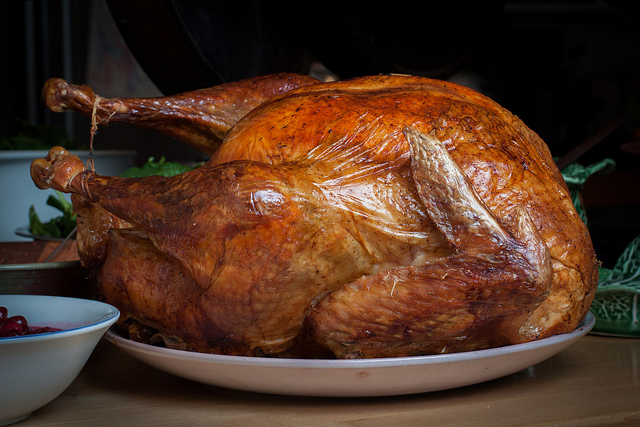
Thanksgiving is celebrated on the fourth Thursday of November each year. Even though a few other countries also celebrate Thanksgiving, it’s still considered a uniquely American holiday, one that the au pairs look forward to experiencing. You can learn more about it here.

I really enjoyed Thanksgiving with my host family. It was as I imagined! So much food to try. Everyone got dressed up and shared what they were thankful for. It was so warm and special. The next day we began to prepare for Christmas. It was magical.” Selina from Germany

Below you will find some tips to help you have a terrific Thanksgiving experience.


Host Parents

1.  Please plan to include your au pair in your Thanksgiving celebration, if at all possible. Thanksgiving with an au pair offers an opportunity to consider the relevance of the history and meaning of Thanksgiving as you compare the hospitality offered by the Native Americans to the recently arrived Pilgrims and the hospitality you offer your au pair.

2.  If you are traveling or will not be able to invite your au pair to join you for Thanksgiving, give her plenty of notice and help her make alternate plans. You don’t want to leave your au pair alone over the holiday.

Au Pairs

3.  If you are invited to attend dinner, please let your family know within 5 days of the invitation, whether you are planning to attend. It is considered rude in America to accept the invitation for dinner and then change your mind later in the month. Please be thoughtful.

4.  Make sure to discuss time off during this holiday weekend. Many host families work the Friday after Thanksgiving so do not assume you have this day off or the entire weekend. Talk to your host family, BEFORE you make any plans.

5.  If your host family is unable to include you in their Thanksgiving plans, please let me know if you have trouble making other plans. You may be able to join a friend and their host family for the holiday dinner.

Bonus Tip for the Kids

If you are looking for a fun recipe to make with your au pair, check out these turkey cupcakes. Find more fun activities and recipes on the Au Pair in America Fall Holidays pinboard.

Photo: Tim Sackton (Flickr)

Preventing Dehydration in Hot Weather

Dehydration means that the body lacks the necessary amount of fluid. Infants and small children are more likely to become dehydrated than older children or adults, because they can lose relatively more fluid quickly.

Here are some steps to take to make sure children remain hydrated in the summer months:

  • Encourage your child to drink plenty of water. On hot days, children should drink significantly more water than usual, as they are losing more due to the heat.
  • Do not wait until your child is thirsty to give him water. By the time they feel thirsty, they are already becoming dehydrated.
  • If your child is resistant to drinking enough water, have other liquids on hand for your child to drink throughout the day.
  • Be alert to changes in behavior. A child may act confused or more irritable when they are becoming dehydrated/overheated. Get them into cooler temperatures and drinking more fluids.
  • Dress your child in lightweight clothing in the summer months, particularly if she’ll be playing outdoors in warm weather. You may also consider clothes that are well ventilated as they do not trap heat close to the body.
  • When there are heat and/or air quality advisories because the weather is dangerously hot, you should avoid taking the children outdoors. Check with your host parents for further guidance on this topic.

Remember to follow these tips for yourself too, so you stay well hydrated.

Photo: Darwin Bell (Flickr)

Holiday & Vacation Reminders

“Rest and be thankful.” – William Wordsworth

Holidays and vacations are a great opportunity to rest, recharge and explore the U.S.

Memorial Day Weekend is the unofficial start of summer travel season. Here are some reminders about program rules regarding holidays and vacations.

Holidays

  • Host families are not required to give au pairs any specific holidays.
  • Each host family will make different arrangements on holidays, some au pairs will be off and others will be required to work.
  • Au pairs should not make plans for holidays without checking with your host family first.

Vacations

  • Au pairs earns 2 weeks of paid vacation during the course of her year.
  • Vacation time should be mutually agreed upon.
  • All vacation should be preplanned (at least 4 weeks in advance.)
  • All au pair’s friends and/or family visits/vacations should be pre-approved prior to purchasing tickets.
  • If an au pair travels with her host family, it should be discussed in advance whether this is the au pair’s vacation or if she is working.
  • If an au pair travels with the host family to work, the host family is required to pay for her transportation, lodging and meals.

Important: If an au pair is traveling outside of the U.S., she must have her DS2019 signed (travel validation) PRIOR to her departure from the US. More information about this may be found here on the Au Pair in America website.

Photo: torbakhopper (Flickr)

Handling Expenses

Host parents often ask for suggestions on how best to handle common expenses that occur as au pairs are caring for the children.

Miscellaneous Expenses

There are different ways to handle the little day to day expenses that come up.  Things like when an au pair takes the kids out for ice cream or picks up a gallon of milk.  Some families keep a cookie jar fund, a little cash that they set aside weekly or monthly for these types of expenses. Others give their au pair a prepaid debit card for this purpose. Below are some suggestions for avoiding problems with expenses.

Host Families

  • It’s important to be clear about how long this money should last and what types of expenses are approved.
  • Let the au pair know whether or not you expect receipts.

Au Pairs

  • Only spend the money on approved expenses.
  • If it is something you are not sure about, ask first.
  • Put your receipts in the cookie jar in place of the money to avoid any confusion.

Gas and Fare Cards 

Host families are responsible for the au pair’s transportation costs: to and from classes, cluster meetings and when driving the kids.

It is a good idea to figure out how much gas an au pair will use for these trips and either put gas in the car or give a gas allowance.   If your au pair is riding to classes or cluster meetings with another au pair, you should offer to share the cost of gas.

Au pairs are responsible for their own transportation at all other times.  You should replace the amount of gas used for personal use.

Photo: Andrea Travillian

Holiday Survival

The Holidays should be a time of joy and excitement.  From our experience, we have noticed they can also be a time of stress and disappointment for Host Families and Au Pairs.  We would like to offer some ideas and insights that we hope can broaden everyone’s understanding.

Homesickness

First, let’s face the issue of homesickness.  Host Families, this can be a problem at this time of year even if it hasn’t been in the past. Important people and places are missed.  Our traditions and activities seem “different” just at a time when an Au Pair craves the “familiar” celebration.  My observation has been that an Au Pair’s emotions are closer to the surface during the holidays.  Her highs are higher, her lows are lower.  The enormity of what she is accomplishing…actually living and working in another culture, (which is an amazing thing when you think about it!)… can induce a self-protective mode.  You can help her through this unfamiliar territory by talking to her about what your specific family activities will be such as when the candles will be lit, the stockings hung, the gifts given, the meals prepared and eaten, the relatives arriving, etc.. Let her know what you will be doing, when you will be doing it, and what she can expect.  Talk to her about what must be accomplished and get her involved. Ask her if she has any favorite holiday foods or traditions that could be incorporated into your celebration. Give her some clear, agreed-upon assignments. Remember, her parents have probably handled the organization in previous years, so don’t expect her to “know” what needs to be done. Make her feel a part of things.  And, let her know her contribution is needed and appreciated.  Try to cut a little slack, then be pleased with progress.

Au Pairs, regarding homesickness…you knew when you came for a year that family and religious holidays would be a part of that year.   If you get involved and active in the family’s plans, I assure you that next year you will be thinking about this family and missing their celebrations!  Your Host Family will make many efforts to assure that this holiday in America is special for you.  It is important to your Host Family that you acknowledge their efforts.  Show your appreciation and participate, participate, participate!!!  Look for ways to help.  If you aren’t certain, ask!  Thinking about someone other than yourself is the best way to manage homesickness.

Routine Changes

Host Families, another problem to consider is how the dynamics of the established relationships and routines change during the holidays.  Parents are home more and this demands adjustment for the children as well as the Au Pair.  Different work expectations may be needed since the kids may prefer to hover around the parents.  This can make an Au Pair feel unwanted and unsure of what is expected of her.  She may not see the specific needs of the children other than the usual.  The high emotions and energy of the children (compared to their more reasonable behavior during the rest of the year, I’m sure) may be difficult to handle even for the most confident Au Pair.  Assure her that this behavior is temporary and will be back to normal soon.  In the meantime, suggest specific things she can do to help.  Encourage her to roll with the punches and enjoy the energy of the season.  The quantity of gifts given to the children and the excesses of gifts, food, decorations, etc. can be overwhelming.  In everyone’s best interest, make sure there is some quiet, meaningful time together when the true spirit of the holidays is shared.

Au Pairs, life will be busy and, perhaps, stressful for the Host Family as they do all that they would like during the holiday season.  Celebrations don’t just “happen”…there is a lot of work involved in having fun!  Your Orientation information from Connecticut, under “Policies and Procedures” very clearly states under “Holidays” that there are no automatic  “holidays off.”  You are expected to help with the work and responsibility. Your Host Family may not be at their usual jobs, but they are putting in great effort to prepare for the family celebration.  Your Host Parents are very successful day to day, but, these same people will be in an absolute panic trying to prepare holiday meals, get all of the toys assembled and wrapped, and create a “perfect” day for their family AND for you.  Find ways to help!   Play games with the children, bundle them up and take them for walks, visit the library with them, use up some of their energy.  This can free the parents for other things.  If the children want to be in the middle of the action, then find other ways to help.  You can keep the kitchen floor swept, do the extra laundry, prepare lunch when parents are busy.  BE CREATIVE about what you can do.  During your free time all year, you have the choice to be one of the children or one of the adults in your family…this is definitely the time to be one of the adults!  Keep your eyes and hearts open for moments to help out!

Social Life

Host Families, remember that socially, the holidays are a time when Au Pairs want to be with their friends.  Christmas Eve, in some countries, is spent with friends rather than family.  New Year’s Eve in America is a very special occasion to them.  Discuss your plans and expectations with each other.  Be as generous with free time as possible.

Au Pairs, if you treat family holidays as a time to disappear every evening, and sleep all day, you can expect to disappoint your family.  If you came to learn family customs, then please know that our customs during the holidays include working together, sharing responsibility, and spending time with the extended family.  As for  ‘New Years Eve,’ all of you would like to have this night off to celebrate, but many of you will be asked to work.  If this is part of your responsibility, do it with good grace and cooperation.  It is only one night out of your 13 months here!   If your Host Parents make arrangements so you can be free, express your appreciation.

Host Families and Au Pairs, these are important days ahead. They will involve adjustment, but will create fun-filled memories if you let them.  This is a time of love and understanding.  Please do your part to reflect these priorities.

Wishing all of you a wonderful holiday season!

Massachusetts Drivers License for German Au Pairs

For Au Pairs with A German Driver’s License– How to get a Massachusetts License

German au pairs may obtain a Massachusetts drivers license without having to take the test. Please follow the following instructions (first in German- then in English):

————————————
GERMAN INFORMATION: In Massachusetts benötigen Sie für die Umschreibung Ihren Pass, Social Security Number, den deutschen Führerschein mit Übersetzung und einen Registerauszug des Kraftfahrtbundesamtes. Bitte beachtet, dass die Uebersetzung des deutschen Fuehrerscheins keine VerkehrsverstoeBe enthalten darf. Anträge für Registerauszüge vom Kraftfahrtbundesamt können unter http://www.kba.de/cln_015/nn_125874/DE/ZentraleRegister/VZR/Auskunft/vzr__auskunft__inhalt.html heruntergeladen werden (wenn der link nicht funktioniert, bitte copy and paste…). Bitte drucken Sie das Formular aus und senden Sie es an die angegebene Adresse, zusammen mit einer Notiz, dass Sie Ihren Registerauszug in Englisch benoetigen und dass er an Ihre amerikanische Adresse geschickt werden soll. Dies kann bis zu zwei Wochen dauern und sollte daher zuerst beantragt werden.
Die Übersetzung Ihres Führerscheins wird im Generalkonsulat (3 Copley Pl # 500; Boston) vorgenommen. Bitten bringen Sie dazu Ihren Führerschein und Ihren deutschen Pass mit. Eine vorherige Terminabsprache ist nicht notwendig; die Gebühr beträgt derzeit 22,- US $.

Umschreibungsstelle in Boston: RMV, 10 Park Plaza (Transportation Building, T-Station Boylston oder China Town), Tel.: 617-973-8860. Anträge für Umschreibungen deutscher Führerscheine können dort nach vorheriger Terminabsprache erfolgen. Die Gebühr betraegt $100.

Führerscheinübersetzung und Registerauszug dürfen nicht älter als 30 Tage bei Beantragung der Umschreibung sein!
======
ENGLISH INSTRUCTIONS: In order to convert your German license to a Massachusetts license you will need your passport, social security number, German license with the official translation, and a clear German driving record from the “Kraftfahrtbundesamt.”

1. Do immediately: Get your German driving record. Click on the following link http://www.kba.de/cln_015/nn_125874/DE/ZentraleRegister/VZR/Auskunft/vzr__auskunft__inhalt.html (if link doesn’t work, please copy and paste…) Print out the form and send it to the given address. You also need to include a note saying that you need the document in English and that they need to send it to your American address. It takes about two weeks so this should be done first.*

2. Wait the required two weeks in the USA: Apply for social security number in person.

3. Once you have your social security number in hand: Get your license translated: German Consulate Boston (3 Copley Pl # 500; Boston). Please bring your German passport und license. It is not necessary to make an appointment. The fee is $22.

4. Finally: Convert your license: RMV 10 Park Plaza, Boston (Transportation Building, T-Station Boylston or China Town). Call 617-973-8860 to make an appointment. The fee is $100 for the cost of the license.

*Please note that the driving record and translation may not be older than 30 days in order to be able to get your license converted.

Blogger’s family finds their APIA Au Pair…

Blogging in the Wall Street Journal

Blogging in the Wall Street Journal

The reporter John J. Edwards, III  with the Wall Street Journal has been blogging with his readers about searching for an au pair.  He announced his family’s decision to match with an au pair from South Africa using  Au Pair in America!  Check out his blog by clicking here to see how his family came to the decision to match with this girl.

The Importance Of Complying With Au Pair Program Rules and Regulations

The au pair program is a state department regulated cultural exchange program and by joining it, host families have agreed to comply with the program rules and regulations, most of which are set by the State Department.  During busy times of your life as a host family it might be tempting to make exceptions to the rules.  However, it is important to keep to the program rules and make sure that alternate arrangements are made in times of high need.

Please remember that your most important asset is your kids, and the au pair is the one watching them.  The way the au pair is treated automatically affects the way she interacts with your children.  An au pair that feels respected and like a member of the family (versus an employee) will be happier and will have more pleasant interactions with you and your children.  An au pair that is not stressed and tired because she is overworked will be more focused on the safety and well-being of your children.

Please remember that even if an au pair agreed to disregard regulations, it does not make it right.  Many au pairs might not agree, but are too afraid to speak up to you.  They are far away from their own home and you are their family away from home.  Here is a quote from one of my host mothers, Elizabeth: “It’s not a matter of Jomkwan’s willingness, we know she would probably be willing to work overtime in exchange for money or extra days off. We don’t feel comfortable violating the rules of the program. I know lots of people do it, and the au pairs go along willingly, but I think our relationship with Jomkwan has been better because we follow the rules so strictly, even though she’d probably be happy to go along with bending them now and then. We’re talking here about a young woman who is smart and responsible and resourceful, but who is also living in our house thousands of miles from her own home with a limited grasp of English. She’s also from a culture where deferring to authority is the norm. We are very sensitive to the fact that she has a diminished ability to tell us no when we make a request; following the program rules to the letter is an insurance against making her feel pressured to do things that she would rather not do.”

Here is a list of the most important program rules and regulations relating to the daily interactions with your au pair:

-Au Pair’s work hours cannot exceed 45 hours for the week.  There is no banking of hours.  If an au pair only worked 20 hours one week, she cannot be expected to work 65 the next week.

-Scheduled working hours cannot exceed 10 hours per day.  Do not leave an au pair in sole charge of a child overnight.

-Au Pair gets 1.5 days off a week, and a full weekend every month.

-Au Pair cannot alone with the children during the first 3 days after she has arrived in your home.

-Never leave an au pair in sole charge of an infant under 3 months old.

-Au Pair may not care for the children of other families unless it is an occasional playdate.

-Your au pair can be expected to do chores associated with taking care of your children.  Au pairs are not housekeepers, cooks, or maids.  They are not responsible for house cleaning.

-Provide the au pair the opportunity to attend monthly cluster meetings.

-Facilitate the opportunity for your au pair to register and take the required educational classes

-Treat the au pair like a member of your family

originally posted by Bettina Velona