Category Archives: Au Pair Tips

Winter Sports and Sports Insurance


Is it risky to do winter sports without the sports insurance?

Yes. If you have to pay your own hospital bills for a broken bone, you might be shocked at how much that would cost. I checked this website for some cost estimates.

Here are a couple examples:

  • Without medical coverage, to treat a broken arm or leg (that does not require surgery) it could cost up to $2,500.
  • Without medical coverage, to treat a broken arm or leg (requiring surgery) it could cost $16,000 or more.

I wanted to make sure everyone understands how the medical coverage works for sports related injuries. There is a list of “high-risk sports/activities” that are not covered with the basic or upgrade medical insurance plans. Those activities are only covered with the Sports Insurance Package (also known as Option A.)

The Sports Insurance Package was available pre-departure and may also be purchased at any time during your year. It takes effect within 48 hours of your enrollment and it is good for 12 months. The cost will be the same ($85) whether you have a month left or your whole year ahead of you. I recommend you pay for it early on, if you didn’t already purchase it. You never know when an opportunity might present itself and you don’t want to miss out on an adventure. You also don’t want to take a risk on getting injured and being responsible for the bill on your own.

Below is a partial list of sports that are only covered with the sports insurance package:
Football, Rugby, Scuba diving, Ski-doo,  Wakeboarding, Skydiving, Parachuting, Rock climbing, Zip line, Skate boarding, Rollerblading, Roller skating,  Ice Skating, SkiingSnowboardingSnowmobiles & Snowshoeing.  View the full list on page 3 of the insurance brochure HERE(2015 arrival au pairs) & HERE for (2016 arrival au pairs)
Note: Injuries sustained while partaking in these sports are covered with purchase of the Sports Insurance ONLY.

How to register for the Sports Insurance
Contact Lisa or Christine to get a copy of the Sports Insurance Enrollment Form. It takes a few days for your coverage to begin. If you think you will be doing any of these sports, you should get it now.

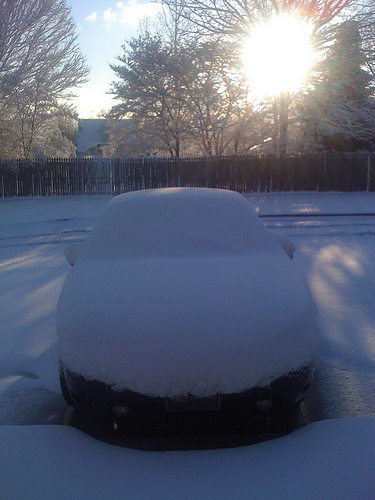
Snow Days are Here!

Here is a simple snow day game plan…

  1. Play in the snow. Do you wanna build a snowman? Here’s a great how-to video.
  2. Come inside and warm up with hot chocolate (don’t forget the marshmallows.)
  3. May your own play dough.
  4. Play board games or Legos together.
  5. Ever heard of Snow Ice Cream? Great for freshly fallen snow.
  6. Look for more fun things to do on the APIA Pinterest Boards:
  7. Bake cookies together or make some other fun recipe.
  8. Play in the snow again.
  9. Warm up inside taking turns on the Make a Snowflake Website.
  10. Make a blanket fort.

Stay warm & have fun!

Photo credit: Tony Crider (flickr)

Fun Things to Do With Children


Our APIA website is packed with ideas for au pairs to help them find fun things to do with the children. You can search for activities by age group, season of the year and indoor or outdoor activities.

http://www.aupairinamerica.com/resources/activities/index.asp

Here are  some creative winter activities!
https://www.pinterest.com/aupairinamerica/winter-fun/

With Valentine’s Day coming up, making cards, pizza hearts, Valentines cookies or handmade gifts are great ways to spend a snow day!
https://www.pinterest.com/aupairinamerica/valentine-s-day/

How to Write a Check or Money Order

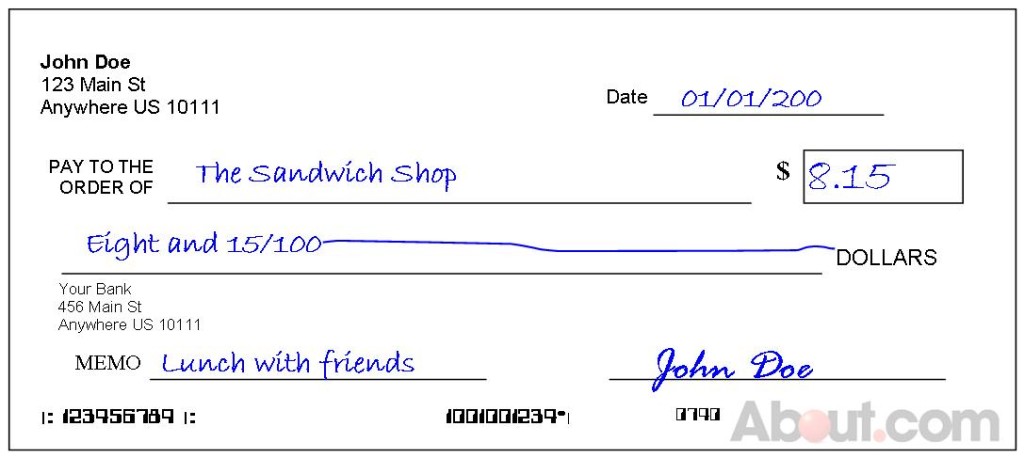
This question comes up from time to time and with the tax deadline approaching, I thought I would post a link with a great step by step tutorial.  Click on the image of a check below to go to the tutorial on About.com.

write_a_check_step5_sign_memo

Remember: Use pen and don’t leave extra blank space where someone can make changes.

If you don’t have a checking account and need to make a payment by check, you have two other options: money order or cashier’s check (bank check.) Money orders are available for purchase at your bank, the post office or the customer service desk of some retail stores (CVS, Safeway, WalMart.) You will be charged a small fee, $1.50-$5.  Money orders need to be paid for with cash (not credit cards.) You will fill out the money order similarly to a check and keep your receipt portion for your records.

If you are paying your taxes:

  • Make check or money order payable to “United States Treasury.”
  • Write this info somewhere on the check:
    • Your full name
    • Your address and phone number
    • Your Social Security Number
    • 2013 Form 1040 NR-EZ
  • Mail your tax forms (keep copies for your records) and payment to: Internal Revenue Service
    P.O. Box 1303
    Charlotte, NC 28201–1303
    U.S.A.
  • (Source: https://blogs.aupairinamerica.com/mdf/2014/03/03/how-to-write-a-check/)

Happy Channukah!

We have host families from a wide variety of backgrounds and faiths.  Some celebrate Christmas, some Chanukkah, some Kwanzaa and some celebrate more than one of those or none of the above.  That is something that makes America special, we can all be different, but still one united together.

I wanted to give a brief overview of Chanukkah and some of the customs you might observe.  Something important to note is that Chanukkah is not the Jewish equivalent of Christmas.  From a religious standpoint, it is a relatively minor holiday.  So, the amount of emphasis put on Chanukkah and how it is celebrated will vary from one family to the next.

You may see Chanukkah spelled in a variety of ways: Chanuka, Hanukkah, Hanukka and more. Part of the reason for this confusion may be due to the fact there is no exact English translation of the Hebrew word for Chanukkah.

If your host family celebrates Chanukkah and you don’t, I would encourage you to take part and experience the customs of another religion.  This can be a great opportunity for culture sharing.  The same is true, if you are a host family and your au pair celebrates a different holiday than you.

Here is a simple explanation from Judaism 101:

Chanukkah is the festival of lights, commemorating the rededication of the Temple in Jerusalem after a successful revolt against the Seleucid Greeks. As part of the rededication, the victorious Jews needed to light the Temple’s menorah (candelabrum), but they had only enough oil to last one day and it would take eight days to prepare more oil. Miraculously, the one-day supply of oil lasted for eight days. The miracle of the oil is commemorated with this eight-day candle lighting holiday.

Chanukkah begins between Thanksgiving and Christmas. About half of the time, it overlaps with Christmas, but there are many years when Chanukkah ends long before Christmas. In 2002, for example, Chanukkah began on Thanksgiving and ended in the first week of December, but that is unusual.

Almost all Jews light candles with their families for at least some nights of the holiday, so people like to be at home during this holiday. Although almost nobody takes off from work or school for this holiday, many may not want to work nights or travel during the holiday so they can light candles with the family, and accommodations should be made for this.

Here are some links for more info and children’s activities:

Safety Meeting in November

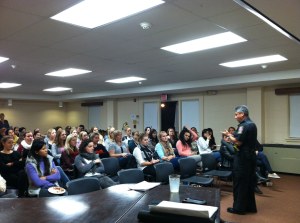
When moving to another country, a person isn’t always aware of how to stay safe, or how to keep others safe. In addition to staying safe themselves, au pairs have the additional responsibility of keeping their host children safe.  We were fortunate to be able to have a Montgomery County police officer speak to nearly 70 au pairs in this multi-cluster meeting. We discussed winter driving, car seats, road rules and driving rules in Maryland. We also discussed personal safety for the au pairs.

Montgomery County Police Officer presenting to the au pairs

Montgomery County Police Officer presenting to the au pairs

Easter and Passover

Celebrating Easter

Easter is one of the most awaited Christian festivals. It is celebrated throughout the world by the followers of Christian community. It is considered to be very auspicious as it is believed that this was the day when Christ resurrected after crucifixion. This day is of immense religious as well as social significance amongst the Christian community.

Church services and festive celebrations blend together during the Easter weekend. On Easter Sunday in New York and other cities, large Easter parades are held.  Easter in USA is also very much commercialized. Easter symbols like bunnies, Easter tree, Easter Eggs and Easter lamb are found in different forms during the Easter festivities throughout the market. The popular trend of Easter symbols such as the Easter bunny and egg tree were introduced to the American folklore by the German settlers who arrived in the Pennsylvania Dutch country during the 1700s. Gradually American people took to crafts such as egg and Easter tree decoration. Easter in US is also a time to enjoy special Easter foods such as baked ham, potatoes and vegetables. Several special recipes are made at each home. Easter parties are also organized where traditional Easter delicacies are served and people enjoy wonderful get together along with Easter games and music.

For children’s Easter games and activities go to:  http://www.thekidzpage.com/easter_games/index.html

Observing Passover

Passover is an eight day celebration observed each year by the Jewish religion. It commemorates the freedom of Jewish slaves from Egypt during the reign of Pharaoh Ramses II.   Families celebrate Passover by having a seder. With special foods, songs, and customs, the Seder is the focal point of the Passover celebration. Seder means order, and the Passover story is read in order from a book called a haggadah.

Fearing that Jews were becoming too strong, a Pharaoh decreed that all male Jewish babies were to be killed. Jocheved and Amran, a Jewish couple, wanted to save their infant son – so they put him in a basket that floated him down the river. The infant was rescued by the Pharaoh’s daughter and she raised him as her own son. She named the baby Moses, which means “take from the water.”

When Moses grew up, he empathized with the Jewish slaves and tried to get the Pharaoh to free them. The Pharaoh refused – so there were 10 plagues sent down to Egypt: Blood, Frogs, Lice, Beasts, Cattle Disease, Boils, Hail, Locusts, Darkness, and Slaying of the Firstborn. The name Passover comes from the Plague of Slaying the Firstborn. The Angel of Death passed over the homes of the Jews who had put lambs blood on their doors.

After the 10th plague, Pharaoh agreed to let the Jewish slaves go. They gathered up their belongings quickly, and didn’t have time for their bread to rise, so they had to bake it and take it the way it was. This is why the Jewish people eat matzah during Passover.   As the Jews were fleeing, Pharaoh changed his mind, and sent his army after the people to bring them back. Moses parted the Red Sea for the Jews to cross, and as soon as they were safely to the other side, the waters closed on the soldiers, drowning them all. The Jewish people were free.

For children’s activities go to:  http://www.apples4theteacher.com/holidays/passover/

=
Au Pair Travel Outside of the U.S.

If you are planning to travel outside the US during your first year, your DS 2019 will need a travel signature.  You will also need to check if you need visa to enter the country you intend to visit.  Obtaining a tourist visa is solely the responsibility of the au pair.

~Three weeks before you plan to travel, mail your original DS-2019 Form and a self-addressed stamped envelope (so your signed DS 2019 may be returned to you) to:

Au Pair in America
River Plaza
9 West Broad Street
Stamford, CT 06902
Attn.: Evelyn Blum

Have a great trip!