
Tag Archives: au pair

Making Thanksgiving Memories Together

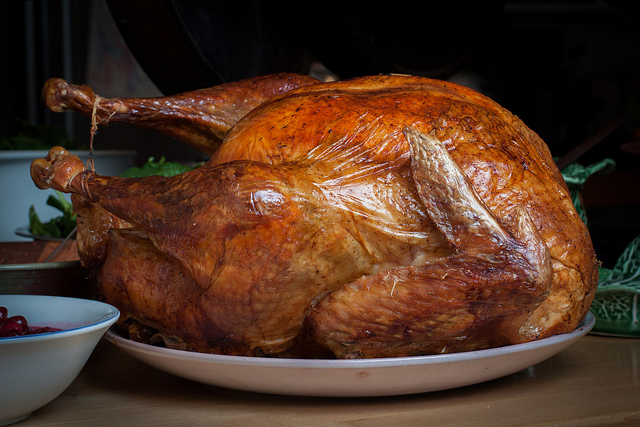
Thanksgiving is a public holiday celebrated on the fourth Thursday in November every year in the United States. It started as a harvest festival and has been celebrated nationally on and off since 1789.  The most important part of Thanksgiving for American families is to spend family time together.

Martin Cathrae

 “My favorite holiday was Thanksgiving. Firstly, it was my first holiday with the whole family in America. Secondly, the whole family came together. All aunts and uncles and their kids came to grandma’s. We played football with all of them, including grandma and grandpa. It was the first time I played it and it was so much fun for all. We had a great dinner with all the typical things you can imagine … it was deeeelicious! It was so great to be with such a big family and I really enjoyed that day. I will remember it my whole life, I hope.” – Swantje from Germany

Here are a few tips to help you have a terrific Thanksgiving experience.

Host Parents
Please plan to include your au pair in your Thanksgiving celebration, if at all possible. If you are traveling or will not be able to invite your au pair to join you for Thanksgiving, give her plenty of notice and help her make alternate plans. You don’t want to leave your au pair alone over the holiday.

Au Pairs
If you are invited to attend dinner, please let your family know within 5 days of the invitation, whether you are planning to attend, so they may make plans. If your host family is unable to include you in their Thanksgiving plans, please let me know if you have trouble making other plans, so I can assist.

Make sure to discuss time off during this holiday weekend. Many host families work the Friday after Thanksgiving so do not assume you have this day off or the entire weekend. Talk to your host family, BEFORE you make any plans.

Bonus Tip for the Kids
If you are looking for a fun recipe to make with your au pair, check out these turkey cookies. Find more fun activities and recipes on the Au Pair in America Fall Holidays pinboard.

 

Avoiding Homesickness this Holiday Season

Homesickness can be a problem during the holidays, even if it hasn’t been at any other time of the year. Au pairs often miss their friends and family, familiar places and their own traditions and customs. The holiday activities in the United States seem, and may actually be, different just at a time when an au pair would welcome something familiar. 
It is common for au pairs’ emotions to be close to the surface during the holidays. Her highs are higher, her lows are lower. The enormity of what she has done–actually living in another country (which is an amazing thing when you think about it!)–hits her and throws her into a self-protective mode.

Host parents can help her through this unfamiliar territory by talking to her about what your specific family activities will be (gifts, meals, visitors, religious services, in-home traditions, or none of these, as the case may be.) In the spirit of cultural exchange, ask her if she has any favorite holiday traditions or foods that you might be able to incorporate into your family’s celebration of the season. Let her know what you will be doing, when you will be doing it, and what she can expect. Talk to her about what has to be accomplished and get her involved and interested. Don’t expect her to just “know” what needs to be done. Give her some clear, agreed upon assignments. Make her feel a part of things. And, let her know her contribution is needed and appreciated.

Photo: Sheila Sund (Flickr)

5 Thanksgiving Tips for Au Pairs & Host Parents

Thanksgiving is celebrated on the fourth Thursday of November each year. Even though a few other countries also celebrate Thanksgiving, it’s still considered a uniquely American holiday, one that the au pairs look forward to experiencing. You can learn more about it here.

I really enjoyed Thanksgiving with my host family. It was as I imagined! So much food to try. Everyone got dressed up and shared what they were thankful for. It was so warm and special. The next day we began to prepare for Christmas. It was magical.” Selina from Germany

Below you will find some tips to help you have a terrific Thanksgiving experience.


Host Parents

1.  Please plan to include your au pair in your Thanksgiving celebration, if at all possible. Thanksgiving with an au pair offers an opportunity to consider the relevance of the history and meaning of Thanksgiving as you compare the hospitality offered by the Native Americans to the recently arrived Pilgrims and the hospitality you offer your au pair.

2.  If you are traveling or will not be able to invite your au pair to join you for Thanksgiving, give her plenty of notice and help her make alternate plans. You don’t want to leave your au pair alone over the holiday.

Au Pairs

3.  If you are invited to attend dinner, please let your family know within 5 days of the invitation, whether you are planning to attend. It is considered rude in America to accept the invitation for dinner and then change your mind later in the month. Please be thoughtful.

4.  Make sure to discuss time off during this holiday weekend. Many host families work the Friday after Thanksgiving so do not assume you have this day off or the entire weekend. Talk to your host family, BEFORE you make any plans.

5.  If your host family is unable to include you in their Thanksgiving plans, please let me know if you have trouble making other plans. You may be able to join a friend and their host family for the holiday dinner.

Bonus Tip for the Kids

If you are looking for a fun recipe to make with your au pair, check out these turkey cupcakes. Find more fun activities and recipes on the Au Pair in America Fall Holidays pinboard.

Photo: Tim Sackton (Flickr)

Winter Sports and Sports Insurance


Is it risky to do winter sports without the sports insurance?

Yes. If you have to pay your own hospital bills for a broken bone, you might be shocked at how much that would cost. I checked this website for some cost estimates.

Here are a couple examples:

  • Without medical coverage, to treat a broken arm or leg (that does not require surgery) it could cost up to $2,500.
  • Without medical coverage, to treat a broken arm or leg (requiring surgery) it could cost $16,000 or more.

I wanted to make sure everyone understands how the medical coverage works for sports related injuries. There is a list of “high-risk sports/activities” that are not covered with the basic or upgrade medical insurance plans. Those activities are only covered with the Sports Insurance Package (also known as Option A.)

The Sports Insurance Package was available pre-departure and may also be purchased at any time during your year. It takes effect within 48 hours of your enrollment and it is good for 12 months. The cost will be the same ($85) whether you have a month left or your whole year ahead of you. I recommend you pay for it early on, if you didn’t already purchase it. You never know when an opportunity might present itself and you don’t want to miss out on an adventure. You also don’t want to take a risk on getting injured and being responsible for the bill on your own.

Below is a partial list of sports that are only covered with the sports insurance package:
Football, Rugby, Scuba diving, Ski-doo,  Wakeboarding, Skydiving, Parachuting, Rock climbing, Zip line, Skate boarding, Rollerblading, Roller skating,  Ice Skating, SkiingSnowboardingSnowmobiles & Snowshoeing.  View the full list on page 3 of the insurance brochure HERE(2015 arrival au pairs) & HERE for (2016 arrival au pairs)
Note: Injuries sustained while partaking in these sports are covered with purchase of the Sports Insurance ONLY.

How to register for the Sports Insurance
Contact Lisa or Christine to get a copy of the Sports Insurance Enrollment Form. It takes a few days for your coverage to begin. If you think you will be doing any of these sports, you should get it now.

Snow Days are Here!

Here is a simple snow day game plan…

  1. Play in the snow. Do you wanna build a snowman? Here’s a great how-to video.
  2. Come inside and warm up with hot chocolate (don’t forget the marshmallows.)
  3. May your own play dough.
  4. Play board games or Legos together.
  5. Ever heard of Snow Ice Cream? Great for freshly fallen snow.
  6. Look for more fun things to do on the APIA Pinterest Boards:
  7. Bake cookies together or make some other fun recipe.
  8. Play in the snow again.
  9. Warm up inside taking turns on the Make a Snowflake Website.
  10. Make a blanket fort.

Stay warm & have fun!

Photo credit: Tony Crider (flickr)

The Au Pair Education Requirement

Au pairs are required to complete 6 credits or 8 CEUs or 72 or more hours.

EduCare Companions are required to complete 12 credits or 16 CEUs or 144 or more hours.

You may take credit or non-credit classes from an accredited college. Look on the right side of this page under “Education Options” for accredited schools in our cluster area. If you want to take a class at a school not listed here on my blog, please check with me first to make sure it is accredited. Otherwise, it would not count toward your education requirement.

Your host family will pay an education allowance to assist you in completing your education requirement. Au Pairs education allowance – $500, EduCare education allowance – $1000

There are ways to get your credits for just your education allowance, but it will not give you a lot of choices. Normally au pairs will contribute some of their own money ($200+) towards their education.

The APIA Advantage UCLA Course is the only State Dept. approved class with an online component. No other online classes are accepted.

Note: Au pairs should only take one weekend course for their education requirement. Using only weekend courses to meet your education requirement could result in the denial of your extension application (should you decide to extend.)

Presentation at Whole Foods Market (Friendship Heights, MD) about healthy eating

 Sally Lukash, Healthy Eating Specialist, at Whole Foods Market in Friendship Heights met with 27 au pairs. She took them around the store,  talked about healthy eating, prepared samples of healthy snacks for children.  Au pairs received recipes, tried fruit smoothies and had a great time. Hopefully, we will have another meeting there again.

DSC05023

DSC05029


DSC05015

DSC05013

Facebook, Internet, Twitter

fb twitter youtubeJust a reminder about how important it is to respect your host family’s privacy and not share personal details and information.  This applies to all kinds of situations, including: personal conversations, email and social websites.

For your own safety, it is a good idea to be careful what personal information you share about yourself as well. You should not be giving out information like your telephone number and address to people you don’t know.

Once you post something on the internet (even if you later delete it), it can show up elsewhere.  Unless you have specific permission from the host family, you should not post pictures of them, their children or their home on the internet.

If you have a blog or website where you post in your native language, remember there is translation software.  So, even if you say it in your native language, be sure it is not something you will regret.

An Extra Set of Hands Can Help Moms Get Back in Shape

Submitted by Au Pair in America
Is there anything that new moms could use more than extra hours in the day? Unfortunately, we haven’t found a way to get more hours in the day.  What we have found is that having an extra set of hands can help you fit more in your day. In years gone by, it was common for new moms to have the support of their own mothers or other family members in the early weeks after giving birth. That is not always possible nowadays.  Many new moms have found that having an au pair can provide that much needed extra set of hands.

Au pairs are carefully screened, live-in child care providers from countries all over the world. These young woman (aged 18-26) come to the U.S. to live with an American host family to provide child care and learn about American language and culture.

During the first three months, an au pair can assist you in caring for the baby as well as independently caring for older siblings. Once your baby reaches three months, an au pair is authorized to care for the baby on her own. Au pairs can also help with childcare related housekeeping tasks such as the children’s laundry, preparing meals and tidying their bedrooms and play areas.

Having someone to help with these tasks can allow you to carve out a little “me time.” It’s important for new moms to set aside time to take care of themselves. In addition to getting adequate rest, exercise is an important thing for new moms to make time for. The health benefits of getting back into shape post-baby are only part of the equation. Exercise is also a great stress reliever. Taking care of yourself is essential for you to be able to take the best care of your baby.

Getting and staying in shape after the birth of your baby will help you be a more physically active and engaged parent. Making fitness a priority for your family, will set a positive example for your child and set them on the path to an active, healthy lifestyle.

Summer Safety Tips

SPRING AND SUMMER SAFETY TIPS

from the American Academy of Pediatrics Web site (http://www.aap.org).

FUN IN THE SUN

Babies under 6 months:

  • Avoiding sun exposure and dressing infants in lightweight long pants, long-sleeved shirts, and brimmed hats that shade the neck are still the top recommendations from the AAP to prevent sunburn. However when adequate clothing and shade are not available, parents can apply a minimal amount of suncreen with at least 15 SPF to small areas, such as the infant’s face and the back of the hands.

For Young Children:

  • Apply sunscreen at least 30 minutes before going outside, and use sunscreen even on cloudy days. The SPF should be at least 15.

For Older Children:

  • The first, and best, line of defense against the sun is covering up. Wear a hat with a three-inch brim or a bill facing forward, sunglasses (look for sunglasses that block 99-100% of ultraviolet rays), and cotton clothing with a tight weave.
  • Stay in the shade whenever possible, and limit sun exposure during the peak intensity hours – between 10 a.m. and 4 p.m.
  • Use a sunscreen with an SPF (sun protection factor) of 15 or greater. Be sure to apply enough sunscreen – about one ounce per sitting for a young adult.
  • Reapply sunscreen every two hours, or after swimming or sweating.
  • Use extra caution near water, snow, and sand as they reflect UV rays and may result in sunburn more quickly.

 HEAT STRESS IN EXERCISING CHILDREN

  • The intensity of activities that last 15 minutes or more should be reduced whenever high heat and humidity reach critical levels.
  • At the beginning of a strenuous exercise program or after traveling to a warmer climate, the intensity and duration of exercise should be limited initially and then gradually increased during a period of 10 to 14 days to accomplish acclimatization to the heat.
  • Before prolonged physical activity, the child should be well-hydrated. During the activity, periodic drinking should be enforced, for example, each 20 minutes, 5 oz of cold tap water or a flavored sports drink for a child weighing 90 lbs, and 9 oz for an adolescent weighing 130 lbs, even if the child does not feel thirsty.
  • Clothing should be light-colored and lightweight and limited to one layer of absorbent material to facilitate evaporation of sweat. Sweat-saturated garments should be replaced by dry garments.
  • Practices and games played in the heat should be shortened and more frequent water/hydration breaks should be instituted.

 POOL SAFETY

  • Make sure pool gates open out from the pool, and self-close and self-latch at a height children can’t reach.
  • Never leave children alone in or near the pool, even for a moment.
  • Keep rescue equipment (a shepherd’s hook – a long pole with a hook on the end – and life preserver) and a portable telephone near the pool.
  • Avoid inflatable swimming aids such as “floaties.” They are not a substitute for approved life vests and can give children a false sense of security.
  • Children may not be developmentally ready for swim lessons until after their fourth birthday. Swim programs for children under 4 should not be seen as a way to decrease the risk of drowning.
  • Whenever infants or toddlers are in or around water, an adult should be within arm’s length, providing “touch supervision.”

BUG SAFETY

  • Don’t use scented soaps, perfumes or hair sprays on your child.
  • Avoid areas where insects nest or congregate, such as stagnant pools of water, uncovered foods and gardens where flowers are in bloom.
  • Avoid dressing your child in clothing with bright colors or flowery prints.
  • To remove a visible stinger from skin, gently scrape it off horizontally with a credit card or your fingernail.
  • Combination sunscreen/insect repellent products should be avoided because sunscreen needs to be reapplied every two hours, but the insect repellent should not be reapplied.
  • Insect repellents containing DEET are most effective against ticks and mosquitoes, and can prevent Lyme Disease.
  • The concentration of DEET in products may range from less than 10 percent to over 30 percent. The benefits of DEET reach a peak at a concentration of 30 percent, the maximum concentration currently recommended for infants and children. DEET should not be used on children under 2 months of age.
  • The concentration of DEET varies significantly from product to product, so read the label of any product you purchase.

BICYCLE SAFETY

  • Your child needs to wear a helmet on every bike ride, no matter how short or how close to home. Many accidents happen in driveways, on sidewalks, and on bike paths, not just on streets.  Children learn best by observing you. Whenever you ride, put on your helmet.
  • A helmet protects your child from serious injury, and should always be worn. And remember, wearing a helmet at all times helps children develop the helmet habit.
  • A helmet should be worn so that it is level on the head, not tipped forwards or backwards.  The strap should be securely fastened, and you should not be able to move the helmet in any direction.  If needed, the helmet’s sizing pads can help improve the fit.

SKATEBOARD AND SCOOTER SAFETY

  • Children should never ride skateboards or scooters in or near traffic.
  • All skateboarders and scooter-riders should wear a helmet and other protective gear.