Category Archives: Child Care

5 Thanksgiving Tips for Au Pairs & Host Parents

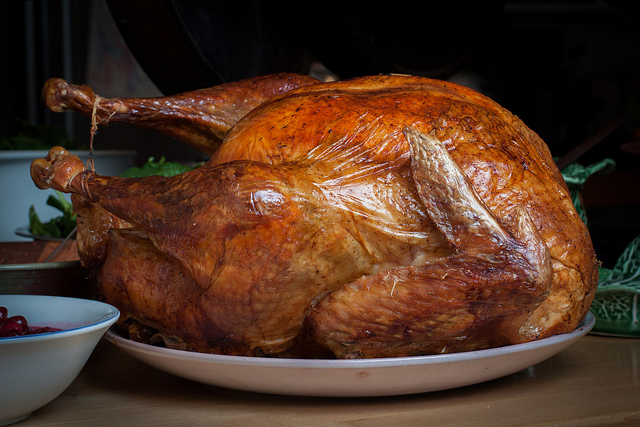
Thanksgiving is celebrated on the fourth Thursday of November each year. Even though a few other countries also celebrate Thanksgiving, it’s still considered a uniquely American holiday, one that the au pairs look forward to experiencing. You can learn more about it here.

I really enjoyed Thanksgiving with my host family. It was as I imagined! So much food to try. Everyone got dressed up and shared what they were thankful for. It was so warm and special. The next day we began to prepare for Christmas. It was magical.” Selina from Germany

Below you will find some tips to help you have a terrific Thanksgiving experience.


Host Parents

1.  Please plan to include your au pair in your Thanksgiving celebration, if at all possible. Thanksgiving with an au pair offers an opportunity to consider the relevance of the history and meaning of Thanksgiving as you compare the hospitality offered by the Native Americans to the recently arrived Pilgrims and the hospitality you offer your au pair.

2.  If you are traveling or will not be able to invite your au pair to join you for Thanksgiving, give her plenty of notice and help her make alternate plans. You don’t want to leave your au pair alone over the holiday.

Au Pairs

3.  If you are invited to attend dinner, please let your family know within 5 days of the invitation, whether you are planning to attend. It is considered rude in America to accept the invitation for dinner and then change your mind later in the month. Please be thoughtful.

4.  Make sure to discuss time off during this holiday weekend. Many host families work the Friday after Thanksgiving so do not assume you have this day off or the entire weekend. Talk to your host family, BEFORE you make any plans.

5.  If your host family is unable to include you in their Thanksgiving plans, please let me know if you have trouble making other plans. You may be able to join a friend and their host family for the holiday dinner.

Bonus Tip for the Kids

If you are looking for a fun recipe to make with your au pair, check out these turkey cupcakes. Find more fun activities and recipes on the Au Pair in America Fall Holidays pinboard.

Photo: Tim Sackton (Flickr)

Hints for Success – Overcoming Homesickness

Almost everyone experiences homesickness and culture shock to some degree, when they come to live in a completely new environment. So much is different and it takes time to adjust.

It is normal to miss your own family, at home. Try to remember that they support you and want you to make the most of this experience. They will enjoy learning more about the U.S., through your eyes, as you share your adventures with them.

Top 5 Tips for Dealing with Homesickness

1. Make Friends – Don’t wait for other au pairs to reach out to you, reach out to them. There are other lots of new au pairs who are feeling the same way you are right now. Set a goal to reach out to a few of them each day. Some will respond and some will not. Don’t let that discourage you. No one will ever be mad at you for sending them a message to say hello or ask if they want to do something together. Make friends from various countries and you will also get a chance to practice your English skills together.

2. Stay in touch with your home country, but not too much. Skyping or talking on the phone every day with your family and/or friends back home normally makes homesickness worse. Try emailing instead and reduce the Skype and phone calls to once a week, until you feel stronger. It’s much harder seeing the faces and hearing the voices of those you miss.

3. Get out of the house (or your room specifically) – Go to cluster meetings, have coffee or movies with other au pairs, join a gym, go to the library, go for a walk, visit the mall, get a manicure, visit a museum. If someone invites you out, say “yes.” Also, don’t be afraid to do the inviting. If your host family invites you to do things with them, say “yes.” This will help you get to know each other and contribute to your overall happiness.

4. Realize that it definitely gets better – All au pairs experience homesickness and the vast majority of them get through it, stay and have a successful year (some even extend for a second year!) So, it must get better, right? Once you get past the initial homesickness, most au pairs report how quickly the year goes by.

5. Make Plans – Create your own Au Pair Bucket List (places you want to go, new foods to try, new things to experience during your year in the U.S.) and start doing them now. Post on our cluster Facebook group to find others who may want to join you on your adventures.

Photo by:  Shimelle Laine (Flickr)

SaveSaveSaveSaveSaveSaveSaveSave

Preventing Dehydration in Hot Weather

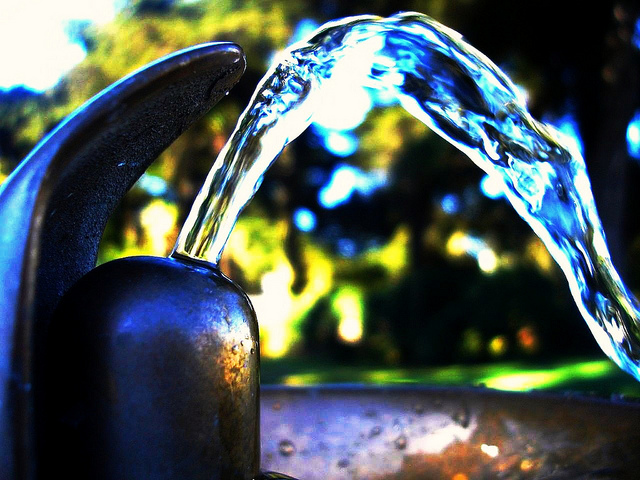
Dehydration means that the body lacks the necessary amount of fluid. Infants and small children are more likely to become dehydrated than older children or adults, because they can lose relatively more fluid quickly.

Here are some steps to take to make sure children remain hydrated in the summer months:

  • Encourage your child to drink plenty of water. On hot days, children should drink significantly more water than usual, as they are losing more due to the heat.
  • Do not wait until your child is thirsty to give him water. By the time they feel thirsty, they are already becoming dehydrated.
  • If your child is resistant to drinking enough water, have other liquids on hand for your child to drink throughout the day.
  • Be alert to changes in behavior. A child may act confused or more irritable when they are becoming dehydrated/overheated. Get them into cooler temperatures and drinking more fluids.
  • Dress your child in lightweight clothing in the summer months, particularly if she’ll be playing outdoors in warm weather. You may also consider clothes that are well ventilated as they do not trap heat close to the body.
  • When there are heat and/or air quality advisories because the weather is dangerously hot, you should avoid taking the children outdoors. Check with your host parents for further guidance on this topic.

Remember to follow these tips for yourself too, so you stay well hydrated.

Photo: Darwin Bell (Flickr)

Holiday & Vacation Reminders

“Rest and be thankful.” – William Wordsworth

Holidays and vacations are a great opportunity to rest, recharge and explore the U.S.

Memorial Day Weekend is the unofficial start of summer travel season. Here are some reminders about program rules regarding holidays and vacations.

Holidays

  • Host families are not required to give au pairs any specific holidays.
  • Each host family will make different arrangements on holidays, some au pairs will be off and others will be required to work.
  • Au pairs should not make plans for holidays without checking with your host family first.

Vacations

  • Au pairs earns 2 weeks of paid vacation during the course of her year.
  • Vacation time should be mutually agreed upon.
  • All vacation should be preplanned (at least 4 weeks in advance.)
  • All au pair’s friends and/or family visits/vacations should be pre-approved prior to purchasing tickets.
  • If an au pair travels with her host family, it should be discussed in advance whether this is the au pair’s vacation or if she is working.
  • If an au pair travels with the host family to work, the host family is required to pay for her transportation, lodging and meals.

Important: If an au pair is traveling outside of the U.S., she must have her DS2019 signed (travel validation) PRIOR to her departure from the US. More information about this may be found here on the Au Pair in America website.

Photo: torbakhopper (Flickr)

Helping Young Children Learn Language

Being an au pair is an important role in a child’s life. When you are caring for a young child up to 45 hours per week, there are lots of opportunities to help them learn language. Many host parents are eager for their children to be exposed to foreign language. If this is true of your host parents, you can try the suggestions below, in both English and your native language.

Below are a few tips to start with, for more ideas, check out Ready at Five.

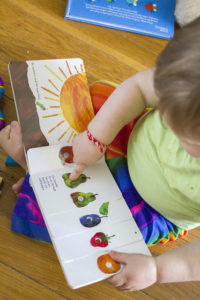
  • Read – Read to them daily, point out pictures and ask questions. Even if they can’t answer the questions, this is still modeling conversation.
  • Talk – Point out objects around them, names of their body parts, explain what you are doing and places you are going. Long before babies can speak, they benefit greatly from being spoken to.
  • Sing – You can sing childhood classics or make up your own silly songs. If you are looking for song ideas, HERE is a great website with lists of songs, lyrics and links to YouTube videos* of the songs.  Children’s music is also available at the public library and even on iTunes.
  • Words – As children move from toddlers to preschoolers begin to point out written language.
  • Writing – Toddlers and preschoolers can begin to learn pre-writing skills by drawing with crayons or doing finger paints.

*The American Academy of Pediatrics recommends no screen time for babies under 18 months of age. For children 18 months to 5 years they recommend no more than 1 hour of high quality content. You can play the songs on youtube for the audio and not necessarily show the screen to the child.

Photo: Quinn Dombrowski (Flickr)

Handling Expenses

Host parents often ask for suggestions on how best to handle common expenses that occur as au pairs are caring for the children.

Miscellaneous Expenses

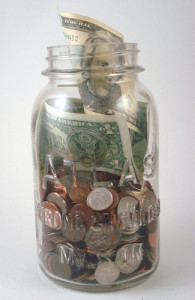
There are different ways to handle the little day to day expenses that come up.  Things like when an au pair takes the kids out for ice cream or picks up a gallon of milk.  Some families keep a cookie jar fund, a little cash that they set aside weekly or monthly for these types of expenses. Others give their au pair a prepaid debit card for this purpose. Below are some suggestions for avoiding problems with expenses.

Host Families

  • It’s important to be clear about how long this money should last and what types of expenses are approved.
  • Let the au pair know whether or not you expect receipts.

Au Pairs

  • Only spend the money on approved expenses.
  • If it is something you are not sure about, ask first.
  • Put your receipts in the cookie jar in place of the money to avoid any confusion.

Gas and Fare Cards 

Host families are responsible for the au pair’s transportation costs: to and from classes, cluster meetings and when driving the kids.

It is a good idea to figure out how much gas an au pair will use for these trips and either put gas in the car or give a gas allowance.   If your au pair is riding to classes or cluster meetings with another au pair, you should offer to share the cost of gas.

Au pairs are responsible for their own transportation at all other times.  You should replace the amount of gas used for personal use.

Photo: Andrea Travillian

Looking for Activities for Valentines Day?

Valentine’s Day is a time of love, friendship, giving, and caring. Americans use Valentine’s Day as an opportunity to tell friends and family how much they care. Children usually exchange cards at school.    Here’s some fun idea’s to celebrate!    Valentines Day Activities

valentine-Clever-Cupcakes


Read these tips and Be SAFE this summer!

SUMMER SAFETY TIPS
The following summer safety tips are from the American Academy of Pediatrics Web site  (http://www.aap.org ).  Keep your family safe this summer by following these tips.


Babies under 6 months:

— The two main recommendations from the AAP to prevent sunburn are to avoid sun exposure, and dress infants in lightweight long pants, long-sleeved shirts, and brimmed hats that shade the neck to prevent sunburn. However when adequate clothing and shade are not available, parents can apply a minimal amount of sunscreen with at least 15 SPF (sun protection factor) to small areas, such as the infant’s face and the back of the hands. If an infant gets sunburn, apply cold compresses to the affected area.

For Young Children:

— Apply sunscreen at least 30 minutes before going outside, and use sunscreen even on cloudy days. The SPF should be at least 15 and protect against UVA and UVB rays.

For Older Children:

— The first, and best, line of defense against the sun is covering up. Wear a hat with a three-inch brim or a bill facing forward, sunglasses (look for sunglasses that block 99-100% of ultraviolet rays), and cotton clothing with a tight weave.
— Stay in the shade whenever possible, and limit sun exposure during the peak intensity hours – between 10 a.m. and 4 p.m.
— Use a sunscreen with an SPF of 15 or greater. Be sure to apply enough sunscreen – about one ounce per sitting for a young adult.
— Reapply sunscreen every two hours, or after swimming or sweating.
— Use extra caution near water, snow, and sand as they reflect UV rays and may result in sunburn more quickly.

HEAT STRESS IN EXERCISING CHILDREN
-When high heat and humidity reach critical levels, reduce the intensity of activities .
— Before prolonged physical activity, the child should be well-hydrated. During the activity, periodic drinking should be enforced, for example, each 20 minutes, 5 oz of cold tap water or a flavored sports drink for a child weighing 90 lbs, and 9 oz for an adolescent weighing 130 lbs, even if the child does not feel thirsty.
— Clothing should be light-colored and lightweight and limited to one layer of absorbent material to facilitate evaporation of sweat. Sweat-saturated shirts should be replaced by dry clothing.
— Practices and games played in the heat should be shortened and more frequent water/hydration breaks should be instituted.

POOL SAFETY

Source: http://www.aap.org/family/tipppool.htm

— Install a fence at least four-feet high around all four sides of the pool.  The fence should not have openings or protrusions that a young child could use to get over, under, or through.
— Make sure pool gates open out from the pool, and self-close and self-latch at a height children can’t reach.
— Never leave children alone in or near the pool, even for a moment.
— Keep rescue equipment (a shepherd’s hook – a long pole with a hook on the end – and life preserver) and a portable telephone near the pool. Choose a shepherd’s hook and other rescue equipment made of fiberglass or other materials that do not conduct electricity.
— Avoid inflatable swimming aids such as “floaties.” They are not a substitute for approved life vests and can give children a false sense of security.
— Children may not be developmentally ready for swim lessons until after their fourth birthday. Swim programs for children under 4 should not be seen as a way to decrease the risk of drowning.
— Whenever infants or toddlers are in or around water, an adult should be within arm’s length, providing “touch supervision.”

BUG SAFETY
— Don’t use scented soaps, perfumes or hair sprays on your child.
— Avoid areas where insects nest or congregate, such as stagnant pools of water, uncovered foods and gardens where flowers are in bloom.
— Avoid dressing your child in clothing with bright colors or flowery prints.
— To remove a visible stinger from skin, gently scrape it off horizontally with a credit card or your fingernail.
— Combination sunscreen/insect repellent products should be avoided because sunscreen needs to be reapplied every two hours, but the insect repellent should not be reapplied.
— Insect repellents containing DEET are most effective against ticks, which can transmit Lyme Disease, and mosquitoes, which can transmit West Nile Virus and other viruses.
— The current CDC and AAP recommendation for children over 2 months of age is to use 30 percent DEET. DEET should not be used on children under 2 months of age.
— The concentration of DEET in products may range from less than 10 percent to over 30 percent. Ten percent DEET only protects for about 30 minutes – inadequate for most outings.
— The concentration of DEET varies significantly from product to product, so read the label of any product you purchase. Children should wash off repellents when back indoors.

For more information on DEET: http://www.aapnews.org/cgi/content/full/e200399v1

PLAYGROUND SAFETY
Source: http://www.aap.org/advocacy/archives/maytra.htm
Source: http://www.aap.org/family/playgrd.htm

— The playground should have safety-tested mats or loose-fill materials (shredded rubber, sand, wood chips, or bark) maintained to a depth of at least 9 inches. The protective surface should be installed at least 6 feet (more for swings and slides) in all directions from the equipment.
— Equipment should be carefully maintained. Open “s” hooks or protruding bolt ends can be hazardous.
— Swing seats should be made of soft materials such as rubber, plastic or canvas.
— Make sure children cannot reach any moving parts that might pinch or trap any body part.
— Never attach—or allow children to attach—ropes, jump ropes, leashes, or similar items to play equipment; children can strangle on these.
— Make sure metal slides are cool to prevent children’s legs from getting burned.
— Parents should never purchase a home trampoline or allow children to use home trampolines.
— Parents should supervise children on play equipment to make sure they are safe.

BICYCLE SAFETY
Source: http://www.aap.org/family/bicycle.htm
Source: http://www.aap.org/family/tbikmyth.htm

— Do not push your child to ride a 2-wheeled bike until he or she is ready, at about age 5 or 6. Consider the child’s coordination and desire to learn to ride. Stick with coaster (foot) brakes until your child is older and more experienced for hand brakes.
— Take your child with you when you shop for the bike, so that he or she can try it out. The value of a properly fitting bike far outweighs the value of surprising your child with a new one.  For more information on finding the proper fit, go to http://www.aap.org/family/bicycle.htm
— Buy a bike that is the right size, not one your child has to “grow into.” Oversized bikes are especially dangerous.
— Your child needs to wear a helmet on every bike ride, no matter how short or how close to home. Many accidents happen in driveways, on sidewalks, and on bike paths, not just on streets.  Children learn best by observing you. Whenever you ride, put on your helmet.
— When purchasing a helmet, look for a label or sticker that says the helmet meets the CPSC safety standard.
— A helmet protects your child from serious injury, and should always be worn. And remember, wearing a helmet at all times helps children develop the helmet habit.
— A helmet should be worn so that it is level on the head, not tipped forwards or backwards.  The strap should be securely fastened, and you should not be able to move the helmet in any direction.  If needed, the helmet’s sizing pads can help improve the fit.
October News

Upcoming Holidays:  Monday, October 11th  is Columbus Day and Sunday, October 31st is Halloween.

Childcare Focus:  October is Young Adolescent Month. so, if you are caring for a child over 11, make an effort  to be extra patient.  Remember to set a good example, children are looking up to you!

Your Health:  It is a good time to get flu shots.  Save some money by avoiding the Emergency Room because for au pairs arriving after 2009 there is an additional deductible of $250 for visits to the Emergency Room.

September is Better Breakfast Month!

With the start of school, it is easy to rush out the door and forget to eat a HEALTHY and nutritious breakfast. Remember that children (and you) need a balanced diet including milk, meat, vegetables, fruit and grain. Breakfast can include 3 of these groups. Here are a few sample menus:

*Fruit, yogurt and toast
*Cereal, milk and juice
*Eggs, bacon and juice
*Pancakes, milk and fruit

Hopefully, this tip can help make you a great au pair!