Tag Archives: au pair in america

2020 AU PAIR GUIDE TO OBTAINING A CONNECTICUT DRIVER’S LICENSE

Currently, it can take weeks to obtain a license in CT so please give yourself time to complete the process.  Read this whole document– it’s complicated 🙁

Here is the DMV website detailing the process and the documents required.

Note: Au Pairs with German, French or Canadian licenses can transfer their licenses (treated as “out of state” transfer) at the Norwalk Department of Motor Vehicles. You only have to fill out an application and take the vision test. You do not have to do the 8-hour safety course. You will need the same documents listed below under #4.

 First obtain a Social Security Number. To apply for a restricted working social security card, you must go in person to the Social Security office at: 2 Landmark Square, Suite 105, Stamford CT 06901 (866-770-1881) with these documents:

–           Valid passport with J-1 visa stamp inside

–           DS-2019 form

–           I-94 card print out from the Customs and Border Control website

–           Proof of identification that is at least one year old (e.g. passport, driver’s license, birth certificate)                                                       

Required preparation for Connecticut driver’s license:

1)  Schedule an appointment online to take the written “rules of the road” knowledge test at the Norwalk Dept of Motor Vehicles (540 Main Ave. Norwalk CT).

2)   Study for your knowledge test. You can download the manual to study (available in English or Spanish) as well as an app with practice questions for your iPhone/iPad or Android (also in English and Spanish).

3)  Email your counselor two weeks before your written test and ask her to mail you a participation letter to prove your residency and that you are a current au pair.

4)  Take the written knowledge test and vision tests (bring your glasses if you wear them) at the Norwalk DMV:

You must bring with you documents from this list for “non-US born” applicants:

  • Passport with J-1 Visa inside
  •  Current DS-2019 form
  •   Hard copy printout of I-94 arrival form (print out here)
  • International Driver’s license
  • Home country license
  •  Social Security card
  • Letter from your Host Family stating that you are currently living with them as their au pair
  • Participation letter from your counselor postmarked within 90 days and sent to your host family’s address including the envelope addressed to you to prove that you are living at your host family’s address. Please contact your counselor at least one week before your written test date so that she can mail you the letter.
  • Recent bank statement or credit card bill addressed to you at your host family’s home to further prove residency (postmarked within 90 days old), in the envelope
  • $40.00 application fee

5)   Take the required 8-hour Safe Driver course at a driving school and get a CS-1 completion certificate required for taking the road test.  All driving schools offer this. There are two in New Canaan:

–           Lewis School of Driving—28 Cross Street, New Canaan, (203) 972-0242 – cost $150 but mention APIA for a discount– click here for info– the class is currently online

–           Fresh Green Light – 111 Cherry Street, New Canaan,  (203) 861-1188 – cost $150 – click here for course info – currently online

6)   When you have passed your written and vision test and scheduled your 8 hour safe driving course, you can schedule your driving test online here.  You should schedule your driving test at the Bridgeport DMV – please DO NOT schedule it at the Danbury location as we have had issues with foreign licenses there. Remember, your test must take place AFTER you have completed your Safe Driving course.

7)    Take your road test– review documents and the road test here

Make sure you have with you:

  • A copy of your road test appointment confirmation page (which is emailed to you when you make your appointment online)
  • Your CS-1 Driver Education certificate proving completion of Safe Driving Class
  •  An R-229 form application for a Non-Commercial Driver’s license.  Download the form ahead of time here and fill it in to bring with you.
  • Vehicle registration, car insurance card AND a letter from your host family stating that they are giving you permission to drive their car for the road test
  • Out of country license and international driver’s license along with ALL other paperwork listed above in required documents for knowledge test
  • License fee of $84

8)    Once you pass your road test, your license will be valid for 5 ½ – 7 years depending on your date of birth.

You will receive your driver’s license through the mail to your home address.  You can track the delivery of your license here. Good luck!

July 4th

Independence Day, or July 4th, commemorates the day the American colonies declared independence from Great Britain in 1776. It is a day of celebration, relaxation and hopefully safe times with family and friends.  Often, this day is focused on BBQs and fireworks. To learn more about the historical context, read on.



Abraham Lincoln: https://www.nps.gov/liho/learn/historyculture/declaration.htm

Now, my countrymen, if you have been taught doctrines conflicting with the great landmarks of the Declaration of Independence; if you have listened to suggestions which would take away from its grandeur, and mutilate the fair symmetry of its proportions; if you have been inclined to believe that all men are not created equal in those inalienable rights enumerated by our chart of liberty, let me entreat you to come back. Return to the fountain whose waters spring close by the blood of the Revolution. Think nothing of me – take no thought for the political fate of any man whomsoever – but come back to the truths that are in the Declaration of Independence. You may do anything with me you choose, if you will but heed these sacred principles. You may not only defeat me for the Senate, but you may take me and put me to death. While pretending no indifference to earthly honors, I do claim to be actuated in this contest by something higher than an anxiety for office. I charge you to drop every paltry and insignificant thought for any man’s success. It is nothing; I am nothing; Judge Douglas is nothing. But do not destroy that immortal emblem of Humanity – the Declaration of American Independence.

Frederick Douglass –Frederick Douglass was a fiery orator and his speeches were often published in various abolitionist (anti-slavery) newspapers. His well-known speech presented in Rochester, New York, on July 5, 1852, is often studied in literature classes today. Douglass moved to Rochester in 1847, when he became the publisher of The North Star, an abolitionist weekly. There were approximately 500 attendees who heard him speak, each paying twelve and a half cents.

 The links below include transcripts of the speech, a live version read by James Earl Jones and a virtual free class on it being offered over the next few days.

https://www.youtube.com/watch?v=O0baE_CtU08

https://teachingamericanhistory.org/library/document/what-to-the-slave-is-the-fourth-of-july/

https://stbarts.org/event/1829422-2020-07-01-frederick-douglass-fourth-of-july-oration/

President Harry S. Truman , July 4 1951:

The principles of the Declaration of Independence are the right principles. They are sound enough to guide us through this crisis as they have guided us through other crises of the past. Freedom can overcome tyranny in the 20th century as surely as it overcame the tyrants of the 18th century. There is a text inscribed on the Liberty Bell, the bell that rang out a hundred and seventy-five years ago to announce the signing of the Declaration of Independence. When the Pennsylvania Provincial Assembly ordered that bell for the statehouse in Philadelphia, they directed that it should bear certain words, “well-shaped in large letters.” You remember what those words were: “Proclaim Liberty throughout all the land unto all the inhabitants thereof.” We should write these words again today. We should write them in everything we do in this country—”well-shaped in large letters”—by every deed and act, so that the whole world can read them.

Emma Lazarus, “The New Colossus” (1883) – Written to raise funds for the base of the Statue of Liberty, this famous poem is engraved on it for all to see. The lines “Give me your tired, your poor, Your huddled masses yearning to breathe free,” speak volumes to the nation of immigrants. Emma Lazarus was an American author of poetry, prose, and translations, as well as an activist for Jewish causes. She wrote the sonnet “The New Colossus” in 1883. Its lines appear inscribed on a bronze plaque, installed in 1903, on the pedestal of the Statue of Liberty. https://poets.org/poem/new-colossus?gclid=CjwKCAjwi_b3BRAGEiwAemPNU5p8KNMlkalKwZA7Dl3rY8BZMLinfQVoU6N1Tv_6_mV62I7P7IAaVhoCIbYQAvD_BwE

Claude McKay, “America” (1921) – A love sonnet written by a leader of the Harlem Rennaissance, “America” portrays the poet’s adoration for the country while, at the same time, confronting the troubles he has seen in his community. https://shenandoahliterary.org/blog/2014/03/america-by-claude-mckay-1921/

With freedom comes responsibility.                                                                                                        Eleanor Roosevelt

Valentines Day Fun With Your Kids

February 4, 2020 – 9:00 am

Valentine’s Day (February 14) is a time of love, friendship, giving, and caring. Americans use Valentine’s Day as an opportunity to tell friends and family how much they care.  Children usually exchange cards at school.

Are you looking for Valentine’s Day activity, recipe and craft ideas? Look no further…  Au Pair in America has a Pinterest pinboard devoted to Valentine’s Day.

APIA Valentine’s Day Pinboard

Photo: Clever Cupcakes (Flickr)

STAYING HEALTHY THIS WINTER

Sore throat and runny nose are usually the first signs of a cold, followed by coughing and sneezing. Most people recover in about 7-10 days. You can help reduce your risk of getting a cold: wash your hands often, avoid close contact with sick people, and don’t touch your face with unwashed hands.


Common colds are the main reason that children miss school and adults miss work. Each year in the United States, there are millions of cases of the common cold. Adults have an average of 2-3 colds per year, and children have even more.

Most people get colds in the winter and spring, but it is possible to get a cold any time of the year. Symptoms usually include:

  • sore throat
  • runny nose
  • coughing
  • sneezing
  • headaches
  • body aches

Most people recover within about 7-10 days. However, people with weakened immune systems, asthma, or respiratory conditions may develop serious illness, such as bronchitis or pneumonia.

Boy washing hands
Help reduce your risk of getting a cold by washing hands often with soap and water.

How to Protect Yourself

Viruses that cause colds can spread from infected people to others through the air and close personal contact. You can also get infected through contact with stool (poop) or respiratory secretions from an infected person. This can happen when you shake hands with someone who has a cold, or touch a surface, like a doorknob, that has respiratory viruses on it, then touch your eyes, mouth, or nose.

You can help reduce your risk of getting a cold:

  • Wash your hands often with soap and water. Wash them for 20 seconds, and help young children do the same. If soap and water are not available, use an alcohol-based hand sanitizer. Viruses that cause colds can live on your hands, and regular handwashing can help protect you from getting sick.
  • Avoid touching your eyes, nose, and mouth with unwashed hands. Viruses that cause colds can enter your body this way and make you sick.
  • Stay away from people who are sick. Sick people can spread viruses that cause the common cold through close contact with others.

Girl sneezing into shirt sleeve
Practice good cough and sneeze etiquette: always cough and sneeze into a tissue or your upper shirt sleeve, completely covering your mouth and nose.

How to Protect Others

If you have a cold, you should follow these tips to help prevent spreading it to other people:

  • Stay at home while you are sick and keep children out of school or daycare while they are sick.
  • Avoid close contact with others, such as hugging, kissing, or shaking hands.
  • Move away from people before coughing or sneezing.
  • Cough and sneeze into a tissue then throw it away, or cough and sneeze into your upper shirt sleeve, completely covering your mouth and nose.
  • Wash your hands after coughing, sneezing, or blowing your nose.
  • Disinfect frequently touched surfaces and objects, such as toys and doorknobs.

There is no vaccine to protect you against the common cold.

How to Feel Better

There is no cure for a cold. To feel better, you should get lots of rest and drink plenty of fluids. Over-the-counter medicines may help ease symptoms but will not make your cold go away any faster. Always read the label and use medications as directed. Talk to your doctor before giving your child nonprescription cold medicines, since some medicines contain ingredients that are not recommended for children. Learn more about symptom relief of upper respiratory infections, including colds.

Antibiotics will not help you recover from a cold caused by a respiratory virus. They do not work against viruses, and they may make it harder for your body to fight future bacterial infections if you take them unnecessarily. Learn more about when antibiotics work.

When to See a Doctor

You should call your doctor if you or your child has one or more of these conditions:

  • symptoms that last more than 10 days
  • symptoms that are severe or unusual
  • if your child is younger than 3 months of age and has a fever or is lethargic

You should also call your doctor right away if you are at high risk for serious flu complications and get flu symptoms such as fever, chills, and muscle or body aches. People at high risk for flu complications include young children (younger than 5 years old), adults 65 years and older, pregnant women, and people with certain medical conditions such as asthma, diabetes, and heart disease.

Your doctor can determine if you or your child has a cold or the flu and can recommend treatment to help with symptoms.

Causes of the Common Cold

Many different respiratory viruses can cause the common cold, but rhinoviruses are the most common. Rhinoviruses can also trigger asthma attacks and have been linked to sinus and ear infections. Other viruses that can cause colds include respiratory syncytial virushuman parainfluenza virusesadenovirushuman coronaviruses, and human metapneumovirus.

Know the Difference between Common Cold and Flu

The flu, which is caused by influenza viruses, also spreads and causes illness around the same time as the common cold. Because these two illnesses have similar symptoms, it can be difficult (or even impossible) to tell the difference between them based on symptoms alone. In general, flu symptoms are worse than the common cold and can include fever or feeling feverish/chills, cough, sore throat, runny or stuffy nose, muscle or body aches, headaches and fatigue (tiredness). Flu can also have very serious complications. CDC recommends a yearly flu vaccination as the first and best way to prevent the flu. If you get the flu, antiviral drugs may be a treatment option.

DRIVING IN THE SNOW

If the snow &/or ice is heavy or threatening to become heavy, don’t go out. It is not worth the risk. Cancel, change plans, make due. If you must go out, keep the trip as short as possible, and follow these guidelines.

When there is snow &/or ice on the street:

1. If your car has been outside, warm up the car and clean the snow & ice off all windows, windshields, and hood using a brush & scraper (make sure your headlights and brake lights are snow free). Do not warm up a car in a closed garage.
2. Go more slowly than usual, and leave more time than you normally would to get where you’re going.
3. Keep a safe distance between you and the vehicle(s) ahead of you. Safe distance in snow is double the normal distance.
4. Turn your headlights on if it is snowing (and any time you use your windshield wipers). In heavy snow, fog lights might also be helpful (but not all cars have them).
5. Don’t make sudden or jerky movements with steering, and don’t accelerate or brake forcefully. This can cause you to slide and lose control.
6. If you start to slide or skid, take your foot off the gas pedal and keep steering & looking where you want to go. When you are headed the right way again and feel some traction, accelerate slowly (or brake slowly). If your wheels start to spin, take your foot off the gas pedal until you feel the tires grab again.
7. When you break, push the break gently. If you have anti-lock brakes, you will hear a thumping sound which is normal (it is the way the car prevents the brakes from locking up and making the situation worse). If you have regular brakes, pump them slowly, keeping your heel on the floor and the ball of your foot on the brake pedal (this helps you to be gentler because you are using only your foot, not your whole leg).
8. If you need to get out of a parking space with a lot of snow, you might need to “rock” the car, going forward a little, then back a little, over and over. Keep the wheels fairly straight, with only slight movements left or right. It is really difficult to get over snow when the wheels are turned hard to the left or right. If that doesn’t work, you may need to either shovel the snow out of the way or put down sand, kitty litter or gravel to get traction (some families keep a bag of this in the trunk).
9. Keep your gas tank at least ¼ full so that the gas line doesn’t freeze (if extra moisture gets in the line), and keep your windshield wiper fluid 1/2 full or more. You don’t want to run out of wiper fluid in the middle of the road with trucks spewing dirty slush onto your windshield.
10. Never use the cruise control in snow, ice or rain. It can cause the car to hydroplane and you could lose control.

MINIMIZING MORNING MADNESS

It’s important to have effective morning routines so children get off to school without stress. Older children can help plan their routines.

Here are some specific ideas for minimizing morning madness on school days:

  • Prepare the night before. Make lunch, pack backpacks, and set out clothes.
  • Set up a launching pad—a place near the door for children’s backpacks, coats, shoes, hats and gloves so no time is wasted looking for these items.
  • Wake up at least half an hour before the kids. Shower, get dressed, have your coffee/breakfast, and be ready!
  • Have a reliable wake up system for the kids. An alarm clock or clock radio is good.
  • Stagger wake up times for the kids. Pre-teen and teenagers usually need more time to shower and groom.
  • Younger kids should bathe the night before to reduce bathroom congestion.
  • Have kids choose what they are wearing the night before. Limit choices and make sure everything is neat and clean.
  • Don’t rush the children! Make sure there is enough time to wash, dress, eat breakfast, comb hair and brush teeth. Start earlier if you need to.
  • Avoid turning on the TV. Kids can waste a lot of time watching TV or playing. These activities should be permitted only if they are completely ready for school.
  • Don’t skip breakfast! Hungry kids can’t concentrate in school.
  • Remind kids to use the bathroom just before leaving for school. Lots of kids don’t like to use the school bathroom.
  • Wish the kids a great day. Give them each a hug!

Au Pairs Celebrate International Exchange Day

Au Pair in America celebrated International Exchange Day in Waveny Park with food, children’s games, face painting, and a community service project which collected over 100 pairs of shoes for donation to Person-To-Person in Darien! International Exchange Day, which is on August 5 each year, is a nationwide celebration of the benefit of international exchange. Participants come together to share cultural diversity and customs, to give back to their communities, and to have some fun. IED is also an opportunity to raise awareness of international exchange programs and spread the word about the power and breadth of cultural exchange. Thank you to all of the host families that donated shoes! Your generosity is appreciated 🙂

Fun in the Park

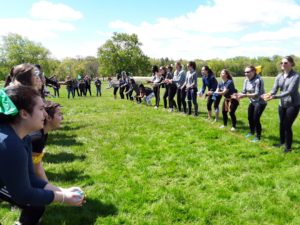
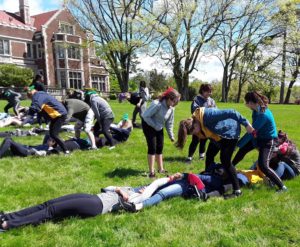
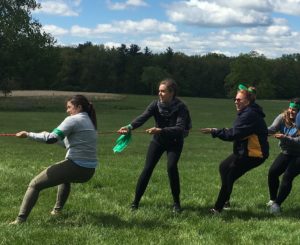
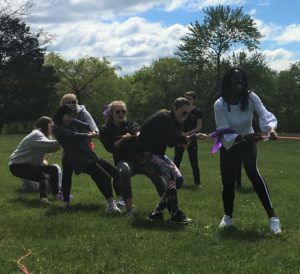
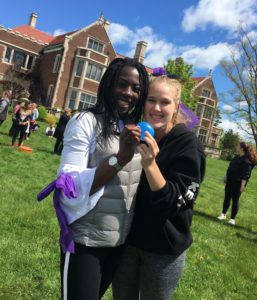
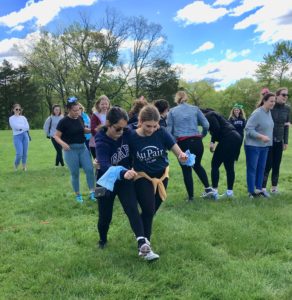
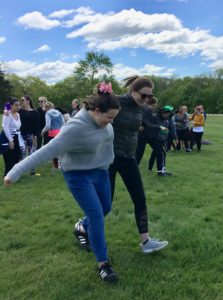
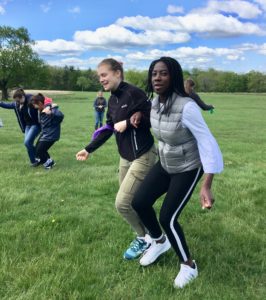
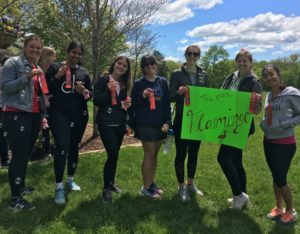
More than 75 au pairs from lower Fairfield County gathered in Waveny Park for outdoor games as part of Au Pair in America’s annual Color Wars competition. Girls from all over the world competed on different teams (designated by color) in tug-o-war, balloon toss, three-legged races, skin the snake and more. They learned team work amid the laughter, and new friends were made 😀

Au Pairs Volunteer!

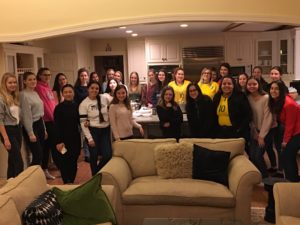
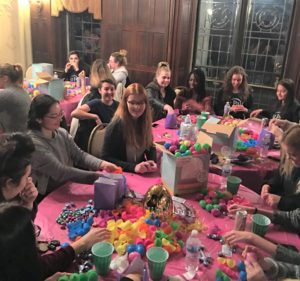
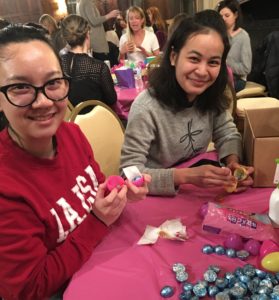
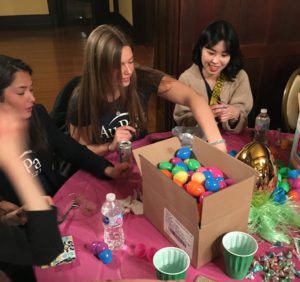
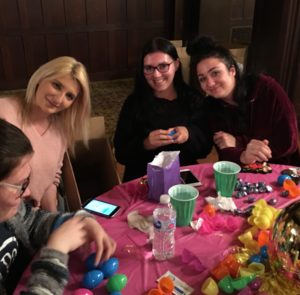
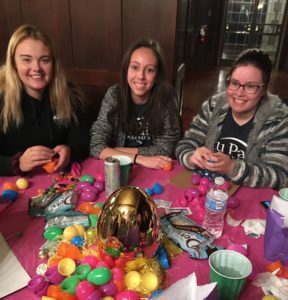
More than two dozen au pairs with Au Pair in America helped the Young Women’s League of New Canaan fill 10,000 plastic eggs with candy for the town Easter Egg Hunt! The au pairs, from around the world, enjoy experiencing American traditions during their time in the US. They are quite eager to volunteer in the community, meet new people, and have fun!