
Yearly Archives: 2026

Big Kids Need Interaction Too

Just because a child is old enough to occupy themselves, doesn’t mean that they should be expected to do so the majority of the time. Host families have a certain expectation of activity and involvement for their children. Get the kids engaged and active. You can be more fun than the TV or a video game.


Problem:
But, my kids don’t want to do anything but watch TV or play video games.

Solution:
Instead of saying, “Would you like to (fill in the blank with any activity)? The answer will often be, “No.”

Try this, “Now we are going to (fill in the blank with any activity.) or “Would you rather do _____ or ______?” Make sure both the choices are good options.
Your chances of co-operation are greatly increased. Even kids who are reluctant to try new things will usually get in the spirit of things and have fun if you pick a good activity.

Problem:
I don’t know what to do with school-age kids.

Solution:
Look for ideas online. Google “activities school-age kids” or “activities tweens”. You can also take part in an au pair webinar on this topic. Below is a list of some ideas to get you started.

-Cooking
-Making things (check craft stores like Michael’s for kits and models that are age-appropriate)
-Going to fun places (pottery painting, jewelry making, farms, museums, mini-golf, go-karts)*
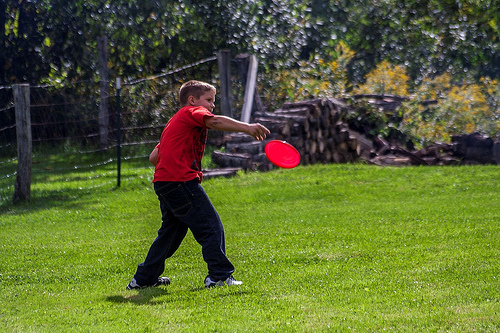
-Sports (soccer, tennis, swimming, bicycling, roller skating, ice skating)*
-Let them teach you to do something they enjoy. Kids this age love being the expert.
-Get outdoors and visit local parks. You can even make a project of reviewing all the local parks (what kind of equipment they have, is there shade, water fountain?) They can write this up and keep it so they remember which ones they want to go to again and which ones to skip in the future.
-Let them help you search and plan some activities.
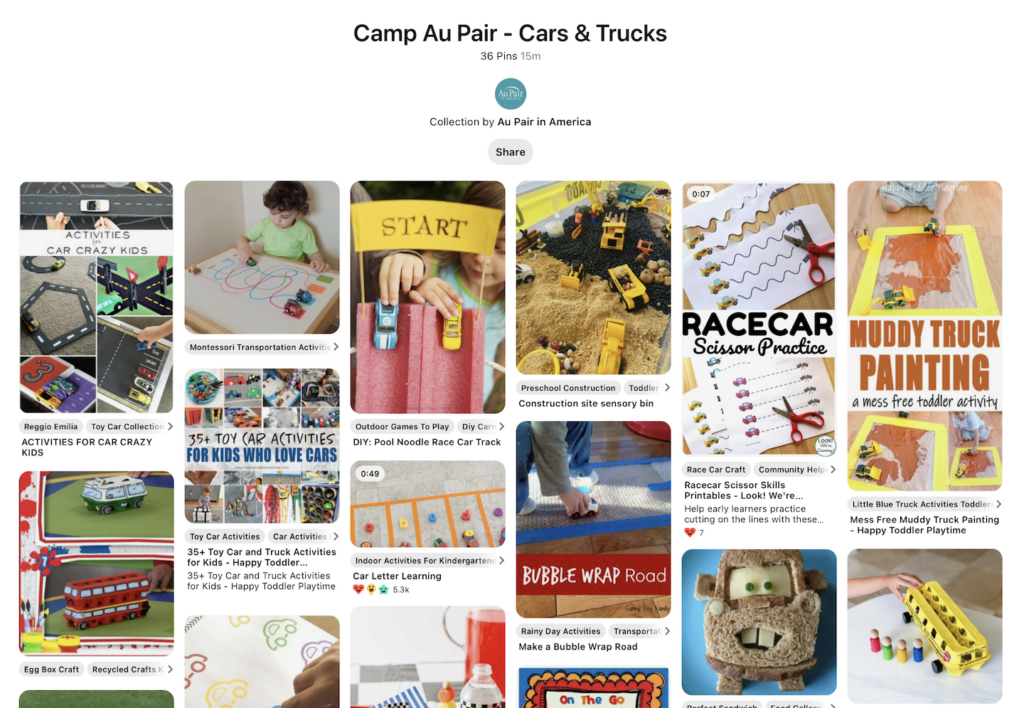
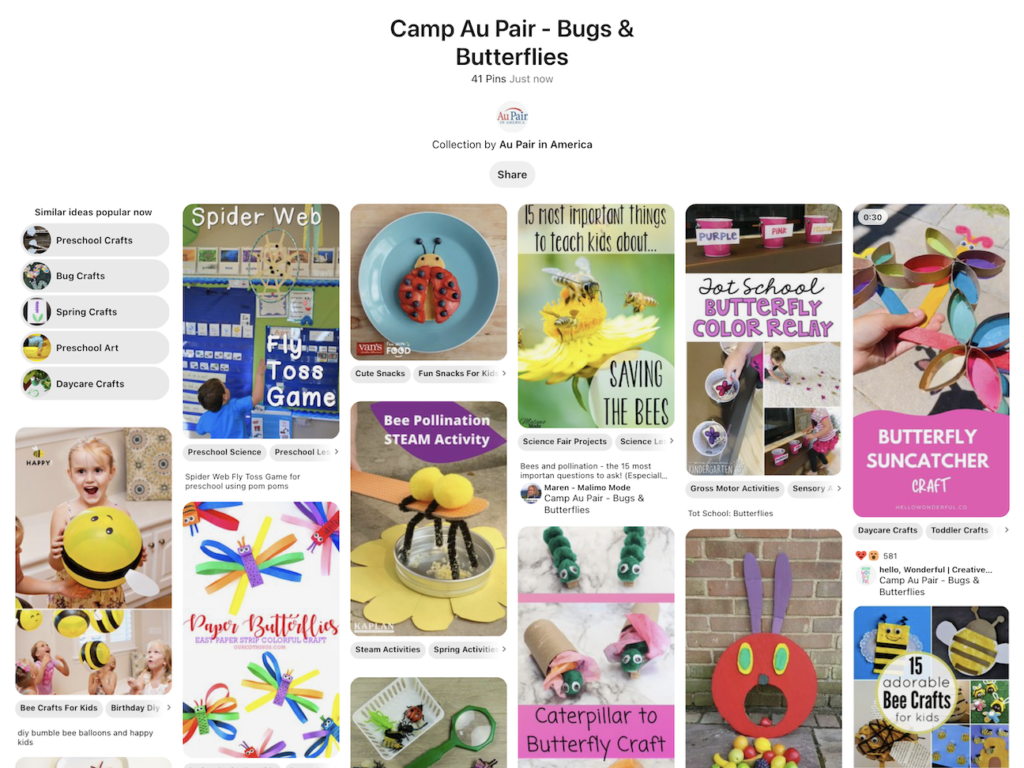
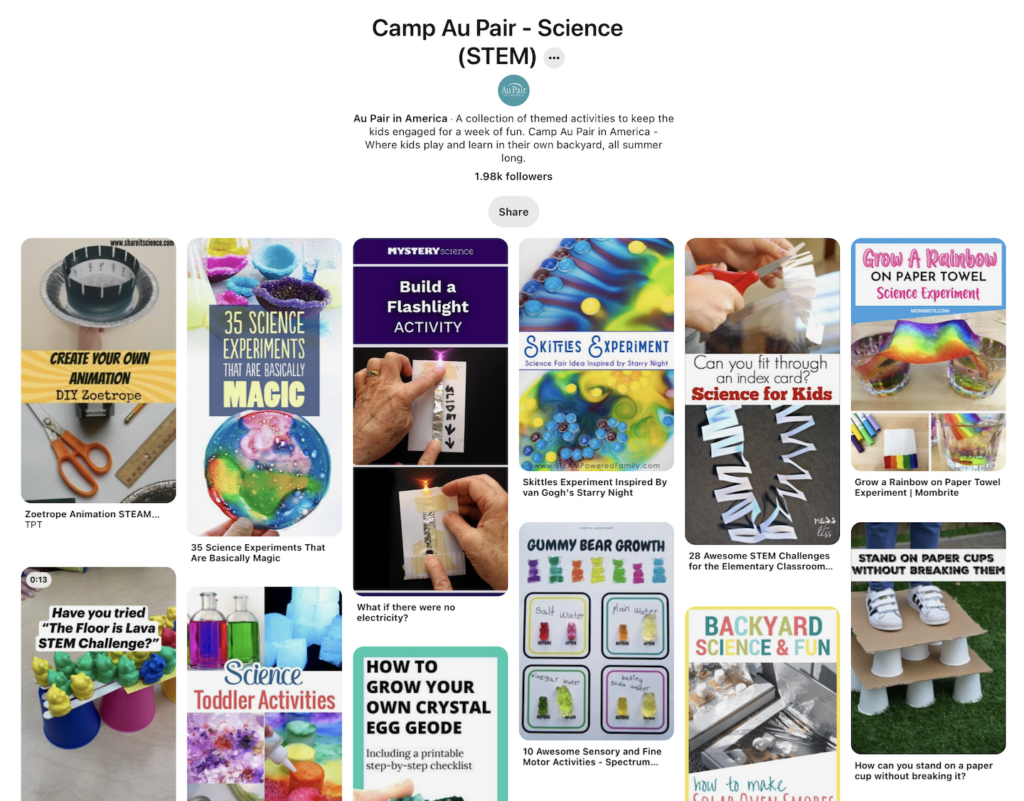
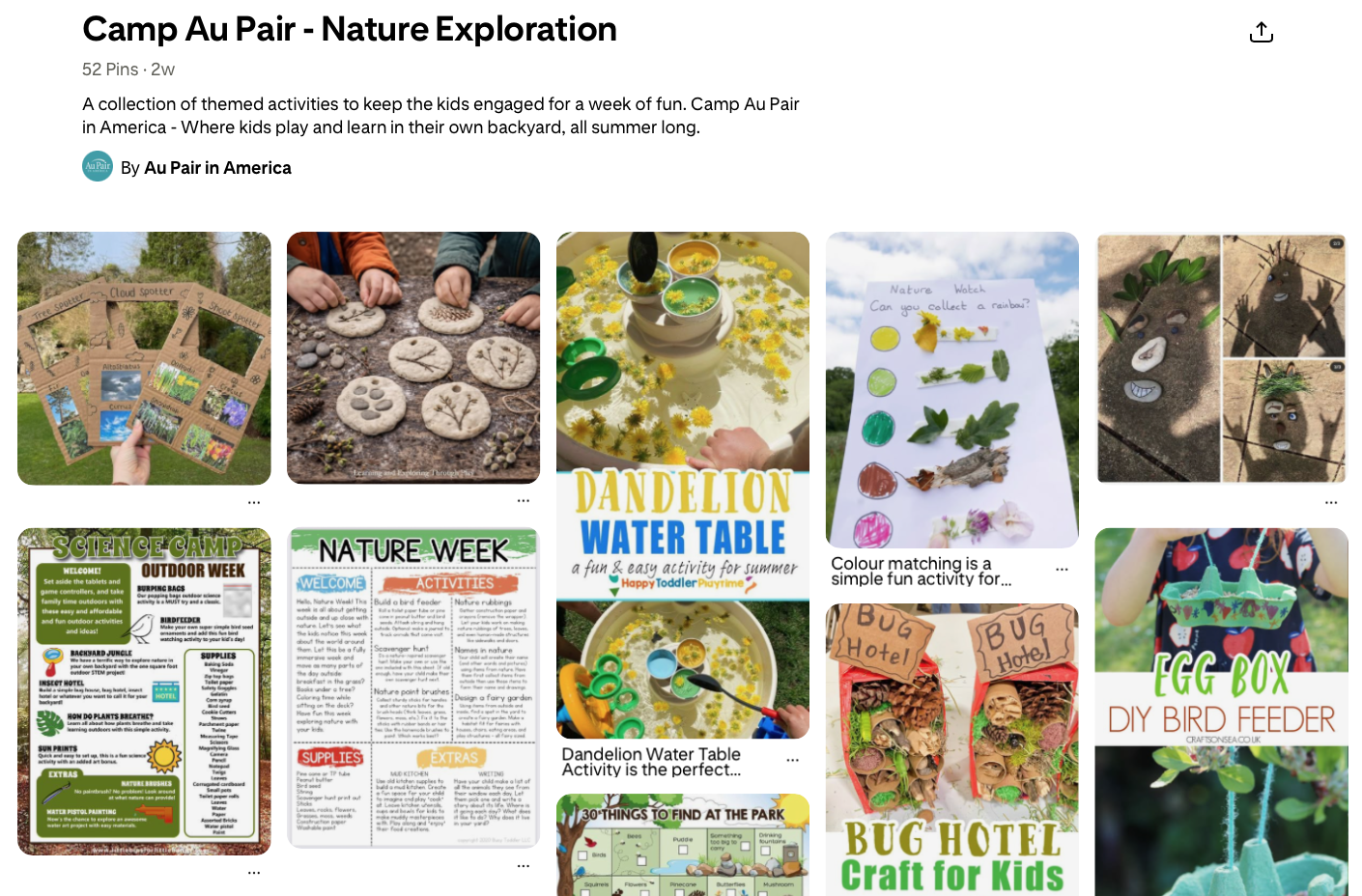
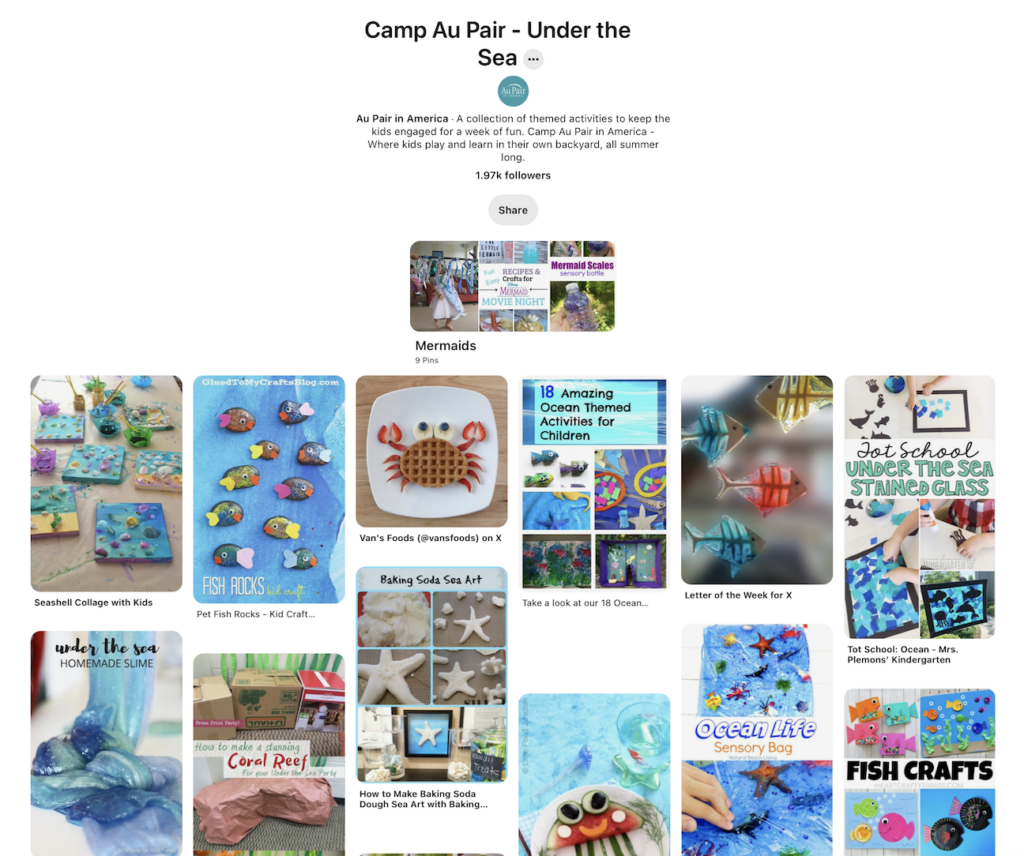
-Check on the APIA Pinterest page and here on our cluster blog for ideas.
-If you have a GPS, try taking them geocaching. Here is a website with all the details.
-Use technology to get them off the couch and sneak in some exercise. The phone app Pokémon Go includes activities that are unlocked by taking steps. There are Pokéstops and gyms at many places they might enjoy going for walks like parks, nature trails, walk/bike paths, and downtown areas.
-As part of Au Pair in America’s continuing education webinar series for au pairs , there is a session with advice on working with teens. Be on the lookout for the next time that topic is offered.

Protecting Privacy & Personal Information Online

We live in a time of constant sharing through social media. We often share pictures, plans of somewhere we are going, or rants about problems, without thinking much about who will see it and what could be the consequences.

Before clicking “post”, stop to think:

Am I violating someone’s privacy?
Am I sharing personal information that could put me in danger?
Would I want my current or a future employer to see this?
This will help protect your privacy and safety as well as that of your host family. It is important to respect your host family’s privacy and not share personal details and information. This applies to all kinds of situations, including personal conversations, email, and social websites.

For your own safety, it is a good idea to be careful what personal information you share about yourself as well. You should not give out information like your telephone number and address to people you don’t know. Safer to meet a new friend in a public place, than to give them your address before you know them.

Once you post something on the Internet (even if you later delete it), it can show up elsewhere. Unless you have specific permission from your host family, you should never post pictures of them, their children, or their home on the Internet.

If you have a blog or website where you post in your native language, remember there is translation software. So, even if you say it in your native language, be sure it is not something that might be misinterpreted in translation or something you will regret saying.

Reminder: Use of your phone during work hours should be very limited, just checking for messages from your host parents. It is important that you are not distracted by your phone. Giving your full attention to work keeps your host children safe and helps you form a better relationship with them.

Snow Day Boredom Busters: New Ideas for Classic Toys

It is good to offer kids a balance of independent play time and play where you are actively engaging with them. You can make toys they may be bored with, feel new and exciting, by suggesting different ways to play with them. Try some of the ideas below as a starting point.


Play Food/Dishes

Teach your host children how to say the names of some of the food and dishes in your language.
Using English and/or your language play games where you are ordering food like in a restaurant. Take turns with who will be the waiter and who is the customer.
Come up with silly food combinations. For example: Who wants pickles on their slice of cake?
Play a guessing game where the children have to figure out what food you are talking about. For example: I grow under the ground in the dirt. People eat me fried, mashed and baked. What am I? (a potato)
Play a game with setting the table using your language to ask for the different items (plate, spoon, etc.)
Ask the children to divide the foods up into the different food groups (vegetables, meat, dairy, etc.)


Lego Blocks and Other Building Toys

Divide up all of the blocks between the people playing, by taking turns for each person to select block by block.
Suggest specific things to build (robots, houses, mountains etc.) and build together.
Challenge everyone to use all of their blocks.
Sort the blocks by color or shape and make patterns with them (red, blue, red, blue or square, triangle, rectangle.) You can create a pattern and ask the child to fill in what comes next to continue the pattern.
Make the tallest block tower you can and let them knock it down (over and over again, if like most kids, they like destroying things.)


Mr. Potato Head

Teach your host children the names of the different parts in your language and play a game asking them to put on the body parts by name.
Play Hide and Seek with Mr. Potato Head. Have the children cover their eyes and count, while you hide Mr. Potato Head, then they go looking for him. Switch things up by letting them hide Mr. Potato Head and then you are the one to locate him.
Play the same game above, but using Simon Says. Simon Says is a game where the leader gives commands by saying “Simon says” first. For example, “Simon says, put on the nose.” The players are only to follow the commands when the leader says “Simon says.” If the leader doesn’t say “Simon says” first and just says, “put on the nose,” and the player follows the command, they are out of the game. Repeat the game multiple times, so all kids get a turn to be the leader at least once.

9 Winter Driving Tips to Stay Safe in the Ice & Snow


The best advice for driving in bad winter weather is not to drive at all, if you can avoid it. Don’t go out until the snow plows and sanding trucks have had a chance to do their work, and allow yourself extra time to reach your destination.

If you must drive in snowy conditions, make sure your car is prepared, and that you know how to handle road conditions. It’s a good idea to always keep at least a half tank of gas in your car, especially in winter months when you could get stranded. It’s helpful to practice winter driving techniques in a snowy, open parking lot to familiarize yourself with how your car handles. Consult your owner’s manual for tips specific to your vehicle.

Driving Safely on Icy Roads

1.Decrease your speed and leave yourself plenty of room to stop. You should allow at least three times more space than usual between you and the car in front of you.
2.Brake gently to avoid skidding. If your wheels start to lock up, ease off the brake.
3.Turn on your lights to increase your visibility to other motorists.
4.Keep your lights and windshield clean.
5.Use low gears to keep traction, especially on hills.
6.Don’t use cruise control or overdrive on icy roads.
7.Be especially careful on bridges, overpasses, and infrequently traveled roads, which will freeze first. Even at temperatures above freezing, if the conditions are wet, you might encounter ice in shady areas or on exposed roadways like bridges.
8.Don’t pass snow plows and sanding trucks. The drivers have limited visibility, and you’ll likely find the road in front of them worse than the road behind.
9.Don’t assume your vehicle can handle all conditions. Even four-wheel and front-wheel drive vehicles can encounter trouble on winter roads.