Yearly Archives: 2014

Motor Development in Children

Motor development is the process of acquiring movement skills and abilities. Motor development is divided into group types: gross motor, which involves the large muscles, and fine motor, which involves the small muscles. Gross motor skills develop before fine motor skills. Fine motor skills are less developed in younger children than in older children. Both types of motor skills are important in the child’s development.

Motor development occurs in a predictable, orderly sequence. This pattern of development is universal in children all over the world. For example, most children sit up around seven months, walk around 12 months, hop by three years, and skip at five years of age. It is important to remember that each child will develop at his or her own rate, and that different children will have different abilities in both gross and fine motor development. Children should not be pushed to perform motor skills before they are ready.

During the first two years of life, motor development is rapid. Motor development proceeds from the head down to the toes. The muscles closest to the head are the first muscles an infant learns to control. Next shoulder, arm, and stomach muscles develop, followed by the muscles in the legs and feet. Most motor skills are developed by six or seven years of age. Giving infants, toddlers and children opportunities to move their bodies and develop their muscles is critical to physical development as well as social, emotional and intellectual development.

Handedness is the area of motor development that involves hand preference. This preference may occur

in children as young as two years of age and is usually established by age five. Hand preference is deter- mined by the brain. As the brain develops, one side of the brain becomes dominant. If a child’s hand preference is left, then the right side of the brain is dominant. If the left side of the brain is dominant, then the child will be right handed. Children should not be encouraged to change their hand preference.

Depending on the age and development of the child, gross and fine motor activities should be encouraged. Activities that include running, jumping, skipping, kicking, walking, climbing, throwing and catching become the foundation for children to learn more complex motor skills as they get older. Some suggestions for large motor development include playing Follow the Leader, jumping over things, dancing to music and playing with balls.

Fine motor development occurs when children have control over the finger muscles. Children should be offered manipulative activities that are age-appropriate to develop this skill. Activities for young children include putting together puzzles, zipping, stringing beads, using scissors, playing with Duplos or Legos, scribbling, drawing, and painting.

Every day age-appropriate activities to promote motor development should be encouraged for infants, toddlers, preschoolers, and school-age children. These activities should include indoor and outdoor play. Interact and play along with the children while you are supervising them. Make sure children have adequate time and space as well as safe equipment and materials that are age-appropriate. Each time you provide these activities and interact with the child, you are contributing to their development.


Mardi Gras Celebration

06_rex

Among many things au pairs love about New Orleans is the opportunity to experience the weeks-long outdoor party that is Mardi Gras season.

They enjoy everything about this “crazy time” and “the coolest free show on Earth”: daily parades that roll own the streets, extravagant floats, high-flying Mardi Gras throws, tons of beads around their necks, buckets of doubloons, the bands, the stands, the costumes. Also, the roar of the crowds to which they contribute with all their enthusiasm and vocal power:

Laissez Les Bons Temps Rouler!!

See the list of Mardi Gras parades at http://www.nola.com/mardigras/parades/

CHILDREN SAFETY

If au pair goes to the parade with her host family, it is important to discuss beforehand the following issues:

1. Will au pair be working or just hanging out with the family?
2. If she’ll be working — what exactly will be her duties.
3. If she’ll be looking after a particular child — which one and what she should do when the child gets tired, bored, overexcited, hungry etc.
4. Rules regarding bathroom use.
5. Rules about hand holding and crossing/approaching the street.
6. Rules about not coming close to the floats to receive hand-out toys or special beads. If the child is offered a special item, parents should bring the child to the float to receive it, not au pair.
7. Rules about staying close together and not straying with/without child in pursuit of beads/doubloons.

AU PAIR SAFETY

The rules are common-sense but worth remembering:

1. Do not bring valuables to the parade. That includes money, credit cards, expensive electronics and jewelry, etc.
2. Carry your ID, credit card & some cash in a bag that you can keep track of at all times. Keep it zipped and close to your body.
3. Be mindful and protective of your expensive camera if you decide to bring it with you.
4. If you stop for a drink or snack don’t leave your purse or camera on the chair or table even if your friends promise to watch them. Always have them with you.
4. Don’t park on median (neutral ground) unless you want to get a ticket. Meter maids go out in force to give out plenty of parking tickets during Mardi Gras.
5. Be friendly but cautious when making friends. Do not go into people’s houses if you don’t know the owners and never wander away into secluded area (night or day).
6. Remember that in Louisiana legal age for drinking alcohol is 21 years old.
7. Trust your gut. If you have a funny feeling about a person or a situation walk away and join your friends or seek a busy place with other visitors.

Valentine's Day

NOLValentinehearts
Through the ages, many cultures have paused to celebrate love and romance in mid-February, but Americans use Valentine’s Day as an opportunity to tell almost everyone how much they care. Children usually exchange cards at school. Even more importantly, the observance of this day encourages a spirit of goodwill and respect for fellow human beings. Valentine’s Day truly is a time of love, friendship, giving, and caring.

See the links for Valentine’s Day ideas and games:

http://blackdog4kids.com/holiday/valentine/index.html

http://www.heart4home.net/2014/01/valentine-ideas/

http://www.ivillage.com/valentines-day-crafts-kids-0/6-b-142009#142011


A History Lesson at Laura Plantation

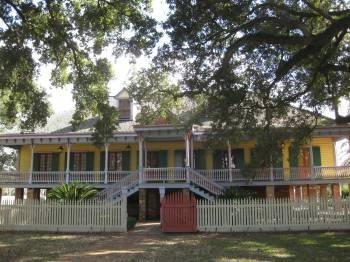
Laura Plantation in Vacherie, La is one of the many Creole plantations sitting alongside the Mississippi River outside of New Orleans.

The main building has a colorful façade reflecting Caribbean influences and compared to other plantation houses is less grand and nearly contemporary in look.  Located behind the main compound are old slave quarters displaying old time farm implements and a few pictures.

The fascinating story told at Laura focuses in equal measure on the plantation owners and slaves, giving visitors a fairly rounded picture of what life was really like on a Creole plantation in the nineteenth century.

NOLLauraPlantation

NOLLaurabananas

NOLLauracabin

NOLLauracabingirlsNOLLaurafarm

NOLLauraIndianNOLLauraporch

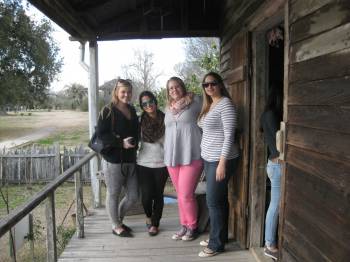
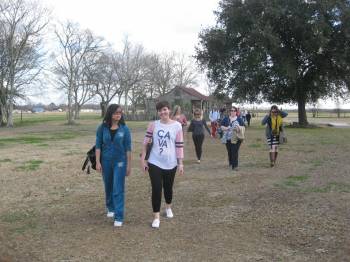
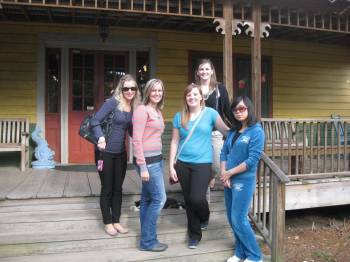
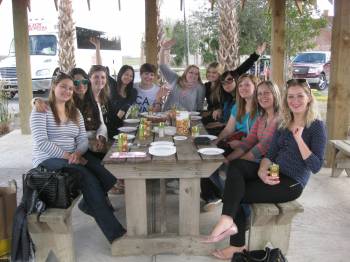
Following a lively and informative tour by our excellent guide, Dough, au pairs repaired to a nearby shelter to have some refreshments and enjoy the rest of the meeting.

We gave a big round of applause to Kirsty who is finishing her second very successful year with her host family and getting ready to return to England.

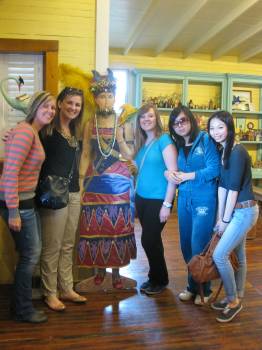
We also greeted two new au pairs, Desire from South Africa and Charlotte from France. Desire is a first time au pair, but Charlotte is a returning au pair who rejoined her former host family after a two-year hiatus back home in France.

We wish Desire and Charlotte a great year with their host families!

NOLLauragroup

Extension au pair:

Au pair who decides to extend her participation in the program either with her current host family or a new one. Au pair can extend for 6 months, 9 months or 1 year.

Returning au pair:

Au pair who decides to rejoin the program after a required two-year break. Au pair can match with her former host family or a new host family.

Alexiane Says Au Revoir to New Orleans

NOLAlex

Q: How would you describe your year as au pair in America?

Fantastic. I have no regrets about my decision to become an au pair. I think being in an American family is the best way to discover and understand this country, and this is what makes this experience unique. I’ve met a wonderful family, I’ve got the chance to travel and see different parts of the USA, I’ve met wonderful people and I would never forget this year.

Q: What surprised you most about the USA?

I would say the people. Americans are so friendly and you can easily talk with someone while waiting for your coffee or at the gym with people smiling at you and asking how you’re doing. Pretty much something I wasn’t used to. Also, this country is huge… Everything is bigger.

Q: What was the most memorable experience you shared with your host family?

All the special moments I had the opportunity to experience with them such as the 4th of July, Thanksgiving or Christmas… It was interesting to see how they celebrate holidays and so nice from them to include me.

Other memorable things are when I’m with the kids and we are all laughing and having fun, these simple but magic moments make all sense for an au pair.

Q: The best trip you took.

Every new trip is the best! But New York with my family coming from France was kind of special. Excited for my travel month now.

Q: What advice would you give future au pairs?

Make it the best. Don’t overthink things, sometimes you just need to be confident in what you’re doing. Do your best, parents will notice it, and enjoy every moment. Remember that you’re trying to make it easier for everyone including you. 🙂

Martin Luther King Day

Martin Luther King Jr. was born on January 15, 1929 he was an important leader of the civil rights movement in the United States during the 1950s and 60s. The holiday was created as a day to remember his fight for the freedom, equality, and dignity of all races and peoples and as a time to remember the message of change through nonviolence. He gave his most famous speech  “I have a dream” during the March on Washington in 1963. He was assassinated in 1968 but his legacy lives on. MLK Day is always celebrated on the third Monday in January.

“I have a dream that my four little children will one day live in a nation where they will not be judged by the color of their skin, but by the content of their character.”
– Martin Luther King, I Have a Dream quote

NOLMLKJR

APIA Seasonal Calendar

NOLAPIAcalendar

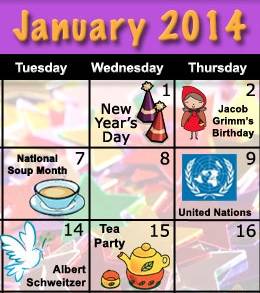
Although au pairs are clever and resourceful ladies with plenty of ideas on how to amuse and educate their host kids, there are days when they scratch their heads and wonder what else they can do to keep things interesting.

One place to turn to for inspiration is APIA CALENDAR

http://www.aupairinamerica.com/resources/calendars/

which is chock-full of colorful tidbits about world events, famous people, fun games, recipes, etcetera… etcetera.

JANUARY 2014 alone offers info and additional links to subjects as varied as:
National Soup Month
United Nations
Pineapples (and Pineapple Upside Down Cake)
Winnie the Pooh
and Benjamin Franklin

“If you would not be forgotten, as soon as you are dead and rotten, either write things worth reading, or do things worth the writing.” ~ B. Franklin

Check it out and, as always, have fun!

A Visit to the 1850 House

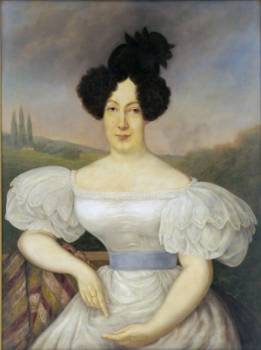
One of the most fascinating characters in New Orleans’ long and colorful history is the famous Micaela Almonester, Baroness de Pontalba who designed and built the famous Pontalba Buildings around Jackson Square in the French Quarter.

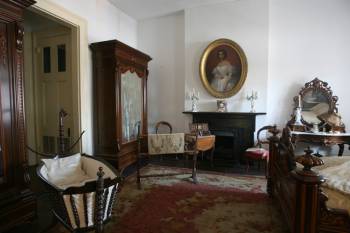
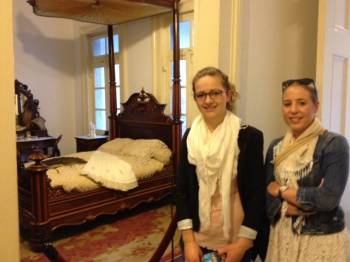
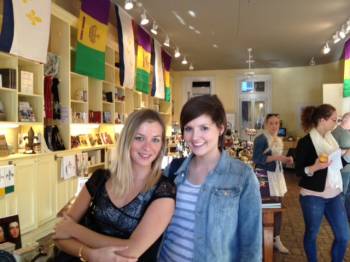
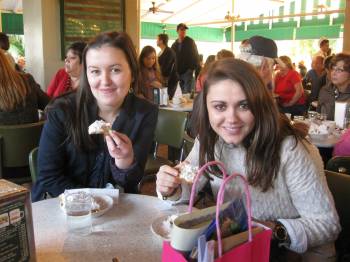
To get a glimpse of the historical apartments, au pairs visited the 1850 House museum located within the Pontalba complex. The museum docent narrated some of the Baroness’ fascinating life story, complete with her unfortunate marriage, persecution and shooting by her father-in-law, and success as a shrewd business woman and developer. After visiting the two story house furnished with period furniture and memorabilia, au pairs walked down the block to Café du Monde for café a’lait and begniets.

NOLBaroness

http://www.knowla.org/entry/833/

NOLPontalbaroom

NOL1850house

NOL1850Houseshop

NOLCafeduM

NOLCafeduMonde