Au Pair in America au pairs are so creative and contribute so much to their host families and to cultural exchange. Here’s what our own Christina Moser contributed:
Christina tells us about Austrian Christmas
I’m going to tell you about the traditions around Christmastime in my family back home in the south of Austria.
Since I was a child I lovd christmas and the time before and of course the time after unil New Years Eve. My family and me we have a lot of different traditions during the most reflective time of the year.
Well, the December 1st is always a pretty big deal in my family. Everyone is very excided because we LOVE christmas. It’s the time of the year that makes our whole family come together from all over the world. So on Dec 1st we open the first window on our Advent calender. We have a handcrafted one, my mom made 20 years ago, so when I had my first Christmas.
The whole Christmas time for my family starts at the first sunday of advent. My family and I we light the first candle at our Advent wreath. We sit together and each of us plays something of on of our Instruments (e.g. my brother plays on his styrian akkordeon and I play my guitar) and my parents read a typical christmas story. Since my brother and I were little we hold on to that family tradition.![Christina Moser,pic2[1]](http://www.globalawareness.com/wp-content/uploads/2013/12/Christina-Moserpic21-150x150.jpg)
And before the first sunday of advent where we light the first candle. My brother, my mom and me we start to bake our tratitional christmas cookies. Most of the recepies we have from my granma and my grandgranma. Of course I love to share my traditions with my hostfamily here in the US and so I brought my most favourite cookie recipe and baked and decorated the cookies with my girls.
December 5th is the day of the Krampus. As you will read in the text below, he comes with the Saint Nikolaus on December 6th to the houses of the kids. Well, but what is a Krampus? Duning the christmastime those creatures try to scare away bad ghosts and after christmas they try to scare away the winter. So this tradition may seem a litte bit very strong, because very often during the the Krampus runs though some cities some people like it to get hit by them. Don’t ask me why they like it. I’ve actually never been to one of them, because I’m very, very scared of them, even if I’m already 20. I’ve always been and will ever be.
And that’s the definiton of Krampus on wikipedia:
Krampus is represented as a beast-like creature, generally demonic in appearance. The creature has roots in Germanic folklore; however, its influence has spread far beyond German borders. Traditionally young men dress up as the Krampus in Austria, southern Bavaria, South Tyrol, northern Friuli, Hungary, Slovenia, the Czech Republic, the Slovak Republic and Croatia during the first week of December, particularly on the evening of 5 December (the eve of Saint Nicholas day on many church calendars), and roam the streets frightening children with rusty chains and bells. Krampus is featured on holiday greeting cards called Krampuskarten. There are many names for Krampus, as well as many regional variations in portrayal and celebration.![Christina Moser, 4,jpg[1]](http://www.globalawareness.com/wp-content/uploads/2013/12/Christina-Moser-4jpg1-150x150.jpg) On December 6th Saint Nikolaus comes to houses in Austria. Kids get a visit from him and his companion the Krampus. For those kids, who were good in the last year, they will get a bag full of apples, nuts, tangerine, chocolate and little toys and he knows everything. Before a kid gets his bag, he or she can compose a poem about him (there are tons of them, even songs) and he tells you what you did right and what you did wrong in the last year (e.g. you are very good in school, just try not to fight as much as you do with you sister as you did in the last year).
On December 6th Saint Nikolaus comes to houses in Austria. Kids get a visit from him and his companion the Krampus. For those kids, who were good in the last year, they will get a bag full of apples, nuts, tangerine, chocolate and little toys and he knows everything. Before a kid gets his bag, he or she can compose a poem about him (there are tons of them, even songs) and he tells you what you did right and what you did wrong in the last year (e.g. you are very good in school, just try not to fight as much as you do with you sister as you did in the last year).
The Krampus is a beast-like creature that always comes togehter with the Nikolaus. It will never hurt any kid, it’s just there to frighten the very bad kids. With his scary face and the bells around his waist he is very frightening and very loud. The picture you see is the Nikolaus and the Krampus visiting my little cousin Manuel last year at his house.
This link is to a song about him, that is very popular in Austria.
An now we are on December 24th, the so called “Heilige Abend”. My whole family comes together, my parents, my brother, my uncle and his family and my granparents with my grandgranma. As I am a skilled cook, my dad and I cook the Christmas meal, usually four courses , together. I always contains a Carpaccio, seafood for second, like Spaghetti with shrimp as second, somthing fancy, like duck á l orange, like we had last year or any kind of cream for dessert, last year we had Limecream. We prepare as much as we can for the later evening. At around 5 o’clock we meet my grandparents at church to celebrate the holly mass together. Back at home my dad and I continue to cook and when my uncle’s family arrive, we all celebrate Christmas Eve together. That’s the difference between Austria and the USA. We celebrate and open our presens on the 24th, so Christmas Eve. So before we open the presents the Christkind brought us, we call it “Bescherung”, we listen to christmas poems and stories the adults read to us and play on our instruments and sing together. Then we lighten the candles on the tree with the holy light from Jerusalem, which my dad and my brother always pick up at a location in the city on christmas day, which is the 24th in Austia.
So I told you we don’t have Santa Clause. We have the Christkind. It is said that it comes in through the window and leaves presents around the Christmas tree while the children are out of the room and it looks like an angel, but it’s actually Jesus Christ Baby.
The picture you see is Christmas at my house back in Austria.![Christina Moser pic7[1]](http://www.globalawareness.com/wp-content/uploads/2013/12/Christina-Moser-pic711-150x150.jpg)
December 25th is reserved for my friends. We always spend Christmas day together. Mostly we are on the mountains skying or do whaterever we are up to.
New Years Eve, I always used to spend with my family first and then go to my best friends house. We usually dress up and meet our friends in the city and then go back home to my place where we shoot fireworks together with my family.
Jannuary 6th, Epiphany, the day of the three Magi, Caspar, Melchio and Balthazar who brought gold, rankincense and myrrh to Jesus Christ on his crib. This tradition combines collecting donations for the the third world by goning from house to house and sing dressed up as the three Magi and helping he local church as well. So mostly kids in my area do that. In german it’s called “Sternsingen”. It is like a huge charity project from all austrian churches togehter. So there are different groups of kids, every group has an adult with them. My grandma always went with my group. I went singing for about 5 years. We didn’t went exactly on Jan 6th, but on the days around. So we went from house to house and sing our song at each house. After we’ve finished the song we usually get a donation and sometimes we get a treat as well. I loved it, becuse I could hang out with my two cousins. We’ve always been in the same group. And after the last day of all groups we had a huge meeting, when we were told how much we collected and everybody was so happy that we could helped so much by doing things we love, singing and hanging around with family and friends. On this picture you see me and my cousins, 8 years ago, wearing our costumes before we started to the first house. ![Christina Moser,pic11[1]](http://www.globalawareness.com/wp-content/uploads/2013/12/Christina-Moserpic1111-150x150.jpg)


 Fold in half an 8 1/2- by 11-inch sheet of heavyweight paper so that the shorter ends match up.

![Christina Moser,pic2[1]](http://www.globalawareness.com/wp-content/uploads/2013/12/Christina-Moserpic21.jpg)
![Christina Moser, 4,jpg[1]](http://www.globalawareness.com/wp-content/uploads/2013/12/Christina-Moser-4jpg1.jpg)
![Christina Moser pic7[1]](http://www.globalawareness.com/wp-content/uploads/2013/12/Christina-Moser-pic711.jpg)
![Christina Moser,pic11[1]](http://www.globalawareness.com/wp-content/uploads/2013/12/Christina-Moserpic1111.jpg)
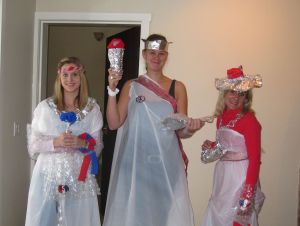

 THANKSGIVING falls on the fourth Thursday of November. It is as a legal holiday in the United States and commemorates the feast held at Plymouth in 1621 by the Pilgrim colonists and members of the Wampanoag people. The feast was held to honor God and give him thanks for harvest and health.
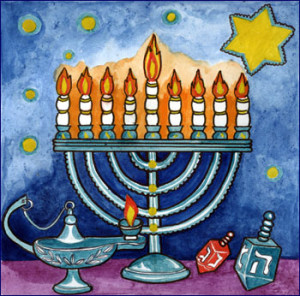 We have host families from a wide variety of backgrounds and faiths. Some celebrate Christmas, some Chanukkah, some Kwanzaa and some celebrate more than one of those or none of the above. That is something that makes America special, we can all be different, but still one united together.