Category Archives: Uncategorized

HALLOWEEN SAFETY TIPS

HALLOWEEN FUN AND SAFETY!
bats

When walking in neighborhoods, children should

  • Use flashlights, stay on sidewalks, and avoid crossing yards.
  • Cross streets at the corner, use crosswalks (where they exist), and do not cross between parked cars.
  • Stop at all corners and stay together in a group before crossing.
  • Wear clothing that is bright, reflective, and flame retardant.
  • Consider using face paint instead of masks. (Masks can obstruct a child’s vision.)
  • Avoid wearing hats that will slide over their eyes.
  • Avoid wearing long, baggy, or loose costumes or oversized shoes (to prevent tripping).
  • Be reminded to look left, right, and left again before crossing the street.

Parents and adults should:

  • Supervise the outing for children under age 12.
  • Establish a curfew (a return time) for older children.
  • Prepare homes for trick-or-treaters by clearing porches, lawns, and sidewalks and by placing jack-o-lanterns away from doorways and landings.
  • Avoid giving choking hazards such as gum, peanuts, hard candies, or small toys as treats to young children.
  • Inspect all candy for safety before children eat it.
  • Parents and adults should ensure the safety of pedestrian trick-or-treaters
  • Make sure children under age 10 are supervised as they cross the street.
  • Drive slowly.
  • Watch for children in the street and on medians.
  • Exit driveways and alleyways carefully.
  • Have children get out of cars on the curb side, not on the traffic side.

And a few tips about pumpkins:

  • Carve pumpkins on stable, flat surfaces with good lighting.
  • Have children draw a face on the outside of the pumpkin, then parents should do the cutting.
  • Place lighted pumpkins away from curtains and other flammable objects, and do not leave lighted pumpkins unattended.

School Bus Stop Safety

school-bus-stop-color

School Starts Now – Be Safe at the Bus Stop

  1. Be on time to the bus stop so that you and your host kids get there safely
  2. Walk and hold hands to the stop
  3. Stand on the sidewalk or the the grass, not in the street
  4. Wait until the bus comes to a complete stop before the children walk to the door
  5. Let the bus driver open the door, do not push it, wait
  6. Remind the children to sit on the bus and not stand, if there are seat belts, tell them to put them on.
  7. Let the bus leave before you do, just in case there is a problem
  8. Be at the afternoon return bus stop in plenty of time, before it comes
  9. The driver is not allowed to let small children off the bus unless someone greets them, so if you are not there the children will be taken back to school.  BE THERE.
  10. The bus driver will not leave until you are safely on your side of the street, so if you need to cross the street, do it in front of the bus!!

HOLIDAY AND VACATION REMINDERS

With Memorial Day just passed and Fourth of July coming up next month, I wanted to remind everyone about program rules on holidays and vacations.

Holidays

  • Host families are NOT REQUIRED to give au pairs any specific holidays.
  • Each host family will make different arrangements on holidays, some au pairs will be off and others will be required to work.
  • Au pairs should NOT make plans for holidays without checking with your host family FIRST.

luggage maliasVacation

  • Au pair earns 2 weeks of paid vacation during the course of her year.
  • The host family can pick a week and the au pair can pick a week, if an agreement is not reached.
  • All vacation should be preplanned (at least 4 weeks in advance.)
  • All au pair’s friends and/or family visits/vacations should be pre-approved prior to purchasing a ticket.
  • If an au pair travels with their host family, it should be discussed UP FRONT whether this is the au pair’s vacation or if she is working.
  • If an au pair travels with the host family to work, the host family is required to pay for her transportation, lodging and meals.

Important: An au pair MUST have her DS2019 signed PRIOR to her departure from the US. More info. about this can be found on the right side of this page under “Travel Links for Au Pairs.”

AU PAIRS VOLUNTEER AT CRADLES TO CRAYONS

IMG_0911

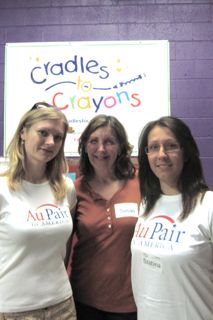
Au Pairs from Au Pair in America joined their Local Community Counselor, Susan Kalan for a volunteer activity at Cradles to Crayons in Conshocken, PA on Tuesday night.  “We didn’t realize how much fun it would be,” commented Oksana from Ukraine and Szabina from Hungary.

“It felt like we were shopping,” Susan Kalan says – We were given a list of items for a particular age group and sex.  We gathered the items from bins of gently-used or new clothing and accessories that had been donated.  We made sure every item was in good condition – taking care to coordinate colors; keeping in mind how much this small bag of essential items will mean to a child in need.

Michael Smith, Executive Director of C2C; explained to us that the bags went to children who were living in homeless shelters or who are victims of domestic violence; and living in shelters.  The bag of donated items from C2C represents the only personal items they would have for a while.

Au Pair In America partners with AAA

AAA

The most trusted choice for live-in childcare, Au Pair in America has partnered with AAA, the nation’s most trusted name in driver safety and instruction, to offer a custom course specifically designed for au pairs. This course differs from those offered in your community, in that AAA has taken the best of several of their coursesadapted them to be the most accessible to the au pair population, with special focus on driver and child passenger safety. Key components of the course include:

  • Driver Safety
  • Child passenger safety (car seats, communication, expectations)
  • Communication and traffic devices
  • Vehicle Awareness (understanding what your vehicle is “telling you.”)
  • Reducing Risks while Driving (includes defensive driving techniques, phone/texting issues, and drinking and driving awareness)

kids-car-safety-toddler

This  AAA course designed exclusively for Au Pair In America.  Course includes a combination of lecture, group exercises, video/other media to ensure the maximum understanding to speakers of other languages or newly arrived to the US participants.

young-woman-driving

All Host Families with au pairs arriving into the USA in 2011 will receive more information about this new course and how their au pair can be enrolled!

SAFE DRIVING IN WINTER WEATHER

No Comments

Winter Driving Tips
You are likely to find ice and snow on the roads in many parts of the country. There are some basic rules to remember to stay safe in the car in difficult driving conditions:

  • Start early and take your time.
  • Accelerate slowly, especially on hills
  • Drive slowly to avoid having to stop while going up a hill, as it will be hard to start again.
  • Don’t make any sudden turns or stops.
  • Be sure that the mirrors and windows are always free of snow and ice.
  • If you skid, try to steer in the direction the car is sliding to regain control.
  • The changes in temperature sometimes cause potholes in the streets. If you don’t see the pothole in time to steer around it, apply the brakes before hitting the pothole and release them just before you reach the pothole. If you keep the brake on as you hit the pothole, it will do more damage to the tire.
  • Try to keep your gas tank at least half full.
  • If your wheels spin on ice, switch to low gear, even on automatics.
  • Leave extra space between you and the car in front of you.
  • Remember that bridges and exit ramps are icier than roads.
  • Ask what kind of brakes your car has and how to use them in case of a skid.

HALLOWEEN IS COMING – OCTOBER 31ST

HALLOWEEN FUN AND SAFETY!

batsHistory –    Halloween, celebrated each year on October 31, is a mix of ancient Celtic practices, Catholic  and Roman religious rituals and European folk traditions that blended together over time to create the holiday we know today. Straddling the line between fall and winter, plenty and paucity and life and death, Halloween is a time of celebration and superstition. Halloween has long been thought of as a day when the dead can return to the earth, and ancient Celts would light bonfires and wear costumes to ward off these roaming ghosts. The Celtic holiday of Samhain, the Catholic Hallowmas period of All Saints’ Day and All Souls’ Day and the Roman festival of Feralia all influenced the modern holiday of Halloween. In the 19th century, Halloween began to lose its religious connotation, becoming a more secular community-based children’s holiday. Although the superstitions and beliefs surrounding Halloween may have evolved over the years, as the days grow shorter and the nights get colder, people can still look forward to parades, costumes and sweet  treats to usher in the season.


Au Pairs help children stay safe for Halloween


  1. Make sure to inspect the children’s Trick Or Treat candy to make sure everything is in a sealed wrapper and appears safe.
  2. Small children should not eat hard candy because of chocking.
  3. Children should be supervised when they go Trick-or-Treating.  Many parents will come home early from work on the day to go with their children.  Check with Host Parents about this.

Pumpkins and the Legend of Stingy Jack

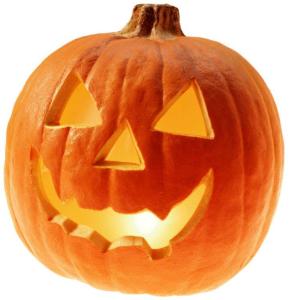
Jack-o-lanterns are an Irish tradition brought to America by early Irish immigrants. But early jack-o-lanterns were not pumpkins, they were turnips, rutabagas or gourds that were hollowed out. Lights were placed in them to ward off evil spirits and to keep “Stingy Jack” (the legendary Irish drunkard and prankster, believed to have made a deal with the devil and condemned to walk the earth upon death, whose namesake has been given to modern day, carved pumpkins) away. It was not until the 1800’s when Irish immigrants came to America and found pumpkins to be so plentiful and easier to carve, that the tradition was altered.

pumpkin

BASEBALL – AMERICA’S NATIONAL PASTIME

Philadelphia_PhilliesPHILADELPHIA PHILLIES – The Philadelphia Phillies won the World Series in 2008.  In 2009 they went to the World Series again; but lost to the NY Giants.  We’ll win that Series this year — I’m betting on it!

Major League Baseball

Baseball is called the “National Pastime” of the United States because it is so popular. There are thirty teams spread across the country, and many people have their own favorite “home team.”

The game is played by two teams. When one team is in the field, the other team takes turns at bat. A baseball player first bats at the ball and then runs around the bases in an effort to score. Points, called “runs,” are scored when a player on the batting team touches all the bases (including home plate) without being tagged or put “out” by a player on the fielding team. The team scoring the greater number of runs in nine “innings” wins the game. Each inning is divided into two halves: top and bottom. Both teams are allowed three outs per half inning.
Each team is part of a league. There are two leagues, the American League and the National League. Each team tries to win the most games in their league. The teams that win each league championship will play each other in the “World Series.”