Category Archives: Host Family Tips

Focus on Play: New Ideas for Some Classic Toys

It is good to offer kids a balance of independent play time and play where you are actively engaging with them. You can make toys they may be bored with, feel new and exciting, by suggesting different ways to play with them. Try some of the ideas below as a starting point.
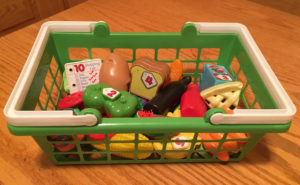
Play Food/Dishes

  • Teach your host children how to say the names of some of the food and dishes in your language.
  • Using English and/or your language play games where you are ordering food like in a restaurant. Take turns with who will be the waiter and who is the customer.
  • Come up with silly food combinations.  For example: Who wants pickles on their slice of cake?
  • Play a guessing game where the children have to figure out what food you are talking about.  For example: I grow under the ground in the dirt.  People eat me fried, mashed and baked.  What am I? (a potato)
  • Play a game with setting the table using your language to ask for the different items (plate, spoon, etc.)
  • Ask the children to divide the foods up into the different food groups (vegetables, meat, dairy, etc.)

Lego Blocks and Other Building Toys

  • Divide up all of the blocks between the people playing, by taking turns for each person to select block by block.
  • Suggest specific things to build (robots, houses, mountains etc.) and build together.
  • Challenge everyone to use all of their blocks.
  • Sort the blocks by color or shape and make patterns with them (red, blue, red, blue or square, triangle, rectangle.)  You can create a pattern and ask the child to fill in what comes next to continue the pattern.
  • Make the tallest block tower you can and let them knock it down (over and over again, if like most kids, they like destroying things.)

Mr. Potato Head

  • Teach your host children the names of the different parts in your language and play a game asking them to put on the body parts by name.
  • Play Hide and Seek with Mr. Potato Head. Have the children cover their eyes and count, while you hide Mr. Potato Head, then they go looking for him. Switch things up by letting them hide Mr. Potato Head and then you are the one to locate him.
  • Play the same game above, but using Simon Says.  Simon Says is a game where the leader gives commands by saying “Simon says” first. For example, “Simon says, put on the nose.”  The players are only to follow the commands when the leader says “Simon says.”  If the leader doesn’t say “Simon says” first and just says, “put on the nose,”  and the player follows the command, they are out of the game.  Repeat the game multiple times, so all kids get a turn to be the leader at least once.

Photos:  Lisa Maxwell (top) & Tom Smalls (bottom)

Avoiding Homesickness this Holiday Season

Homesickness can be a problem during the holidays, even if it hasn’t been at any other time of the year. Au pairs often miss their friends and family, familiar places and their own traditions and customs. The holiday activities in the United States seem, and may actually be, different just at a time when an au pair would welcome something familiar. 
It is common for au pairs’ emotions to be close to the surface during the holidays. Her highs are higher, her lows are lower. The enormity of what she has done–actually living in another country (which is an amazing thing when you think about it!)–hits her and throws her into a self-protective mode.

Host parents can help her through this unfamiliar territory by talking to her about what your specific family activities will be (gifts, meals, visitors, religious services, in-home traditions, or none of these, as the case may be.) In the spirit of cultural exchange, ask her if she has any favorite holiday traditions or foods that you might be able to incorporate into your family’s celebration of the season. Let her know what you will be doing, when you will be doing it, and what she can expect. Talk to her about what has to be accomplished and get her involved and interested. Don’t expect her to just “know” what needs to be done. Give her some clear, agreed upon assignments. Make her feel a part of things. And, let her know her contribution is needed and appreciated.

Photo: Sheila Sund (Flickr)

5 Thanksgiving Tips for Au Pairs & Host Parents

Thanksgiving is celebrated on the fourth Thursday of November each year. Even though a few other countries also celebrate Thanksgiving, it’s still considered a uniquely American holiday, one that the au pairs look forward to experiencing. You can learn more about it here.

I really enjoyed Thanksgiving with my host family. It was as I imagined! So much food to try. Everyone got dressed up and shared what they were thankful for. It was so warm and special. The next day we began to prepare for Christmas. It was magical.” Selina from Germany

Below you will find some tips to help you have a terrific Thanksgiving experience.


Host Parents

1.  Please plan to include your au pair in your Thanksgiving celebration, if at all possible. Thanksgiving with an au pair offers an opportunity to consider the relevance of the history and meaning of Thanksgiving as you compare the hospitality offered by the Native Americans to the recently arrived Pilgrims and the hospitality you offer your au pair.

2.  If you are traveling or will not be able to invite your au pair to join you for Thanksgiving, give her plenty of notice and help her make alternate plans. You don’t want to leave your au pair alone over the holiday.

Au Pairs

3.  If you are invited to attend dinner, please let your family know within 5 days of the invitation, whether you are planning to attend. It is considered rude in America to accept the invitation for dinner and then change your mind later in the month. Please be thoughtful.

4.  Make sure to discuss time off during this holiday weekend. Many host families work the Friday after Thanksgiving so do not assume you have this day off or the entire weekend. Talk to your host family, BEFORE you make any plans.

5.  If your host family is unable to include you in their Thanksgiving plans, please let me know if you have trouble making other plans. You may be able to join a friend and their host family for the holiday dinner.

Bonus Tip for the Kids

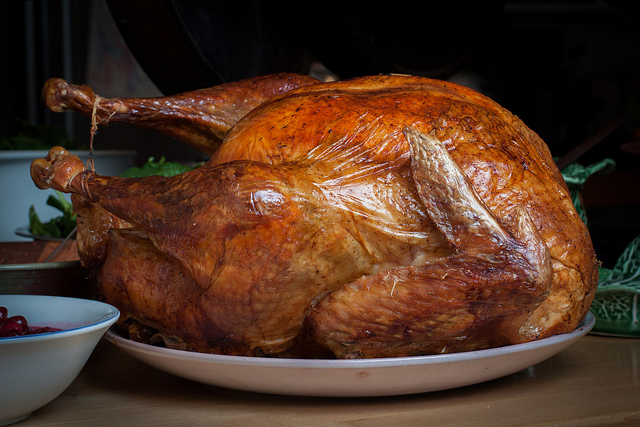
If you are looking for a fun recipe to make with your au pair, check out these turkey cupcakes. Find more fun activities and recipes on the Au Pair in America Fall Holidays pinboard.

Photo: Tim Sackton (Flickr)

Preventing Dehydration in Hot Weather

Dehydration means that the body lacks the necessary amount of fluid. Infants and small children are more likely to become dehydrated than older children or adults, because they can lose relatively more fluid quickly.

Here are some steps to take to make sure children remain hydrated in the summer months:

  • Encourage your child to drink plenty of water. On hot days, children should drink significantly more water than usual, as they are losing more due to the heat.
  • Do not wait until your child is thirsty to give him water. By the time they feel thirsty, they are already becoming dehydrated.
  • If your child is resistant to drinking enough water, have other liquids on hand for your child to drink throughout the day.
  • Be alert to changes in behavior. A child may act confused or more irritable when they are becoming dehydrated/overheated. Get them into cooler temperatures and drinking more fluids.
  • Dress your child in lightweight clothing in the summer months, particularly if she’ll be playing outdoors in warm weather. You may also consider clothes that are well ventilated as they do not trap heat close to the body.
  • When there are heat and/or air quality advisories because the weather is dangerously hot, you should avoid taking the children outdoors. Check with your host parents for further guidance on this topic.

Remember to follow these tips for yourself too, so you stay well hydrated.

Photo: Darwin Bell (Flickr)

Holiday & Vacation Reminders

“Rest and be thankful.” – William Wordsworth

Holidays and vacations are a great opportunity to rest, recharge and explore the U.S.

Memorial Day Weekend is the unofficial start of summer travel season. Here are some reminders about program rules regarding holidays and vacations.

Holidays

  • Host families are not required to give au pairs any specific holidays.
  • Each host family will make different arrangements on holidays, some au pairs will be off and others will be required to work.
  • Au pairs should not make plans for holidays without checking with your host family first.

Vacations

  • Au pairs earns 2 weeks of paid vacation during the course of her year.
  • Vacation time should be mutually agreed upon.
  • All vacation should be preplanned (at least 4 weeks in advance.)
  • All au pair’s friends and/or family visits/vacations should be pre-approved prior to purchasing tickets.
  • If an au pair travels with her host family, it should be discussed in advance whether this is the au pair’s vacation or if she is working.
  • If an au pair travels with the host family to work, the host family is required to pay for her transportation, lodging and meals.

Important: If an au pair is traveling outside of the U.S., she must have her DS2019 signed (travel validation) PRIOR to her departure from the US. More information about this may be found here on the Au Pair in America website.

Photo: torbakhopper (Flickr)

Handling Expenses

Host parents often ask for suggestions on how best to handle common expenses that occur as au pairs are caring for the children.

Miscellaneous Expenses

There are different ways to handle the little day to day expenses that come up.  Things like when an au pair takes the kids out for ice cream or picks up a gallon of milk.  Some families keep a cookie jar fund, a little cash that they set aside weekly or monthly for these types of expenses. Others give their au pair a prepaid debit card for this purpose. Below are some suggestions for avoiding problems with expenses.

Host Families

  • It’s important to be clear about how long this money should last and what types of expenses are approved.
  • Let the au pair know whether or not you expect receipts.

Au Pairs

  • Only spend the money on approved expenses.
  • If it is something you are not sure about, ask first.
  • Put your receipts in the cookie jar in place of the money to avoid any confusion.

Gas and Fare Cards 

Host families are responsible for the au pair’s transportation costs: to and from classes, cluster meetings and when driving the kids.

It is a good idea to figure out how much gas an au pair will use for these trips and either put gas in the car or give a gas allowance.   If your au pair is riding to classes or cluster meetings with another au pair, you should offer to share the cost of gas.

Au pairs are responsible for their own transportation at all other times.  You should replace the amount of gas used for personal use.

Photo: Andrea Travillian

Travel Reminders

Au Pairs Traveling outside the United States

https://encrypted-tbn3.gstatic.com/images?q=tbn:ANd9GcTAogHeoKsrTKv0zfPzq5sULH2hlA8OeAwVwt9RHXeAtW6wHtabJNwEWnwr

If you are planning to travel outside of the United States during your program term you must make sure you check with the embassy or consulate of the country being visited  to find out if an additional visa is required.  It is also important that you check the status of your J1 visa in your passport and the date of expiration.  You must have your DS2019 signed by a member of staff in the Stamford office and returned before you depart for your trip.  It must be an original signature for validation.  The DS2019 should be mailed at least three weeks prior to the departure date for the trip.  It should be mailed with the travel validation request form which can be found here: http://www.aupairinamerica.com/pdf/travform.pdf  and a return self addressed stamped envelope and a check for $10 if you want it to be returned by 2 day UPS delivery.

NB: Make sure you have received your DS2019 before leaving for vacations such as cruises (where logistically it is very difficult for us to get the DS2019 to you after your departure).  We want to make sure that no au pair gets stuck at a port of entry which can be a very stressful and unpleasant experience.  Anything you can do to help us avoid this is greatly appreciated. Please note: au pairs should not be outside of the United States for longer than a 3 week period at any one time!!

We have some great travel tips for au pairs here:  http://www.aupairinamerica.com/resources/travel_and_flights/travel_tips.asp


Image result for trekamerica

For au pairs planning for travel in the summer, please check out our TrekAmerica partnership, it offers wonderful group trips and a 20% discount for au pairs.
http://www.trekamerica.com/aupairinamerica/au-pair-travel-discounts.html


Have a great week everybody!

Taxes – Due April 15th!!

Au pairs who earned more than $3,950 in 2014 are responsible to file a federal tax return and pay an income tax.

Au Pair in America is not responsible for the interpretation of the information within this document, or any changes to IRS rules or forms that may occur. Neither Au Pair in America, nor its community counselors, can provide any official tax information, and we recommend that you contact a tax professional if you have any specific questions regarding these matters.

Taxes for income earned in 2014 are due to be filed on or before April 15th of this year.

Will I have to file taxes?
If you earned more than $3,950 in 2014, then yes!

When are the 2014 taxes due? 
April 15th, 2015!

How to file taxes? 
1. Get a Social Security Number or Tax ID Number: 

http://www.aupairinamerica.com/resources/life_in_the_us/procedure_4.asp
http://www.irs.gov/Individuals/International-Taxpayers/Au-Pairs 

2. Calculate how much you have earned during 2014.

Example: You were here for 31 weeks in 2014 and earned a weekly stipend of $195.75* for those 31 weeks. Your total earnings would be 31 x $195.75 = $6068.25 = $6068. (always round up to the nearest dollar amount) . *This rate will vary based upon when you arrived in 2014 and what program you were participating in when you earned the stipend – au pair, EduCare, extraordinaire. You would then subtract the personal exemption amount for 2014, ($3,950) from your income and would get a total of $2,118. This is your taxable income.

Once you determine your taxable income, you should then check the 2014 instruction booklet http://www.irs.gov/pub/irs-pdf/i1040nre.pdf (see link above), starting on page 23 to see how much tax you owe based on your taxable income. For the amount above, your tax would be $211.

3. Fill out 1040NR-EZ form

http://www.irs.gov/pub/irs-pdf/f1040nre.pdf
This is a link to instruction booklet    http://www.irs.gov/pub/irs-pdf/i1040nre.pdf

Below are some helpful tips for filling out the 2014 tax form.

1. Enter the total amount you earned in 2014 on line 3, line 7, line 10 and line 12. This would be your weekly stipend multiplied by the number of weeks you were in the U.S. in 2014 and were paid the weekly stipend.
2. You should not have any itemized deductions, so the amount entered on line 11 would be ‘0’.
3. Enter the 2014 exemption amount of $3,950 on line 13.
4. Subtract the exemption amount ($3,950) from your income reported on line 12 and put on line 14. This is your taxable income.
5. Look up the taxable income amount in the tax tables which are included in the instructions (starting on page 23) to see the amount you will owe in taxes. Put this amount on line 15, line 17 and line 25 of form 1040NR-EZ. This would be the amount that you will pay to the IRS.
6. Don’t forget to sign the form at the bottom. – the form is not valid without your signature!
7. You must fill out the other side of the form (page 2)
8. Put your home country on line A
9. Lines C,D, and F should all say ‘no’
10. For section E put ‘J-1’
11. In section G, you should start with your arrival date in the U.S. (in 2013) and list any dates that you left the country for any trips (either your own vacation or your host family’s vacation). Then add up all the days that you were in the U.S. during 2014 and enter this number in section H.
12. If you filed a tax return in the previous year, answer ‘yes’ on line I and put the form number you filed (probably 1040-NR-EZ 2013)

If you have any questions, you can call the IRS directly at 1-800-829-1040
Filing a tax return and payments: Whether you are filing your taxes from the U.S. or back in
your home country, all tax returns and checks should be mailed to:

Internal Revenue Service
P.O. Box 1303
Charlotte, NC 28201 – 1303
U.S.A.

Can I mail my form and pay online?
YES — via….Debit card (flat rate less than $3) or Credit card (@ 1.87% of total tax amount) http://www.irs.gov/uac/Electronic-Payment-Options-Home-Page (NB: you still have to mail in your forms). 


Child Passenger Safety Laws

Child passenger restraint requirements vary based on age, weight and height. Often, this happens in three stages: infants use rear-facing infant seats; toddlers use forward-facing child safety seats; and older children use booster seats.

Many laws require all children to ride in the rear seat whenever possible, and most states permit children over a particular age, height or weight to use an adult safety belt.

Learn More About Occupant Protection
Adult Seat Belt Laws: http://www.ghsa.org/html/stateinfo/laws/seatbelt_laws.html
Occupant Protection: http://www.ghsa.org/html/issues/occprotection/index.html
Best Practices for Children: http://www.ghsa.org/html/publications/opc.html 

First offense fines for not complying with a state’s child passenger safety laws vary from $10 to $500. Some states also use driver’s license points as an additional penalty for noncompliance.

* All 50 states, the District of Columbia, Guam, the Northern Mariana Islands and the Virgin Islands require child safety seats for infants and children fitting specific criteria.
* 48 states and the District of Columbia and Puerto Rico require booster seats or other appropriate devices for children who have outgrown their child safety seats but are still too small to use an adult seat belt safely.
* The only states lacking booster seat laws are Florida and South Dakota.
* 5 states (California, Florida, Louisiana, New Jersey and New York) have seat belt requirements for school buses. Texas requires them on buses purchased after September 2010.

Texas:
Child restraint required for children age: <7 and <57″
Adult safety belt: not permissible for children!
Maximum fine 1st offense: $25 minimum 


Summer Institute for the Gifted

(Programs for gifted and talented youth ages 5-17). 

The mission of the Summer Institute for the Gifted is to provide the highest quality educational and social opportunities for academically gifted and talented students through programs designed to meet their abilities and needs.

Through 30 Years of experience & resources in gifted education, SIG provides a unique environment for gifted and talented students to connect with peers in a community of like-minded learners from all over the world who share common interests, abilities & goals.

Students will benefit from unique programming, which combines academics with social, cultural and recreational opportunities for a truly engaging summer. Courses are led by qualified instructors who have expertise in their disciplines and represent an array of professional backgrounds.

These 3-week summer sessions will allow your child to mature and develop in every element of life, develop long-lasting and meaningful relationships, increase self-confidence and think in divergent ways,all within a safe and secure environment at a prestigious campus. No matter which program option you choose, you can rest assured that the overall atmosphere of SIG will uncover, nurture & grow your child’s gifts.

Read more at:  http://www.giftedstudy.org/