Tag Archives: nanny San Antonio

Facts about the Education Requirement

Au pairs can fulfill the educational component in different ways. The choice you make will depend largely on the educational opportunities in your community and your work schedule. To meet the requirement, it is possible you will need to supplement the education allowance with your own money, so plan carefully.

The education requirement

The au pair requirement is 6 semester hours of academic credit or the equivalent. EduCare Companions must complete twice the requirement of au pairs, and year2 au pairs are expected to take an additional 3 credits for a 6-month extension and 6 credits for a 9- or 12-month extension.

Generally, a 3-credit college course is 45 hours, and a 4-CEU (continuing education units) course is 40 hours. Non-credit and audit courses are counted by the number of hours spent in the classroom.

6 credits = approx. 80 hours in the classroom = approx. 8 CEUs

You can use any combination of hours, credits, or CEUs as long as they add up to the required number of hours. Your counselor will be able to advise you on what is possible in your area. You can also review your options by reviewing the educational listings for your state. Click here to view those options.

Auditing classes: Auditing allows students to attend a class with limited in-class participation, non-graded assignments, and no final grade. If auditing is available to the au pair, the cost may be less than for a credit course. Each individual college or university has its own audit policy.

CEU: Continuing Education Units is a nationally recognized method of quantifying the time spent in the classroom during professional development and training activities. Ten hours of instruction = 1.0 CEU.

Choosing classes: Be flexible. Remember that your childcare responsibilities come first. Class schedules need to be arranged with your host family and around your childcare duties. Your favorite class may not be available when you are. Schools vary in what they offer, but most offer a wide range of choices and offer day, evening, and Saturday classes.

Completion of the education requirement: Education is an important part of your year in America. Take advantage of the opportunity and don’t forfeit your eligibility to extend and/or return to the US as a return au pair.

Continuing Education courses: These classes are usually non-credit and are offered at some colleges and universities. These courses are designed for a purpose other than working toward a degree, usually for personal enrichment or career-specific skills.

Extending: In order to extend, you must show proof that you have completed the education requirement at an accredited U.S. post-secondary institution. To extend, your education must be complete no later than 30 days before the end of your year. One or more of the following documents can be used to verify that you have completed your education:

Letter from the school on letterhead
Completion certificate from the school
School transcript

All proof of education must state your name, school attended, course title, and number of credits/hours earned. Completed verification should be given to your community counselor. Your extension request will not be processed without this proof.

*If you are still in the process of completing your education, you must obtain proof from the school stating that the course(s) you are taking will conclude at least 30 days before the end of your year and the number of credits/hours/CEUs that you will earn. If you are registered for a course that has not yet begun, you must submit proof of registration indicating that the course will conclude at least 30 days before your first year ends and the number of credits/hours/CEUs that you will earn. All proof of education must be given to your counselor before your deadline to extend.

Non-credit classes: Non-credit classes are offered at some colleges and universities. These courses are designed for a purpose other than working toward a degree, usually for personal enrichment or career specific skills.

Online Courses: Online courses do not meet the educational requirement for au pairs.

Placement Tests: Many English as a Second Language (ESL) classes have placement exams. Some schools may require the TOEFL or other placement tests at the time of registration for other courses as well.

Post-secondary accredited institution: A post-secondary institution offers at least a one-year program of college-level studies. An accredited institution is an institution officially recognized by a regional or national accrediting commission of schools and colleges. To verify the acceptability of a school, you should either ask your community counselor or contact the Education and Program Services coordinator at 1-800-928-7247 ext. 5028 or email education@aifs.com.

Proof of Education Completed: You may submit any of the following to your community counselor as proof of your education.

Letter from the school on letterhead
Completion certificate from the school
School transcript

All proof of education must state your name, school attended, course title, start and end date of the course, and number of credits/hours earned. If your community counselor does not have proof that your education requirement has been completed, you will not receive a completion certificate upon your return to your home country and you forfeit the opportunity to extend.

Recognition: If you are taking a course for academic credit, you will receive a grade and an official transcript. If you are auditing or taking a non-credit course, recognition is at the discretion of the instructor.

TOEFL: For information about the Test of English as a Foreign Language, click here.

Transfer of credits: If you are taking a course for academic credit and want to transfer credits home, it is up to the university in your home country to determine if they will accept that credit or not. It is the responsibility of the au pair to contact her home university if she is interested in transferring credit.

Transportation: Your host family is required to provide transportation, including gasoline, parking, or public transportation costs (if applicable) to and from classes in your community. The cost of transportation is in addition to the $500/$1000 allocated to tuition and related fees. It is your host family’s responsibility to provide transportation or cover the transportation costs until you complete your educational requirement, even if the $500 education allowance has already been spent.

Tuition: Host families reimburse tuition costs and costs of related materials (books and supplies) up to $500 for the first year. EduCare companions are reimbursed up to $1000 for the first year. If it will cost you more than $500 (or $1000 for EduCare) to meet the requirement, you must pay the additional expense, so plan carefully.

UCLA APIA Advantage Course APIA has partnered with UCLA to create a 19-week interdisciplinary online course for 6 credits. This course has been specially-approved by the US Department of State to fulfill the educational requirement for au pairs. Unlike a typical online course, the blended online format of the APIA Advantage course allows au pairs to have face-to-face contact with their local communities. As a requirement of the course, au pairs are required to do a Global Awareness presentation, volunteer at a local organization, and participate in historical and cultural activities. To find out more about the course, please visit UCLA Extension at https://www.uclaextension.edu/aupairs, or ask your local community counselor.

Contact me if you have any questions about this topic 🙂

St. Patrick’s Day

March 17th equals…

Saint Patrick’s Day is celebrated in honor of the Patron Saint of Ireland, who brought Christianity to the Emerald Isles, as Ireland is known. It is a day of celebrating Irish history, ancestry, traditions, and customs. Remember to sport some green on this day – if not, you might just get pinched!!

Looking for some St. Patrick’s Day Shenanigans (or actually just some fun crafts, recipes, games, and activities to do with your kids)? Check out our APIA St. Patrick’s Day Pinboard:
http://www.pinterest.com/aupairinamerica/st-patrick-s-day-shenanigans/

Murphy’s St. Patrick’s Day River Parade & Festival:

March 15th: 12:00 PM – 6:00 PM –> March 16th: 12:00 PM – 6:00 PM
FREE to the public!
Location: La Vilita – 418 Vilita St. (between Presa and Alamo).

Enjoy live music on Arneson Stage, and a family-friendly festival of food, games, activities and more! This is a family-friendly festival of music, food, and fun!!

P.S.: Don’t miss the Dyeing O’ the River Green & River Parade!! This takes place at 3:00 PM Sunday March 16th: Floats will release 110 lbs of green dye into the San Antonio river!
https://www.thesanantonioriverwalk.com/events/murphys-st.-patricks-day-river-parade-festival

St. Patrick’s Day recipes:
Get in the spirit with some classic Irish dishes! 🙂
http://www.foodnetwork.com/holidays-and-parties/packages/st-patricks-day.html

St. Patrick's Day Printables


MS Walk San Antonio

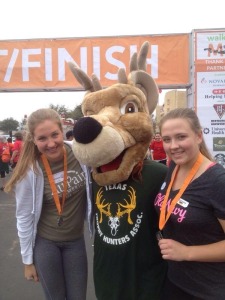
The fog was thick but the resolve thicker as thousands turned out for the annual walk against MS.


MS_walk2MS_walk3MS_walk1


People suffering from multiple sclerosis joined with family, friends, and supporters for the Walk MS 2014 Saturday morning at the AT&T Center. The event raised a little over $205,000 and the money helps people living in Texas with multiple sclerosis and funds national research and support programs.


Alyssa Smith, the development manager of Walk MS San Antonio, said they expected 3,200 people at the event. She said it’s not just about the walk, however. “You’ll see on the start line people getting out of their wheelchairs for the first time in maybe 364 days, because they’re going to walk today, because this is Walk MS.” “That’s what makes our event a little unique because it is this silent disease for some people, where they do not share necessarily how it affects them and their family.”


MS_walk4 (3) - Copy


Thank you to all who participated in this walk!!


If you want to help make a difference, donate here:

http://walktxh.nationalmssociety.org/site/PageServer?pagename=WLK_TXH_ePledge&s_AffiliateSecCatId=1&pw_id=10481


Helping au pairs feel right at home in US

Such a great article, Melinda Brooks! About peace, love, understanding, and child care (The Boston Globe). This is why we do what we do!

Helping au pairs feel right at home in US

As a counselor, Melinda Brooks helps au pairs from around the world adapt to life in America.

As a counselor, Melinda Brooks helps au pairs from around the world adapt to life in America.


The first few weeks can be difficult for au pairs who have never been to the United States. But thanks to Melinda Brooks and other Au Pair in America counselors, the newly arrived guest workers often quickly feel at home with host families

“For many families, the live-in component is the best part of having an au pair — it’s truly a global experience and everyone involved learns about new cultures and customs,” said Brooks, who heads up a New England team of Au Pair in America community counselors.

Au pairs go through a four-day orientation, including safety and child development training. What’s one of the unusual aspects of the training?

It’s the little things, like not knowing how to fold a stroller or operate a microwave, that can be very bewildering. For example, a typical American family has a lot more stuff, not just toys, but infant equipment, like strollers, bouncy seats, and more. So we have all this equipment in a big room to introduce them to the gear.

Which countries do most of the au pairs come from?

We have about 500 host families in New England and recruit from over 50 countries. The families in our area tend to gravitate toward Germany, France, UK, South Africa, Thailand, Brazil, and Sweden.

What stereotypes do au pairs have about Americans?

Americans only eat junk food. All Americans are workaholics. All Americans are overweight. Of course, they quickly realize these are oversimplified images and often far from the truth.

If an au pair will do a lot of driving, are there assumptions you can make about their driving based on their home countries?

Typically Western Europeans tend to be good drivers, because they’re behind the wheel a lot. But in places like Peru, Bolivia, China, Slovenia, Croatia, most people don’t drive frequently. Massachusetts requires them to take driving lessons and get their licenses here.

What’s a typical conflict between au pair and host family?

Often it’s personality or lifestyle issues. They might want the kids out every day to kick the soccer ball, but the au pair might be sleeping in or staying up late. That’s where I come in, to help explain expectations and work through misunderstandings.

What’s your “happily ever after” au pair story?

I have a family in Lexington. The kids are older, so they just said good-bye to their last au pair. When their youngest son made his bar mitzvah recently, 12 au pairs came back to the States to be there. They flew in from all over the world — Germany, Lithuania, South Africa. It’s a testament to cultural harmony that we don’t often see today.

http://www.bostonglobe.com/business/2014/01/26/peace-love-understanding-and-child-care/RJSI55wXk83Im1UJ3CRAXJ/story.html

February Ideas

Having a hard time trying to figure out how to plan your days? Is school closed? How about taking initiative and coming up with some great activities for the kids?! Check out our Au Pair in America Pinterest boards for some great ideas: http://www.pinterest.com/aupairinamerica/

Or visit The San Antonio Kids’ Guide for more suggestions: http://sanantoniokidsguide.com/

Don’t have time to go anywhere? See below!

Continue reading

Winter Fun

January Ideas:

Childcare focus
At some point this winter your host child will probably develop a fever, i.e. a body temperature that is higher than the normal 98.6 F. It is very important to realize that fever itself is not an illness – only a symptom of one. When your host child has a fever, his/her heart rate and breathing will speed up slightly in addition to feeling slightly warm. She/he may appear flushed and perspiration may be present as well. Do not give medicine to your host child without the permission of your host family. There are strict guidelines for dosages and they MUST be followed.

Travel
Au Pair in America has an exclusive agreement with INTREPID Active & Adventure travel. INTREPID has been offering regional tours of the US for young adults for almost 40 years. Au pairs with Au Pair in America will receive a 20% discount off the published rate!  Visit http://www.intrepidtravel.com/ to plan your INTREPID Adventure.

ABC’s of Winter Fun

A is for Art – try drawing, painting, or gluing
B is for Baking bake a dessert together for dinner
C is for Clay – use non-hardening clay or play dough to shape and mold
D is for Dance – put on a lively tape
E is for Exercise – be sure to get some every week
F is for Friends – invite some over
G is for Greenhouse – find a local greenhouse to visit to enjoy the sights and smells
H is for House – make a playhouse from a large appliance box
I is for Ice skating – take the children to a local rink
J is for Jigsaw puzzle – be sure to pick one that isn’t too difficult
K is for Kitchen science – try a safe experiment
L is for Library – borrow some new books
M is for Movie – make one with a video camera, or watch one
N is for Necklace – make one out of cereal or macaroni
O is for Origami – learn to make simple paper creations
P is for Puppets – socks make easy and fun puppets – put on a show!
Q is for Quiet Time – everyone needs some of this
R is for Reading aloud – choose a good book and a comfortable place to sit
S is for Seeds and Suet – put out food for the birds and watch them eat
T is for Tent – make one from old blankets and chairs
U is for Unplugged – do a day with no TV
V is for Variety – try something new
W is for Walk – take one in any weather (be sure to dress appropriately)
X is for Xylophone – make your own with glasses, water, and a metal spoon
Y is for Year – make a calendar or scrapbook to remember the year
Z is for Zoo – visit the animals

UT Basketball Game

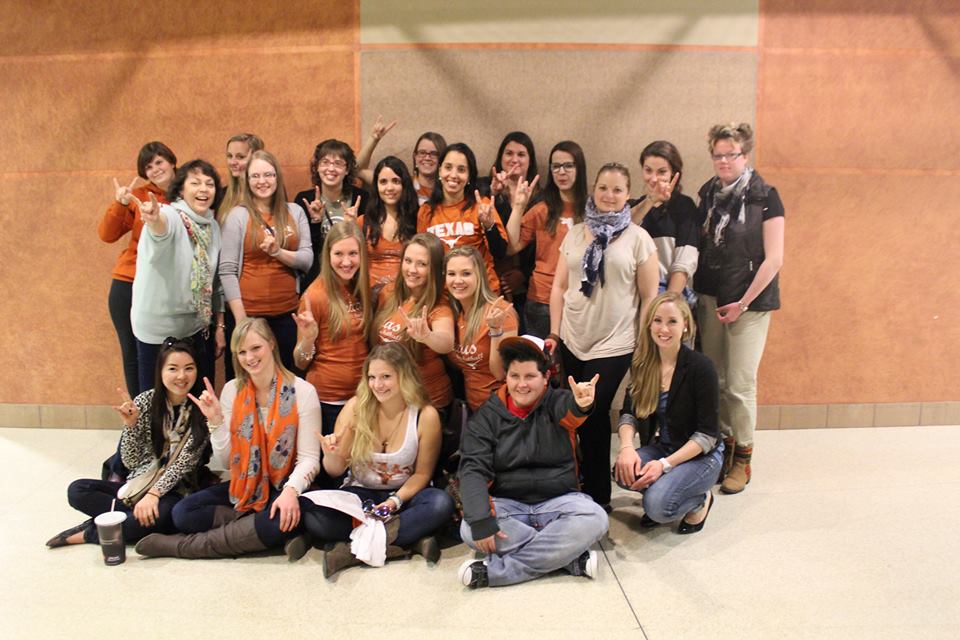
Great pic from our January cluster meeting!
We met up with the Austin cluster and had a really good time at the Texas Longhorns (vs. Iowa State) basketball game!! We saw some great cheer and dance routines, made some new friends, AND the Longhorns came out on top!!
All in all, it was a FUN day! 🙂


UT Basketball Game