Author Archives: Christine Connally

Holiday & Vacation Reminders

“Rest and be thankful.” – William Wordsworth

Holidays and vacations are a great opportunity to rest, recharge and explore the U.S.

Memorial Day Weekend is the unofficial start of summer travel season. Here are some reminders about program rules regarding holidays and vacations.

Holidays

  • Host families are not required to give au pairs any specific holidays.
  • Each host family will make different arrangements on holidays, some au pairs will be off and others will be required to work.
  • Au pairs should not make plans for holidays without checking with your host family first.

Vacations

  • Au pairs earns 2 weeks of paid vacation during the course of her year.
  • Vacation time should be mutually agreed upon.
  • All vacation should be preplanned (at least 4 weeks in advance.)
  • All au pair’s friends and/or family visits/vacations should be pre-approved prior to purchasing tickets.
  • If an au pair travels with her host family, it should be discussed in advance whether this is the au pair’s vacation or if she is working.
  • If an au pair travels with the host family to work, the host family is required to pay for her transportation, lodging and meals.

Important: If an au pair is traveling outside of the U.S., she must have her DS2019 signed (travel validation) PRIOR to her departure from the US. More information about this may be found here on the Au Pair in America website.

Photo: torbakhopper (Flickr)

Helping Young Children Learn Language

Being an au pair is an important role in a child’s life. When you are caring for a young child up to 45 hours per week, there are lots of opportunities to help them learn language. Many host parents are eager for their children to be exposed to foreign language. If this is true of your host parents, you can try the suggestions below, in both English and your native language.
Below are a few tips to start with, for more ideas, check out Ready at Five.

  • Read – Read to them daily, point out pictures and ask questions. Even if they can’t answer the questions, this is still modeling conversation.
  • Talk – Point out objects around them, names of their body parts, explain what you are doing and places you are going. Long before babies can speak, they benefit greatly from being spoken to.
  • Sing – You can sing childhood classics or make up your own silly songs. If you are looking for song ideas, HERE is a great website with lists of songs, lyrics and links to YouTube videos* of the songs.  Children’s music is also available at the public library and even on iTunes.
  • Words – As children move from toddlers to preschoolers begin to point out written language.
  • Writing – Toddlers and preschoolers can begin to learn pre-writing skills by drawing with crayons or doing finger paints.

*The American Academy of Pediatrics recommends no screen time for babies under 18 months of age. For children 18 months to 5 years they recommend no more than 1 hour of high quality content. You can play the songs on youtube for the audio and not necessarily show the screen to the child.

Photo: Quinn Dombrowski (Flickr)

Handling Expenses

Host parents often ask for suggestions on how best to handle common expenses that occur as au pairs are caring for the children.
Miscellaneous Expenses

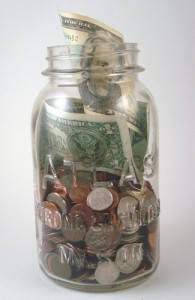
There are different ways to handle the little day to day expenses that come up.  Things like when an au pair takes the kids out for ice cream or picks up a gallon of milk.  Some families keep a cookie jar fund, a little cash that they set aside weekly or monthly for these types of expenses. Others give their au pair a prepaid debit card for this purpose. Below are some suggestions for avoiding problems with expenses.

Host Families

  • It’s important to be clear about how long this money should last and what types of expenses are approved.
  • Let the au pair know whether or not you expect receipts.

Au Pairs

  • Only spend the money on approved expenses.
  • If it is something you are not sure about, ask first.
  • Put your receipts in the cookie jar in place of the money to avoid any confusion.

Gas and Fare Cards 

Host families are responsible for the au pair’s transportation costs: to and from classes, cluster meetings and when driving the kids.

It is a good idea to figure out how much gas an au pair will use for these trips and either put gas in the car or give a gas allowance.   If your au pair is riding to classes or cluster meetings with another au pair, you should offer to share the cost of gas.

Au pairs are responsible for their own transportation at all other times.  You should replace the amount of gas used for personal use.

Photo: Andrea Travillian

Childcare Focus – Supervision

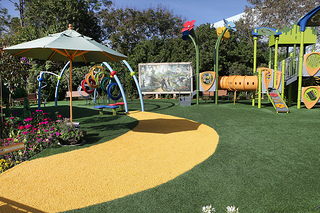
Whether you are at the park, in the backyard or in the playroom, stay with the children at all times! If you are on duty the safety and well being of the children is your job. If you have a middle-schooler, who is able to walk to and from school, or play outside with friends, you still need to know where he/she is and whether an adult is present. Make plans for when he/she will call you, where you can find him/her, and what time you expect him/her home.

Photo credit: Sam Howzit (Flickr)

Stopping for School Buses

With some schools getting back in session and many new au pairs who have recently arrived, I wanted to remind everyone about what to do in different situations with school buses. If you have questions, please ask your counselor or your host parents.

The rules regarding stopping for school buses are:

  • It is against the law to pass a stopped school bus while its lights are flashing and its’ stop arm is extended.
  • On undivided roadways, with no physical barrier or median, vehicles must stop on both sides of the roadway.
  • Yellow flashing lights indicate that the bus is preparing to load or unload children. Motorists should slow down and prepare to stop their vehicles.
  • Red flashing lights and extended stop arms indicate that the bus has stopped, and children are getting on or off. Motorists approaching from either direction must wait until the red lights stop flashing before proceeding.

Holiday and Vacation Reminders

With Spring Break coming soon, I wanted to remind everyone about program rules on holidays and vacations.luggage malias

Holidays

  • Host families are NOT REQUIRED to give au pairs any specific holidays.
  • Each host family will make different arrangements on holidays, some au pairs will be off and others will be required to work.
  • Au pairs should NOT make plans for holidays without checking with your host family FIRST.

Vacation

  • Au pair earns 2 weeks of paid vacation during the course of her year.
  • The host family can pick a week and the au pair can pick a week, if an agreement is not reached.
  • All vacation should be preplanned (at least 4 weeks in advance.)
  • All au pair’s friends and/or family visits/vacations should be pre-approved prior to purchasing a ticket.
  • If an au pair travels with their host family, it should be discussed UP FRONT whether this is the au pair’s vacation or if she is working.
  • If an au pair travels with the host family to work, the host family is required to pay for her transportation, lodging and meals.

Important: An au pair MUST have her DS2019 signed PRIOR to her departure from the US. More info. about this can be found on the right side of this page under “Travel Links for Au Pairs.”

Indiana Dunes!

Seventy-five au pairs from the Chicago area enjoyed an afternoon together at the Indiana Dunes.  The weather did not cooperate, but au pairs had no trouble making the day fun!APIA DunesAu Pair Dunes 2

Impact!

Impacting lives of young people through cultural exchange is vital to the mission of APIA, so we love to hear back from our au pairs.  The following email came to a staff person in our Stamford, CT headquarters:

Hi Mary, I hope all is well with you…I really appreciate you and all of the AuPair in America staff. Yesterday 9 years ago I entered the US for the very first time in my life not knowing what wonderful things were ahead of me. It all started with orientation and I still have such vivid memories from those very first few days in this country like it was just last month. Now I am a doctor in this country and just feel so very blessed. I have truly gained a second family in my host family and we are still in such close contact and I can’t wait for my first vacation so I can go see them again. Without you and the organization I would not be the person who I am today and that is what I want to thank you for today! Thank you for all you do for all the au pairs!  Love, Melanie

Au Pairs and our Community

Linus Blanket Au pairs in the western suburbs got together to make a blanket for Project Linus.  Project Linus provides security blankets for children who are ill or experiencing  trauma.  We will be collecting fleece for a major Project Linus Initiative planned for the fall 2012.  Contact aupairdupage@gmail.com for more information.

June is National Zoo and Aquarium Month

Kids love animals!  The Chicago area is full of wonderful places to see them.  Brookfield Zoo (www.brookfieldzoo.org) in the Western Suburbs, Shedd Aquarium (www.sheddaquarium.org),  and Lincoln Park Zoo (lpzoo.org) in the city are among the world class places you can visit.    But you can’t do big trips with the kids every day, so younger children might enjoy setting up a pretend zoo with play animals and blocks.  Older siblings can create a map of the zoo’s exhibits and “tickets” for host moms and dads to use while touring the zoo.  And, of course, nothing is more fun than adding the soundtrack (animal sounds!).  The library is full of animal books.  For young ones read Dr. Seuss books like If I Ran the Zoo and older ones will enjoy checking out animal fact books or DVDs like National Geographic’s Blue Planet. Animal fun will go as far as your creativity can take you!