An au pair’s last work day is the date before her arrival in New York. For example, if an au pair arrives on May 14, her last work day would be May 13 of the following year.
Author Archives: Christine Connally
Summer Fun with Bees!
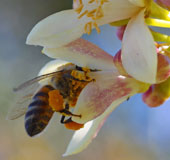
Bee searching for pollen
Fun with Bees!
Summer is a great time to observe and learn about the wonderful world of bees, but be careful not to get too close!
At the Library:
Look for books about bees such as Berlioz the Bear by Jan Brett or Bumblebee, Bumblebee, Do You Know Me? : A Garden Guessing Game by Anne Rockwell.
Arts and Crafts:
- Make a large “Bee Garden” poster: Use green paper and create a flower garden using markers or construction paper or crayons. Draw bees visiting the flowers.
- Make a Bee Headband: Use a 1-1/2” wide piece of construction paper measured to fit the circumference of the child’s head for the headband. You need chenille stems (pipe cleaners) if you want to make the flowers stand up. Make the flowers out of tissues or stiff paper.
Make a Bee Snack
Make pumpernickel (dark) bread with melted cheese stripes.
Six Buzzing Bumblebees (a finger play – use your fingers as the bees)
Six buzzing bumblebees
Flying ‘round the hive,
One buzzes off and then there are five.
Five buzzing bumblebees
Flying near my door,
One buzzes off and then there are four
Four buzzing bumblebees
Flying ’round a tree.
One buzzes off and then there are three.
Three buzzing bumblebees
In the sky so blue.
One buzzes off and then there are two.
Two buzzing bumblebees
Flying toward the sun.
One buzzes off and then there is one.
One buzzing bumblebee
Looking for some fun,
Oops! It stung me….off it buzzes.
Then there are none.
Local Au Pairs Featured in Geneva Sun Newspaper
The Geneva Sun Newspaper recently ran a great article on Chicago area Au Pair in America community counselor, Sandee Plescia and her au pairs. It discusses the cultural exchange aspect of the program.
Read the article HERE.

Father's Day is here!

Father’s Day
What Makes A Dad
God took the strength of a mountain,
The majesty of a tree,
The warmth of a summer sun,
The calm of a quiet sea,
The generous soul of nature,
The comforting arm of night,
The wisdom of the ages,
The power of the eagle’s flight,
The joy of a morning in spring,
The faith of a mustard seed,
The patience of eternity,
The depth of a family need,
Then God combined these qualities,
When there was nothing more to add,
He knew His masterpiece was complete,
And so, He called it … DadAuthor is unknown
To honor the father in your family, work together to make one of these special homemade gifts:
http://familycrafts.about.com/cs/fathersdaycrafts/?once=true.
Here are some other ideas for Father’s Day crafts:
http://crafts.kaboose.com/holidays/fathers-day/
When the working day is through….
Au Pairs work hard all week long. They provide childcare for their Host Families for up to 10 hours a day and 45 hours a week. They have fun with the children; taking them to the park, playing games, reading, helping with homework, driving to activities and so much more. So when the work week is over, Au Pairs love to take a break and relax.
On Friday, April 16 three Au Pair in America clusters from the western suburbs gathered at Expression Dance Studio in Westmont for: “Au Pair Dance Night Out.” They were joined by their local Community Counselors Maria, Pat and Pam, and one very brave set of Au Pair parents for some dance lessons and a whole lot of fun. The au pairs learned a few “smooth latin moves” and how to have fun, and look good out on the dance floor. One Au Pair commented: “Dance Night was so much fun, we should do this again very soon.”

Naperville Cluster Makes Food Baskets For Local Pantry
The Naperville Cluster gathered for one of their monthly cluster meetings to “give back” to a local charity. They exercised their creativity and generosity by putting together beautiful baskets to give to families in need through the Naperville Loaves and Fishes organization. A fun time was had by all.

Happy Easter
Easter is on Sunday, April 4 for both “Western” and “Eastern Orthodox” Christians this year. Here is some Easter trivia from around the world:
| According to widespread belief, Easter owes its name to “Eastre”, the Anglo-Saxon goddess symbolizing hare and egg. Another theory suggests that it comes from the early German word “eostarun”, meaning dawn and white. | |
| Easter always falls between March 22 and April 25. | |
| Easter is a “moveable feast” as it does not fall on a fixed date in the Gregorian or Julian calendars. The full moon determines the date of Easter. | |
| “Pysanka” is a name given to the tradition of Easter egg painting. | |
| The color used in painting the eggs differ in different nations. Orthodox Grecians paint their eggs red to symbolize the blood of Christ. Some Germans and Austrians paint their eggs green and use them on Holy Thursday. Slavic peoples decorate their eggs in gold and silver patterns. | |
| Chocolate eggs were traditionally given as gifts in Europe. | |
| In 19th century Europe, bitter dark chocolate was used to make small egg shapes. These chocolate eggs were traditionally exchanged as Easter gifts, especially in countries like France and Germany. | |
| Ninety million chocolate Easter bunnies and 16 billion jelly beans are produced each year before the commencement of the Easter festivities. As a holiday, Easter comes only second to Halloween in terms of the annual sale confectionary items. | |
| 76 percent of people eat the ears on chocolate bunnies first. | |
| According to the Guinness Book of World Records the largest Easter egg ever made was just over 25 feet high and weighed 8,968 lbs. | |
In countries like Hungary and Transylvania, the day after Easter is called “Locsolo Hetfo” meaning “Watering Monday”. This is because water, perfume or perfumed water is often sprinkled in exchange for an Easter egg on this day.  |
|
National Puzzle Day

Get creative, make your own puzzle
Today is National Puzzle Day!
Do a puzzle or make one of your own. Au Pairs can help the children to find a fun picture in a magazine and glue it to lightweight cardboard. Cut into shapes. If the children are small, make it just a few easy shapes. To make your own word or math puzzles with the children, visit http://puzzlemaker.school.discovery.com/.
January 27 is Mozart's Birthday
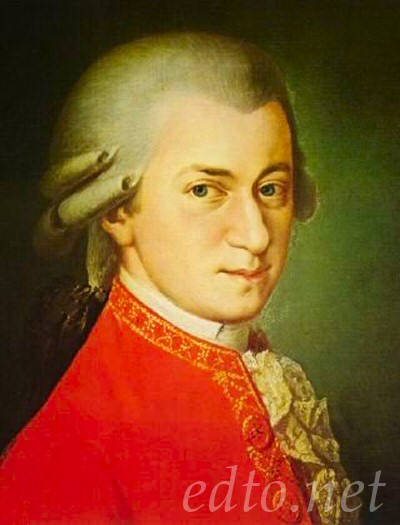
Mozart
Children don’t often have the chance to listen to classical music. Au Pairs can download Mozart from the web at www.classicalarchives.com/mozart.html. This music may be calming and delightful at nap time, mealtime, or to inspire drawing on paper with crayons or markers.
January 26 is "Australia Day"
Mother and Baby Kangaroo
People across New South Wales join together in celebration of what it means to be Australian. Australia is unique because it is an island country that is also a continent. You can learn more about Australia by visiting www.kidskonnect.com/content/view/301/27/.