Tag Archives: safety

Three Ways for Au Pairs to Stay Red Cross Ready

Being knowledgeable in basic first aid and CPR is important for au pairs (and anyone else caring for children). Au Pair in America’s commitment to infant/child safety begins before au pairs arrive to the U.S., with pre-arrival training and continue throughout the au pair year.
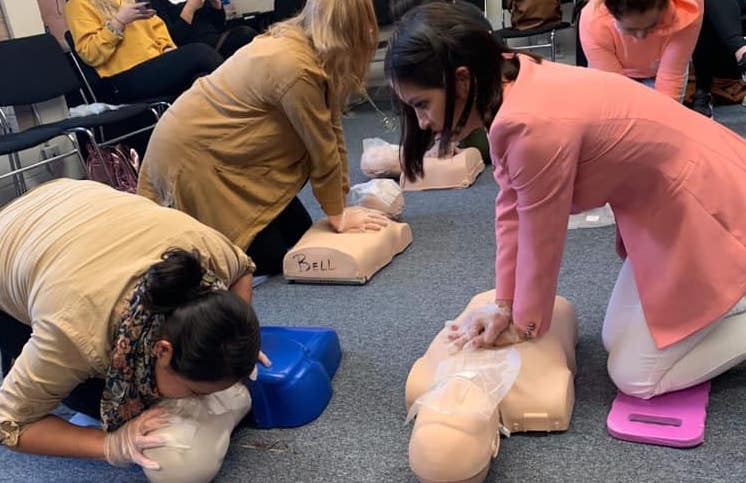
#1 Training At Orientation

Our orientation includes seminars by American Red Cross instructors who provide hands-on demonstrations in infant/child CPR and safety. Printed materials are provided that reinforce the safety information and can be used to review from time to time.

#2 Enroll in a Red Cross Certification Class

After settling into their host community, all au pairs are encouraged to complete an Infant/Child CPR and First Aid certification program. Au Pair in America will pay for this training through the American Red Cross.
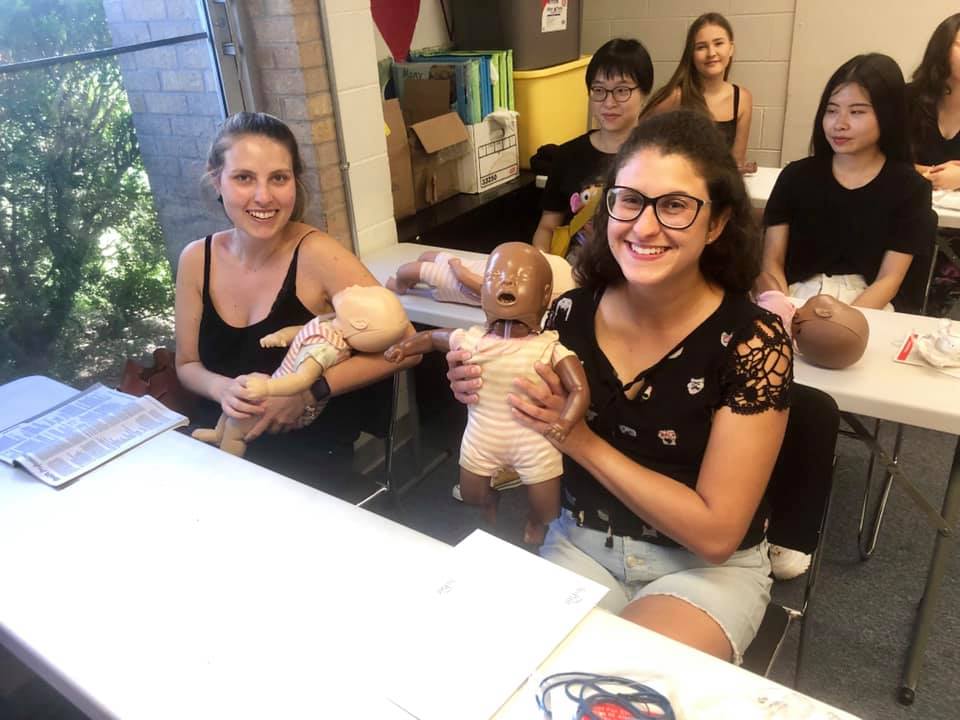
Classes are available through the Red Cross. Au Pair in America will pay for the cost of a class providing an au pair has at least six months left on her visa and is taking one of several approved childcare/child safety-related classes, such as Adult and Pediatric First Aid/CPR/AED. Au pairs should check with their community counselor and host family before signing up. Au Pair in America will register the au pair directly.

To locate a class, visit www.redcross.org/takeaclass. For step-by-step instructions on how to locate a class and have Au Pair in America complete enrollment, click here.

#3 Stay Current on Safety Information

The Official American Red Cross First Aid app puts expert advice for everyday emergencies in your hand. Available for iPhone and Android devices, this app gives you instant access to the information you need to know to handle the most common first aid emergencies. With videos, interactive quizzes and simple step-by-step advice, it’s never been easier to know first aid. Download the app for free from the American Red Cross website or in your app store.

Photos: Robin Leon

Privacy & Personal Information Online

We live in a time of constant sharing through social media. We often share pictures, plans of somewhere we are going or rants about problems, without thinking much about who will see it and what could be the consequences.

Before clicking “post”, stop to think:

  • Am I violating someone’s privacy?
  • Am I sharing personal info. that could put me in danger?
  • Would I want my current or a future employer to see this?

This will help protect your privacy and safety as well as that of your host family. It is important to respect your host family’s privacy and not share personal details and information.  This applies to all kinds of situations, including: personal conversations, email and social websites.

For your own safety, it is a good idea to be careful what personal information you share about yourself as well. You should not give out information like your telephone number and address to people you don’t know. Safer to meet a new friend in a public place, than to give them your address before knowing them.

Once you post something on the internet (even if you later delete it), it can show up elsewhere.  Unless you have specific permission from your host family, you should never post pictures of them, their children or their home on the internet.

If you have a blog or website where you post in your native language, remember there is translation software. So, even if you say it in your native language, be sure it is not something that might be misinterpreted in translation or something you will regret saying.

10 Tips for Summer Safety

  1. Remember to bring along drinks, especially water. Try to get children to drink water every 20 minutes, when they are outside in hot weather.
  2. Pay attention to surfaces that can be hot against children’s skin, such as metal slides and other playground equipment in the sun.
  3. Safety around water is particularly important. A child can drown in just a few inches of water. Whenever you are near water you must never leave a child alone – if the phone rings, take them with you or let it ring! Always stay within arm’s reach when the children are in or near water.
  4. Young babies should be kept out of direct sunlight. Keep the baby in the shade or under a tree, umbrella or stroller canopy.
  5. Dress babies in lightweight clothing and use brimmed hats.
  6. Apply sunscreen 30 minutes before going outside, even if it appears overcast (cloudy).
  7. Try to keep children out of the sun in the middle of the day when the sun is strongest.
  8. Learn what poison ivy looks like and keep children out of it. A good rule to teach the children is “leaves of three, let it be.”
  9. Use insect repellent spray to keep away mosquitos and ticks. Ask your host parents before applying.
  10. Check for ticks when you bring children in from playing outside, especially if you’ve been in tall grass or the woods.

Photo: Scott97006 (Flickr)

SaveSave

Preventing Dehydration in Hot Weather

Dehydration means that the body lacks the necessary amount of fluid. Infants and small children are more likely to become dehydrated than older children or adults, because they can lose relatively more fluid quickly.

Here are some steps to take to make sure children remain hydrated in the summer months:

  • Encourage your child to drink plenty of water. On hot days, children should drink significantly more water than usual, as they are losing more due to the heat.
  • Do not wait until your child is thirsty to give him water. By the time they feel thirsty, they are already becoming dehydrated.
  • If your child is resistant to drinking enough water, have other liquids on hand for your child to drink throughout the day.
  • Be alert to changes in behavior. A child may act confused or more irritable when they are becoming dehydrated/overheated. Get them into cooler temperatures and drinking more fluids.
  • Dress your child in lightweight clothing in the summer months, particularly if she’ll be playing outdoors in warm weather. You may also consider clothes that are well ventilated as they do not trap heat close to the body.
  • When there are heat and/or air quality advisories because the weather is dangerously hot, you should avoid taking the children outdoors. Check with your host parents for further guidance on this topic.

Remember to follow these tips for yourself too, so you stay well hydrated.

Photo: Darwin Bell (Flickr)

Driving with Children in the Car

1. Be prepared. Before you put the kids in the car, make sure you have items that they may need easily on hanBXP59761d or within reach. For babies, plan for snacks before you depart as eating in the car may not be the best practice due to your limited ability to react to choking or spills. For older kids, put snacks and drinks so that they are accessible and toys within easy reach. In all cases, make sure that any heavier items such as video games or larger books have a place to be stored such as in the seatback pockets so that they won’t become potential projectiles in the event of a crash.

2. Make them wait. As unpleasant as it can be, tell the kids that you cannot help because you are driving and that they will need to wait until you can pull over or until you get to your destination. You may have to listen to a tantrum, but at least the child is restrained in a seat and cannot hurt anyone.

3. Keep your eyes forward. Resist the urge to reach back or take your eyes off the road even when you’re stopped. It only takes a second for an accident to occur.

4. Pull over. If you cannot deal with screaming and need to tend to your child immediately, pull over to a safe spot. It’s safer to get off the highway and go into a gas station, than move to the side of the road where you could face other hazards such as the possibility of getting struck by another vehicle.

5. Use your mirrors. If your children are in rear-facing car seats, attach a mirror to the head restraint to be able to monitor them. For me, I felt comfortable knowing I could still monitor the kids if there was something wrong without turning around.

6. Set the ground rules. Educate children on car safety. Tell them that parents need to pay attention to the road, so that everyone is safe. If they know you can’t and won’t react then they won’t expect it.

7. Distract the children. When I have whining little ones in the car, I try to distract by engaging them in a song or game outside of the car. Children’s music in the CD player or on satellite radio is a nice addition. Pointing out school buses, fire trucks, and traffic lights always seems to work for us and soon they forget what was bothering them in the first place.

8. Stay off the phone. For the safety of yourself and your host children (and others on the road), do not use the cell phone to talk or text. You’re carrying precious cargo and your job is to transport them safely. IT IS AGAINST THE LAW TO USE THE CELL PHONE WHILE YOU ARE DRIVING! If you need to make a call, pull over to a safe place.

Distracted Driving – Driving with Kids in the Car

Driving with kids in the car can be particularly distracting especially if there is crying, whining, or some other issue that warrants attention. Usually it’s either a dropped toy, needing a tissue, drink, or snack, that distracts us.

It is hard to ignore children who want attention, but when you are driving you need to remain focused on DRIVING!