
Category Archives: Au Pair Tips

5 Tips: Summer Activities With Kids

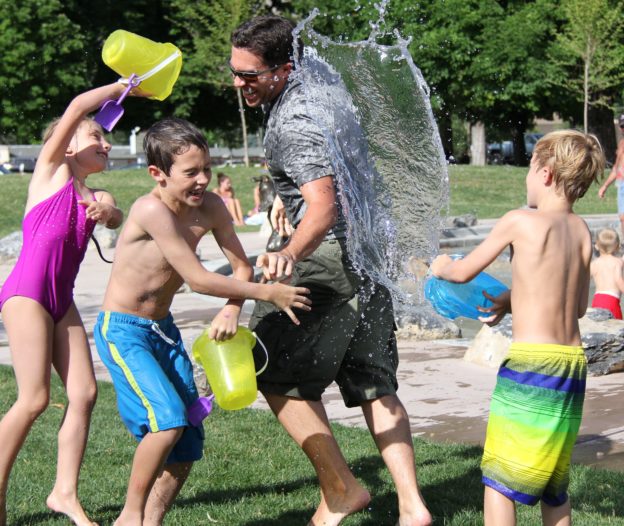
After a long winter, everyone is eager to be outside soaking up the sun and getting all that pent up energy out. Sometimes the winter is so long that it feels like you’re out of practice with things to do outside with the kids. Now that you’ve become well-versed with what to do inside, you need to get up to speed on what to do outside. Have no fear, there are plenty options. Here are five tips on outdoor activities to help kick off your summer with the kids right.

Outdoor Artistry

There is one thing almost all kids love –art. What goes hand in hand with making art? Making messes. It’s the perfect time of year to make a mess outside. It’s so much easier to clean up when it’s on the sidewalk, driveway, patio, or grass. An easy activity is chalking the driveway. Almost all local convenience stores, grocery stores, or pharmacies sell chalk kits.  Finger painting is perfect for outdoor entertainment also. Set up an easel out on the front lawn or even in back on the patio and put a smock on the kids and let them go to town with all the colors. Clean up is easy if you keep a hose nearby so you can clean off the paint. Be sure to wash everyone’s hands thoroughly or head right to the bath afterward!

Hiking

Chances are you live near a forest preserve, a land trust, or a nature center.This makes for the perfect outdoor adventure that will not only get all of you moving, but allow for the kids to get some energy out. All you need is a backpack with some SPF, bug spray, bottles of water, light snacks, wet wipes and you’re good to go.

Unorganized Sports

Sometimes getting everyone out the door is as easy as saying, “Grab the soccer ball and meet me in the backyard!” Within a few minutes, everyone is breaking a nice sweat. This also applies with a bat and ball, a frisbee, volleyball, field hockey, basketball, or even just playing simple catch with a ball. Keep these things easily accessible in the summer months. A plastic bin outside or in the garage  is a good spot to store them in so they are easy to find and play with on the fly.

Playgrounds/Parks

One of the simplest ways to urge the kids to get up and go is to offer to take them to their favorite playground – or better yet- research a really stellar one and tell them you’re surprising them. There are so many good ones in our neck of the woods here in Connecticut. Here are just a few:

  1. Compo Beach Playground in Westport ($)
  2. Sandcastle playground at Jennings Beach in Fairfield 
  3. Earthplace playground in Westport
  4. Stamford Nature Center Playground ($)
  5. Devon’s Place in Norwalk
  6. Cherry Lawn Park in Darien
  7. Vicki Soto playground in Stratford
  8. Owen Fish playground in Fairfield
  9. Stillmeadow School playground in Stamford

There is also a splash pad at Lake Mohegan in Fairfield and in Trumbull at Indian Ledge. Be sure to bring cash as there may be a charge.   Remember that the beach playgrounds require you to have a beach sticker for that town after Memorial Day. If you don’t have a beach sticker for that town, they will ask you to pay a hefty parking fee at the gate ranging from $20-$80 in some instances.

Excursions

There is much to do in our family friendly area-especially over the summer. You can do something as elaborate as a day trip or as simple as a picnic. Here are some ideas for excursions in the area.

Venture on a picnic at one of our Fairfield beaches, a nearby park, or at the picnic tables along the scenic Mill River on the corner of Brookside and Mill Plain Rd.

Check out Captain’s Cove Seaport located in Bridgeport where you can pick up free scavenger hunt maps for the kids and spend a good 2-3 hours visiting the shops to complete your hunt and having lunch on the water. There is also a play area that is ideal for kids ages 2-7.

Most children love to be able to get up close to animals and touch them. We are fortunate to have two petting zoos in the area: Silverman’s Family Farm in Easton and The Stamford Nature Center. Be sure to bring quarters so that you can feed the animals.  On the topic of animals, we are right in the vicinity of the Beardsley Zoo which is a popular destination for families over the summer. There are also playgrounds nearby the zoo (along the parking path) that you can visit as well.

Picking fruit at a local farm is a great way to spend the day. Strawberries are about ready to be picked and Jones Family Farm in Shelton is open for picking in a few weeks!

Lastly, a good website to check for activities and events nearby is www.mommypoppins.com. Be sure to select CT as your state.

Hopefully these five outdoor play tips for this summer in  Fairfield County area help you to get started on the right foot. You will likely find that there are so many activities right at your fingertips. Enjoy the sunshine and all of your fun activities ahead.


The Importance of Non-Verbal Language

We’ve all been there. Someone we know, whether it is a child or another adult, says “thank you”, or “I’m sorry”, or “It was an accident”, or “this is the best gift ever”,  but their body language is not quite lining up with their words. This can leave us questioning the authenticity behind their communication and can often lead to misperceptions, misunderstandings, and inevitably hurt feelings.  Non-verbal language is just as important as the words themselves. This is key for all of us be aware of and practice in everyday life. Let’s walk through owning our mistakes through a sincere apology, offering a genuine thank you, and lastly being an engaged listener.These are tools to practice throughout your life. Self awareness is important in all of our day to day interactions.

Apologizing

We all make mistakes. We are human, and almost always, we can turn our mistakes into a moment of learning or perhaps a life lesson. Sometimes our mistakes are as simple as spilling a glass of milk or oversleeping after hitting the snooze button one too many times. Other times, mistakes are not always that glaringly obvious until they’ve been pointed out by those around us. These are almost always uncomfortable moments.  One way to take the discomfort out of the equation quickly is to own up to your mistake the moment you realize it.

There are simple steps to doing this.  The first step is admitting it out loud, the second is apologizing for it, and the third is explaining the reasoning behind what happened. However, let’s imagine for a moment that you do all of these things, yet you’re not making eye contact, you’re mumbling, and your arms are crossed with your body turned away from the person you’re speaking with. Do you think the apology has been effective?  The short answer is no. Why? Because you’ve said the words, but your non-verbal queues are negating what you truly mean. The non-verbals have to match your words, otherwise, they may mean nothing at all. While walking through the steps above, make sure you’re looking at the person, your stance is open, and your voice is projecting clearly.

Giving Thanks

Showing sincere gratitude when someone does something nice for us is always an important part of interacting as well. Make eye contact, smile, speak clearly, and express your appreciation. When someone does something kind or nice for us, we often want them to know how much it means. If we’re saying “thank you” but looking down or whispering it, it may feel like we mean just the opposite! We don’t want someone misinterpreting our appreciation for something else due to mismatched body language.

Engaged Listening

Paying attention and active listening is also a key part of all interactions both personally and professionally. Nodding and eye-contact is extremely important. Think of a time when you have been one on one with a friend, a colleague, a co-worker, or a child having a conversation, and they have looked away from you, looked down, or they’ve picked up their cell phone. This doesn’t make anyone feel particularly good. Knowing that this doesn’t make one feel like they are being listened to, be sure to give the person you’re speaking with your attention and actively engage by nodding, chiming in, sitting upright (not slouching), and again making eye contact.

The Most Important Non-Verbal Queue

Remember the best rule of thumb is good eye-contact. This ensures you’re engaged, you mean what you are saying, and you are being truthful. This is key for first impressions, communicating with a child/employee/colleague, and being a good friend/partner.

Check in with Your Body

The next time you find yourself in a situation where you need to apologize, express appreciation, or need to be an active listener, have a checklist in your mind about your body language. Do a body scan while you’re talking. Ask yourself- am I making good eye contact? Are my arms crossed in front of my body or am I open? Am I slouched over or standing/sitting upright? How is my voice projection: am I whispering or am I speaking clearly? The more you’re aware of your body language, the more confident you will feel in your interactions. Your communication will be clear and misperceptions will fall to the wayside.


Daylight Saving Time Begins March 11

What is Daylight Saving Time?

During Daylight Saving Time, clocks are turned forward one hour, effectively moving an hour of daylight from the morning to the evening. Today, approximately 70 countries worldwide utilize Daylight Saving Time, in at least some portion of the country. The U.S. started observing it in 1918, so it celebrates it’s 100th birthday, this year.

In March, we move the clock forward one hour, losing an hour of sleep. In November, we move the clock back one hour, regaining that extra hour of sleep.

An easy way to remember it is: Spring forward, Fall back.

Before you go to bed on March 10, be sure to set the clocks forward one hour!

Photo: Mark Lee

Avoiding Homesickness this Holiday Season

Homesickness can be a problem during the holidays, even if it hasn’t been at any other time of the year. Au pairs often miss their friends and family, familiar places and their own traditions and customs. The holiday activities in the United States seem, and may actually be, different just at a time when an au pair would welcome something familiar. 

It is common for au pairs’ emotions to be close to the surface during the holidays. Her highs are higher, her lows are lower. The enormity of what she has done–actually living in another country (which is an amazing thing when you think about it!)–hits her and throws her into a self-protective mode.

Host parents can help her through this unfamiliar territory by talking to her about what your specific family activities will be (gifts, meals, visitors, religious services, in-home traditions, or none of these, as the case may be.) In the spirit of cultural exchange, ask her if she has any favorite holiday traditions or foods that you might be able to incorporate into your family’s celebration of the season. Let her know what you will be doing, when you will be doing it, and what she can expect. Talk to her about what has to be accomplished and get her involved and interested. Don’t expect her to just “know” what needs to be done. Give her some clear, agreed upon assignments. Make her feel a part of things. And, let her know her contribution is needed and appreciated.

Photo: Sheila Sund (Flickr)

5 Thanksgiving Tips for Au Pairs & Host Parents

Thanksgiving is celebrated on the fourth Thursday of November each year. Even though a few other countries also celebrate Thanksgiving, it’s still considered a uniquely American holiday, one that the au pairs look forward to experiencing. You can learn more about it here.

I really enjoyed Thanksgiving with my host family. It was as I imagined! So much food to try. Everyone got dressed up and shared what they were thankful for. It was so warm and special. The next day we began to prepare for Christmas. It was magical.” Selina from Germany

Below you will find some tips to help you have a terrific Thanksgiving experience.


Host Parents

1.  Please plan to include your au pair in your Thanksgiving celebration, if at all possible. Thanksgiving with an au pair offers an opportunity to consider the relevance of the history and meaning of Thanksgiving as you compare the hospitality offered by the Native Americans to the recently arrived Pilgrims and the hospitality you offer your au pair.

2.  If you are traveling or will not be able to invite your au pair to join you for Thanksgiving, give her plenty of notice and help her make alternate plans. You don’t want to leave your au pair alone over the holiday.

Au Pairs

3.  If you are invited to attend dinner, please let your family know within 5 days of the invitation, whether you are planning to attend. It is considered rude in America to accept the invitation for dinner and then change your mind later in the month. Please be thoughtful.

4.  Make sure to discuss time off during this holiday weekend. Many host families work the Friday after Thanksgiving so do not assume you have this day off or the entire weekend. Talk to your host family, BEFORE you make any plans.

5.  If your host family is unable to include you in their Thanksgiving plans, please let me know if you have trouble making other plans. You may be able to join a friend and their host family for the holiday dinner.

Bonus Tip for the Kids

If you are looking for a fun recipe to make with your au pair, check out these turkey cupcakes. Find more fun activities and recipes on the Au Pair in America Fall Holidays pinboard.

Photo: Tim Sackton (Flickr)

Hints for Success – Overcoming Homesickness

Almost everyone experiences homesickness and culture shock to some degree, when they come to live in a completely new environment. So much is different and it takes time to adjust.

It is normal to miss your own family, at home. Try to remember that they support you and want you to make the most of this experience. They will enjoy learning more about the U.S., through your eyes, as you share your adventures with them.

Top 5 Tips for Dealing with Homesickness

1. Make Friends – Don’t wait for other au pairs to reach out to you, reach out to them. There are other lots of new au pairs who are feeling the same way you are right now. Set a goal to reach out to a few of them each day. Some will respond and some will not. Don’t let that discourage you. No one will ever be mad at you for sending them a message to say hello or ask if they want to do something together. Make friends from various countries and you will also get a chance to practice your English skills together.

2. Stay in touch with your home country, but not too much. Skyping or talking on the phone every day with your family and/or friends back home normally makes homesickness worse. Try emailing instead and reduce the Skype and phone calls to once a week, until you feel stronger. It’s much harder seeing the faces and hearing the voices of those you miss.

3. Get out of the house (or your room specifically) – Go to cluster meetings, have coffee or movies with other au pairs, join a gym, go to the library, go for a walk, visit the mall, get a manicure, visit a museum. If someone invites you out, say “yes.” Also, don’t be afraid to do the inviting. If your host family invites you to do things with them, say “yes.” This will help you get to know each other and contribute to your overall happiness.

4. Realize that it definitely gets better – All au pairs experience homesickness and the vast majority of them get through it, stay and have a successful year (some even extend for a second year!) So, it must get better, right? Once you get past the initial homesickness, most au pairs report how quickly the year goes by.

5. Make Plans – Create your own Au Pair Bucket List (places you want to go, new foods to try, new things to experience during your year in the U.S.) and start doing them now. Post on our cluster Facebook group to find others who may want to join you on your adventures.

Photo by:  Shimelle Laine (Flickr)

SaveSaveSaveSaveSaveSaveSaveSave

Preventing Dehydration in Hot Weather

Dehydration means that the body lacks the necessary amount of fluid. Infants and small children are more likely to become dehydrated than older children or adults, because they can lose relatively more fluid quickly.

Here are some steps to take to make sure children remain hydrated in the summer months:

  • Encourage your child to drink plenty of water. On hot days, children should drink significantly more water than usual, as they are losing more due to the heat.
  • Do not wait until your child is thirsty to give him water. By the time they feel thirsty, they are already becoming dehydrated.
  • If your child is resistant to drinking enough water, have other liquids on hand for your child to drink throughout the day.
  • Be alert to changes in behavior. A child may act confused or more irritable when they are becoming dehydrated/overheated. Get them into cooler temperatures and drinking more fluids.
  • Dress your child in lightweight clothing in the summer months, particularly if she’ll be playing outdoors in warm weather. You may also consider clothes that are well ventilated as they do not trap heat close to the body.
  • When there are heat and/or air quality advisories because the weather is dangerously hot, you should avoid taking the children outdoors. Check with your host parents for further guidance on this topic.

Remember to follow these tips for yourself too, so you stay well hydrated.

Photo: Darwin Bell (Flickr)

Holiday & Vacation Reminders

“Rest and be thankful.” – William Wordsworth

Holidays and vacations are a great opportunity to rest, recharge and explore the U.S.

Memorial Day Weekend is the unofficial start of summer travel season. Here are some reminders about program rules regarding holidays and vacations.

Holidays

  • Host families are not required to give au pairs any specific holidays.
  • Each host family will make different arrangements on holidays, some au pairs will be off and others will be required to work.
  • Au pairs should not make plans for holidays without checking with your host family first.

Vacations

  • Au pairs earns 2 weeks of paid vacation during the course of her year.
  • Vacation time should be mutually agreed upon.
  • All vacation should be preplanned (at least 4 weeks in advance.)
  • All au pair’s friends and/or family visits/vacations should be pre-approved prior to purchasing tickets.
  • If an au pair travels with her host family, it should be discussed in advance whether this is the au pair’s vacation or if she is working.
  • If an au pair travels with the host family to work, the host family is required to pay for her transportation, lodging and meals.

Important: If an au pair is traveling outside of the U.S., she must have her DS2019 signed (travel validation) PRIOR to her departure from the US. More information about this may be found here on the Au Pair in America website.

Photo: torbakhopper (Flickr)

Helping Young Children Learn Language

Being an au pair is an important role in a child’s life. When you are caring for a young child up to 45 hours per week, there are lots of opportunities to help them learn language. Many host parents are eager for their children to be exposed to foreign language. If this is true of your host parents, you can try the suggestions below, in both English and your native language.
Below are a few tips to start with, for more ideas, check out Ready at Five.

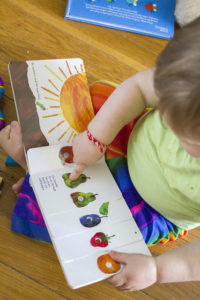
  • Read – Read to them daily, point out pictures and ask questions. Even if they can’t answer the questions, this is still modeling conversation.
  • Talk – Point out objects around them, names of their body parts, explain what you are doing and places you are going. Long before babies can speak, they benefit greatly from being spoken to.
  • Sing – You can sing childhood classics or make up your own silly songs. If you are looking for song ideas, HERE is a great website with lists of songs, lyrics and links to YouTube videos* of the songs.  Children’s music is also available at the public library and even on iTunes.
  • Words – As children move from toddlers to preschoolers begin to point out written language.
  • Writing – Toddlers and preschoolers can begin to learn pre-writing skills by drawing with crayons or doing finger paints.

*The American Academy of Pediatrics recommends no screen time for babies under 18 months of age. For children 18 months to 5 years they recommend no more than 1 hour of high quality content. You can play the songs on youtube for the audio and not necessarily show the screen to the child.

Photo: Quinn Dombrowski (Flickr)

Handling Expenses

Host parents often ask for suggestions on how best to handle common expenses that occur as au pairs are caring for the children.

Miscellaneous Expenses

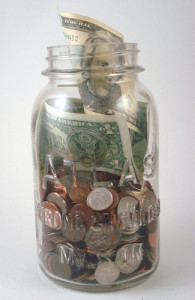
There are different ways to handle the little day to day expenses that come up.  Things like when an au pair takes the kids out for ice cream or picks up a gallon of milk.  Some families keep a cookie jar fund, a little cash that they set aside weekly or monthly for these types of expenses. Others give their au pair a prepaid debit card for this purpose. Below are some suggestions for avoiding problems with expenses.

Host Families

  • It’s important to be clear about how long this money should last and what types of expenses are approved.
  • Let the au pair know whether or not you expect receipts.

Au Pairs

  • Only spend the money on approved expenses.
  • If it is something you are not sure about, ask first.
  • Put your receipts in the cookie jar in place of the money to avoid any confusion.

Gas and Fare Cards 

Host families are responsible for the au pair’s transportation costs: to and from classes, cluster meetings and when driving the kids.

It is a good idea to figure out how much gas an au pair will use for these trips and either put gas in the car or give a gas allowance.   If your au pair is riding to classes or cluster meetings with another au pair, you should offer to share the cost of gas.

Au pairs are responsible for their own transportation at all other times.  You should replace the amount of gas used for personal use.

Photo: Andrea Travillian