Category Archives: Host Family Tips

Handling Miscellaneous Household Expenses or “Petty Cash” with Au Pairs

As summer has arrived, the kids may be home more often requiring Au Pairs to spend “petty cash” on snacks for the children at the pool, taking them to the movies, crafts projects, lunches in the day etc.

So, here is is a tip on “Handling Expenses” by Au Pair in America Senior Community Counselor – Christine Connally of Bowie, MD

May 15, 2014 – 12:56 am

Miscellaneous Expenses

There are different ways to handle the little day to day expenses that come up.  Things like when an au pair takes the kids out for ice cream or picks up a gallon of milk.  Some families keep a cookie jar fund, a little cash that they set aside weekly or monthly for this kind of expenses.  Here are some suggestions for avoiding problems with expenses.

Host Families

  • It’s important to be clear about how long this money should last and what types of expenses are approved.
  • Let the au pair know whether or not you expect receipts.

Au Pairs

  • Only spend the money on approved expenses.
  • If it is something you are not sure about, ask first.
  • Put your receipts in the cookie jar in place of the money to avoid any confusion.

Gas and Fare Cards

Host families are responsible for the au pair’s transportation costs:

  • to and from classes and cluster meetings
  • driving the kids

It is a good idea to figure out how much gas an au pair will use for these trips and either put gas in the car or give a gas allowance.   If your au pair is riding to classes or cluster meetings with another au pair, you should offer to share the cost of gas.

Au pairs are responsible for their own transportation at all other times.  You should replace the amount of gas used for personal use.

Au Pairs Prepare Now for Summer with Pool Safety Class

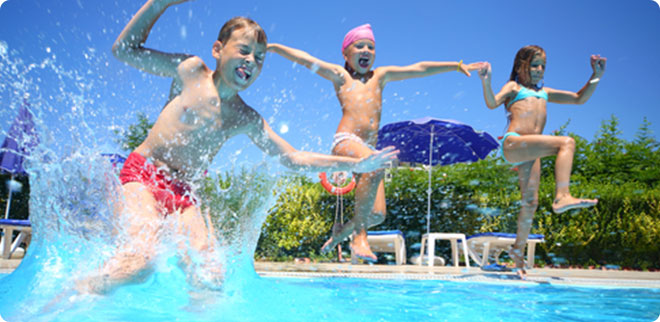
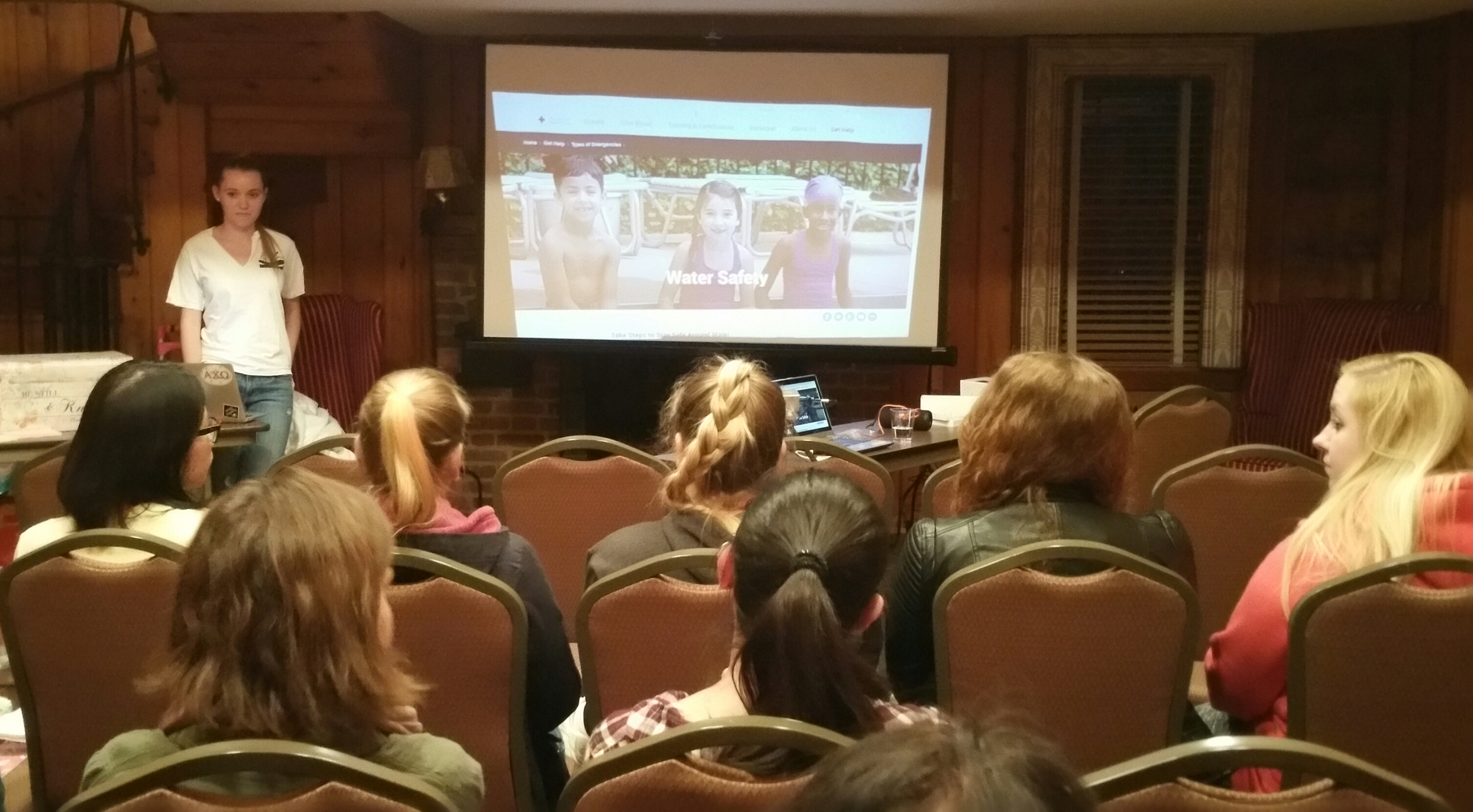
Au Pairs in Victoria Paton’s Cluster gathered in our Rockville “Cluster Cottage” to brush-up on their pool safety skills for both public and home swimming this year.kids jumping in

Life guard Aileen Farrell of Montgomery Country spoke about being vigilant (do not rely on the pool life guard to watch your children – you must also be vigilant), what drowning looks like across a crowded pool – hint: it is less obvious than you’d think, talking to host parents before pool season about escorting children to changing rooms/toilets, using objects at pool-side for water rescues etc.pool safety

Please take a look at the video now. It could save a life.

Here is another useful video.

The American Red Cross provides very useful information here.

Thanksgiving – What is it and why is it celebrated?

What is the History of Thanksgiving in United Starockwelltes?

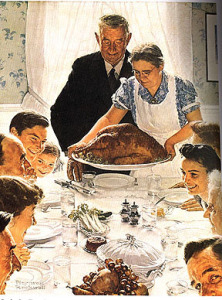
The initial “Thanksgiving” feast, held in 1621, was really a traditional English harvest celebration. The Pilgrims shared it with the Native Americans because they had taught the colonists to plants crops and hunt wild game. Without the Native Americans, the Pilgrims may not have survived the harsh winter and been able to celebrate their first harvest of plentiful crops in the New World. The colonists’ first harvest feast lasted for three days. Food was served all at once, instead of in courses, so people ate whatever they pleased in the order that they desired. The more important members at the feast were given the best pieces of meat, while the rest of the diners ate whatever was closest to them. Since the Pilgrims didn’t use forks or plates, they ate their meal straight off the table with spoons, knives or their fingers. They used large napkins to wipe their hands and also wrapped it around food when it was too hot to hold.

Nowadays, the day before the third Thursday of the month is the busiest travel day of the year (even more than Christmas). In America people of all religions, races etc. celebrate this holiday and they bring to it the foods that they enjoy at celebrations from their home countries. Turkey, mashed potatoes, sweet potatoes, pumpkin pie, stuffing, cranberry sauce are all traditional parts of a current Thanksgiving meal. It is a very important occasion for families to gather together from all over the country.

A fun movie to rent at this time of year is “Planes, Trains and Automobiles” a comedy about a man trying to get home for his Thanksgiving meal. Lots of laughs.

Au Pairs please note: While host parents and other workers are off for the day, it is NOT an Au Pair holiday off of work unless an Au Pair is given that day off by the Host Family…Au Pairs are to help the family in whatever way is needed as it is a busy day but, more importantly, Au Pairs should be part of this very American holiday! This may be your only time to join in a true American Thanksgiving!  Enjoy.
– Victoria Paton

Thanksgiving story Posted by Silga Vasilevsky on N765e_turkey1ov 5, 2 009

Talking with your kids about their school day

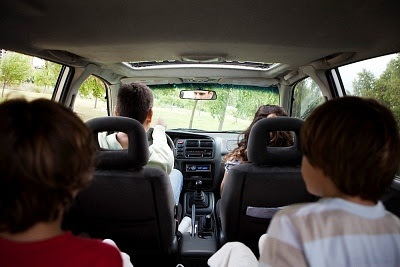
family in car

Pick-up up from school is a very important time for learning about your child’s school day and so much more…

Here is some great information from PBS Parent:

How Was School Today? Are you hoping to avoid the “okay” or blank stare in response to your daily question?
Be sure to listen – JUST listen.  When kids learn that these conversations turn into parent “you shoulds” or are otherwise laden with adult hidden agendas, they develop ways to avoid telling the real story.  Does “Who did you eat lunch with?”  really mean I’m worried that you don’t have any friends.
Does “How was math class today?” really mean did you get in trouble again today?

One way to get off on a different footing is to start with “I had a great day…” or “I had a frustrating day…” or “I made a stupid mistake today…”.  This helps create a conversation instead of an investigation.
You may want to address issues that come up, but give your child a chance to take ownership of any problems and communicate a belief that your child can take care of him or herself.  Listen attentively for hints as to what your child needs from you.  Empathy, encouragement, problem solving?

I’ve collected some thoughts from some on my favorite experts on how to make this conversation meaningful.

Talking with Kids About School: Why is it so hard to talk about school? Parents often get exasperated with kids’ monosyllabic answers to their simple questions. That one well-intentioned line, “How was school today?” has probably provoked more bad feelings between parents and kids than either party ever intended.

“‘How was school today?’ is a frustrating question for both parents and kids,” notes Michael Thompson, Ph.D., author of “The Pressured Child.” “Parents never get the answer they want and often don’t understand how difficult this question really is. Without meaning to, parents are asking for a summary but kids don’t summarize the way adults do. So most kids just say ‘fine’ or try to avoid the question entirely.” And then the problem escalates. “Many parents will repeat this question if they don’t get a good enough response because they don’t know how else to ask it,” adds Lawrence Cohen, Ph.D., author of “Playful Parenting.” Fortunately, some simple strategies can get kids and parents talking and listening. “What was fun? What was the worst part of the day? Did your teacher explain that math homework? How did soccer go?” However, communicating effectively about school goes deeper than just asking the right questions. “What are the goals of talking with kids about school and what is the role of the adult in these conversations?” asks Diane Levin, Ph.D., professor of education at Wheelock College. “More than just finding out how their day was, we want to help kids become problems solvers and independent learners. Good conversations help kids see we care about their lives, that we are there to support them, and to help them develop strategies for solving problems themselves.”
Try these strategies to get kids and parents talking about school and listening to each other in meaningful ways. http://www.pbs.org/parents/education/going-to-school/talking-with-kids-about-school/

Understanding Each Other: So why don’t our kids want to tell us about their day at school? And why do we think we need to know every detail? And how can we become more effective listeners? To find out, take a look at the situation from your child’s perspective and compare it to your own.

“How was school?” and “How are you?” are not really questions — they’re greetings. A problem arises because we expect an answer. But the question is so general that it’s difficult for kids to answer, particularly when they are on overload from a challenging day at school. “What parents are trying to do when they ask ‘how was school?’ is to make contact with their child,” explains Michael Thompson, Ph.D. But we don’t realize that the question “how was school” may not be the most effective way to connect.

Kids often think adults ask too many questions.“And they are right,” adds Thompson, “we do. Adults are often just trying to start a conversation and don’t understand that their questions make a child feel put on the spot. Be aware that a question from a big person like you can place demands on a small child, even though you don’t mean it that way.””It’s important to also be clear why you are asking children about school. Is it merely chit chat, are you looking for something more meaningful, and are you communicating in ways that relate to your child’s experience?” notes Diane Levin, Ph.D.

School can be hard for kids and that’s why it’s hard for them to talk about it. Every day at school, kids get things wrong and make mistakes. That’s how they learn. But generally, kids don’t want to come home and say, “I was frustrated by my mistakes but I learned from them.” They would rather come home and say, “I got everything right.” Their feelings about meeting the expectations of their teachers, their parents, and themselves can make school a challenging topic to discuss.

So — should we stop asking questions? No. But you might ask fewer ones and try not to get crazy when your kids don’t respond the way you want them to. Remember that if your kids don’t want to talk, it’s not a rejection of you. When you do speak, try to find ways to discuss what’s meaningful to both your child and you, because this shows that you care. http://www.pbs.org/parents/education/going-to-school/talking-with-kids-about-school/understanding-each-other/

Questions that Work

Whatever your child’s age, a specific question, or even a specific statement, may prompt more of a response than the more general “How was school today?” If you listen to your child’s answer, and (if the opening is there) ask another question, you’ll be on your way to a meaningful conversation.
Ask kids about what interests them:
·  “What did you do that was fun today?”
·  “Did anything funny happen?”
·  “What did you like best today?”
·  “Did you read any new books in library?”
·  “How did the science experiment turn out?”

Ask about specific people and events in your child’s life:
·  “Did Mrs. Stone go over that math test?”
·  “What did Mr. Zeiner talk about in social studies?”
·  “Who’d you sit next to on the bus?”
·  “Did Mrs. Davis call on you today?”
·  “Are you and Helen still having a hard time?”
·  “How are you and Charlie doing?”
·  “What do your friends think about the substitute teacher?”

Ask kids about what bugs them. Everybody likes to complain, so if your child is in a bad mood, ask what’s wrong. You might find that within a few minutes, your child is telling you what she likes. You might ask:
·  “Anybody get on your nerves today?”
·  “Was your teacher annoying again?”
·  “Was there anything really hard for you?”

Make comments about schoolwork. You can look over your child’s work or the teacher’s weekly class note, and ask:
·  “Wow, what a cool picture of a squirrel. I like the bushy tail. What does he use it for?”
·  “Can you explain photosynthesis to me?”
·  “What is a whole number, anyway?”
http://www.pbs.org/parents/education/going-to-school/talking-with-kids-about-school/questions/

Winter 2010 Parenting Courses for Au Pairs and Host Families with YMCA

parentinglogo2 Below is the Winter Schedule for parenting courses offered by the YMCA at various nearbyl locations.

These topics may be useful for parents, au pairs  or YMCA1both. Many classes are free of charge! These courses are for  information/education only and do not count toward the APIA education requirements.

To sign up for courses please contact:
Pam Mintz Parenting Education Coordinator; Call (301) 229-1347 or email:  parenting@ymcadc.org or www.ymcadc.org

Dealing with a Strong Willed Child

Do you sometimes feel your child is more determined, more sensitive, more argumentative, more volatile than others?  Come and learn how to turn these strong characteristics into positive attributes and make day to day family living more tranquil.

Monday, January 11  7:00 – 9:00 p.m. Free.  Donations appreciated.   Silver Spring Library, 8901 Colesville Rd., Silver Spring

Ten Reasons Children Don’t Succeed… and Eleven Things Parents Can Do

Come to this parenting skills workshop to discover common pitfalls of parenting that deprive children of the opportunity to succeed with daily tasks of living.  Parents will learn strategies for helping kids become more confident, courageous, capable and caring.

Wednesday, January 20, 7:00 – 9:00 p.m. Free. Donations appreciated.     Bethesda Library, 7400 Arlington Rd., Bethesda

Parenting Without Threats and Bribes

Parenting tools will be the focus of this how-to workshop.  While the use of rewards and threats in disciplining may be effective in controlling behavior in the immediate situation, over time it can decrease mutual respect in the relationship.  Come learn alternative approaches.

Tuesday, January 26, 7:00 – 9:00 p.m.  Free.  Donations appreciated.   Davis Library, 6400 Democracy Blvd., Bethesda

Choosing, Making and Keeping Friends

Parents will learn how to help their child assess social situations, strategize ways to have more positive interactions, recognize and read social cues, and feel better about him or herself.

Monday, February 1, 7:00 – 9:00 p.m.   Free. Donations appreciated.   Potomac Library, 10101 Glenolden Dr., Potomac

Words:  Parenting Classes

Parenting Children

Parents will learn to identify the purposes of a child’s misbehavior and develop effective discipline and encouragement strategies for positively redirecting these behaviors.  Skills include: Developing effective consequences, structuring choices, and ending power struggles.   Required text, available first night: $20; class fee: $30.

Wednesdays, Feb 3 – March 10, 7:00 – 8:30 p.m.  YMCA Ayrlawn Program Center, 5650 Oakmont Ave., Bethesda

Parenting Teens

A down-to-earth and practical way to meet the challenges of raising teenagers.  The group discussion format teaches skills to help improve parent/teen relations; develop teen self-esteem and self-reliance; and promote responsible teen behavior at home, school and in the community.  Required text, available first night: $20; class fee: $30.

Tuesdays, February 2 – March 9, 7:00 – 8:30 p.m.    YMCA Ayrlawn Program Center, 5650 Oakmont Ave., Bethesda

Family Anger Issues

This class will help parents understand their own and their family members’ intense feelings.  Topics include:

·          Parent-child issues:  power struggles and emotional outbursts

·          Child-child issues:  sibling rivalry, dealing with conflicts.

·          Looking for patterns and creating strategies for change

·          Prevention strategies:  trigger thoughts, temperament issues

Required text, available first night: $20; class fee: $30.

Tuesdays, February 2 – March 9, 7:00 – 8:30 p.m.   Silver Spring YMCA, Child Development Ctr. 9800 Hastings Drive, Silver Spring

Improving Communication Skills for Couples

Working together as a team is a challenge for many couples.  We will learn from volunteer couples who have agreed to share the challenges and successes in their relationships.  This class will demonstrate ways to improve listening skills, increase mutual respect and stimulate playful and joyful interaction through an open forum marriage demonstration.   Class fee: $30.

Thursdays, February 4 – Feb 25, 7:00—8:30 p.m.  United Church of Christ, 9525 Colesville Road, Silver Spring

It’s easy to register on line.  Go to www.ymcadc.org.  Click on the Easy Enroll Icon and search by our branch:  YMCA Youth & Family Services

Pam Mintz Parenting Education Coordinator YMCA Youth & Family Services 7425 MacArthur Blvd Cabin John, MD  20818 301-229-1347