Yearly Archives: 2018

10 Tips for Summer Safety

  1. Remember to bring along drinks, especially water. Try to get children to drink water every 20 minutes, when they are outside in hot weather.
  2. Pay attention to surfaces that can be hot against children’s skin, such as metal slides and other playground equipment in the sun.
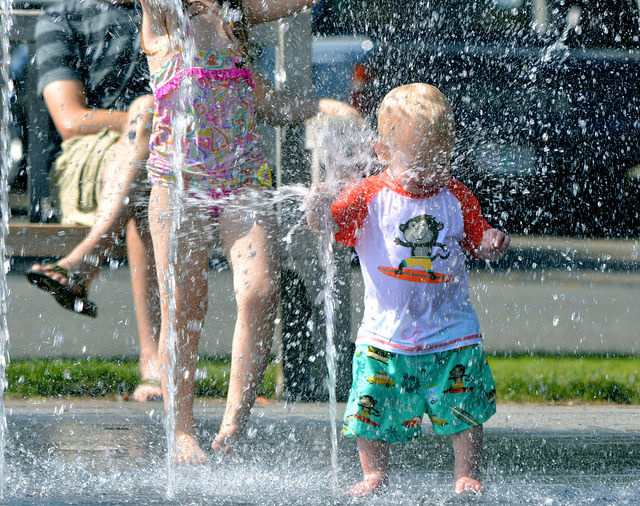
  3. Safety around water is particularly important. A child can drown in just a few inches of water. Whenever you are near water you must never leave a child alone – if the phone rings, take them with you or let it ring! Always stay within arm’s reach when the children are in or near water.
  4. Young babies should be kept out of direct sunlight. Keep the baby in the shade or under a tree, umbrella or stroller canopy.
  5. Dress babies in lightweight clothing and use brimmed hats.
  6. Apply sunscreen 30 minutes before going outside, even if it appears overcast (cloudy).
  7. Try to keep children out of the sun in the middle of the day when the sun is strongest.
  8. Learn what poison ivy looks like and keep children out of it. A good rule to teach the children is “leaves of three, let it be.”
  9. Use insect repellent spray to keep away mosquitos and ticks. Ask your host parents before applying.
  10. Check for ticks when you bring children in from playing outside, especially if you’ve been in tall grass or the woods.

Photo: Scott97006 (Flickr)
SaveSave

May Day in Minneapolis

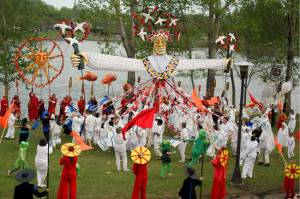
If it’s the first Sunday in May, it’s time to celebrate May Day at Powderhorn Park! This festival has been going on for 44 years. Heart of the Beast Puppet and Mask Theatre and the communities around Powderhorn Park put on an amazing show to welcome the warm weather.

May Day this year will happen on Sunday, May 6th. The day starts with a parade, beginning at noon, down Bloomington Ave. from 25th Street to 34th Street, and then into the park.

Once the paraders have all gotten there, they have a ceremony to welcome the sun – the HOBT tree of lifemain stage is on the west side of the lake, and boats carry the grand finale across the lake. It ceremony includes puppets as big as 10 feet high!

There is music and dancing for everyone, and vendors selling all kind of foods. The ceremony is free and everyone is welcome.

This celebration is one of the unique things that make the Twin Cities, and Minneapolis in particular, so special.

Come on down to Powderhorn Park and welcome our wonderful summer!

http://hobt.org/mayday/

Severe Weather Awareness Month in Minnesota

April is Severe Weather Awareness Month and it’s important to be ready. Late spring is when we see a large number of severe thunderstorms and tornadoes, so here’s how to handle that.

A severe thunderstorm is one which may include any or all of the following: frequent lightning strikes (which can be extremely dangerous,) high winds, hail, and heavy rain with street flooding.

A tornado is a specific kind of storm where winds and air pressure combine to create a funnel cloud. This spins around in a circle and creates crazy wind speed. Depending on the severity, trees can be knocked into houses, houses can be blown down, windows can shatter and strew broken glass everywhere.

If a severe thunderstorm watch or a tornado watch is announced, that means  that conditions are right for bad weather to develop, but nothing is happening yet. Mainly, just be aware of what’s going on outside at this point – maybe don’t get too far from shelter. I would turn the TV on or listen to the radio to see if there is anything near me.

If a severe thunderstorm warning or a tornado warning are announced, that means they have identified an actual storm in your area. Sirens will go off and they will definitely break into programming to give you information. If the warning is for a thunderstorm, keep everyone inside and away from windows – sometimes hail can break a window, or lightning can strike right through it.

If the warning is for a tornado, DROP EVERYTHING, Grab the kids and go to a safe part of the basement – away from windows, and also in a sturdy place – under the staircase can be perfect. Stay there until you hear that things are all clear – sometimes tornadoes can come in waves, so just because one has gone by doesn’t mean the danger is over. Try to keep the kids calm by singing or reading to them.

Families probably want to have things like a battery-powered radio, flashlights, and maybe a blanket ready in the basement in case of severe weather.

I’ll be going over all this with the au pairs at our April cluster meeting.

Rainy Spring Days

Image by Tilda Rice

Rainy days and Minnesota spring go together like hot dish and tater tots. You can count on cold, windy, rainy, muddy weather well into May. So it’s best to have a plan ready. Otherwise, kids can get pretty squirrelly stuck inside!

Think about the kids you are caring for when thinking up activities. You can’t expect a super active child to sit for hours doing a jigsaw puzzle. But there are a lot of different ideas out there.

Some activities to consider:
* Teach kids a new skill. Depending on the age and interests of your kids, teach kids something they haven’t tried before. Some ideas include watercolor painting, bread baking, doing a maze, or trying yoga (go to the Cosmic Yoga YouTube channel for some great kid-oriented yoga.)
* Acting in a play. Take a favorite book and adapt it to your own use. Costumes and props are fun to create. Even if it’s just for yourselves, it’s still a fun activity.
* Go on a scavenger hunt. Make a series of clues that lead from one to another, with some kind of small prize at the end. Little kids can decode easier clues, like “Look where the eggs are kept;” older kids can be given more complicated puzzles.
* Movie and popcorn time. It can be fun to recreate the experience of going to the movies at home. Make a big bowl of popcorn and pick a fun movie, and everyone can snuggle on the couch and relax.
* Get out and play in the puddles. Dress kids in waterproof jackets and boots, grab umbrellas, and splash around out there. You can learn a lot from watching how rain falls, how puddles develop, or how raindrops fall off of leaves. Obviously, you can’t go out in a thunderstorm!

Our Pinterest page has many, many more ideas. Keep the kids occupied while the rain is falling and everyone will be in a better mood when you can finally get outside into the beautiful Minnesota springtime.

Daylight Saving Time Begins March 11

What is Daylight Saving Time?

During Daylight Saving Time, clocks are turned forward one hour, effectively moving an hour of daylight from the morning to the evening. Today, approximately 70 countries worldwide utilize Daylight Saving Time, in at least some portion of the country. The U.S. started observing it in 1918, so it celebrates it’s 100th birthday, this year.

In March, we move the clock forward one hour, losing an hour of sleep. In November, we move the clock back one hour, regaining that extra hour of sleep.

An easy way to remember it is: Spring forward, Fall back.

Before you go to bed on March 10, be sure to set the clocks forward one hour!

Photo: Mark Lee

Focus on Play: New Ideas for Some Classic Toys

It is good to offer kids a balance of independent play time and play where you are actively engaging with them. You can make toys they may be bored with, feel new and exciting, by suggesting different ways to play with them. Try some of the ideas below as a starting point.

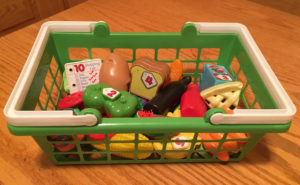
Play Food/Dishes

  • Teach your host children how to say the names of some of the food and dishes in your language.
  • Using English and/or your language play games where you are ordering food like in a restaurant. Take turns with who will be the waiter and who is the customer.
  • Come up with silly food combinations.  For example: Who wants pickles on their slice of cake?
  • Play a guessing game where the children have to figure out what food you are talking about.  For example: I grow under the ground in the dirt.  People eat me fried, mashed and baked.  What am I? (a potato)
  • Play a game with setting the table using your language to ask for the different items (plate, spoon, etc.)
  • Ask the children to divide the foods up into the different food groups (vegetables, meat, dairy, etc.)

Lego Blocks and Other Building Toys

  • Divide up all of the blocks between the people playing, by taking turns for each person to select block by block.
  • Suggest specific things to build (robots, houses, mountains etc.) and build together.
  • Challenge everyone to use all of their blocks.
  • Sort the blocks by color or shape and make patterns with them (red, blue, red, blue or square, triangle, rectangle.)  You can create a pattern and ask the child to fill in what comes next to continue the pattern.
  • Make the tallest block tower you can and let them knock it down (over and over again, if like most kids, they like destroying things.)

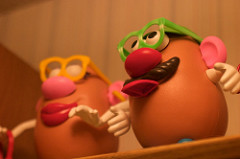
Mr. Potato Head

  • Teach your host children the names of the different parts in your language and play a game asking them to put on the body parts by name.
  • Play Hide and Seek with Mr. Potato Head. Have the children cover their eyes and count, while you hide Mr. Potato Head, then they go looking for him. Switch things up by letting them hide Mr. Potato Head and then you are the one to locate him.
  • Play the same game above, but using Simon Says.  Simon Says is a game where the leader gives commands by saying “Simon says” first. For example, “Simon says, put on the nose.”  The players are only to follow the commands when the leader says “Simon says.”  If the leader doesn’t say “Simon says” first and just says, “put on the nose,”  and the player follows the command, they are out of the game.  Repeat the game multiple times, so all kids get a turn to be the leader at least once.

Photos:  Lisa Maxwell (top) & Tom Smalls (bottom)