 City Putt in New Orleans City Park is a great place to visit for a Sunday outing. Au pairs vied for the winner’s title on the Louisiana Course. Although a few balls ended up in the water and some in the bushes, two players scored a hole in one and all had much fun.
Category Archives: Au Pair Tips
APIA at Baby and Child Expo 2017

Please join us at Baby and Child Expo offered by La Leche League of Jefferson on Saturday, June 24 at 10am-2pm at Lakeside Mall Center Court.
In addition to getting information about Au Pair in America program visitors will have the opportunity to chat with the local APIA representative and au pairs who are currently placed with local host families.
Two gift baskets with certificates offering discounts off of the program fee will be raffled during the Expo. Children will receive gifts of coloring pages, Frisbees, bookmarks and more.
Au Pair in America, the first federally approved live-in childcare program, has a long record of successfully connecting thousands of American families with young out of country women seeking au pair experience. APIA au pairs have provided host families with outstanding childcare help while learning about life and culture in the United States.
Baby an Child Expo
June 24, 10am-2pm
Lakeside Mall – Center Court
3301 Veterans Memorial Blvd
Metairie, La 70002
https://www.facebook.com/BabyandChildExpo/
Picnic in City Park

A picnic and an egg hunt in City Park are now a tradition during the lovely month of April.
Au Pair Tips for Success
 Stay in touch with your Community Counselor
Call if you cannot come to a monthly meeting.
Let your counselor know if you will be out of town.
Call when you need help or advice.
Be a good buddy
Remember what it is like to be a new au pair. Welcome new arrivals.
Arrange to meet a new au pair.
Take her out.
Accompany her to the next cluster meeting.
Take responsibility for your actions
No one is perfect. If you make a mistake, take responsibility and try to correct the situation.
Respect the privacy of others
Gossiping about other au pairs and host families can be very harmful.
If your friends confide in you, honor the confidence.
Do not tell others about what goes on in other host families.
Communicate
Share your ideas, discuss cultural differences, ask questions when you don’t understand.
If you have a problem, present it to your host parents clearly and calmly. Suggest a solution to the situation. Listen to what they say and try to reach a compromise.
Let your host family know if language is a problem. Admit if you do not understand a word or instructions. Ask questions.
Follow house rules
The only way you will establish trust is by following rules – even those with which you may not agree. If you are not sure of the house rule, ask.
Be considerate of your host parents
Keep them informed of where you are going.
Let them know if you are staying out overnight.
If you plan on traveling, discuss the details with them and do not interfere with their schedules. Remember that your host parents are tired when they get home from work.
Show appreciation – return the favors your family does for you with kindness and generosity.
Take initiative – don’t wait to be asked, anticipate children’s needs, offer to help when you are sharing “family time.”
Set a good example
The children you care for look up to you. Don’t do things in front of the children that their parents would not want them doing.
Shower or bathe regularly
Most Americans value cleanliness as a virtue. Families expect that their au pairs will bathe or shower regularly, wash hair frequently and change into clean clothes daily. Use deodorant.
Take care of yourself
Have reasonable expectations of yourself – be patient as you learn to adjust to life in America.
Try to understand and accept cultural differences – that is part of why you came here. Learn from the experience.
If you are feeling homesick or house-bound, call someone and give yourself something to look forward to.
Keep reasonable evening hours if you are expected to get up early to work the next day.
Sunday Paddle on Bayou St. John
 After happily paddling up and down the stream on Bayou St. John, au pairs declared the outing a great success.
Helping Young Children Learn Language
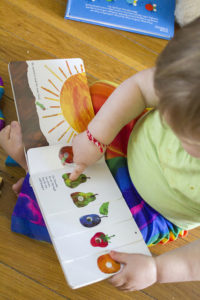 Being an au pair is an important role in a child’s life. When you are caring for a young child up to 45 hours per week, there are lots of opportunities to help them learn language. Many host parents are eager for their children to be exposed to foreign language. If this is true of your host parents, you can try the suggestions below, in both English and your native language.
Below are a few tips to start with, for more ideas, check out Ready at Five.
- Read – Read to them daily, point out pictures and ask questions. Even if they can’t answer the questions, this is still modeling conversation.
- Talk – Point out objects around them, names of their body parts, explain what you are doing and places you are going. Long before babies can speak, they benefit greatly from being spoken to.
- Sing – You can sing childhood classics or make up your own silly songs. If you are looking for song ideas, HERE is a great website with lists of songs, lyrics and links to YouTube videos* of the songs. Children’s music is also available at the public library and even on iTunes.
- Words – As children move from toddlers to preschoolers begin to point out written language.
- Writing – Toddlers and preschoolers can begin to learn pre-writing skills by drawing with crayons or doing finger paints.
*The American Academy of Pediatrics recommends no screen time for babies under 18 months of age. For children 18 months to 5 years they recommend no more than 1 hour of high quality content. You can play the songs on youtube for the audio and not necessarily show the screen to the child.
Photo: Quinn Dombrowski (Flickr)
Happy Valentine’s Day
 Celebrating Valentine’s Day with friends from different countries shows that the festival of love is popular across many different cultures.
Discussing Healthy Snacks at Whole Foods
 One of au pairs’ responsibilities is preparing food for their host children and keeping healthy snacks on hand in case kids get hungry and need a quick bite to boost their energy. Au pairs discussed the pleasures and challenges of fixing dishes that make kids go: Yum!
Handling Expenses
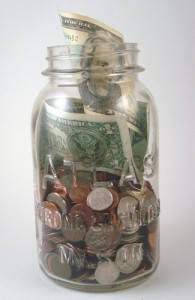 Host parents often ask for suggestions on how best to handle common expenses that occur as au pairs are caring for the children.
Miscellaneous Expenses
There are different ways to handle the little day to day expenses that come up. Things like when an au pair takes the kids out for ice cream or picks up a gallon of milk. Some families keep a cookie jar fund, a little cash that they set aside weekly or monthly for these types of expenses. Others give their au pair a prepaid debit card for this purpose. Below are some suggestions for avoiding problems with expenses.
Host Families
- It’s important to be clear about how long this money should last and what types of expenses are approved.
- Let the au pair know whether or not you expect receipts.
Au Pairs
- Only spend the money on approved expenses.
- If it is something you are not sure about, ask first.
- Put your receipts in the cookie jar in place of the money to avoid any confusion.
Gas and Fare Cards
Host families are responsible for the au pair’s transportation costs: to and from classes, cluster meetings and when driving the kids.
It is a good idea to figure out how much gas an au pair will use for these trips and either put gas in the car or give a gas allowance. If your au pair is riding to classes or cluster meetings with another au pair, you should offer to share the cost of gas.
Au pairs are responsible for their own transportation at all other times. You should replace the amount of gas used for personal use.
Photo: Andrea Travillian
Happy Holidays 2016
 Au pairs celebrated the holiday season with gift exchange and party games. They chatted about their memorable experiences with host families and kids and shared hopes for the future.