
Category Archives: Uncategorized

Valentine’s Day in the USA!

NOLValentine'sValentine’s day is celebrated in the United States every year on February 14th. There are many stories and legends behind who the real St. Valentine was, but most scholars agree that he was a martyr who was killed by Roman soldiers because he was marrying people in secret at a time when marriage was outlawed.  Later in the Middle Ages, a great writer named Geoffrey Chaucer wrote a poem as a present to King Richard II, who was going to be married soon. In it, he mentioned St. Valentine, and over time, the idea of Valentine’s Day became associated with the idea of love.
During the Victorian times (in the 1800s), Valentine’s Day became extremely popular! Men and women spent a lot of time making beautiful Valentine’s cards with ribbon, fancy paper and even lace. In those days, people were very reserved and they did not often say what they were feeling. Valentine’s day gave them a way to express their feelings to someone they were in love with anonymously.  The sender would remain a mystery until they could speak more freely.
In the last few decades, Valentine’s day has changed a lot! Today we still exchange cards, but many people buy ready-made cards instead. We also give flowers or chocolates as a gift to remind people of our friendship and love for them. Most Valentine’s gifts and cards make use of the colors red and pink, and are decorated with images of hearts or roses. Another common symbol of love on this day is Cupid, the Roman god of love. He is usually shown as a little angel with a bow and arrow. According to legend, anyone who is struck by his arrows will fall in love.
Here are some links with ideas about how you can celebrate and have fun with your host children.
 
Click here for Valentine’s Day Cards, coloring pages, recipes, crafts, games and puzzles: http://www.dltk-holidays.com/valentines/
Check out our Au Pair in America Pinterest page for Valentine’s Day for more ideas: https://www.pinterest.com/aupairinamerica/valentines-day/
Volunteering Options in New Orleans

volunteer

Below is the partial list of volunteering options in New Orleans. There are quite a few more opportunities where you can show your volunteering spirit but this list should be sufficient to get you started.
Why volunteer? Because volunteering is a very important part of American culture that you’ll only appreciate if you give it a try. It also helps you “broaden your horizons”, both physically and mentally, and allows you to make friends that you’d never meet otherwise.

Volunteers of America Greater New Orleans

http://www.voagno.org/about-us

Hands on New Orleans

http://www.handsonneworleans.org/

Beacon of Hope Resource Center

www.beaconofhopenola.org

Camp Restore

www.camprestore.org

Catholic Charities Archdiocese of New Orleans

www.ccano.org

Common Ground Relief

www.commongroundrelief.org

Grow Dat Youth Farm

www.growdatyouthfarm.org

Habitat for Humanity

www.habitat-nola.org

Hike for KaTREEna

www.hikeforkatreena.org

Junior Achievement of Greater New Orleans

www.jagno.org

KidSmart

www.kidsmart.org

Projects with Purpose

www.projectswithpurpose.org

Rebuilding Together New Orleans

www.rtno.org

Second Harvest Food Bank

www.no-hunger.org

Jewish Community Center

www.nojcc.org

Youth Rebuilding New Orleans

yrno.com

New Orleans City Park Volunteer

http://neworleanscitypark.com/info/volunteer

Audubon Institute (Zoo, Aquarium, Insectarium)

http://www.auduboninstitute.org/volunteers

Uptown Shepherds Center

http://uptownshepherdcenter.wix.com/uptownshepherdcenter

Louisiana’s Children’s Museum

http://lcm.org/volunteer-internships

New Orleans Museum of Art

https://noma.org/support/volunteer/

Longue Vue House and Gardens

https://longuevue.com/give/volunteer/

Contemporary Arts Center

http://www.contemporaryartscenter.org/support-us/volunteer

Touro Hospital

http://www.touro.com/content/careers/volunteer.htm

Tulane Medical Center

http://tulanehealthcare.com/about/volunteer.dot

Children’s Hospital

http://www.chnola.org/Volunteer

East Jefferson General Hospital

http://ejgh1.tru-m.com/index.php?option=com_content&view=article&id=27&Itemid=71

New Orleans Public Library

Anyone interested in volunteering may contact Human Resources at 504 596-2607

Jazz Fest

http://www.jazzandheritage.org/get-involved

French Quarter Festivals

http://fqfi.org/pages/detail/118/Volunteers

Mahalia Jackson Theatre

http://mahaliajacksontheater.com/general-info/volunteer

Tulane Summer Lyric Theatre

http://summerlyric.tulane.edu/audition.cfm

Jefferson Performing Arts Society

http://www.jpas.org/support-us/volunteer-with-jpas/

SPCA (Society for the Prevention of Cruelty to Animals)

http://www.la-spca.org/donate/volunteer/opportunities

Crescent City Classic (racing)

http://www.ccc10k.com/volunteers

Susan G. Komen New Orleans (cure for breast cancer)

http://komenneworleans.org/get-involved/volunteer/

Rock & Roll Marathon Series

http://www.runrocknroll.com/new-orleans/the-weekend/volunteer/


A Docent Tour at New Orleans Museum of Art

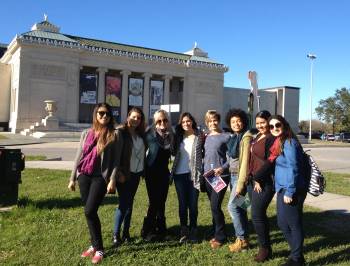
NOLNOMA2016New Orleans Museum of Art is the perfect destination for both passionate art lovers and casual amusement seekers. On a recent early afternoon Sunday au pairs joined a docent-led tour to explore the highlights of the collection. Everybody picked their favorites, be it a grand portrait of Queen Marie Antoinette in her finery, an Andy Warhol likeness of intense Mick Jagger, or a Flemish still life showing a table laden with all manner of consumables.

A bite of king cake after the tour completed a fun and interesting outing.

Easy Craft Ideas for Children

NOLkidcraftDoing crafts with host children is one of the most fun things that au pair’s job entails. Here are a few ideas that will help children develop their creativity.
Play dough
Combine 2 cups of flour and 1 cup of salt. Add 1 cup of water and 1 1/2 tablespoons of oil. Mix and knead well. If too stiff, add more water, if too sticky add more flour. For colored play dough, add food coloring to the water before combining it with the other ingredients. STORE IN AN AIR TIGHT CONTAINER. If left out in the air the dough will harden.

Texture Coloring
Put different textures under drawing paper (scrap paper or the back of junk mail works just fine, you don’t need fancy drawing paper) and then color with a crayon. Try a comb, corrugated cardboard (that’s the bumpy cardboard from heavy boxes), sandpaper or different kinds of fabric. Or cut shapes out of light weight cardboard (old cereal or cracker boxes), put them under the drawing paper and rub the crayon over the top to make designs.
 
Crayon Etching
Completely cover the paper with heavy crayon markings of different colors. Then color over all the colors with one other color (black works best). Make a picture or a design with a toothpick or other pointed but not sharp object, it will scrape away the top color to show the colors underneath.
 
Paper bag masks
Use a large brown paper grocery bag for a mask by cutting out holes for the eyes (try it on the child to get them in the right place) and then coloring the face in fun ways with crayons. You can make different characters – a monster, a king or queen, animals etc. Cutting holes for the shoulders can also be helpful.
 
Space helmet
Cut an empty plastic gallon milk container into a helmet shape. Pretend you are on a trip into space.

Halloween Safety Tips for Au Pairs

NOLSafetyHalloween

Adult supervision is essential. Always accompany the children if they are going door to door to trick or treat

Try tick-or-treat-friendly homes. Ensure the children only visit houses with lights on. And, you might also suggest the houses they visit have some sort of Halloween decoration on the porch.

Stay outside. Make sure the children don’t go inside someone’s house. They can trick or treat on the porch.

Remain visible. Dress the children in bright costumes or have them wear reflective strips or carry a glow stick or flashlight.

Quality-check treats. Check the candy before they eat it. Throw out any candy that is not in its original wrapper or looks like it has been tampered with.

Say “no” to strangers. Remind the children to never accept a ride or go anywhere with a stranger.

Have a great time! Finally, make sure your kids have tons of fun and enjoy the night.


Happy Halloween

NOLHappyHalloweenHello dear au pairs,

I hope the pumpkins are carved, the costumes are ready and you’re looking forward to going trick and treating with your host children.

Happy Halloween!

Halloween, what is it all about?

Halloween is celebrated across the United States on October 31st.  Not all,  but most families will participate in some aspect of the Halloween holiday traditions.  This may be a new experience for you so It is a good idea to talk to your host family ahead of time and find out how they celebrate. 

Like many other holidays, Halloween has changed throughout history. Over 2,000 years ago people called the Celts lived in what is now Ireland, the UK, and parts of Northern France. November 1 was their New Year’s Day. They believed that the night before the New Year (October 31) was a time when the living and the dead came together.

More than a thousand years ago the Christian church named November 1st All Saints Day.  This was a special holy day to honor the saints and other people who died for their religion. The night before All Hallows was called Hallows Eve. Later the name was changed to Halloween.

Like the Celts, the Europeans of that time also believed that the spirits of the dead would visit the earth on Halloween. They worried that evil spirits would cause problems or hurt them. So on that night people wore costumes that looked like ghosts or other evil creatures. They thought if they dressed like that, the spirits would think they were also dead and not harm them.

The tradition of Halloween was carried to America by the immigrating Europeans. Some of the traditions changed a little, though. For example, on Halloween in Europe some people would carry lanterns made from turnips. In America, pumpkins were more common. So people began putting candles inside them and using them as lanterns. That is why you see Jack ‘o lanterns today.

These days Halloween is not usually considered a religious holiday. It is primarily a fun day for children. Children dress up in costumes like people did a thousand years ago. But instead of worrying about evil spirits, they go from house to house. They knock on doors and say “trick or treat.” The owner of each house gives candy or something special to each trick or treater.


Welcoming Au Pair to Your Home

After you match with your new au pair and arrange her travel from orientation to your community, it’s very important to keep in touch with her prior to her arrival. Please keep in mind that you have opened your home to someone else’s daughter. There are many things you can do that will help her to feel welcome in your home. An email to check in every so often is reassuring and builds the bonds you started to form when you offered her a home for a year. Sending photos of the children or pictures they have drawn is also a welcome form of connection.

Once your au pair arrives at orientation, please call her to welcome her. It makes the au pair feel much more comfortable to hear from you while she is at orientation.

Some families send flowers or small packages with personalized stationery or homemade cookies. Ask your counselor for other suggestions if you want to send something, but keep in mind that your au pair will have to transport whatever it is to your house. Faxes can be received by the hotel and are also a nice way to say hello.

Before she travels to your home, prepare a welcome sign made by the children. You can display it at home or use it at the airport or train station. Make sure her room is clean and ready for her. Mark the au pair’s birthday on the family calendar.

When she arrives at your home, she will be tired, excited and probably anxious. Keep in mind the fatigue that being in a new culture causes, particularly if your au pair is not a native English speaker. The au pair needs time to recover from jet lag.

It’s important to give her a few days to unpack, rest and become acclimated to the host family’s home, family and neighborhood before expecting her to assume full child care responsibilities. She should be allowed to find ways to make her space her own; mounting a bulletin board on the wall is one easy way to do this.

According to Department of State regulations, au pairs are not allowed to assume sole responsibility for the children until after she has been in the home three days. Giving her the opportunity to bond with the children one at a time is helpful in building relationships. Those first few days can be used to complete the child care questionnaire for each of your children, to conduct a tour of the neighborhood, to go to the grocery store to determine her food preferences and for her to see the variety of foods available in the US, and to share information about the house and her chores. Many families also use this time to have the au pair drive for the first time.

The Community Counselor will call and/or visit within the first forty-eight hours after the au pair’s arrival.

Some other adjustment issues to keep in mind:

  • The au pair may be confused by directions with so many new things to learn, especially as she works to adapt to a new language and surroundings.
  • She may be homesick, possibly suffering from stomach indigestion as she tries to adapt to new foods, diet and a different time zone.
  • Children may be both excited and apprehensive about the au pair’s arrival, and their behavior patterns may be different from how they generally behave. With patience they will weather the transition.
  • Host parents may need to adapt to sharing living space with a young adult.

Putting time and effort into a positive welcome experience and being prepared for what typically happens in the first few days will give your match a strong foundation to build on.

http://www.aupairinamerica.com/resources/host_family_tips/welcome.asp


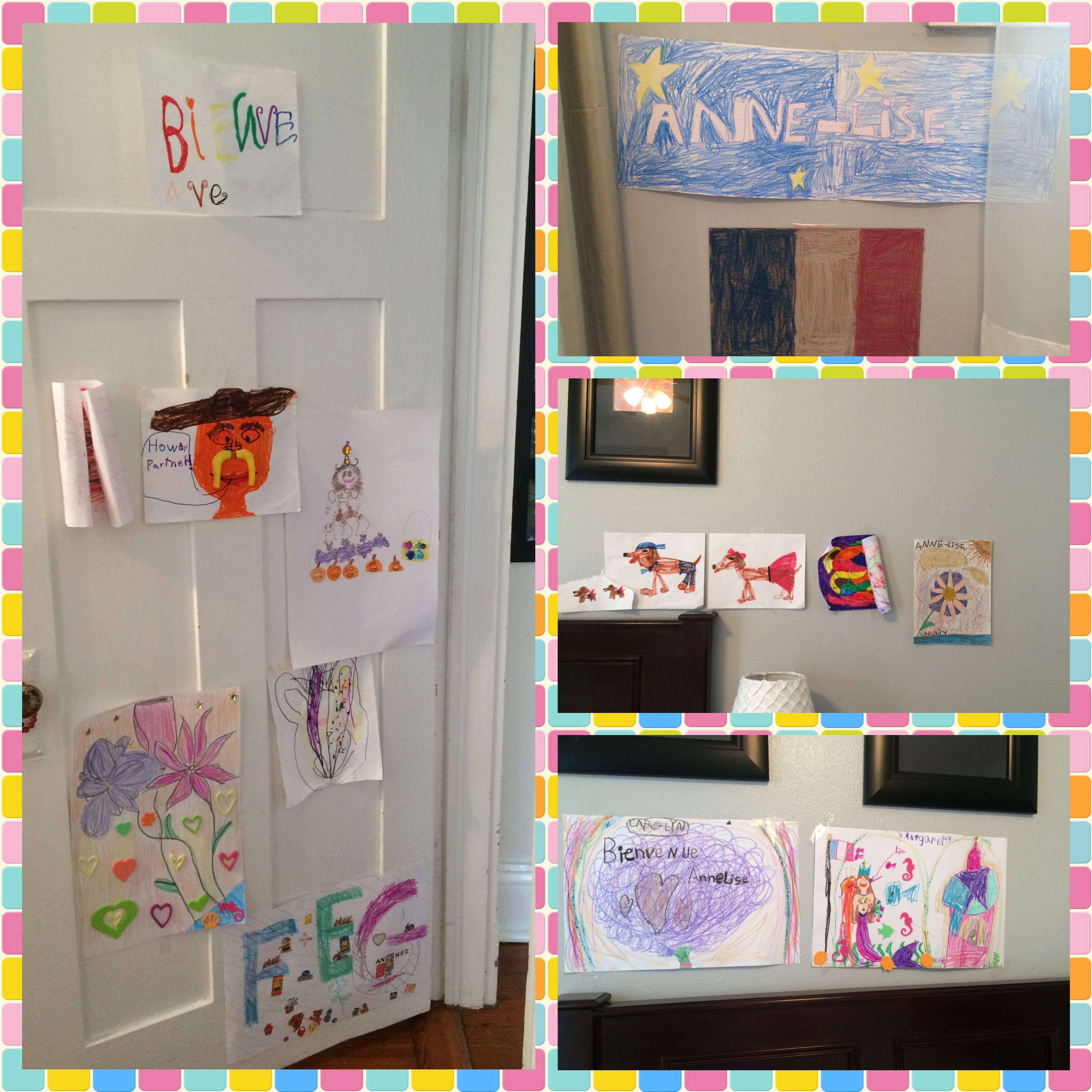
Anne Lise arrived from France recently and was very happy with the welcome by her host family. She was touched to see that her host children drew not one but a whole gallery of pictures to decorate her room.

Processed with Moldiv

Processed with Moldiv

“I was very well received by the family! I arrived at night and in the morning the girls came to see how I was. After when I went to say hello, they all made me a kiss and a hug.” (Anne Lise)


Happy Labor Day!

NOLhappy-labor-day-pictures-4
Dear au pairs, here is some information about Labor Day in the United States:
The Workman’s Holiday ~ Dedicated in honor of the worker, Labor Day is also known as the “workingman’s holiday”. The holiday is dedicated to all workers in the United States in respect and appreciation for the work they do in or outside of the home, union or non-union, big companies and small companies and au pairs too. As long as you work somewhere at something, this holiday is for you! It is a day to celebrate your contribution to American working life and the work you do.
The First Labor Day ~ The first Labor Day was celebrated in New York City on September 5, 1882 and was started by the Central Labor Union in New York City. In 1884, it was moved to the first Monday in September where it is celebrated today. Labor Day quickly became popular and one state after another voted it as a holiday. On June 28, 1894, the U.S. congress voted it a national holiday.
The End of Summer ~ Labor Day is also viewed as the official end of summer. While the Fall Equinox is still a couple of weeks away, kids go back to school and summer vacations are over. This day is celebrated with a long weekend off from work and union sponsored parades. Many people celebrate this weekend with one last picnic. It is also the date that many people close up the swimming pool, and put away the boats.
Was it McGuire or Maguire? Either Peter McGuire or Matthew Maguire is the Creator of Labor Day. Peter J. McGuire, was an active labor organizer. He was also general secretary of the Brotherhood of Carpenters and Joiners and a co-founder of the American Federation of Labor. He was believed to be the first to suggest a day be dedicated to American workers and their accomplishments. Matthew Maguire however, was secretary of the Central Labor Union in New York in 1882 and many believed that he proposed the holiday in 1882.
So What do Americans eat on Labor Day? Picnics and barbecues are popular ways  to celebrate Labor Day.  Old standards are hamburgers, corn dogs, coleslaw, potato salad  corn on the cob, baked beans and sliced tomatoes. Finish up with sliced watermelon, apple or blueberry  pie and freshly churned ice cream.  Sound good?  Want to try a recipe? 
 
What can you do with the kids on Labor Day?  Schools are usually closed on labor day so the children are home for the day.  Generally Americans love long weekends and it is an extra special time for families to be together.  Join in and be part of the family activities.  Enjoy your first Labor Day Weekend in the United States.  If you recently arrived this is a great weekend to bond with the kids and get to know them.  Go for a bike ride, play in the back yard, go to the park or enjoy the beach and the pool before the fall weather arrives.  For indoor quiet activities try these:
 
Click here for Labor Day coloring pages: 
Click here for Labor Day short stories for children: