Yearly Archives: 2014

School Bus Stop Laws

With some schools getting back in session and new au pairs who have recently arrived, I wanted to remind everyone about what to do in different situations with school buses. If you have questions, please ask your counselor or your host parents.

The rules regarding stopping for school buses are:

  • It is against the law to pass a stopped school bus while its lights are flashing and its stop signal arm is extended.
  • On undivided roadways, with no physical barrier or median, vehicles must stop on both sides of the roadway.
  • Yellow flashing lights indicate that the bus is preparing to load or unload children. Motorists should slow down and prepare to stop their vehicles.
  • Red flashing lights and extended stop arms indicate that the bus has stopped, and children are getting on or off. Motorists approaching from either direction must wait until the red lights stop flashing before proceeding.

NB: It isn’t necessary to stop when passing a school bus on a different road or when on a controlled-access highway where the bus is stopped in a loading zone and pedestrians aren’t permitted to cross.
Academic Year in America

Dear Prospective Host Families,

I would like to call your attention to a special offer from our sister program, Academic Year in America (AYA), operated by the AIFS Foundation. The AYA program is seeking host families to welcome a student into their home this month!!

* Host families can host for a short welcome period of 4-6 weeks, a semester for the full academic year
* Host families can be from anywhere in the U.S.
* Students are ages 15-18
* Students available are from Germany, China, Brazil, South Korea and Thailand
* Host families provide a bed, meals, a place to study and welcome the student as a son or daughter
* Students will attend local high school
* Students come with full medical insurance and their own spending money
* Local Support is provided by an AYA Local Coordinator for the family and student throughout the year plus support from the AYA National Office 24/7

Please take a few minutes to think of all the people you know and pass along a name or two to AYA! Please send me a message for more information!!

You can make a difference for a young student this fall!! 

Thank you!

King William Paddle Trail

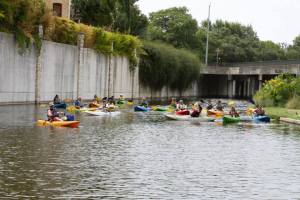
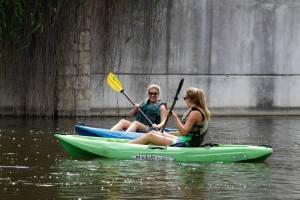
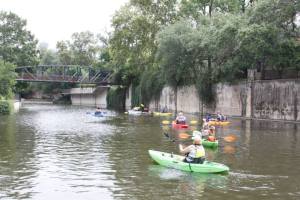
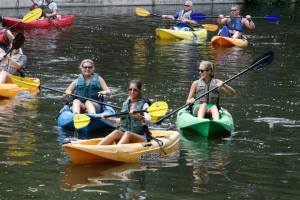
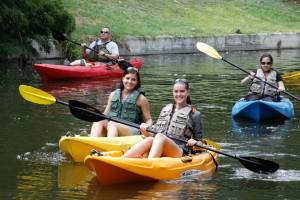
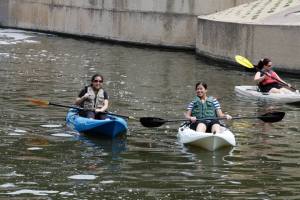
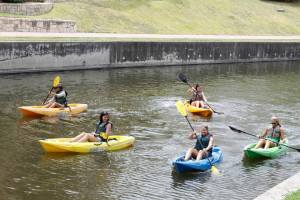
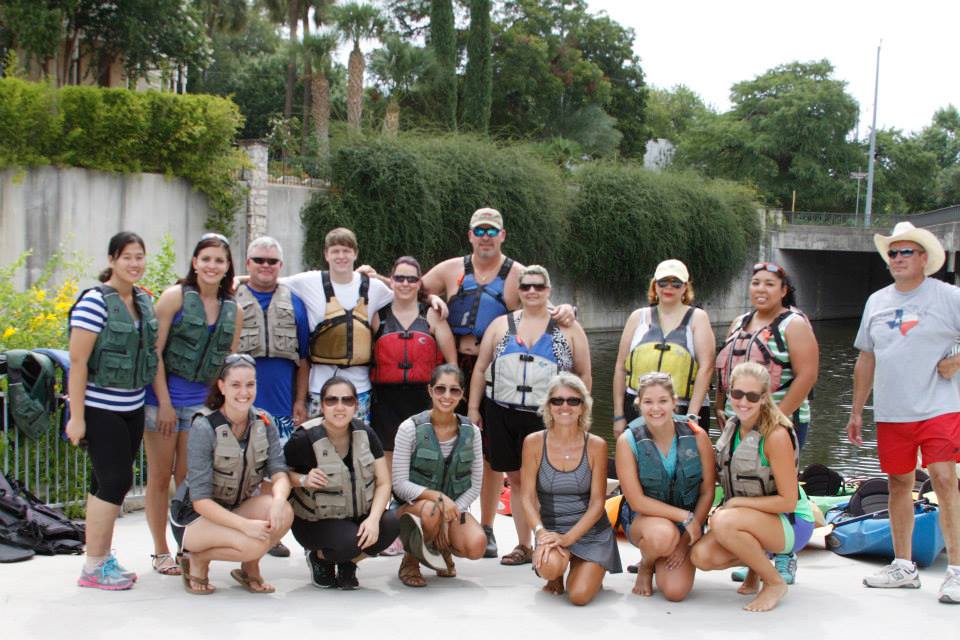
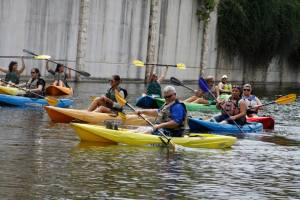
For this month’s cluster meeting, the au pairs got to spend time kayaking up and down the San Antonio river!!
It was a beautiful (but hot) summer day and everybody had a great time 🙂


10600612_10152398976681888_7448233818875269294_n

10561561_10152398977396888_2231947474885535133_n1621691_10152398976856888_7958063091799152384_n
Love the enthusiasm 🙂

10347158_10152398977781888_3268950812836754504_n 10521369_10152398978466888_3810607225723884865_n
Caroline from Sweden & Annerien from South Africa

10599620_10152398986011888_2638135416747481082_n 10592695_10152399002401888_5672667598551953754_n
Annerien, Caroline with Johanna from Colombia       Hana and Iveta from Czech Republic

10609653_10152399021581888_1643149750186922048_n 10492304_10152399009641888_6334027413625315267_n
Saaynaam and Nut from Thailand

10593026_10152399013426888_5256368876363201321_n

To see more pictures, please visit Texas Pack and Paddle’s Facebook page:

https://www.facebook.com/media/set/?set=a.10152398965876888.1073742023.107903396887&type=1


Going Unplugged During Work Hours

Au Pairs – Imagine for a moment that you went to the hospital and you were in the care of doctors and nurses.  How would you feel if those doctors and nurses who were there to care for you were more interested in texting or using their personal computer than caring for you?  How would that make you feel, about yourself and about them?  Would you think that you were getting the treatment you deserved?  Would you feel like paying the bill after your stay?

Life as an au pair, it is a fine balance between employee and family member. You live with your host family and participate with them as a member of the family, but you also have clear responsibilities as a childcare provider. Being a childcare provider is truly one of the most important jobs I can think of, because you are helping to shape our next generation.  What message are you sending them when you would rather interact with a computer than with them? How will they feel about themselves and about you? Children feel as though everything is about them. They will see this as a rejection of them and they will be more likely to act out.

It also poses a safety concern when you are not paying enough attention to the children in your care.  Accidents happen, but when an adult care giver is close by and appropriately supervising the chances of a major injury dramatically reduce.


During work hours, the following would not be considered acceptable:

-Texting
-Talking to friends on the phone
-Chatting with friends online
-Using Skype or Facetime
-IMing
-Emailing
-Updating your status on Facebook
-Using Orkut, Google+, Studivz, SiempreGente or any other social media site
-Watching videos on YouTube (even my really fabulous ones)
-Tweeting on your Twitter
-Uploading photos on Instragram or Vine
-Anything else on the computer, unless it is going to Nickjr.com together with your host children


Think about this — even if you work 45 hours a week, that leaves you 123 hours per week for all of that other stuff, or about 70 hours (if you are getting the recommended 7-8 hours of sleep per night.)

Host Parents – You need to be clear about what you consider acceptable during work hours to avoid misunderstandings.  Also, please understand that you are dealing with a new generation of people who are very accustomed to being plugged in at all times.  Their intention is not to be rude, they don’t necessarily realize how their actions will be perceived.  Please use this information as an opportunity to begin a dialogue on the issue.

Craving something sweet??

Carrot cake (or cupcakes)…… Need I say more???

Cake:

3/4 cup flour
1/4 cup quick-cooking oats
1 1/2 tsp ground cinnamon
1 tsp baking powder
1/2 tsp baking soda
1/4 tsp salt
1 cup sugar
1/4 cup canola oil
1 (2 1/2 ounce) jar carrot baby food
2 large eggs, lightly beaten
1 1/4 cups finely grated carrot (about 4 ounces)
1/2 cup chopped pineapple
1/2 cup chopped walnuts

Frosting:

1/3 cup (3 ounces) cream cheese, softened
1 Tsp butter, softened
1 1/4 cups powdered sugar
1/2 tsp vanilla extract
1/4 cup flaked sweetened coconut, toasted in oven


1. Preheat oven to 325 F
2. Combine flour and next 5 ingredients (through salt) in a food processor, until well blended. Place flour mixture in a large bowl. Combine sugar, canola oil, baby food, and eggs; stir with a whisk. Add to flour mixture; stir just until moist. Stir in grated carrot and pineapple. Spoon batter into an 8-inch square baking pan coated with cooking spray.
3. Bake at 325 F for 40 minutes (or 14-17 minutes if you’re making cupcakes). Cool in pan on a wire rack, then transfer to the fridge (this keeps them moist).
4. To prepare frosting, combine cheese and butter in a large bowl. Beat with a mixer at high speed until creamy. Gradually add powdered sugar and vanilla, beating at low speed until smooth. Spread over cake, sprinkle with coconut.

Congratulations to Germany!!

https://encrypted-tbn2.gstatic.com/images?q=tbn:ANd9GcT6P4koQ1sdIxf_SRUhQm0F7wOUwUVqXJCXTX3ft3Ks3Zq0quW7Qq9_ww4Q

Congratulations to our German friends, host families, and au pairs!

The German team has thrilled football fans throughout the world during this world cup tournament. The 4-0 victory over Portugal was impressive and the 7-1 win over host nation Brazil was mesmerizing. But yesterday’s win, secured through guts, fight, and a moment of magic from one of its bright new stars showed that Germany overcame the most difficult hurdle of all. With the game deadlocked at 0-0 after 90 minutes, substitute Gotze provided the game’s defining moment with a touch of magic. The Bayern Munich star took Schurrle’s pass on his chest before displaying exquisite technique to volley the ball past Sergio Romero.

https://encrypted-tbn0.gstatic.com/images?q=tbn:ANd9GcRwkI30weNbF-WcBqsW7LAh8czQw1BxadA42K3iSze6jtAhaQ2tgmcjeA

In Berlin last night, a quarter of a million football fans packed into the “fan mile” while celebrating in front of the German capitals famous Brandenburg gate.

http://img.fifa.com/mm/photo/tournament/competition/02/40/52/71/2405271_big-lnd.jpg

Congratulations Germany, FIFA champions!

4th of July and Ramadan!

Known  as the Fourth of July and Independence Day, July 4th has been a federal holiday in the United States since 1941, but the tradition of Independence Day celebrations goes back to the 18th century and the American Revolution (1775-83). In June 1776, representatives of the 13 colonies then fighting in the revolutionary struggle weighed a resolution that would declare their independence from Great Britain. On July 2nd, the Continental Congress voted in favor of independence, and two days later its delegates adopted the Declaration of Independence, a historic document drafted by Thomas Jefferson. From 1776 until the present day, July 4th has been celebrated as the birth of American independence, with typical festivities ranging from fireworks, parades and concerts to more casual family gatherings and barbecues.

Wishing you all a very happy holiday weekend!! 🙂


Ramadan Started!

Greeting card for holy month of Ramadan Kareem - vector clip art

Some of you may know that the Month of Ramadan started this past weekend!

Ramadan is the ninth month of the Muslim calendar. The Month of Ramadan is also when it is believed the Holy Quran was sent down from heaven. It is during this month that Muslims fast. It is called the Fast of Ramadan and lasts the entire month. Ramadan is a time when Muslims concentrate on their faith and spend less time on the concerns of their everyday lives. It is a time of worship and contemplation.

During the Fast of Ramadan, strict restraints are placed on the daily lives of Muslims. They are not allowed to eat or drink during the daylight hours (an hour before sunrise until sunset). At the end of the day the fast is broken with prayer and a meal called the iftar. Traditionally the fast is broken by having a glass of water and eating a date. In the evening following the iftar, it is customary for Muslims to go out visiting family and friends. The fast is resumed the next morning.

During Ramadan, it is common for Muslims to go to the Masjid (Mosque) for special prayers and studying the Quran. In addition to the five daily prayers, during Ramadan Muslims recite a special prayer called theTaraweeh prayer (Night Prayer). The length of this prayer is usually 2-3 times as long as the daily prayers. Some Muslims spend the entire night in prayer.

One day during the last ten days of the month, Muslims celebrate the Laylat-al-Qadr (the Night of Power). It is believed that on this night Muhammad first received the revelation of the Holy Quran. And according to the Quran, this is when God determines the course of the world for the following year.

When the fast ends (the first day of the month of Shawwal) it is celebrated for three days in a holiday called Id-al-Fitr (the Feast of Fast Breaking). Gifts are exchanged. Friends and family gather to pray in congregation and for large meals. In some cities, fairs are held to celebrate the end of the Fast of Ramadan.

Charity is very important in Islam, and even more so during Ramadan. Zakat, often translated as “the poor-rate”, is obligatory as one of the pillars of Islam; a fixed percentage is required to be given to the poor of the person’s savings. Sadaqa is voluntary charity in given above and beyond what is required from the obligation of Zakat. In Islam all good deeds are more handsomely rewarded in Ramadan than in any other month of the year. Consequently, many will choose this time to give a larger portion, if not all, of the Zakat for which they are obligated to give. In addition, many will also use this time to give a larger portion of Sadaqa . Also, lanterns and lights are used to make this month extra festive!

“Ramadan Kareem” (happy Ramadan)!!


World Cup News

https://encrypted-tbn2.gstatic.com/images?q=tbn:ANd9GcTFjceZqX4KrYTN0WVvop9cPiYrVU1rL6CGi6bBqoxq0gdBRC12FjhR9sfW

The tournament will mark the 20th edition of the World Cup, which will culminate with the final on July 13 in Rio de Janeiro. The World Cup will feature 32 nations — placed in groups with four teams apiece — and a total of 64 games. Defending champion Spain will have to contend with the likes of Brazil, Germany, Argentina and Italy if it wants to retain its title. The United States has qualified for its seventh straight World Cup and will be looking to get out of a very tough group that features Germany, Portugal and Ghana.

The host nation has won the World Cup five times (1958, 1962, 1970, 1994 and 2002) and will be going for a sixth before a home crowd.

The groups are as follows:

Group A        Brazil, Croatia, Mexico, Cameroon

Group B        Spain, Netherlands, Chile, Australia

Group C        Colombia, Greece, Cote d’lvoire. Japan

Group D        Uruguay, Costa Rica, England, Italy

Group E        Switzerland, Ecuador, France, Honduras

Group F         Argentina, Bosnia and Herzegovina, Iran, Nigeria

Group G        Germany, Portugal, Ghana, USA

Group H        Belgium, Algeria, Russia, Korea Republic


There is also a FIFA world cup app you can download to follow the scores and latest news.

#JoinIn the Brazil 2014 experience

For more news and information go to the official FIFA World Cup website at:

http://www.fifa.com/

Summer Safety

http://1.bp.blogspot.com/-huZ8k4FZcS0/T7vRdgP7EXI/AAAAAAAAAes/94F7-hIFbLA/s1600/SummerSafe.gif

During the summer months we need to take some added precautions
to keep children safe in the sun and by the water.

  • Avoid long periods of sun exposure especially between
    10.00 a.m. and 4.00 p.m.
  • Apply sunscreen of at least  15 SPF that protects against
    both UVA and UVB rays should be worn on sunny and
    cloudy days.
  • Infants should be dressed in lightweight clothing
    covering as much skin as possible and brimmed hats to
    shade the face.
  • Stay hydrated, drink water throughout the day.
  • Intense activities and sports should be reduced whenever high
    heat and humidity reach critical levels.
  • Never leave children or animals in a car unattended.

https://encrypted-tbn2.gstatic.com/images?q=tbn:ANd9GcQ13-DwE_svO5Mm9tnkh-eq4r0cs11s56bC-N9ibp60SPgx2iaAteM1j_E

  • Actively supervise children in and around the water,
  • Giving them your undivided attention. Appoint a
    designated “water watcher,” taking turns with other adults.
    Be very clear who is in charge.
  • When in the water there should be an adult at arms
    length from young children at all times.
  • Children who cannot swim or who are not strong
    swimmers should wear water wings or life jackets when
    in the water.
  • Swim in designated areas supervised by lifeguards.
  • Always swim with a buddy; do not allow anyone to swim
    alone. Even at a public pool or a life-guarded beach, use
    the buddy system!
  • If you go boating, wear a life jacket! Most boating fatalities
    occur from drowning.
  • Avoid alcohol use. Alcohol impairs judgment, balance and
    coordination; affects swimming and diving skills; and
    reduces the body’s ability to stay warm.

Enjoy the summer and be safe!