Category Archives: Au Pair Tips

School Bus Stop Laws

With some schools getting back in session and new au pairs who have recently arrived, I wanted to remind everyone about what to do in different situations with school buses. If you have questions, please ask your counselor or your host parents.

The rules regarding stopping for school buses are:

  • It is against the law to pass a stopped school bus while its lights are flashing and its stop signal arm is extended.
  • On undivided roadways, with no physical barrier or median, vehicles must stop on both sides of the roadway.
  • Yellow flashing lights indicate that the bus is preparing to load or unload children. Motorists should slow down and prepare to stop their vehicles.
  • Red flashing lights and extended stop arms indicate that the bus has stopped, and children are getting on or off. Motorists approaching from either direction must wait until the red lights stop flashing before proceeding.

NB: It isn’t necessary to stop when passing a school bus on a different road or when on a controlled-access highway where the bus is stopped in a loading zone and pedestrians aren’t permitted to cross.

Going Unplugged During Work Hours

Au Pairs – Imagine for a moment that you went to the hospital and you were in the care of doctors and nurses.  How would you feel if those doctors and nurses who were there to care for you were more interested in texting or using their personal computer than caring for you?  How would that make you feel, about yourself and about them?  Would you think that you were getting the treatment you deserved?  Would you feel like paying the bill after your stay?

Life as an au pair, it is a fine balance between employee and family member. You live with your host family and participate with them as a member of the family, but you also have clear responsibilities as a childcare provider. Being a childcare provider is truly one of the most important jobs I can think of, because you are helping to shape our next generation.  What message are you sending them when you would rather interact with a computer than with them? How will they feel about themselves and about you? Children feel as though everything is about them. They will see this as a rejection of them and they will be more likely to act out.

It also poses a safety concern when you are not paying enough attention to the children in your care.  Accidents happen, but when an adult care giver is close by and appropriately supervising the chances of a major injury dramatically reduce.


During work hours, the following would not be considered acceptable:

-Texting
-Talking to friends on the phone
-Chatting with friends online
-Using Skype or Facetime
-IMing
-Emailing
-Updating your status on Facebook
-Using Orkut, Google+, Studivz, SiempreGente or any other social media site
-Watching videos on YouTube (even my really fabulous ones)
-Tweeting on your Twitter
-Uploading photos on Instragram or Vine
-Anything else on the computer, unless it is going to Nickjr.com together with your host children


Think about this — even if you work 45 hours a week, that leaves you 123 hours per week for all of that other stuff, or about 70 hours (if you are getting the recommended 7-8 hours of sleep per night.)

Host Parents – You need to be clear about what you consider acceptable during work hours to avoid misunderstandings.  Also, please understand that you are dealing with a new generation of people who are very accustomed to being plugged in at all times.  Their intention is not to be rude, they don’t necessarily realize how their actions will be perceived.  Please use this information as an opportunity to begin a dialogue on the issue.

Craving something sweet??

Carrot cake (or cupcakes)…… Need I say more???

Cake:

3/4 cup flour
1/4 cup quick-cooking oats
1 1/2 tsp ground cinnamon
1 tsp baking powder
1/2 tsp baking soda
1/4 tsp salt
1 cup sugar
1/4 cup canola oil
1 (2 1/2 ounce) jar carrot baby food
2 large eggs, lightly beaten
1 1/4 cups finely grated carrot (about 4 ounces)
1/2 cup chopped pineapple
1/2 cup chopped walnuts

Frosting:

1/3 cup (3 ounces) cream cheese, softened
1 Tsp butter, softened
1 1/4 cups powdered sugar
1/2 tsp vanilla extract
1/4 cup flaked sweetened coconut, toasted in oven


1. Preheat oven to 325 F
2. Combine flour and next 5 ingredients (through salt) in a food processor, until well blended. Place flour mixture in a large bowl. Combine sugar, canola oil, baby food, and eggs; stir with a whisk. Add to flour mixture; stir just until moist. Stir in grated carrot and pineapple. Spoon batter into an 8-inch square baking pan coated with cooking spray.
3. Bake at 325 F for 40 minutes (or 14-17 minutes if you’re making cupcakes). Cool in pan on a wire rack, then transfer to the fridge (this keeps them moist).
4. To prepare frosting, combine cheese and butter in a large bowl. Beat with a mixer at high speed until creamy. Gradually add powdered sugar and vanilla, beating at low speed until smooth. Spread over cake, sprinkle with coconut.

Summer Safety

http://1.bp.blogspot.com/-huZ8k4FZcS0/T7vRdgP7EXI/AAAAAAAAAes/94F7-hIFbLA/s1600/SummerSafe.gif

During the summer months we need to take some added precautions
to keep children safe in the sun and by the water.

  • Avoid long periods of sun exposure especially between
    10.00 a.m. and 4.00 p.m.
  • Apply sunscreen of at least  15 SPF that protects against
    both UVA and UVB rays should be worn on sunny and
    cloudy days.
  • Infants should be dressed in lightweight clothing
    covering as much skin as possible and brimmed hats to
    shade the face.
  • Stay hydrated, drink water throughout the day.
  • Intense activities and sports should be reduced whenever high
    heat and humidity reach critical levels.
  • Never leave children or animals in a car unattended.

https://encrypted-tbn2.gstatic.com/images?q=tbn:ANd9GcQ13-DwE_svO5Mm9tnkh-eq4r0cs11s56bC-N9ibp60SPgx2iaAteM1j_E

  • Actively supervise children in and around the water,
  • Giving them your undivided attention. Appoint a
    designated “water watcher,” taking turns with other adults.
    Be very clear who is in charge.
  • When in the water there should be an adult at arms
    length from young children at all times.
  • Children who cannot swim or who are not strong
    swimmers should wear water wings or life jackets when
    in the water.
  • Swim in designated areas supervised by lifeguards.
  • Always swim with a buddy; do not allow anyone to swim
    alone. Even at a public pool or a life-guarded beach, use
    the buddy system!
  • If you go boating, wear a life jacket! Most boating fatalities
    occur from drowning.
  • Avoid alcohol use. Alcohol impairs judgment, balance and
    coordination; affects swimming and diving skills; and
    reduces the body’s ability to stay warm.

Enjoy the summer and be safe!

Disaster and Safety Library

Great website! Please go over the various topics with your host families/au pairs!!

——————————————————————————————————————————————

Tools and Resources

The American Red Cross has created this Disaster and Safety Library to assist you in preparing your home, school and workplace in the event of a disaster or emergency. Here you will find fact sheets, preparedness checklists, recovery guides and other helpful information to keep you informed and safe.

Easter Fun!

Kids’ Easter activities & ideas for a fun family Easter. Make it great holiday with egg-cellent crafts, games, recipes & egg decorating!!


Fingerprint Chicks

Fingerprint Chicks

Use your fingerprints to make fingerprint chicks!!

What You Need:

* Yellow tempera paint
* Wash tubs
* Large construction paper
* Glue

What You Do:

1. Choose a piece of construction paper for the background
2. Have your host children gently dip their fingers into the yellow tempera paint
3. Each will place a finger on their paper, making one or more fingerprints.
4. The host kids can then decorate their fingerprints to look like a new spring chick.

…………………………………………………………………………………………………………………..

How to Blow Out an Egg

What You Need:

* Raw egg
* Darning needle (larger needle)
* Small bowl
* Paper towels
* White glue

What You Do:

1. Holding the egg firmly but gently. Using the darning needle, pierce a hole in each end of the egg. Make one hole larger than the other.
2.  Pass the needle through the larger hole and, breaking the yolk inside, stir the contents.
3.  Blow into the small hole and force the contents out of the large hole into the bowl.
4. Clean out the egg by running a little water through the large hole. Gently shake the egg as you rinse until the egg is completely clean (or the eggs will begin to smell after a while). Let dry on a paper towel.
5. After the eggs have dried, you can put a few drops of glue over the holes to protect the eggs from further cracking. Now it is ready to decorate.

………………………………………………………………………………………………………………..

Crayon Resist Eggs

Crayon Resist Eggs

Draw on your egg with crayons before dipping it in the dye

What You Need:

* All Purpose Easter Egg Dye and supplies
* Hard boiled/Blown out egg
* Spoon
* Crayons

What You Do:

1. Using crayons, draw pictures and designs on your egg. Make sure to press hard (but not so hard that the egg shell cracks)!
2. When you are happy with the designs, lower the egg into the dye.
3. When you remove the egg from the dye you will have a crazy crayon craft you won’t be able to resist!

……………………………………………………………………………………………………………

Easter Cupcakes

What You Need:

* 1 box Betty Crocker yellow cake mix
* 1 cup sour cream
* 1/2 cup milk
* 1/3 cup vegetable oil
* 2 eggs
* pink food color
* 2 containers Betty Crocker whipped fluffy white frosting
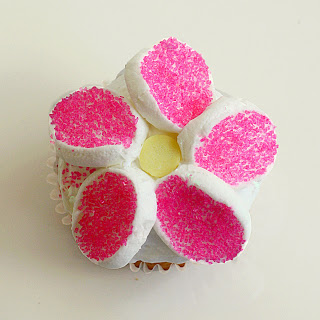
* 5 large marshmallows
* pink sugar
* Candy decorations and sprinkles, as desired

What You Do:

1. Preheat oven to 350 degrees. Place paper liners in each of 24 regular-size muffin cups.
2. Mix cake mix, sour cream, milk, oil, and eggs on medium speed for 30 seconds. Beat for 2 minutes on high.
3. Fill each liner 2/3 of the way and bake for 15-17 minutes. Remove from pan and let cool.
4. Stir a few drops of pink food color into 1 cup of white frosting. Frost cupcakes with pink frosting.
5. Spoon 1 heaping teaspoon of white frosting on center of each cupcake.
6. To make ears, cut each large marshmallow crosswise into 5 pieces with kitchen scissors.
7. Press 1 side of cut edges into pink sugar, flattening slightly.

8. Using scissors, cut through center of each marshmallow piece to within 1/4 of the edge. Separate to look like bunny ears.
Arrange on each of the frosting mounds as shown. Use candy decorations to make eyes, nose, and whiskers.

…………………………………………………………………………………………………………….

Check out our APIA Easter Pinboard for more ideas: http://www.pinterest.com/aupairinamerica/hop-into-easter/

Au Pair Webinars

Just a reminder:
Au Pair Webinar offerings this evening beginning at 7p.m CST:

7p.m.– Finding the Right Strategy for Your Child
Is homework a struggle in your home? In this webinar we consider some basics about homework and also look at ways to adapt the process to your child’s learning style. Hosted by Joan Barth

8p.m. – Nutrition: Good Eating for You and Your Kids
Healthy eating for you and ideas to encourage the kids to eat well. Hosted by Jody Landon

Toilet Training 101
No more diapers? Need help with toilet training the children? Join us for tips and suggestions about toilet training in America. Hosted by Sandee Plescia

Follow the link below to register. http://aupairinamerica.com/apwebinars

Facts about the Education Requirement

Au pairs can fulfill the educational component in different ways. The choice you make will depend largely on the educational opportunities in your community and your work schedule. To meet the requirement, it is possible you will need to supplement the education allowance with your own money, so plan carefully.

The education requirement

The au pair requirement is 6 semester hours of academic credit or the equivalent. EduCare Companions must complete twice the requirement of au pairs, and year2 au pairs are expected to take an additional 3 credits for a 6-month extension and 6 credits for a 9- or 12-month extension.

Generally, a 3-credit college course is 45 hours, and a 4-CEU (continuing education units) course is 40 hours. Non-credit and audit courses are counted by the number of hours spent in the classroom.

6 credits = approx. 80 hours in the classroom = approx. 8 CEUs

You can use any combination of hours, credits, or CEUs as long as they add up to the required number of hours. Your counselor will be able to advise you on what is possible in your area. You can also review your options by reviewing the educational listings for your state. Click here to view those options.

Auditing classes: Auditing allows students to attend a class with limited in-class participation, non-graded assignments, and no final grade. If auditing is available to the au pair, the cost may be less than for a credit course. Each individual college or university has its own audit policy.

CEU: Continuing Education Units is a nationally recognized method of quantifying the time spent in the classroom during professional development and training activities. Ten hours of instruction = 1.0 CEU.

Choosing classes: Be flexible. Remember that your childcare responsibilities come first. Class schedules need to be arranged with your host family and around your childcare duties. Your favorite class may not be available when you are. Schools vary in what they offer, but most offer a wide range of choices and offer day, evening, and Saturday classes.

Completion of the education requirement: Education is an important part of your year in America. Take advantage of the opportunity and don’t forfeit your eligibility to extend and/or return to the US as a return au pair.

Continuing Education courses: These classes are usually non-credit and are offered at some colleges and universities. These courses are designed for a purpose other than working toward a degree, usually for personal enrichment or career-specific skills.

Extending: In order to extend, you must show proof that you have completed the education requirement at an accredited U.S. post-secondary institution. To extend, your education must be complete no later than 30 days before the end of your year. One or more of the following documents can be used to verify that you have completed your education:

Letter from the school on letterhead
Completion certificate from the school
School transcript

All proof of education must state your name, school attended, course title, and number of credits/hours earned. Completed verification should be given to your community counselor. Your extension request will not be processed without this proof.

*If you are still in the process of completing your education, you must obtain proof from the school stating that the course(s) you are taking will conclude at least 30 days before the end of your year and the number of credits/hours/CEUs that you will earn. If you are registered for a course that has not yet begun, you must submit proof of registration indicating that the course will conclude at least 30 days before your first year ends and the number of credits/hours/CEUs that you will earn. All proof of education must be given to your counselor before your deadline to extend.

Non-credit classes: Non-credit classes are offered at some colleges and universities. These courses are designed for a purpose other than working toward a degree, usually for personal enrichment or career specific skills.

Online Courses: Online courses do not meet the educational requirement for au pairs.

Placement Tests: Many English as a Second Language (ESL) classes have placement exams. Some schools may require the TOEFL or other placement tests at the time of registration for other courses as well.

Post-secondary accredited institution: A post-secondary institution offers at least a one-year program of college-level studies. An accredited institution is an institution officially recognized by a regional or national accrediting commission of schools and colleges. To verify the acceptability of a school, you should either ask your community counselor or contact the Education and Program Services coordinator at 1-800-928-7247 ext. 5028 or email education@aifs.com.

Proof of Education Completed: You may submit any of the following to your community counselor as proof of your education.

Letter from the school on letterhead
Completion certificate from the school
School transcript

All proof of education must state your name, school attended, course title, start and end date of the course, and number of credits/hours earned. If your community counselor does not have proof that your education requirement has been completed, you will not receive a completion certificate upon your return to your home country and you forfeit the opportunity to extend.

Recognition: If you are taking a course for academic credit, you will receive a grade and an official transcript. If you are auditing or taking a non-credit course, recognition is at the discretion of the instructor.

TOEFL: For information about the Test of English as a Foreign Language, click here.

Transfer of credits: If you are taking a course for academic credit and want to transfer credits home, it is up to the university in your home country to determine if they will accept that credit or not. It is the responsibility of the au pair to contact her home university if she is interested in transferring credit.

Transportation: Your host family is required to provide transportation, including gasoline, parking, or public transportation costs (if applicable) to and from classes in your community. The cost of transportation is in addition to the $500/$1000 allocated to tuition and related fees. It is your host family’s responsibility to provide transportation or cover the transportation costs until you complete your educational requirement, even if the $500 education allowance has already been spent.

Tuition: Host families reimburse tuition costs and costs of related materials (books and supplies) up to $500 for the first year. EduCare companions are reimbursed up to $1000 for the first year. If it will cost you more than $500 (or $1000 for EduCare) to meet the requirement, you must pay the additional expense, so plan carefully.

UCLA APIA Advantage Course APIA has partnered with UCLA to create a 19-week interdisciplinary online course for 6 credits. This course has been specially-approved by the US Department of State to fulfill the educational requirement for au pairs. Unlike a typical online course, the blended online format of the APIA Advantage course allows au pairs to have face-to-face contact with their local communities. As a requirement of the course, au pairs are required to do a Global Awareness presentation, volunteer at a local organization, and participate in historical and cultural activities. To find out more about the course, please visit UCLA Extension at https://www.uclaextension.edu/aupairs, or ask your local community counselor.

Contact me if you have any questions about this topic 🙂
Video Quilt Project ~ film makers wanted!

http://www.gizbot.com/files/2012/09/How-to-download-YouTube-files-on-your-mobile-image12.jpg

Au Pair in America wants our au pairs to participate in this special project so we can create our very own Au Pair in America video quilt. All you have to do is send a video (not more than 30 seconds) telling us about a FIRST time you experienced something in the U.S. A quick piece using your smart phone will do!

Here’s a link to see how easy it is:  https://www.youtube.com/watch?v=TSOaP7yjats#t=28

You should post your video on YouTube and send the link to: gaapia@gmail.com along with your name, country, cc’s name, and where you live now. Every au pair who submits a video will receive a gift.

The deadline is March 6th.