Category Archives: Au Pair Tips

Tips to Feeling Happy

1. Get Dressed Up! “When you look good, you feel good,” is actually true. If you wake up feeling kind of down for no particular reason, putting on your favorite outfit can help you walk out the door feeling a lot more confident. You will get lots of compliments, too!

2. Stretch and Breathe! Anytime you want to calm your nerves and get a boost of endorphins, all you have to do is take a moment to stretch and breathe deeply for at least 5 minutes. You will feel calmer, centered, and ready to take on the world. It definitely works!

3. Make a Gratitude List! When you start feeling overwhelmed, stressed out, and overcome with the feeling that your life is completely unfair, an easy way to regain perspective is to make a list of everything you’re grateful for now! The list can include basic freedoms, small luxuries, and of course, the people who matter most to you.

4. Call Someone You Love! Chose the most supportive person you can think of. It could be your mom or a close friend. Know in advance who you can turn to in a crisis.

5. Get Some Sun! When sunlight hits your skin, it triggers the production of Vitamin D. Scientific studies have shown that a deficient amount of Vitamin D is directly related to a dip in mood for certain people. Put on some sunscreen and go outside, even on a winter day!

6. Exercise! Take a walk, ride a bike, go to the gym. You’ve probably heard of “runner’s high,” caused by the mood-boosting endorphins (aka “feel good hormones”) your brain naturally releases when you exert yourself.

7. Listen to Your Favorite Song! Have a go-to song that you listen to when you need a quick burst of energy is a great asset to your happy vault. Putting on your favorite song can trigger the brain to release large amounts of dopamine, a chemical that sends “feel good” signals to the rest of the body and plays a role in both motivation and addiction.

8. Do Something for Someone Else! When you give yourself to others you will feel the reward. Studies have reported more people participated in meaningful activities, the happier they were and the more purposeful their lives felt.

Sometimes the best way to BE HAPPY is to SMILE and go for it!

Win a Trek America tour for free!!

Learn how a lucky Au Pair can win a free trip with Trek America!! 

Global Awareness is developing a new section on its site: Learning about the U.S. This will highlight different areas and cultures in our country.  You (Au Pairs) will be asked to write about your travels for the site.

For a fantastic kick-off, Trek America has designed a scavenger hunt on their website and the winner will receive a free trip!!

Please visit the Global Awareness website (http://www.globalawareness.com/ ) to learn more about this opportunity and to participate in the scavenger hunt!


Fun ideas!!


Our APIA website is packed with ideas for fun things to do with your children or host children.  You can search for activities by age group, season of the year, and indoor or outdoor activities. 

http://www.aupairinamerica.com/resources/activities/index.asp


For those of you in the midst of winter weather and snow days, here are some creative winter activities  from our Au Pair in America Pinterest page! 

https://www.pinterest.com/aupairinamerica/winter-fun/


With Valentine’s Day coming up, making cards, pizza hearts, Valentines cookies or handmade gifts are great ways to keep yourself and your children entertained next week!

https://www.pinterest.com/aupairinamerica/valentine-s-day/


Taxes – Due April 15th!!

Au pairs who earned more than $3,950 in 2014 are responsible to file a federal tax return and pay an income tax.

Au Pair in America is not responsible for the interpretation of the information within this document, or any changes to IRS rules or forms that may occur. Neither Au Pair in America, nor its community counselors, can provide any official tax information, and we recommend that you contact a tax professional if you have any specific questions regarding these matters.

Taxes for income earned in 2014 are due to be filed on or before April 15th of this year.

Will I have to file taxes?
If you earned more than $3,950 in 2014, then yes!

When are the 2014 taxes due? 
April 15th, 2015!

How to file taxes? 
1. Get a Social Security Number or Tax ID Number: 

http://www.aupairinamerica.com/resources/life_in_the_us/procedure_4.asp
http://www.irs.gov/Individuals/International-Taxpayers/Au-Pairs 

2. Calculate how much you have earned during 2014.

Example: You were here for 31 weeks in 2014 and earned a weekly stipend of $195.75* for those 31 weeks. Your total earnings would be 31 x $195.75 = $6068.25 = $6068. (always round up to the nearest dollar amount) . *This rate will vary based upon when you arrived in 2014 and what program you were participating in when you earned the stipend – au pair, EduCare, extraordinaire. You would then subtract the personal exemption amount for 2014, ($3,950) from your income and would get a total of $2,118. This is your taxable income.

Once you determine your taxable income, you should then check the 2014 instruction booklet http://www.irs.gov/pub/irs-pdf/i1040nre.pdf (see link above), starting on page 23 to see how much tax you owe based on your taxable income. For the amount above, your tax would be $211.

3. Fill out 1040NR-EZ form

http://www.irs.gov/pub/irs-pdf/f1040nre.pdf
This is a link to instruction booklet    http://www.irs.gov/pub/irs-pdf/i1040nre.pdf

Below are some helpful tips for filling out the 2014 tax form.

1. Enter the total amount you earned in 2014 on line 3, line 7, line 10 and line 12. This would be your weekly stipend multiplied by the number of weeks you were in the U.S. in 2014 and were paid the weekly stipend.
2. You should not have any itemized deductions, so the amount entered on line 11 would be ‘0’.
3. Enter the 2014 exemption amount of $3,950 on line 13.
4. Subtract the exemption amount ($3,950) from your income reported on line 12 and put on line 14. This is your taxable income.
5. Look up the taxable income amount in the tax tables which are included in the instructions (starting on page 23) to see the amount you will owe in taxes. Put this amount on line 15, line 17 and line 25 of form 1040NR-EZ. This would be the amount that you will pay to the IRS.
6. Don’t forget to sign the form at the bottom. – the form is not valid without your signature!
7. You must fill out the other side of the form (page 2)
8. Put your home country on line A
9. Lines C,D, and F should all say ‘no’
10. For section E put ‘J-1’
11. In section G, you should start with your arrival date in the U.S. (in 2013) and list any dates that you left the country for any trips (either your own vacation or your host family’s vacation). Then add up all the days that you were in the U.S. during 2014 and enter this number in section H.
12. If you filed a tax return in the previous year, answer ‘yes’ on line I and put the form number you filed (probably 1040-NR-EZ 2013)

If you have any questions, you can call the IRS directly at 1-800-829-1040
Filing a tax return and payments: Whether you are filing your taxes from the U.S. or back in
your home country, all tax returns and checks should be mailed to:

Internal Revenue Service
P.O. Box 1303
Charlotte, NC 28201 – 1303
U.S.A.

Can I mail my form and pay online?
YES — via….Debit card (flat rate less than $3) or Credit card (@ 1.87% of total tax amount) http://www.irs.gov/uac/Electronic-Payment-Options-Home-Page (NB: you still have to mail in your forms). 


Child Passenger Safety Laws

Child passenger restraint requirements vary based on age, weight and height. Often, this happens in three stages: infants use rear-facing infant seats; toddlers use forward-facing child safety seats; and older children use booster seats.

Many laws require all children to ride in the rear seat whenever possible, and most states permit children over a particular age, height or weight to use an adult safety belt.

Learn More About Occupant Protection
Adult Seat Belt Laws: http://www.ghsa.org/html/stateinfo/laws/seatbelt_laws.html
Occupant Protection: http://www.ghsa.org/html/issues/occprotection/index.html
Best Practices for Children: http://www.ghsa.org/html/publications/opc.html 

First offense fines for not complying with a state’s child passenger safety laws vary from $10 to $500. Some states also use driver’s license points as an additional penalty for noncompliance.

* All 50 states, the District of Columbia, Guam, the Northern Mariana Islands and the Virgin Islands require child safety seats for infants and children fitting specific criteria.
* 48 states and the District of Columbia and Puerto Rico require booster seats or other appropriate devices for children who have outgrown their child safety seats but are still too small to use an adult seat belt safely.
* The only states lacking booster seat laws are Florida and South Dakota.
* 5 states (California, Florida, Louisiana, New Jersey and New York) have seat belt requirements for school buses. Texas requires them on buses purchased after September 2010.

Texas:
Child restraint required for children age: <7 and <57″
Adult safety belt: not permissible for children!
Maximum fine 1st offense: $25 minimum 


Halloween Safety Tips


Halloween can be a lot of fun but it is also a time when safety should come first. Here are some tips for next week:

  • Adult supervision is essential. Always accompany the children if they are going door to door to trick or treat
  • Try trick-or-treat-friendly homes. Ensure the children only visit houses with lights on. And, you might also suggest the houses they visit have some sort of Halloween decoration on the porch.
  • Stay outside. Make sure the children don’t go inside someone’s house. They can trick or treat on the porch.
  • Remain visible. Dress the children in bright costumes or have them wear reflective strips or carry a glow stick or flashlight.
  • Quality-check treats. Check the candy before they eat it. Throw out any candy that is not in its original wrapper or looks like it has been tampered with.
  • Say “no” to strangers. Remind the children to never accept a ride or go anywhere with a stranger.

Pumpkin Carving Instructions

Pumpkin Carving Contest!!

Au Pairs/Host Families: Submit your pumpkin photos (of yourself, your helpers, the actual carving & final product) by November 2nd for a chance to win some special prizes!!


1. Cut a Hole in the Pumpkin

The first step is hollowing out the pumpkin. Use a keyhole saw to cut the hole. If you’ll be using a candle for illumination, you can cut the hole in the pumpkin’s top (always put the candle in a high-sided glass, and never leave unattended). For electric lights, make the hole in the bottom or side so you can hide the cord.


2. Scoop out the Flesh

Scoop Out the Flesh

Scoop out flesh, pulp, and seeds with a plaster scraper or fleshing tool.


3. Transfer Your Design

Transfer Your Design

Now it’s time to transfer your selected designs (use a pumpkin template or draw your own). Affix it to the pumpkin, and trace the design by poking holes with a needle tool or T-pin.


4. Carve the Features

Carve the Features

Remove the template and carve along the pattern with a miniature saw or linoleum carving tool.
You can also get creative with patterns and designs using pumpkin-carving tools.
If desired, place candles, small flashlights, or battery-operated light sources inside your pumpkin.

Tip: Prevent exposed areas of the pumpkin’s flesh from turning brown by applying a film of Vaseline.


5. How to Light a Pumpkin

To illuminate a carved pumpkin, use battery-operated lights, candles, or string lights. If using a candle, place it in a glass or votive holder, and cut a hole in the top/back of the pumpkin for ventilation.


Become a Global Awareness Volunteer

What is a Global Awareness Presentation?

Global Awareness presentations are meant to introduce young children to people from other
countries and cultures. We want them to start forming positive first impressions of someone
from a different part of the world. We want them to go home at the end of the day and say, “I
met a lady from ______, and she was really cool!”
Each Global Awareness presentation is unique. Presentations vary depending on the ages of the children, the grade, and length of time available. A presentation for a pre-school class will be very different from one for a 5th grade class!

Here are some suggestions for presentations. Please feel free to use your own ideas, creativity and materials to create a presentation that is age-appropriate, meaningful and enjoyable for all. You can create a display board if you like filled with photos of your country. Or you can teach the children a song, a game, or a craft. There are so many things you can do, but remember, the most important part of Global Awareness is to HAVE FUN!!

Geography
Stand in front of the classroom map and show where your country is. Provide basic information such as:
· How long it took you to fly from your country to the U.S.
· Tell the children if the seasons are the same as those in the U.S. or opposite
· You may want to give them a map of your country to color.
Many children will want to tell you where they have been and where their ancestors are from.

Flag
Show the children the flag of the country and if age-appropriate, explain what the colors and
design represent.
· You can sing your national anthem.
· You can give the children a flag of your country to color
Most schools will be happy to make copies of the materials you want to hand out to the children.

Language
· Teach a mini-language lesson. The children enjoy learning basic vocabulary such as
counting, animals, foods, greetings and school-related words. How do you say,
‘school,’ ‘teacher,’ ‘class,’ ‘computer,’ backpack,’ ‘book?’

Animals– Bring in pictures of animals from your country.

Currency -Bring in money from your country. The children enjoy seeing and handling this.

Folk tales/nursery rhymes-share stories from your country.

Food/recipes-bring food from your country. But be sure to ask the teacher for permission to
bring food to the classroom. Beware of allergies!

Holidays/celebrations/customs– share holiday traditions with the children. Most teachers
enjoy a presentation with this information during the U.S. Dec. holiday season.

Native costume/dress-the children love to see what your native costume looks like. Bring it to class to show them.

Games/activities – play a game that is popular with children in your country

Music-teach the children a song or dance from your country.

Sports– What sports are popular in your country? Who are the sports heroes? What sports do
children in your country enjoy?

Remember, these are only a few ideas. Feel free to create your own presentation.
We will also send you materials to give to the children.
The children will be very excited for you to visit their classroom! 🙂
Please contact me for more information!

Simple Ways to Shake Up Snack Time!!

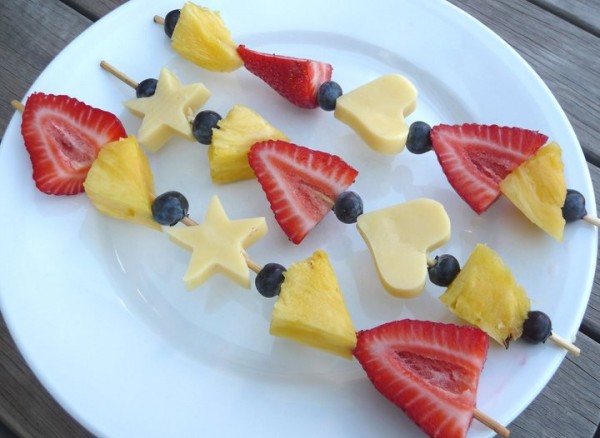
Whether it is your week for share-a-snack at school, or you are looking to tide over tiny tummies until dinner—snack attacks can leave you starved for ideas. If your crew craves something more creative than a bag of goldfish, satisfy small stomachs with a playful presentation. Here are eight simple solutions that take snacks from drab to fab—and might even introduce some new flavors to the mix.

Stick It To ‘Em

To view recipes, please visit:

http://redtri.com/eat-up-simple-ways-to-shake-up-snack-time/?utm_source=LB&utm_medium=morestoriesmissed&utm_campaign=inboundMorestoriesmissed

Caring for a Sick Child

When a child has less energy than usual, is unusually cranky, has less of an appetite, or just doesn’t seem him/herself, chances are the child is sick. Fever is a sign a child is fighting an illness or infection. Fevers are usually not serious and can be cared for at home. It is typical for younger children to run higher fevers than older children. Fevers are also often higher in the evening than in the morning. Be alert for rash, earache, stomachache or sore throat, as these may indicate more serious problems.

A child’s temperature can be taken orally, under the armpit, or with special thermometers only in the ear. Au pairs and host families should discuss the preferred method for that family. A child has a fever if the temperature is 99.4’F (37.4’C) when taken by mouth or under the arm. Be sure the thermometer is shaken down first, and left in place for 3 minutes in the mouth or 6-8 minutes in the armpit. Talk or read to the child while you are taking his/her temperature. Never leave a child alone with a thermometer.

When a child has a fever, he or she needs more rest than usual and should not be awakened. Quiet play is fine, but too much activity can aggravate a fever. Children should be dressed in light layered clothing. Liquids are very important – offer water, juice, fruit drinks, tea, popsicles, Jello or soup.

Some children might enjoy stirring their tea with a lollipop, or having soda as a special treat. Host families and au pairs should discuss appropriate medication and desired dosage. Do not offer children aspirin; consider instead acetaminophen or ibuprofen, but only with the approval of a host parent. If a child’s fever is over 103’F, a lukewarm bath might be comforting. If a child vomits, offer small amounts of liquids, but no dairy products. Within the first 24 hours the diet should be limited to clear liquids, bananas, plain white rice, applesauce and plain toast.

When children are sick they will need an extra dose of patience, attention, affection and comfort even more than they need medicine or special diets. Although basic rules and discipline should not change, a child may be more dependent on adults when he or she is ill. Extra imagination and creativity is needed to keep a sick child entertained with quiet pastimes. Children will welcome novelties – use a baking sheet as a tray to assemble a puzzle in bed or to keep crayons from rolling away; create a story with stuffed animals and a flashlight under a blanket.

Warning signs – It is time to ask for more help if a child:

• has a fever higher than 104’F (40’C)
• is very cranky, sluggish or doesn’t awaken easily
• has trouble breathing
• is confused, or vomits repeatedly
• is unable to swallow or is drooling
• has a convulsion or seizure
• has dry lips, sunken eyes, little or no urine or dark yellow urine