Yearly Archives: 2019

Making Thanksgiving Memories Together

Thanksgiving is a public holiday celebrated on the fourth Thursday in November every year in the United States. It started as a harvest festival and has been celebrated nationally on and off since 1789.  The most important part of Thanksgiving for American families is to spend family time together.

Martin Cathrae

 “My favorite holiday was Thanksgiving. Firstly, it was my first holiday with the whole family in America. Secondly, the whole family came together. All aunts and uncles and their kids came to grandma’s. We played football with all of them, including grandma and grandpa. It was the first time I played it and it was so much fun for all. We had a great dinner with all the typical things you can imagine … it was deeeelicious! It was so great to be with such a big family and I really enjoyed that day. I will remember it my whole life, I hope.” – Swantje from Germany

Here are a few tips to help you have a terrific Thanksgiving experience.

Host Parents
Please plan to include your au pair in your Thanksgiving celebration, if at all possible. If you are traveling or will not be able to invite your au pair to join you for Thanksgiving, give her plenty of notice and help her make alternate plans. You don’t want to leave your au pair alone over the holiday.

Au Pairs
If you are invited to attend dinner, please let your family know within 5 days of the invitation, whether you are planning to attend, so they may make plans. If your host family is unable to include you in their Thanksgiving plans, please let me know if you have trouble making other plans, so I can assist.

Make sure to discuss time off during this holiday weekend. Many host families work the Friday after Thanksgiving so do not assume you have this day off or the entire weekend. Talk to your host family, BEFORE you make any plans.

Bonus Tip for the Kids
If you are looking for a fun recipe to make with your au pair, check out these turkey cookies. Find more fun activities and recipes on the Au Pair in America Fall Holidays pinboard.
 

Three Ways for Au Pairs to Stay Red Cross Ready

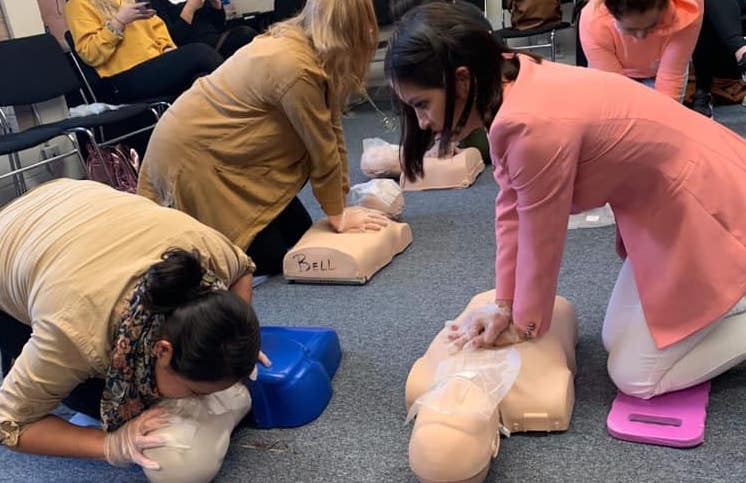
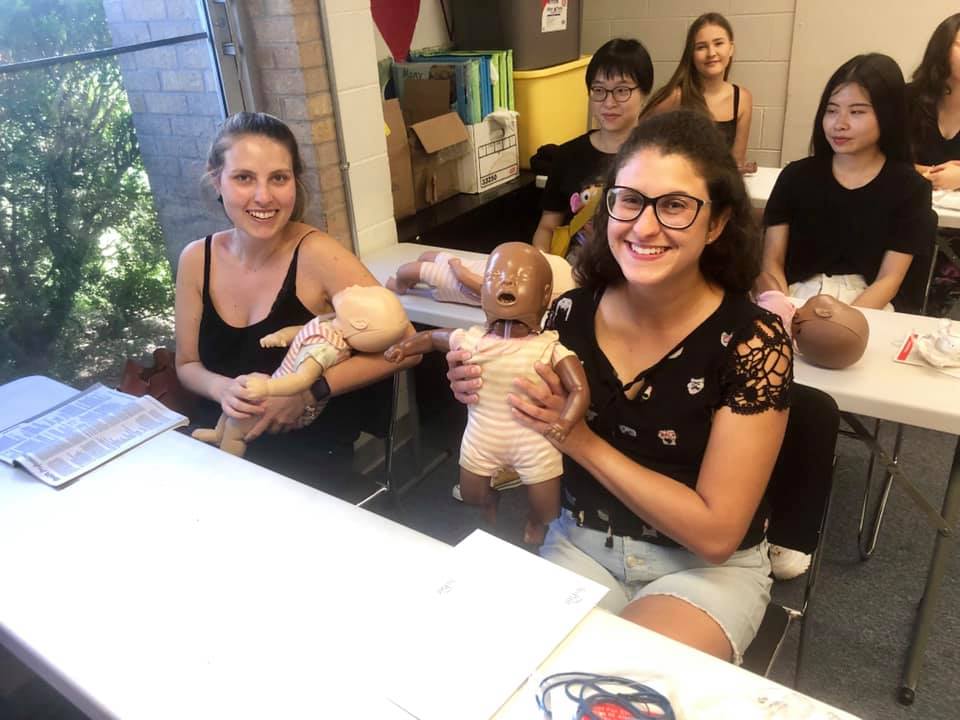
Being knowledgeable in basic first aid and CPR is important for au pairs (and anyone else caring for children). Au Pair in America’s commitment to infant/child safety begins before au pairs arrive to the U.S., with pre-arrival training and continue throughout the au pair year.

#1 Training At Orientation

Our orientation includes seminars by American Red Cross instructors who provide hands-on demonstrations in infant/child CPR and safety. Printed materials are provided that reinforce the safety information and can be used to review from time to time.

#2 Enroll in a Red Cross Certification Class

After settling into their host community, all au pairs are encouraged to complete an Infant/Child CPR and First Aid certification program. Au Pair in America will pay for this training through the American Red Cross.

Classes are available through the Red Cross. Au Pair in America will pay for the cost of a class providing an au pair has at least six months left on her visa and is taking one of several approved childcare/child safety-related classes, such as Adult and Pediatric First Aid/CPR/AED. Au pairs should check with their community counselor and host family before signing up. Au Pair in America will register the au pair directly.

To locate a class, visit www.redcross.org/takeaclass. For step-by-step instructions on how to locate a class and have Au Pair in America complete enrollment, click here.

#3 Stay Current on Safety Information

The Official American Red Cross First Aid app puts expert advice for everyday emergencies in your hand. Available for iPhone and Android devices, this app gives you instant access to the information you need to know to handle the most common first aid emergencies. With videos, interactive quizzes and simple step-by-step advice, it’s never been easier to know first aid. Download the app for free from the American Red Cross website or in your app store.

Photos: Robin Leon

Top 5 Tips for Overcoming Homesickness

Almost everyone experiences culture shock when they come to a completely new environment. Everything is different: the language, the food, and the people.
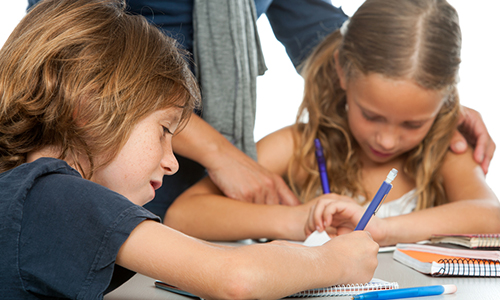

When everything feels so unfamiliar, it is natural to long for the security of home. However, you don’t want to let that feeling of longing for home, make you too sad or prevent you from finding happiness in your new home.

Here are my Top 5 Tips for Dealing with Homesickness

1. Make Friends – Don’t wait for other au pairs to reach out to you, reach out to them. There are other lots of new au pairs who are feeling the same way you are right now. Set a goal to reach out to a few of them each day. Some will respond and some will not. Don’t let that discourage you. No one will ever be mad at you for sending them a message to say hello or ask if they want to do something together. Make friends from various countries and you will also get a chance to practice your English skills together.

2. Stay in touch with your home country, but not too much. Skyping or talking on the phone every day with your family and/or friends back home often makes homesickness worse. Try texting instead and reduce the Skype and phone calls to once a week, until you feel stronger. It’s much harder seeing the faces and hearing the voices of those you miss.

3. Get out of the house (or your room specifically) – Go to cluster meetings, have coffee or go to movies with other au pairs, join a gym, go to the library, go for a walk, visit the mall, get a manicure, visit a museum. If someone invites you out, say “yes.” Also, don’t be afraid to do the inviting. If your host family invites you to do things with them, say “yes.” This will help you get to know each other and contribute to your overall happiness.

4. Realize that it definitely gets better – All au pairs experience homesickness and nearly all of them stay and have a successful year (some stay for two years). So, it must get better, right? Once you get past the initial homesickness, most au pairs report how quickly the year goes by.

5. Make Plans – Create your own Au Pair Bucket List (places you want to go, new foods to try, new things to experience during your year in the U.S.) and start doing them now. Post on our cluster group to find others who may want to join you on your adventures.

Photo by: Hernán Piñera (Flickr)

Back to School Planning

Back to school time is here. This can mean changes to the au pair schedule and possibly to the duties.  It is very important to communicate these changes to avoid problems.

Here is a list of topics to consider discussing:

  • Au pair’s work schedule
  • The children’s school and activity schedules
  • Where the children get dropped off and picked up and who will be doing this
  • What to do if a child is staying home sick, late to school, does not get off the bus (if they are supposed to)
  • Driving laws regarding stopping for school buses
  • How to tell if school has been canceled or delayed for bad weather
  • Add the au pair to your list of people allowed to pick up the kids from school and explain the process
  • What to pack for lunch
  • The routine after school (do they have free time before starting homework, what to give for a snack, any chores, where do they put their backpacks & lunchboxes)
  • How to communicate about what’s going on at school. Your Kids in Care logbook from Au Pair in America can be a great two-way communication tool for keeping track of schedules, afterschool activities and day to day info that needs to be transferred between host parents and au pair.
  • If your au pair will be the one going through the children’s backpack and helping with homework, consider designating an area for putting things that need to be read and/or signed by parents.

Here are some Printable Fill-in-the-Blank School Notes for parents. You can print these out and have them ready for times when the kids are absent, late, have an early dismissal or you need to give permission for something.

Check out Au Pair in America’s Pinterest School Tips and Ideas pinboard for things like organization ideas, back to school traditions, printable lunch box notes, and fun lunch recipes.


Going Home

Most au pairs have mixed feeling about returning home. As the program end nears, there is both excitement and nerves about adjusting to life at home.

Adapting to life back home will include some of the same emotions experienced with adjusting to life in the United States, such as:

  • Homesickness (this time for your American family and friends)
  • Rejecting things that are cultural norms in your home country
  • Adapting to a new environment and routine
  • Accepting your new situation

How do you prepare for going home? While you have been away, things at home may have changed. You have certainly changed, and after adapting to the American culture, you must adapt again to your own culture. Here are some tips to consider as you prepare for the journey home:

  • Be flexible as you think about life back home, give yourself time to adjust, and don’t expect it to be easy every day.
  • Let yourself be sad and feel the loss of friends and family.
  • Reflect on your experience and acknowledge what you have gained and learned during your au pair year.
  • Focus on positive ways you have grown.
  • Make a list of the skills you have acquired or strengthened as an au pair.
  • Make your new resume!
  • You made it! Celebrate and be proud of your au pair achievements.
  • Going home is not the end of something….it’s the beginning of something new.


Camp Au Pair – Dinosaurs

This week’s Camp Au Pair theme is Dinosaurs.

Crafts, recipes, activities, and games related to dinosaurs can all be found here on the Camp Au Pair – Dinosaurs pinboard.

Consider these awesome activities –

Field Trips can be a great way for kids to learn and have new experiences. Here are a few places to go, that fit this theme:

Videos – Look for fun videos on YouTube about dinosaurs. Dinosaurs for Kids is a great video that explains dinosaur history and what paleontologists do.

The Good Dinosaur, Land Before Time and Ice Age are all great family movies that fit with this theme. For older kids, consider movies like Journey to the Center of the Earth and Jurassic Park (which is rated PG-13).

Books – Stop by your local library and look for books on dinosaurs.

Photo: aaron parecki {flickr}

Camp Au Pair – Space!

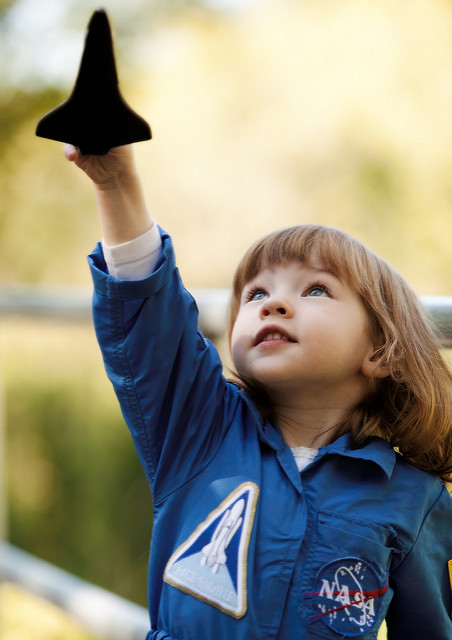
Get ready to blast off as we explore outer space this week! Ready for some serious fun? How about creating the phases of the moon with Oreo’s, exploring solar system mazes or building a space shuttle with recyclables? Try creating outer space themed lunches and snacks, flashlight constellations and answering the questions on “If I Could Be An Astronaut!”

Our Pinterest board is FULL of great ideas for you to use to explore outer space from the comfort of your own home! Moon rocks are optional!

Field Trip Options:

Webcams – You can do a google search for websites with webcams which allow you to observe space. Here is one from the International Space Station to get you started.

Videos – Look for fun videos on YouTube about outer space. Solar System 101 is good for school aged kids. The Planet Song is for toddlers and preschoolers. WALL-E, Zathura, Monsters vs. Aliens & Star Wars are all great family movies that fit with this theme. For older kids, movies like Hidden Figures and the Martian too, both are rated PG-13.

Books – Stop by your local library and look for books on outer space.

Photo: AGeekMom

Camp Au Pair – Nature Exploration

Now for some fun in nature!!! Get out and explore a bit, collect some treasures along the way! Most of these activities are easily created using items likely already around the house, but you may need to plan ahead a bit to have supplies on hand! Check with your host family about getting supplies to use!

How about leaf bowls using air dry clay? Leaf painting mandala?  Create a birdfeeder or make a suncatcher?

How about creating a twig raft? Creating Nature Journals? Maybe a pocket sized nature collection?

So many great ideas! Check them out on the Au Pair in America Pinterest boards here!

Check out your library (or Amazon) for great books about the outdoors! Backpack Explorer: On the Nature Trail.  How about, My First Book About Backyard Nature: Ecology for Kids!

Check out the cool videos at Bob’s Pennsylvania Wildlife Camera 

Consider joining in the Free Forest School outings near you! Free Forest School ignites children’s innate capacity to learn through unstructured play in nature, fostering healthy development & nurturing the next generation of creative thinkers, collaborative leaders & environmental stewards.

Photo by Cynthia Chan

Swim Safety Tips – American Academy of Pediatrics

Swimming is a fantastic form of exercise and a major component of many spring break trips and summer break fun. But parents should remember that swimming also comes with risk. Follow these tips from the American Academy of Pediatrics to protecting children from drowning.

POOL SAFETY

  • Never leave children alone in or near the pool or spa, even for a moment; close supervision by a responsible adult is the best way to prevent drowning in children. Designate a “water watcher” who is not distracted or under the influence of drugs or alcohol to watch children in and near the water.
  • Whenever inexperienced swimmers are in or around water, an adult – preferably one who knows how to swim and perform CPR – should be within arm’s length, providing “touch supervision.”
  • Install a fence at least 4 feet high around all four sides of the pool. The fence should not have openings or protrusions that a young child could use to get over, under, or through.
  • The safest fence is one that surrounds all 4 sides of the pool and completely separates the pool from the house and yard. If the house serves as the fourth side of the fence, install an alarm on the exit door to the yard and the pool. For additional protection, install window guards on windows facing the pool. Drowning victims have also used pet doors to gain access to pools. Keep all of your barriers and alarms in good repair with fresh batteries.
  • Make sure pool gates open out from the pool, and self-close and self-latch at a height children can’t reach. Consider alarms on the gate to alert you when someone opens the gate. Consider surface wave or underwater alarms as an added layer of protection.
  • Keep rescue equipment (a shepherd’s hook ­– a long pole with a hook on the end — and life preserver) and a portable telephone near the pool. Choose a shepherd’s hook and other rescue equipment made of fiberglass or other materials that do not conduct electricity.
  • Avoid inflatable swimming aids such as “floaties.” They are not a substitute for approved life jackets and can give children and parents a false sense of security.
  • Children over age 1 may be at a lower risk of drowning if they have had some formal swimming instruction. However, there is no evidence that swimming lessons or water survival skills courses can prevent drowning in babies younger than 1 year of age.
  • Everyone should learn to swim – Participation in formal swim lessons can reduce the likelihood of childhood drowning death by 88%
  • The decision to enroll a child over age one in swimming lessons should be made by the parent based on the child’s developmental readiness and exposure to water, but swim programs should never be seen as “drown proofing” a child of any age.
  • Avoid entrapment: Suction from pool and spa drains can trap a swimmer underwater. Do not use a pool or spa if there are broken or missing drain covers.  Ask your pool operator if your pool or spa’s drains are compliant with the Pool and Spa Safety Act. If you have a swimming pool or spa, ask your pool service representative to update your drains and other suction fittings with anti-entrapment drain covers and other devices or systems. See PoolSafely.gov for more information on the Virginia Graeme Baker Pool and Spa Safety Act.
  • Large, inflatable, above-ground pools have become increasingly popular for backyard use. Children may fall in if they lean against the soft side of an inflatable pool. Although such pools are often exempt from local pool fencing requirements, it is essential that they be surrounded by an appropriate fence just as a permanent pool would be so that children cannot gain unsupervised access.
  • If a child is missing, look for him or her in the pool or spa first.
  • Share safety instructions with family, friends and neighbors.

BOATING SAFETY

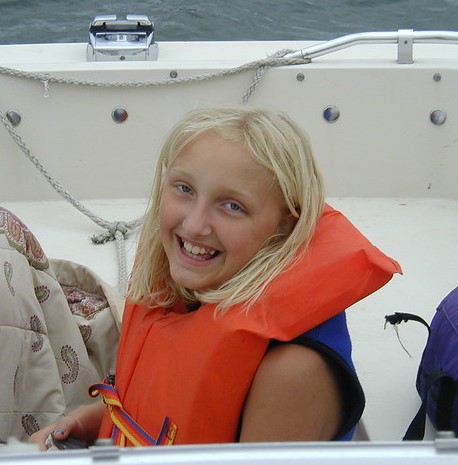
  • Children should wear Coast Guard approved life jackets at all times when on boats, docks or near bodies of water.
  • Make sure the life jacket is the right size for your child. The jacket should not be loose and should always be worn as instructed with all straps belted.
  • Blow-up water wings, toys, rafts and air mattresses should not be used as life jackets or personal flotation devices. Adults should wear life jackets for their own protection, and to set a good example.
  • Adolescents and adults should be warned of the dangers of boating even as a passenger when under the influence of alcohol, drugs, and even some prescription medications.
  • Children follow your example, whenever you are on a boat – everyone, kids and adults should wear a life jacket.

OPEN WATER SWIMMING

  • Never swim alone. Even good swimmers need buddies!
  • A lifeguard (or another adult who knows about water rescue) needs to be watching children whenever they are in or near the water. Younger children should be closely supervised while in or near the water – use “touch supervision,” keeping no more than an arm’s length away.
  • Designate a “water watcher” who is not distracted or under the influence of drugs or alcohol to watch children in and near the water.
  • Make sure your child knows never to dive into water except when permitted by an adult who knows the depth of the water and who has checked for underwater objects.
  • Never let your child swim in canals or any fast-moving water.
  • Ocean swimming should only be allowed when a lifeguard is on duty.
  • Teach children about rip currents. If you are caught in a rip current, swim parallel to shore until you escape the current, and then swim back to shore.
  • Be aware that pools and beaches in other countries may not have lifeguards, and pools may have unsafe drain systems. Supervise children closely.
  • At the beach, stay within the designated swimming area and ideally within the visibility of a lifeguard.
  • Be aware of rip currents. If you should get caught in one, don’t try to swim against it. Swim parallel to shore until clear of the current.
  • Seek shelter in case of storms. Get out of the water. Get off the beach in case of lightning.

Copyright © 2018 American Academy of Pediatrics.

Photo: Gordon {flickr}, eLLen {flickr}, Bradley West {flickr}, R Muller {flickr}

Camp Au Pair – Bucket List & Under the Sea Fun!

Summer has arrived! Time for Camp Au Pair!!

Let’s make a bucket list!

11896064_10206252418420687_3032463284832767225_n

Summer has arrived! Kids are home! Time to get your plans written down and make the most out of your summer days with your host kids! Here’s a great way to make sure you have lots of fun, perhaps learn some new things, and make a bunch of memories together!

Start by creating a bucket list! Bucket lists are a great way to brainstorm a bunch of ideas and then make them happen! Check out some great bucket list ideas like this one or this fun one!

Now for some under the sea fun!! Most of these activities are easily created using items likely already around the house, but you may need to plan ahead a bit to have supplies on hand! Check with your host family about getting supplies to use!

Create a sensory beach exploration pool!

Practice scissor skills with this super cute octopus craft!

How about some under the sea slime?

Coffee filter rainbow fish!

How about paper bag jellyfish? Toilet paper rolls transformed into a school of fish? So many great ideas! Check them out on the Au air in America Pinterest boards here!

Webcams – You can do a google search for aquariums and zoos across the country (and world) with webcams which allow you to observe sea creatures. Here is one to get you started.

Videos – Look for fun videos on YouTube about sea creatures. There’s more to see than Baby Shark. You can learn 10 Fun Facts About Turtles in this video. Movies like Finding Nemo, Dolphin Tale and the Little Mermaid also go well with this theme.

Books – Stop by your local library and look for books on sea creatures. The Rainbow Fish is a classic children’s book, your kids may already own.