Yearly Archives: 2020

Avoid Falling Victim to Scammers

There are always people out there who are looking for ways to trick people out of their money and personal information. There have been several new scams recently, so we are going to explain ways to identify scams and how to protect yourself.

SCAM #1 – A caller says they are a contact tracer and you may have been exposed to COVID-19 and asks you to pay for a test kit.

  • Contact tracers will not ask you for payment.

What to do? Do not give any payment information to someone who calls you on the phone.

SCAM #2 – Calls asking for your PIN, password, personal information or a payment.

  • Your bank will not call you and ask you for your PIN number or password.
  • IRS and Social Security Administration will not ask you for payment or personal info over the phone. Government agencies usually handle issues like this by sending a letter.
  • The number shown on caller ID can be manipulated, don’t take that as a sign that a call is legitimate.

What to do? Whenever you are in doubt, hang up and call the bank (or company) directly using a number you already have for them.

SCAM #3 – Email asking you to click a link to verify your personal information or share your password or PIN.

  • Be very suspicious of emails asking you to click links.
  • Scammers are very good at creating official looking emails and webpages.

What to do? Whenever you are in doubt, go directly to the website (not using the link in the email).

SCAM #4 – You see an offer online telling you to send them some money and they will double it or a pop-up ad says that you have won a great prize and just need to give them your information.

  • When something sounds too good to be true, it usually is.

What to do? Do not give your personal information or any money to people you don’t know.

SCAM #5 – You receive a call and you are told to stay on the phone while you go transfer or withdraw money from the bank and if you don’t you will be arrested or your bank account seized.

  • They are using the idea that this is an urgent situation to make you act quickly without thinking to avoid the consequence they have told you.

What to do? Do not follow their instructions.

Whenever you are in doubt, do not do as the caller or email asks. Check with your host parents or community counselor.

One other note: It is very important to keep your social security number private. There are very few situations where you will need to share this (bank, IRS, motor vehicles). Those are times you are taking an action and need to provide it. There is not a legitimate time where someone would be calling you on the phone or emailing you asking for that number.

Image: Canva.com

Halloween Fun!

Halloween is fast approaching! There are many ways that you can make this time fun and interesting for both you and the children you care for! COVID might change how we celebrate, but there are lots of ways to have fun at home with each other this season!

Au Pair in America has captured a wonderful array of projects you can work on together. You can find them on our Halloween Fun Pinterest board! Try making a collection of glowing pumpkins using jars from the host family’s recycling! You’ll need clean jars, liquid glue, orange tissue paper, some paint, black construction paper or cardstock and a strand of lights or battery operated tea lights.

If you have a collection of plastic pumpkins for trick or treating, place them on a shelf or table and dress them up! Baseball hats, party hats, tiaras, fire fighter hats, pirate hats and more will help you create a fun display! Dig through the dress up collection for some great options or make some of your own with craft supplies!


Check out the Pinterest board for some great ideas like:

Photos by Philip James and Mootsie

Where To Get A Flu Shot

Many au pairs and host families are looking for places to get flu shots this time of year. Au Pair  insurance does not cover immunizations, but there are lots of places to get flu shots for $35 or less.  If the host family is insisting that an au pair get a seasonal flu shot and she agrees to get it, the host family would be responsible for the expense.

If you are planning to get the seasonal flu vaccine, it is recommended that you get it as early as possible.

The Centers for Disease Control and Prevention (CDC) has extensive info available online Key Factors About Seasonal Flu Vaccine.


Fairfax County Health Department

Loudon County Heath Department

Prince William County Health Department


Flu shots are also available for a fee at pharmacies such as Target, CVS, Rite Aid, Walgreens, Harris Teeter, Safeway, Costco, etc. Click the individual store for a link to each website.Several offer the option to schedule an appointment and download and print forms to complete ahead of time.

REMEMBER:

Your health insurance DOES NOT cover preventative care. If you choose a place like Target that advertises “free” or even a $5 coupon, they will bill your insurance and it will be denied, leaving you with the financial responsibility.

ALWAYS discuss the out of pocket cost. Tell them you DO NOT have medical insurance coverage for preventative care. The cost will vary between $20-50 typically.

Photo: Jen Vargas

Back to School – Traditional, Hybrid & Virtual

Kids in our cluster are returning to school, in person or virtual. This means changes to the au pair schedule and possibly to the duties.  It is very important to communicate these changes to avoid problems.

I suggest you discuss the following (if applicable). Remember to tailor it to the particular student/s. If you are doing virtual learning, hybrid or back to a regular schedule:

Regular classes:

Au pair’s work schedule. Remember that all program rules apply, even in a pandemic. Not more that 45 hours over a week, not more than 10 hours in any one day and not more than 5.5 days per week, with one full weekend per month off (minimum).

  • The children’s school and activity schedules.
  • Mask supplies and procedures.
  • Where the children get dropped off and picked up and who will be doing this.
  • What to do if a child is staying home sick, late to school, does not get off the bus (if they are supposed to).
  • How to tell if school has been canceled or delayed for bad weather.
  • Add the au pair to your list of people allowed to pick up the kids from school.
  • What to pack for lunch (don’t forget the cold packs). Note any allergies in the classroom to be aware of as well.
  • The routine after school (do they have free time before starting homework, what to give for snack, any chores, where do they put their backpacks & lunchboxes).
  • How to communicate about what’s going on at school.
  • Specific instructions for driving on and off school grounds, where to park, direction of travel. Do you get out or does staff open the doors, etc.
  • Discuss timing. When does your au pair need to leave the house to get to the bus stop or drive to the school?

Hybrid or Virtual:

Au pair’s work schedule. Remember that all program rules apply, even in a pandemic. Not more that 45 hours over a week, not more than 10 hours in any one day and not more than 5.5 days per week, with one full weekend per month off (minimum).

  • he above, but also…
  • Discuss the packing and wearing of masks.
  • Where will the student/s work?
  • How to access student logins, passwords, etc.
  • Share the communications from the teachers regarding weekly schedule, class updates, deadlines, etc.
  • What to do if there are issues with log in.
  • They finished school early and have time before the next log in…what activities?
  • If you have multiple kids and multiple schedules, please work with your au pair to find balance in the day and develop time management supports as needed.
  • Where are supplies being kept? General as well as school supplied items.
  • Know that the first days will have many challenges and possible connectivity issues. Deep breaths all around.
  • Remember that this is confusing to us as parents. Add into the mix English as a second language. Have an abundance of patience as we all move forward.
  • Remember that the au pair should not be solely in charge of education. She is not a teacher in the State of Maryland and you, as parents, need to be involved and in charge.
  • Remember that most au pairs did not come with the intent of taking on full schooling activities as part of their au pair year. This is hard for all of us. Kudos for the au pairs that have persevered to walk through this pandemic with us!
  • Let me know if you need help! I’m navigating this too!

Online Supports

Homework:

If the au pair will be the one going through the children’s back pack and helping with homework, I suggest you designate an area for putting things that need to be read and/or signed by parents.
School Buses:

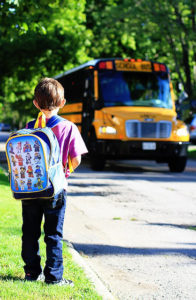
Remember to discuss school bus safety and the rules about driving when school buses are near.  Stopping when the lights flash and the stop sign comes out unless the road is divided, etc.

For more safety info regarding school buses, visit the National Safety Council website. 

Consumer Reports  has additional info and check out this great visual on how to move in traffic with a school bus. This is a very important discussion to have with your au pair. Sarah and I will be sharing this info with the au pairs as well, but it’s important that we all discuss school safety.


School lunches:

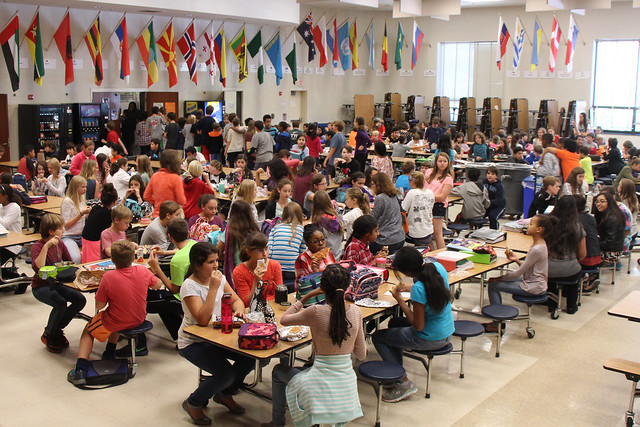
If your students will be packing lunches, now is a good time to have a conversation about what packing lunches looks like in your family. Prepacking lunches could be helpful to for our virtual learners. One less task to complete in the middle of a hectic day.
  • Make lists of foods and amount.
  • Show your au pair the types of containers you use and how you prefer the lunch bag to be packed.
  • Discuss what to do when they get home from school. Will the au pair or child unpack the lunchbox?
  • Do you pack some items ahead for the week (snack bins, cut up hearty veggies, etc)?
  • Do you pack the night before or in the morning?
  • Discuss the time needed to complete these tasks in the morning if that is your preference.
  • Don’t assume she will just know what you prefer.
  • If you are virtual, but picking up lunches from the school, make sure you have completed the form allowing the au pair to pick up the lunches if you are asking her to do so. Make sure that you fully discuss all safety rules and info on how, where and when to pick up the school lunches.
  • Check out the APIA Pinterest boards for more lunch ideas!
  1. 100 non sandwich ideas!
  2. 100 school lunches your kids will want to eat!
  3. 25 Lunchbox ideas!

Reminder: It is illegal in the State of Maryland for a child under the age of 8 to be left alone in the home or car.  Please make sure that your drop off routine does not include leaving children under 8 at home or in the car while dropping off another child.  Even if a host parent gives permission to do this, it is not allowed, because it is against the law.
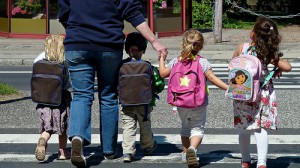
Photo by Jens Rost

Photo by Jens Rost {flickr}, State Farm {flickr} and Woodleywonderworks {flickr}
Social Distancing: Free Virtual Escape Rooms

Libraries may be closed due to COVID-19, but many librarians are coming up with creative ideas to keep people entertained and promote literacy. One of those creative ideas is free virtual escape rooms. With a variety of themes, some may be fun to do on your own, others as activities with the kids.

Sydney Krawiec, Youth Services Librarian at Peters Township Public Library in McMurray, PA created this Hogwarts Virtual Escape Room. She shared this tutorial on how to create your own virtual escape room, which seemed to spark the creativity of many other librarians.

Some amazing librarians all over the country have been busy creating virtual escape rooms with a variety of themes.

Special thanks to the Humboldt County Library in Winnemucca, Nevada for gathering info on many of these escape rooms. Follow them on Facebook for their storytimes and weekly Facebook Live Science Time on Fridays.

Image: Canva.com

Social Distancing: 5 Apps to Plan Your Future Trips

Being spontaneous and just traveling to a place and deciding what to do as you go along can be fun. But, there are benefits to doing research and planning before your trips. These ideas are to help you make general plans. You shouldn’t book any tickets or make any financial commitments until you know when travel will safely resume.

Planning can help you:

  • Save money
  • Make the best use of your time
  • Fit in more adventures
  • Visit places you might not have heard of before

It also extends the joy of the travel time. Planning all the thing you will do, gives you something to look forward to. We can all use things to look forward to right now.

If you are looking for travel inspiration and ideas or a place to keep your travel ideas organized, Pinterest is a great place to start. You can browse other people’s travel and bucket list pinboards. You can create your own pinboards for places you want to go and ones you have already visited.

These three apps are all trip planners and offer the ability to research places and create your own itinerary. Each one has its own look and feel and slightly different features. Download them and see which one is the best fit for you.

Road trips can be the ultimate adventure. You set your own pace and stop to see what you want. The journey can be as much fun as your destination.

  • Road Trippers is an app that helps you plan the ultimate road trip. It helps you determine your route and find interesting stops along the way.

We won’t be stuck inside forever. Once travel resumes, be ready with your plans!

Photo: Natacha R. from France

Social Distancing: 5 Online Adventures for Kids

Reading, playing, and doing art projects are always great ways to entertain children and keep them physically active and learning. It’s a good idea to limit screen time. But, in this time of social distancing, technology can play an important role in allowing kids to see and connect with the world outside of their homes. Many online resources are popping up to create those opportunities.

Here are five to get you started:

And if kids have questions about the coronavirus, Live Science has created an ultimate kids’ guide to the new coronavirus that has lots of information and is appropriate for school-aged kids.

Social Distancing: 10 Things You CAN Do Right Now

Social distancing is important right now to help slow the spread of coronavirus. This means avoiding places where you come in contact with lots of people (schools, movies, restaurants, museums, concerts, parties, etc.)  I am sure you keep hearing a lot about the things you should not do.

It’s also important to have ideas of things you can do. There are plenty of activities you can do at home and away from crowds.

While we can’t control many things going on right now in the world, we can choose how we deal with it.

“She turned her can’ts into cans
and her dreams into plans.” 
– Kobi Yamada


Here are 10 things you CAN do right now:

  • Stay connected with your friends and family via social media, texting, and Skype.
  • Go for a walk or run on your own. As long as you don’t go to a populated place, it’s fine to go out for some exercise.
  • Enjoy nature. That could be sitting outside in your backyard on a nice day or walking on a nature trail.
  • Read a book or listen to an audiobook or podcast. Getting lost in a story is a great way to take your mind off of things. Or if you pick a non-fiction book or podcast you may learn something new. You could even create an online book club or podcast discussion group with friends.
  • Do yoga. Yoga can be a great way to relieve stress and maintain your fitness. There are many free yoga videos on Youtube. Sign up here to receive daily emails for 30 Days of Yoga.
  • Take virtual tours of museums online.*
  • Make memories in the kitchen.* Cooking recipes from your home country is a great way to share your culture with your host family and give yourself a taste of home. Cooking classic American recipes is a way to continue your cultural exchange. You can find lots of recipes online. Also, you will be able to share that taste of America with your own family by cooking some of these recipes after you return home at the end of your program.
  • Have an online watch party with friends. When you watch a movie alone do you miss talking to a friend about what’s happening? Pick a time and a movie and from your individual homes you each stream the movie on Netflix at the same time. You can text or do a group chat during the movie.
  • Make top 10 lists of your favorite things like movies, foods, songs and more. Share and compare lists with your friends. You may find out some things you didn’t know about each other and get some ideas for new things to try.
  • Research and plan trips to places you want to visit while in the U.S.* This time of social distancing won’t last forever. Use this time to do some research online and make plans. This will help you make the most of those trips when you get to take them a few months from now. It will also give you something to look forward to.

*Future blog posts in this series will have more detailed information on these topics.


Dealing with Social Distancing

The coronavirus has caused lots of temporary changes to our daily routines. Right now, we are being asked to practice “social distancing” to reduce the spread of the virus.

What is social distancing?
Social distancing is a way to keep people from interacting as closely or frequently enough to spread the virus. Schools, sporting events and concerts are being canceled. People are being asked to stay at home more to avoid being in contact with a large number of people.

What are some ways to take care of yourself?
Some people may feel anxious, lonely or frustrated and that is totally normal. It can be very helpful to talk with friends and family about those feelings. It helps to know that others are going through these same emotions. Reach out to your community counselor if you need support during this time.

It is very important to practice good self-care. Connect with people you love via Skype and text, maintain a healthy diet, stay active, make plans for things you want to do once things get back to normal. Staying out of crowds doesn’t have to mean just staying in the home. You can go for walks and enjoy nature. Both exercise and spending time in nature are beneficial for your mental health.

Where can you get practical tips for dealing with social distancing?
We recognize that some of these changes will require patience and resourcefulness. During this time, we will be doing a series of blog posts with resources to assist you with two specific aspects of this situation:

  • Ideas for keeping the kids occupied (while they are home from school)
  • Ways to continue your cultural exchange from home

Photo: Meg Willis  

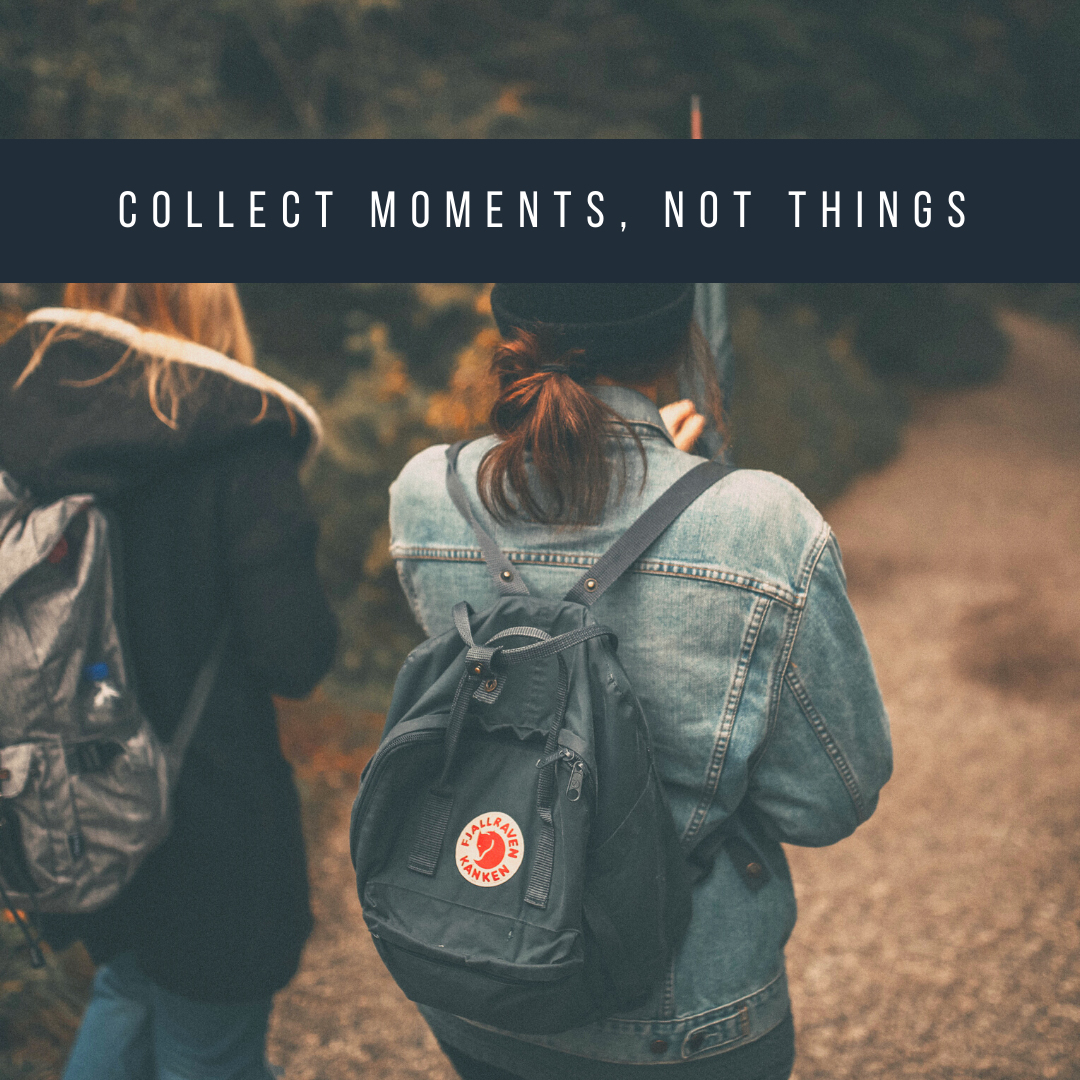
2020 Challenge: Collect Moments, Not Things

Common problem: “It’s the end of my au pair year and I have sooooo much stuff! It’s going to cost me a fortune in extra baggage fees.”

This post is about one way to prevent that problem.

I know it can be tempting. There are so many beautiful things and great sales out there. But in 2020, I challenge you to take a moment before each purchase and ask yourself:

  • Do I really need this?
  • Do I want it enough to pay extra baggage fees to get it home later?
  • What experience could I have with this money instead? For example, you might ask yourself, “Would I rather have these designer shoes or a ticket to a concert?”

Being an au pair can be an amazing time in your life where you have the opportunity to try new things and see new places. The more money you save for travel, the more of those unforgettable moments you will have to carry home with you.

Travel is the only thing you buy that makes you richer.

Photo: Canva.com