
November is American Indian Heritage Month – please visit http://www.infoplease.com/spot/aihm1.html for links to an amazing array of information about American Indian tribes, life and culture.
1 November – All Saints’ Day
All Saints’ Day is the day on which Roman Catholic and Anglican churches glorify God for all God’s saints, known and unknown. It has been celebrated on 1 November in the West since Pope Gregory IV ordered its church-wide observance in 837.
2 November – Election Day
Why do we vote in November? For much of our history, America was a predominantly agrarian society. Law makers therefore took into account that November was perhaps the most convenient month for farmers and rural workers to be able to travel to the polls. The fall harvest was over (remember that spring was planting time and summer was taken up with working the fields and tending the crops) and in the majority of the nation the weather was still mild enough to permit travel over unimproved roads.
Why Tuesday? Since most residents of rural America had to travel a significant distance to the county seat in order to vote, Monday was not considered reasonable since many people would need to begin travel on Sunday. This would, of course, have conflicted with Church services and Sunday worship.
Why the first Tuesday after the first Monday? Lawmakers wanted to prevent election day from falling on the first of November for two reasons. First, November 1st is All Saints Day, a Holy Day of Obligation for Roman Catholics. Second, most merchants were in the habit of doing their books from the preceding month on the 1st. Apparently, Congress was worried that the economic success or failure of the previous month might prove an undue influence on the vote!
5 November – Diwali
Diwali, the Hindu “festival of lights,” is the best known of Hindu festivals and certainly the brightest. Amid the dark skies of autumn, lights illumine homes throughout India and its diaspora, while families celebrate with visits, gifts, and feasts.
Diwali generally lasts for five days, beginning on the 14th day of the dark half of the Hindu calendar month of Asvina. (Every Hindu month is divided into a light half, when the moon waxes, and a dark half, when it wanes.) By the Gregorian calendar, Diwali falls in October or November; in 2010, it begins on November 5.
Diwali’s name comes from the Sanskrit deepavali, “row of lights.” According to tradition, Diwali celebrates the joyous homecoming of Lord Rama, hero of the epic poem the Ramayana, after 14 years of exile. When Lord Rama and his wife Sita returned to rule their country, their people lit the way with small oil lamps called diye.
During Diwali, these lamps shine in rows along homes and temples, adorning windowsills, staircases, and parapetsCor glow from little boats that float down rivers. Colorful candles are lit alongside diye, while fireworks light up the night sky.
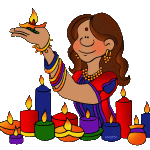 Fresh flowers and freshly cleaned homes welcome the days of Diwali. Many families draw a colorful rangoli, a decorative pattern made in rice flour, at the entrance of the home. Friends, family, and neighbors visit to share feasts and festivities as well as little treats such as khil (rice puffs) and patashe (sugar disks). Puja, worship of deities, takes place at home and at temples with prayers and other offerings.
Diwali also marks the beginning of a new financial year. Households and businesses begin new accounting in new ledgers, which are often decorated with images of Lakshmi. The goddess of fortune, she is the main deity honored during Diwali.
Like other aspects of Hinduism — the world’s oldest religion — the origins of Diwali are remote. The celebration probably has its roots in ancient harvest festivals. And like Hinduism, observance of Diwali is richly varied among the faith’s 800 million adherents.
7 November – End of Daylight Savings Time
Sunday, 7 November at 2 am is the end of Daylight Saving Time (DST).
Don’t forget to turn your clocks back one hour!
11 November – Veterans Day
World War I officially ended on 28 June 1919, with the signing of the Treaty of Versailles. The actual fighting between the Allies and Germany, however, had ended seven months earlier with the armistice, which went into effect on the eleventh hour of the eleventh day of the eleventh month in 1918. Armistice Day, as 11 November became known, officially became a holiday in the United States in 1926, and a national holiday 12 years later. On 1 June 1954, the name was changed to Veterans Day to honor all U.S. veterans.
15 November – Eid al-Adha, the celebration concluding the Hajj
Eid al-Adha, or the Feast of Sacrifice, commemorates the prophet Abraham’s willingness to obey Allah by sacrificing his son Ishmael. According to the Qu’ran, just before Abraham sacrificed his son, Allah replaced Ishmael with a ram, thus sparing his life.
One of the two most important Islamic festivals, Eid al-Adha begins on the 10 day of Dhu’l-Hijja, the last month of the Islamic calendar. Lasting for three days, it occurs at the conclusion of the annual Hajj, or pilgrimage to Mecca. Muslims all over the world celebrate, not simply those undertaking the hajj, which for most Muslims is a once-a-lifetime occurrence.
The festival is celebrated by sacrificing a lamb or other animal and distributing the meat to relatives, friends, and the poor. The sacrifice symbolizes obedience to Allah and its distribution to others is an expression of generosity, one of the five pillars of Islam.
25 November – Thanksgiving (U.S.)
The first American Thanksgiving was celebrated in 1621, to commemorate the harvest reaped by the Plymouth Colony after a harsh winter. In that year Governor William Bradford proclaimed a day of thanksgiving. The colonists celebrated it as a traditional English harvest feast, to which they invited the local Wampanoag Indians.
Days of thanksgiving were celebrated throughout the colonies after fall harvests. All thirteen colonies did not, however, celebrate Thanksgiving at the same time until October 1777. George Washington was the first president to declare the holiday, in 1789.
 By the mid-1800s, many states observed a Thanksgiving holiday. Meanwhile, the poet and editor Sarah J. Hale had begun lobbying for a national Thanksgiving holiday. During the Civil War, President Abraham Lincoln, looking for ways to unite the nation, discussed the subject with Hale. In 1863 he gave his Thanksgiving Proclamation, declaring the last Thursday in November a day of thanksgiving. In 1939, 1940, and 1941 Franklin D. Roosevelt, seeking to lengthen the Christmas shopping season, proclaimed Thanksgiving the third Thursday in November. Controversy followed, and Congress passed a joint resolution in 1941 decreeing that Thanksgiving should fall on the fourth Thursday of November, where it remains.
28 November – First Sunday of Advent
Advent is the period preceding the Christmas season. It begins on the Sunday nearest November 30, the feast day of St. Andrew the Apostle, and covers four Sundays. Because the day it begins changes from year to year, so does the length of each Advent season. In 2010, Advent begins on November 28.
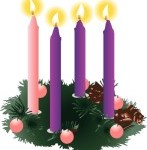 The word advent, from Latin, means “the coming.” For centuries, Advent has been a time of spiritual reflection as well as cheer and anticipation. Even as the Christmas season has become more secular – with advertisers urging holiday gift-givers to buy and buy some more – Advent still brings joy and the observance of ancient customs. Christian families find quiet moments lighting candles in the Advent wreath, and children use Advent calendars to count the days until Christmas.
For more November holidays, visit http://www.holidayinsights.com/everyday2010.htm