Author Archives: Maralyn Steeg

Welcoming November…

November is American Indian Heritage Month – please visit http://www.infoplease.com/spot/aihm1.html for links to an amazing array of information about American Indian tribes, life and culture.

 1 NovemberAll Saints’ Day

All Saints’ Day is the day on which Roman Catholic and Anglican churches glorify God for all God’s saints, known and unknown. It has been celebrated on 1 November in the West since Pope Gregory IV ordered its church-wide observance in 837.

 2 NovemberElection Day

Why do we vote in November?  For much of our history, America was a predominantly agrarian society. Law makers therefore took into account that November was perhaps the most convenient month for farmers and rural workers to be able to travel to the polls. The fall harvest was over (remember that spring was planting time and summer was taken up with working the fields and tending the crops) and in the majority of the nation the weather was still mild enough to permit travel over unimproved roads.

Why Tuesday?  Since most residents of rural America had to travel a significant distance to the county seat in order to vote, Monday was not considered reasonable since many people would need to begin travel on Sunday. This would, of course, have conflicted with Church services and Sunday worship.

Why the first Tuesday after the first Monday?  Lawmakers wanted to prevent election day from falling on the first of November for two reasons. First, November 1st is All Saints Day, a Holy Day of Obligation for Roman Catholics. Second, most merchants were in the habit of doing their books from the preceding month on the 1st. Apparently, Congress was worried that the economic success or failure of the previous month might prove an undue influence on the vote!

 5 NovemberDiwali

Diwali, the Hindu “festival of lights,” is the best known of Hindu festivals and certainly the brightest. Amid the dark skies of autumn, lights illumine homes throughout India and its diaspora, while families celebrate with visits, gifts, and feasts.

 Diwali generally lasts for five days, beginning on the 14th day of the dark half of the Hindu calendar month of Asvina. (Every Hindu month is divided into a light half, when the moon waxes, and a dark half, when it wanes.) By the Gregorian calendar, Diwali falls in October or November; in 2010, it begins on November 5.

 Diwali’s name comes from the Sanskrit deepavali, “row of lights.” According to tradition, Diwali celebrates the joyous homecoming of Lord Rama, hero of the epic poem the Ramayana, after 14 years of exile. When Lord Rama and his wife Sita returned to rule their country, their people lit the way with small oil lamps called diye.

 During Diwali, these lamps shine in rows along homes and temples, adorning windowsills, staircases, and parapetsCor glow from little boats that float down rivers. Colorful candles are lit alongside diye, while fireworks light up the night sky.
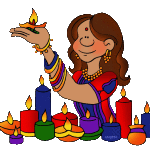
 diwaliFresh flowers and freshly cleaned homes welcome the days of Diwali. Many families draw a colorful rangoli, a decorative pattern made in rice flour, at the entrance of the home. Friends, family, and neighbors visit to share feasts and festivities as well as little treats such as khil (rice puffs) and patashe (sugar disks). Puja, worship of deities, takes place at home and at temples with prayers and other offerings.

 Diwali also marks the beginning of a new financial year. Households and businesses begin new accounting in new ledgers, which are often decorated with images of Lakshmi. The goddess of fortune, she is the main deity honored during Diwali.

  Like other aspects of Hinduism — the world’s oldest religion — the origins of Diwali are remote. The celebration probably has its roots in ancient harvest festivals. And like Hinduism, observance of Diwali is richly varied among the faith’s 800 million adherents.

 7 November End of Daylight Savings TimeYellow clock

Sunday, 7 November at 2 am is the end of Daylight Saving Time (DST).

Don’t forget to turn your clocks back one hour!

 11 November Veterans Day

World War I officially ended on 28 June 1919, with the signing of the Treaty of Versailles. The actual fighting between the Allies and Germany, however, had ended seven months earlier with the armistice, which went into effect on the eleventh hour of the eleventh day of the eleventh month in 1918. Armistice Day, as 11 November became known, officially became a holiday in the United States in 1926, and a national holiday 12 years later. On 1 June 1954, the name was changed to Veterans Day to honor all U.S. veterans.

 15 NovemberEid al-Adha, the celebration concluding the Hajj

Eid al-Adha, or the Feast of Sacrifice, commemorates the prophet Abraham’s willingness to obey Allah by sacrificing his son Ishmael. According to the Qu’ran, just before Abraham sacrificed his son, Allah replaced Ishmael with a ram, thus sparing his life.

 One of the two most important Islamic festivals, Eid al-Adha begins on the 10 day of Dhu’l-Hijja, the last month of the Islamic calendar. Lasting for three days, it occurs at the conclusion of the annual Hajj, or pilgrimage to Mecca. Muslims all over the world celebrate, not simply those undertaking the hajj, which for most Muslims is a once-a-lifetime occurrence.

 The festival is celebrated by sacrificing a lamb or other animal and distributing the meat to relatives, friends, and the poor. The sacrifice symbolizes obedience to Allah and its distribution to others is an expression of generosity, one of the five pillars of Islam.

 25 November Thanksgiving (U.S.)

The first American Thanksgiving was celebrated in 1621, to commemorate the harvest reaped by the PlymouthPilgrims & turkey Colony after a harsh winter. In that year Governor William Bradford proclaimed a day of thanksgiving. The colonists celebrated it as a traditional English harvest feast, to which they invited the local Wampanoag Indians.

Days of thanksgiving were celebrated throughout the colonies after fall harvests. All thirteen colonies did not, however, celebrate Thanksgiving at the same time until October 1777. George Washington was the first president to declare the holiday, in 1789.

cornucopia By the mid-1800s, many states observed a Thanksgiving holiday. Meanwhile, the poet and editor Sarah J. Hale had begun lobbying for a national Thanksgiving holiday. During the Civil War, President Abraham Lincoln, looking for ways to unite the nation, discussed the subject with Hale. In 1863 he gave his Thanksgiving Proclamation, declaring the last Thursday in November a day of thanksgiving. In 1939, 1940, and 1941 Franklin D. Roosevelt, seeking to lengthen the Christmas shopping season, proclaimed Thanksgiving the third Thursday in November. Controversy followed, and Congress passed a joint resolution in 1941 decreeing that Thanksgiving should fall on the fourth Thursday of November, where it remains.

 28 NovemberFirst Sunday of Advent

Advent is the period preceding the Christmas season. It begins on the Sunday nearest November 30, the feast day of St. Andrew the Apostle, and covers four Sundays. Because the day it begins changes from year to year, so does the length of each Advent season. In 2010, Advent begins on November 28.
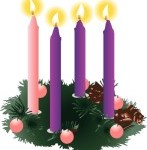
Advent candles The word advent, from Latin, means “the coming.” For centuries, Advent has been a time of spiritual reflection as well as cheer and anticipation. Even as the Christmas season has become more secular – with advertisers urging holiday gift-givers to buy and buy some more – Advent still brings joy and the observance of ancient customs. Christian families find quiet moments lighting candles in the Advent wreath, and children use Advent calendars to count the days until Christmas.

 For more November holidays, visit  http://www.holidayinsights.com/everyday2010.htm
Some Halloween History

Halloweeen ghost and moonHalloween, celebrated each year on October 31, is a mix of ancient Celtic practices, Catholic and Roman religious rituals and European folk traditions that blended together over time to create the holiday we know today. Straddling the line between fall and winter, plenty and paucity and life and death, Halloween is a time of celebration and superstition.
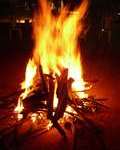
Halloween has long been thought of as a day when the dead can return to the earth, and ancient Celts would light bonfires and wear costumes to ward off these roaming ghosts. The Celtic holiday of Samhain, the Catholic Hallowmas period of All Saints’ Day and All Souls’ Day and the Roman festival of Feralia all influenced the modern holiday of Halloween.

In the 19th century, Halloween began to lose its religious connotation, becoming a more secular community-based children’s holiday. Although the superstitions and beliefs surrounding Halloween may have evolved over the years, as the days grow shorter and the nights get colder, people can still look forward to parades, costumes and sweet treats to usher in the winter season.

Halloween’s Celtic Origin

The holiday that evolved into Halloween was first celebrated over 2,000 years ago byBonfire photo the Celtic people, who called it Samhain. The Samhain festival served as the New Year for the Celtic People, as their calendars started on 1 November. During Samhain they celebrated the fall harvest and the coming of winter with huge bonfires. In the bonfires they sacrificed crops and animals to the Celtic deities. The Celts also wore animal skins and heads during the Samhain bonfires, which is where the Halloween tradition of costumes likely originated.
Halloween’s Christian Origin

 In the 600’s A.D., 1 November was designated by the Pope to be All Saints Day; a day to celebrate and honor Christian saints and martyrs. It is believed that Pope Boniface IV chose 1 November as All Saints Day to replace the pagan Samhain festival with a church-approved holiday.

All Saints Day became known as “All Hallows Day” due to the Middle English word for it, which was ‘Alholowmesse.’ Therefore, the night before All Hallows Day became known as “All Hallow’s Eve.”

trick or treatersThe church later appointed 2 November as “All Souls’ Day,” a day to honor loved ones who have passed on. During All Souls’ Day parades in England, “soul cakes” were passed out to poor people in return for a promise that they would pray for departed family members. The All Souls’ Day cake giving, along with the tradition of leaving food on one’s doorstep to appease spirits, evolved into trick-or-treating.

The Tradition of Pumpkin Carving 

 The Irish Legend of Jack: The idea of pumpkin carving originated in Irish folklore. According to legend, a man named Jack (who was fond of pranks and liquor) tricked the Devil into climbing up a tree. Once the Devil was in the tree Jack drew aJack o' Lantern glowing cross on the tree truck, trapping him there. This of course made the Devil extremely angry, so when Jack died he was denied by both Heaven (for his pranks and drinking) and by Hell (apparently the Devil doesn’t like jokes).With nowhere to go for the afterlife, legend says that Jack was left to wander through cold darkness alone. The devil tossed him a single burning ember from Hell to light the way, which was then placed in a hollowed-out turnip to last longer. Thus, Jacks Lanterns were born.
 From Turnip Lanterns to Spooky Pumpkins: Turnip lanterns eventually turned into pumpkin lanterns in America, where pumpkins grew more bountifully than turnips. And that was the birth of the modern Jack-o-Lantern, a carved pumpkin with an ember inside to light the way.

 Happy Halloween HouseHalloween Today… is a purely recreational holiday. It’s a night to get together to enjoy parties, food and fun costumes.

If you go out trick-or-treating, go in groups, obey all pedestrian rules and check all treats before eating them.

For more information about Halloween costumes and masks, stories to read, games and crafts and other fun things to do, visit www.halloween.com.


September Facts and Fun Things To Do

September Holidays/Dates to Remember

 September 6 – Labor Day

Labor Day is the first Monday in September and was first celebrated in the United States on 5 September 1882 as a trade union holiday.  Now Labor Day is seen as the end of summer and the beginning of school for many students. The day is often celebrated with picnics, sporting events and reunions.

 September 9 – Rosh Hashanah

 Rosh Hashanah starts at sundown and is a solemn celebration of the beginning of the Jewish year.  Synagogue services are held on Rosh Hashanah. During the services, the shofar, a ram’s horn, is sounded.  During Rosh Hashanah special dishes are prepared. Many of the dishes contain honey which symbolizes the desire for a sweet year. The round-shaped bread served represents the fullness of the year.

 September 11  —  911 Day

Dialing 911 on the phone will connect you with an operator trained to handle and dispatch emergency services.  It is used all across the country.  School-aged children should know to call 911 also — discuss when it would be appropriate such as fire (but don’t call from the house that is burning!) or when someone seems to be seriously hurt and there is no adult to help.

 September 11

Take a moment to day to remember victims of the 2001 September 11th attacks, often referred to as 9/11 (pronounced nine-eleven) On this day, hijackers intentionally crashed two airplanes in to the World Trade Center in New York City causing them to collapse. Hijackers crashed a third airliner into the Pentagon in Arlington, Virginia, just outside of Washington, D.C. The fourth plane crashed into a field in rural Pennsylvania, after some of its passengers and flight crew attempted to retake control of the plane. 

 September 12 – National Grandparents Day 

Grandparents Day is celebrated on the first Sunday after Labor Day.  This is not a widely celebrated holiday, but most grandparents would still appreciate being remembered and would particularly enjoy a homemade gift or card.  Work with your children to create a simple but special surprise.  Use a photo of the child or the child and the grandparent to make it even more special.

 September 18 – Yom Kippur

 Beginning at sunset, Yom Kippur is the holiest day in the Jewish calendar. The observance is also known as the Day of Atonement since the events of Yom Kippur focus on asking and granting forgiveness.  Many Jews attend services at a synagogue or temple on the eve and day of Yom Kippur. On Yom Kippur, many Jews perform no work and abstain from food and drink for 24 hours.

 September 19 — National Farm Animal Awareness week

Children are fascinated by animals. Is there a farm nearby where you can visit to see them up close, or a local county fair?  Farm animals often make the news too –check the newspaper in your area for stories about animals.

 September 22 — Multi-Cluster Meeting

Join Detective Jonh Hynes for a discussion of “What you should know about N.Y. State Law & Your Rights as a visitor to this country.” Check your email for your invitation to this event.

September 22Fall begins

As the weather cools and the leaves start to change color it is apple-picking season in most parts of the United States. You can pick you own apples at either Outhouse Orchards (Hardscrabble Road, Croton Falls, 914-277-3188) or Wilkins Fruit & Fir Farm (1335 White Hill Road, Yorktown, 914-245-5111).

Try these simple apple recipes, no matter where you get your apples:

  • Applesauce is very simple to make. Remove the core and quarter the apples. If you leave the peel on during cooking it will give the applesauce a pink color. When the apples are very soft, remove any peel that is left, mash the pulp or put it through a sieve. Add sugar if needed.
  • Try making Dried Apple Rings. They can be used as a nutritious snack. Peel, core and slice apples into 1/8 inch rings (Macintosh or Golden Delicious apples work best). Dip each ring into a mixture of lemon juice and water to help the apples keep their color. Pull a piece of string through the center of each ring and hang in a dry, warm place. They take 1-2 weeks to dry and become chewy.

September 22 — Elephant Appreciation Day

Elephants are the largest land animals. There are Asian (or Indian) and African elephants B the two look slightly different.  Younger children may enjoy reading books with elephants in the story such as the classic “Babar” series by Jean de Brunhoff or “But No Elephants” by Jerry Smath.  Older children (ages 6 and older) would be interested in facts about elephants and learning about conservation of the endangered Indian elephant.  Finish off the day with Elephant Ears, a sweet pastry available at many bakeries.  If you like to bake you can try these at home, but ask your host family first as it involves deep frying.

 Elephant-Ear Cookies

3 egg yolks

1 egg white

1/4 cup water

1/2 cup milk

1/2 teaspoon cardamom

About 3 cups sifted flour

Shortening or vegetable oil for deep frying

 Beat egg yolks and white and combine with water, milk and, cardamom.  Gradually stir in enough flour to make soft dough, turn dough out on a lightly floured board, and knead until firm, smooth, and glossy. Cover and let stand for 2 hours. Divide into balls the size of small walnuts. Then with a rolling pin roll each ball out as thin as possible, 3 inches in diameter and cut into rounds. With the fingers gather one side of the round and press dough together into a tiny handle 1/3 inch in length and thickness. The remainder of the circle should flare out like an elephant’s ear.  Place the cookies on a cookie sheet and keep them covered with a towel to prevent them from drying. When all the dough is ready, heat oil, to a depth of about 1 inch in a shallow frying pan to 375 degrees. Fry the cookies a few at a time in the hot oil for about 30 seconds on one side, then turn and fry the other. They should not be allowed to brown much. Remove and drain on absorbent paper. While still warm, sprinkle generously with confectioners’ sugar. Store in a tightly closed container in a dry place.

 September 23 – Sukkot is a joyous Jewish holiday that lasts for seven days and remembers the time that Israelites wandered in the desert during their journey to the Promised Land.  It is observed by the building of a temporary dwelling (a sukkah) decorated with fruits and other symbols of the harvest.

 Childcare focus — Baby Safety Month

Enroll in an infant/child CPR and first aid class. This will be a valuable investment of your time.  Ask your counselor for details or visit http://aupairinamerica.com/resources/life_in_the_us/insurance.asp

 Driving – no talking or texting while driving!

 The Au Pair Education Requirement

Au pairs are required to complete 6 semester hours of academic credit or the equivalent. EduCare Companions must complete twice the requirement of au pairs, and year2 au pairs are expected to take an additional 3 credits for a 6-month extension and 6 credits for a 9- or 12-month extension.

 Your counselor will be able to advise you on what is possible in your area. You can also review education options for your state on the Au Pair in America website at http://aupairinamerica.com/state/index.asp or at our cluster blog site https://blogs.aupairinamerica.com/wct

 Healthy eating = Variety

Try to eat fruits and vegetables of many different colors. This will help you get many vitamins and other nutrients important to your health.

 Hints for success — Homesickness/Culture Shock

Almost everyone experiences culture shock when they come to a completely new environment. Everything is different: the language, the food, and the people.  If you are feeling homesick or house-bound, call an au pair in your cluster and invite her to go for coffee, she understands exactly how you feel.

 Internet use:  Make sure that anything you put in an email is something that you are comfortable having other people see. Your email might be forwarded without you knowing it.

September is…

Fun things to do in Westchester during this month…

Yorktown Grange Fair – Yorktown Heights – 914-962-3900 – www.yorktowngrangefair.com

Westchester Triathlon – Rye – www.westchestertriathlon.com

Hudson River Valley Ramble – Region wide – 800-453-6665 – www.hudsonrivervalley.com/ramble

Native American Day – Philipse Manor Hall – Yonkers – 914-965-4027 – www.philipsemanorhall.blogspot.com

Westchester Kennel Club Dog Show – Lyndhurst – Tarrytown – 914-631-4481 – www.lyndhurst.org

Taste of White Plains – White Plains – 914-422-1336

Yonkers Marathon – Yonkers – 914-377-6430

Fall Crafts at Lyndhurst – Lyndhurst – Tarrytown – 914-631-4481 – www.lyndhurst.org

Better Breakfast Month  –  With the start of school it’s easy to rush out the door and forget to eat a healthy and nutritious breakfast. Remember that children need a balanced diet including milk, meat, vegetables, fruit and grain. Breakfast can include at least three of those groups. 

Classical Music Month – Children of any age will find classical music soothing. Try playing music at mealtimes, before nap, when children are playing quietly or drawing or even in the car.

Baby Safety Month – There are many safety tips on the Au Pair in America website http://aupairinamerica.com/

In honor of Baby Safety Month, here are some more specific baby tips: 

  • Check condition and sturdiness of toys. Discard any with sharp edges or are broken or falling apart.
  • Check children’s clothing for loose buttons and strings.
  • Is baby’s pacifier still in good condition? If not, toss it. Never use strings to attach the pacifier to baby’s clothes or crib.
  • Where do you set baby’s carrier when she’s in it? Not on the counter, or any high surface. Babies can wiggle and tip themselves over.
  • Walkers can be dangerous (especially old ones that don’t meet today’s safety standards), they allow baby to move very quickly and reach things they normally can’t. Never use around stairs.
  • Stroller check. If your stroller is collapsible, be sure latches are secure before putting baby in. Always check that your child’s arms are out of the way when reversing handle directions so they won’t get pinched. Be sure to use that safety strap. Don’t hang overloaded or heavy bags on the handle of the stroller; this may cause it to tip over.
  • Can you name the 12 most common choking foods for kids under five? Popcorn, hot dogs, chunks of meat, raisins, ice cubes, chunky peanut butter, nuts of any kind, hard candy, grapes, raw carrots, potato chips and corn chips. Don’t leave toddlers alone while eating; if they begin to choke you need to be nearby to assist.
  • Get a piggy bank: this is a great place to put coins so they don’t end up on the floor, in the couch cushions and then baby’s mouth.
  • Never leave your child unattended in the bathtub. If the phone rings, let the machine get it.

Library Card Sign-up Month – Most libraries will give a child a card to borrow books as soon as the child can write his or her own name.  Check out the neighborhood library this month.  Be sure to return the borrowed books before the due dates as this part of using the library is a grown-up responsibility.

National Sewing Month – Children as young as two and a half have fun stringing beads, Cheerios/Fruit Loops or round pasta to make necklaces or bracelets. This can be an ‘introduction to sewing.”

Honey Month – Honey is one of nature’s delicious foods, but never give honey to a child under one year of age. It can cause a serious disease. For older children serve toast with honey for breakfast.

Good Manners Month – Children usually learn manners by example, but they may need some help.  Start by always saying “please”, “thank you” and “you are welcome”.

Emergency Car Care Month — Do you have first aid supplies in the car? 

Football season kicks off this month

Visit http://aupairinamerica.com/resources/life_in_the_us/football.asp for the full rules of American Football.

American Football Simplified

A football field is 100 yards long. There is a Goal Post at each end of the field, in the End Zone, one for each team. A Football Game is made up of 60 minutes of play time. The 60 minutes is divided into four Quarters of 15 minutes each. At the end of two Quarters, there is a break called Half Time. On the Scoreboard you can see the minutes and seconds running out. The team with the most points at the end of four Quarters wins.

Each team has an Offense and a Defense. If the Offense has the ball and tries to score by getting it across the Goal Line – the line where the playing field and the End Zone meet. The Defense tries to stop them.

The Offense gets four tries to move the ball 10 yards toward their own goal post. These are called Downs. If they make the 10 yards or more, they get another four tries to move the ball another 10 yards. If they don’t move the ball 10 yards in four tries, the ball goes to the other team, or the team “loses the ball.”

The Super Bowl is the final game of the Football season when two teams play each other for the championship. The game takes place in late January or early February. For some people the TV commercials are the best part of the Super Bowl.

August 15th Picnic

We were all surprised to find out that PepsiCo had closed its campus for renovations on the day of our scheduled picnic. Quick thinking, set up a relay and redirect everyone to the SUNY Purchase campus across the road. While nowhere as beautiful as Pepsi’s sculpture garden, we  found a spot with  some artwork and had a good time meeting, greeting and getting to know some of our newest au pair arrivals.

Here’s the link to some more picnic photos:

http://s791.photobucket.com/albums/yy197/MS-APIA/15%20August%202010%20Picnic/

Upcoming Cluster Meetings & Events

Mark your calendars and plan to attend:

June 9th (Wednesday) – Cluster Coffee at Starbucks

June 24th (Thursday) – “Make Your own Ice Cream Sundae” Party (Multi-Cluster event)

July 11th (Sunday) – Garden Party at Maralyn’s