SUMMER SAFETY – IMPORTANT INFORMATION
PRINT AND READ!!!!
APPROPRIATE DRESS FOR HOT DAYS
It is hot outside and sometimes the less clothing on, the better we feel. J However, in the United States, and especially as we work with kids, it is both appropriate and respectful to be dressed appropriately while you work. This means skirts, or longer shorts and appropriate coverage on top as well. You may wear what you like on your free time, but while working or spending time around host families and children, please be respectful and cover up. You, as a model of behavior, is the greatest influence and teaching tool a family has. Remember that while working to wear clothing similar to what you would wear if you were going to teach in a classroom. If you wouldn’t wear it there, you shouldn’t wear it here.
SUNSCREEN –
- Apply early AND repeat. For kids six months and older (as well as adults), sunscreens with a Sun Protection Factor (SPF) of 15 or greater reduce the intensity of UVRs that cause sunburns. Apply liberally 15 to 30 minutes before sun exposure, so it can absorb into the skin and decrease the likelihood that it will be washed off. Reapply every two hours and after kids swim, sweat or dry off with a towel. .
- Cover up. Dress kids in protective clothing and hats. Clothing can be an excellent barrier of ultraviolet rays. Many light-weight sun-protective styles cover the neck, elbows and knees.
- Keep infants out of the sun. Keep babies younger than six months out of direct sunlight, dressed in cool, comfortable clothing and wearing hats with brims. The American Academy of Pediatrics (AAP) says sunscreen may be used on infants younger than six months on small areas of skin if adequate clothing and shade are not available.
- Plan early morning play. Avoid over exposure to sun by avoiding peak-sun hours (10 a.m. to 4 p.m.) as much as possible. Sound impossible for your active kids? Make sure you all can get a break from the sun, when needed.
- Beware of shade. Many people think sitting in the shade is a simple sun compromise. Shade does provide relief from the heat, but it offers a false sense of security about UVR protection. You can still sunburn in shade, because light is scattered and reflected. A fair-skinned person sitting under a tree can burn in less than an hour.
- Check the weather. Look for the ultra-violet (UV) index (on a site like Weather.com) when planning outdoor activities; it predicts the intensity of UV light based on the sun’s position, cloud movements, altitude, ozone data and other factors. Higher UV index numbers predict more intense UV light.
POOL/LAKE RULES
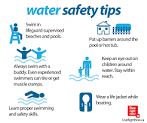
Drowning is the leading cause of unintentional injury deaths in kids one to four-years-old. Here are tips to prevent accidents around the water. I recently shared this article with Au Pairs. If you haven’t read it yet, please do: http://www.slate.com/articles/health_and_science/family/2013/06/rescuing_drowning_children_how_to_know_when_someone_is_in_trouble_in_the.html
- Stay off cell phones. Do NOT allow yourself to get distracted when your kids are in the water.
- EYES ON THE KIDS AT ALL TIMES: Even if your kids are swimmers, they MUST be watched. Anything can happen in the water – do not rely on lifeguards. YOU are in charge!!
- HOMES WITH POOLS: Kiddie pools in backyards are to be drained after use.. For houses that have swimming pools , remember, BRING EVERYTHING YOU NEED TO THE POOL WHEN THE KIDS GO IN!! BE PREPARED: Don’t run back inside because you forgot a towel and leave the kids unattended!! Train your kids to NEVER go near the pool without an adult!!!
INSECTS
- Check for allergic reactions. Some kids react to insect bites more than others. If your child gets bitten and seems to have an allergic reaction to the bite, seek medical attention to see if you should give your child an oral antihistamine or other medication.
- Beware of serious bug-borne illnesses. Most people who contract Eastern Equine Encephalitis (“Triple E”), a mosquito-transmitted illness, do not show any symptoms. But here’s the good news: this illness occurs relatively infrequently and mostly in and around swampy areas where human populations tend to be limited. West Nile is another virus you’ll hear about when the heat strikes. Basically, if there are symptoms of either of these illnesses, they are flu-like, so if you hear of instances in your area, and your child has bites and flu-symptoms (and muscle-stiffness for West Nile), go to a doctor. It’s better to be safe.
- Check for ticks. Ticks thrive in warm, moist, woodsy areas, so ideally kids should wear long clothing to cover their skin, but let’s be realistic: in the heat of summer, that’s hard to do. Clothes are a culprit, too; ticks can come in on a t-shirt! If the clothes aren’t dirty enough to need washing, do it anyway. Placing clothes in the dryer on high heat for at least an hour will kill any ticks.
Kids six and older can check themselves, with adult guidance, but they must check their entire body, not just forearms and legs: under the arms, in and around the ears, inside the belly button, back of the knees, in and around the hair, between the legs, around the waist, etc. If a child develops any rash or fever after a tick bite, go to the doctor.
DEHYDRATION
You may be surprised how much — and when — kids should drink liquids. To prevent dehydration, kids should drink 12 ounces of fluid 30 minutes before an activity begins and take mandatory fluid breaks (like many day camps require), with kids under 90 pounds drinking five ounces every 20 minutes during activities and kids over 90 pounds drinking nine ounces every 20 minutes. Tip: A child’s gulp equals a half-ounce of fluid, so your child should drink about 10 gulps for every 20 minutes of play.
The Safe Kids Coalition urges parents and caregivers to watch for warning signs of dehydration, such as thirst, dry or sticky mouth, headache, muscle cramping, irritability, extreme fatigue, weakness, dizziness or decreased performance.
HELMET DURING BIKE RIDING, SKATE BOARDING, ETC.
Make a family rule: no helmet, no wheels. ALWAY’S REMEMBER TO BUCKLE THE CHIN STRAP!!
NEVER LEAVE KIDS ALONE IN A CAR – EVER!!!!
Never leave a child alone in a car, even for a minute. Fatalities can occur at temperatures as low as the mid-50s because a vehicle heats up so quickly. Children are at a great risk for heat stroke because their bodies heat up three to five times faster than an adult’s does. This rule always applies in all weather.
Summer Gear to keep in your vehicle/on your posession:
- Cell phone
- Water
- Medications for chronic conditions
- Bandages
- Antibiotic cream for cuts and scrapes
- Crushable icepack for bruises
- An epi-pen for a person with known allergies
- Sun protection
- Hats and sunglasses
- Insect repellent
- Tweezers for ticks
Don’t get overwhelmed by all this information and decide to keep your kids locked indoors all summer, hidden under the bed. Summer is a time for having fun, and a few bug bites and scrapes are worth it. Just make sure you and your Au pair are informed about these important summer safety tips!
Lastly, so that I know you have read all of this information, please send me a quick update on what you will be doing this summer. This is your June reach out, I want to hear from each of you what fun you have ahead. J
wmcclain@aupairinamerica.com
Best Wishes for great fun,
Wendy












 Dehydration means that the body lacks the necessary amount of fluid. Infants and small children are more likely to become dehydrated than older children or adults, because they can lose relatively more fluid quickly.