Tag Archives: au pairs

WELCOMING THE MONTH OF NOVEMBER

A few dates to remember:

1101

Day of the Dead

This is a Mexican holiday marked by celebrations, special foods, reunions and visits to cemeteries. For more information visit www.mexconnect.com/mex_/muertos.html.

1102Election Day

Would you like to know more about the American political system? Check out http://bensguide.gpo.gov/ for a simple presentation of information about the US government including elections. Talk to the children about what you learned and create an Election Day theme at home: decorate in red, white and blue (how about colored napkins on the table?) Put out an American flag, and serve red, white and blue snacks. Blue and white corn chips with red salsa, vanilla ice cream with strawberries and blueberries or layers of colored Jell-o served with whipped cream.

1107Daylight Savings Time Ends

Move your clocks back one hour before going to bed on Saturday night and enjoy the extra hour of sleep…

1111-1Veteran’s Day

A day to honor American veterans of all wars, Veteran’s Day is a federal holiday. You can find some suggestions of activities to do with children at www.va.gov/KIDS/.

Calendar DayMickey Mouse’s Birthday

Mickey Mouse was created in 1928! Celebrate his birthday with Mickey Mouse pancakes:

Ingredients:

  • 1/2 cup flour
  • 1/2 cup quick cooking oats
  • 1 cup milk
  • 1 tablespoon sugar
  • 2 tablespoons vegetable oil
  • 1 teaspoon baking powder
  • 1/2 teaspoon baking soda
  • 1/2 teaspoon salt

Beat all ingredients in a bowl until smooth. Grease a griddle or frying pan. For each pancake pour batter into one large circle and two smaller circles at the top to make a Mickey Mouse. Cook until pancake is puffed and dry around the edges. Turn and cook the other side until golden brown. Use chocolate chips for eyes if you want.

1125Thanksgiving

More information on this very special American holiday will be posted on November 15th,so come back and check!

Halloween Safety for Kids

images

The Trick-or-Treater Checklist

by Skye Schulte, MS, MPH

Remind your children that it’s important to:

  • Use a flashlight so they can see and be seen by others.
  • Stay in a group and communicate where they will be going.
  • Only go to homes with a porch light on.
  • Remain on well-lit streets and always use the sidewalk.
  • If no sidewalk is available, walk at the farthest edge of the roadway facing traffic.
  • Never cut across yards or use alleys.
  • Never enter a stranger’s home or car for a treat.
  • Obey all traffic and pedestrian regulations.
  • Always walk across a street—never run.
  • Only cross the street as a group in established crosswalks.
  • Remove any mask or item that will limit eyesight before crossing a street, driveway, or alley.
  • Follow the planned route and return home at the agreed upon time.
  • Don’t assume the right of way. Motorists may have trouble seeing trick-or-treaters. Just because one car stops doesn’t mean others will.
  • Never eat or drink unwrapped food items that may be offered.
  • Notify police or other law enforcement authorities if you see any suspicious or unlawful activities.

RESOURCES:

American Academy of Pediatrics
http://www.aap.org/

HAVE A SAFE HALLOWEEN!

HALLOWEEN GUIDE FOR AU PAIRS….

1031

Halloween is the day children dress up in costumes and, in many communities, go door-to-door to ask for candy.It is celebrated every year on October 31st.

Here are some interesting facts about Halloween:

How did trick-or-treating begin?
The modern practice of trick-or-treating appears to have originated from a combination of the Celtic new year celebration called Samhain celebrated on October 31st and the early Christian ritual related to All Saints Day, celebrated on November 2nd.

The Celts believed that on Samhain, spirits of the dead would come back and try to posses the bodies of the living. So to avoid being possessed by a ghost, living Celts would dress up in scary costumes and parade around the town making a lot of noise, so as to scare the spirits away. This is where the modern tradition of wearing costumes seems to have derived from.

As for the collection of treats, most scholars credit early Christians’ ritual of “souling” to the development of this festive activity. In connection with their All Saints Day celebration, Christians would walk door to door collecting square pieces of currant bread called “soul cakes”. The person who collected the cakes would say prayers on behalf of a deceased relative. The more cakes collected, the more prayers were said and the quicker the soul of the deceased would find heaven.
The combination of these two early activities has evolved into the modern practice of trick-or-treating.


How did “bobbing for apples” become a popular Halloween activity?

The apple has historically been associated with immortality and fertility because when cut down its center it has a five point star. This five pointed star was a common goddess symbol in many ancient religions and believed to help determine marriages, especially during the magical, spiritual season of Samhain. During early celebrations, apples would be hung either from a string or placed in a tub of water and young, unmarried people would try to take a bite. The first one to successfully bite the apple was believed to be the next one married.

Why are bats associated with Halloween?
In early Halloween celebrations, people often gathered around giant bonfires to ward off evil spirits. Night-flying insects were attracted to the flames, which made bonfires the perfect feeding ground for bats. Thus, bats became quickly synonymous with Halloween celebrations. Additionally, during the Middle Ages, people began to link bats to witches because the both seemed to mystically fly throughout the dark night and disappear during the day.

Have people always carved pumpkins for Halloween?
Jack-o-lanterns are an Irish tradition brought to America by early Irish immigrants. But early jack-o-lanterns were not pumpkins, they were turnips, rutabagas or gourds that were hollowed out. Lights were placed in them to ward off evil spirits and to keep “Stingy Jack” (the legendary Irish drunkard and prankster, believed to have made a deal with the devil and condemned to walk the earth upon death, whose namesake has been given to modern day, carved pumpkins) away. It was not until the 1800’s when Irish immigrants came to America and found pumpkins to be so plentiful and easier to carve, that the tradition was altered.

And now, are you ready for some Hallloween crafts and costume ideas?

This link will help you find some fun things to do with the kids:

http://crafts.slides.kaboose.com/316-halloween-crafts

http://crafts.slides.kaboose.com/254-homemade-halloween-costumes

AMERICAN FOOTBALL SEASON KICKS OFF THIS MONTH

images

Visit http://aupairinamerica.com/resources/life_in_the_us/football.asp for the full rules of American Football and http://www.redskins.com/gen/index.jsp for Washington Redskins team schedule.

American Football Simplified:
A football field is 100 yards long. There is a Goal Post at each end of the field, in the End Zone, one for each team. A Football Game is made up of 60 minutes of play time. The 60 minutes is divided into four Quarters of 15 minutes each. At the end of two Quarters, there is a break called Half Time. On the Scoreboard you can see the minutes and seconds running out. The team with the most points at the end of four Quarters wins.
Each team has an Offense and a Defense. If the Offense has the ball and tries to score by getting it across the Goal Line – the line where the playing field and the End Zone meet. The Defense tries to stop them.
The Offense gets four tries to move the ball 10 yards toward their own goal post. These are called Downs. If they make the 10 yards or more, they get another four tries to move the ball another 10 yards. If they don’t move the ball 10 yards in four tries, the ball goes to the other team, or the team “loses the ball.”
The Super Bowl is the final game of the Football season when two teams play each other for the championship. The game takes place in late January or early February. For some people the TV commercials are the best part of the Super Bowl.

HAPPY NEW YEAR

-1

Today,many families accross the globe celebrate Rosh Hashannah!

Rosh Hashanah is a Jewish Holiday commonly referred to as the Jewish New Year.  It is observed on the first day of Tishrei, the seventh month of the Hebrew calendar. Rosh Hashanah is the first of the high Holidays specifically set aside to focus on repentance that concludes with the holiday of Yom Kippur.  Rosh Hashanah is the start of the civil year in the Hebrew calendar.  It is the New Year for people, animals, and legal contracts. Jewish people believe Rosh Hashanah represents either analogically or literally the creation of the World, or Universe.

On Rosh Hashanah, Jewish people all over the world gather in synagogues to celebrate the day.  The holiday is celebrated with sweet foods, like apples dipped in honey and honey cake and round Challot made with honey and raisins as a wish for a sweet year.

Rosh Hashanah is observed today and tomorrow.  We wish all of our Jewish host families, au pairs and friends a very Happy Holiday.

SOCCER WORLD CUP

The soccer world cup is about to start and I am sure we have many soccer fans out there.With so many au pairs from South Africa,and many more from other countries playing in this world wide soccer tournament,our cluster will be all eyes on the TV screens for the next few weeks.

Don’t forget to search for some fun activities to do with the kids during the world cup;try baking a cake in the shape of a soccer ball,find puzzles and trivia games online or use some of the activities below to get started(from www.kaboose.com)


Have fun!

Grab your markers, crayons and colored pencils for some printable fun with these soccer coloring pages!

Find more fun activities including soccer word puzzles, soccer trivia and more.

boy
Boy Kicking Soccer Ball
girl
Girl Kicking Soccer Ball
Dad and son
Dad and Son Playing Soccer
Mom and Daughter
Mom and Daughter Playing Soccer
coaching
Soccer Coach Cartoon

Count your SENSES!

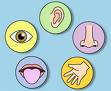
SPRING is a wonderful time to talk about SENSES to your Host Children and do some fun activities around it!

images

Children learn through their senses. Smelling, seeing, touching, hearing, tasting are all ways children take in information about the world around them.

Here is a list of suggestions of fun activities you can do with the children you care for.

SMELL: Smell flowers, name different things that have odors, make smell jars…Place one each of several fruits and vegetables in small cups. Cover cups with aluminum foil. Punch a small hole in the aluminum foil. Have the children smell the cups and identify the fruits and vegetables. Can also use coffee beans, spices, soap, lemon juice, chocolate, or whatever else you think of.

SIGHT: Make an indoor rainbow : fill a clear glass jar with water and set on a window sill in the bright sunlight. Place white paper on the floor to capture the rainbow.

Paint rainbow with watercolors.

Go for a nature walk. See how many things the children can see, hear, smell or touch.

Make binoculars for the nature walk: decorate two toilet paper tubes. Glue together to make binoculars. Place holes on one end of the rolls and attach yarn or string so children can wear the binoculars around their necks.

TOUCH: Make a Feely box: cut a hole in one end of a shoebox so children can slide their hand into the box. Fill the inside of the box with different items-spoons, small car, cotton ball, ball, pencil, etc… Have children slide their hand inside, fell an object and tell you what it feels like and what they think the items are without looking.

Have the children fingerpaint

Play in the sandbox

Make  texture rubbings: place ea piece of paper over different textures-sandpaper, sidewalk, coins, etc…. and have them use a crayon to rub across the paper.

Make a texture collage: finds items of different textures-cotton ball, noodle, ribbon, small sticks, grass, whatever you choose and have the children glue on paper or a paper plate

HEAR: Make sound jars: need small containers such as film canisters, covered baby food jars, or small Pringle Chips cans. Fill two containers with rice, two with beans, two with rocks, two with water, two with pennies, etc… Place lids on containers. Have children shake cans, guess the sound in one of the remaining canisters.

Listen to wind chimes or music.

Listen to a tape of sounds and guess the sounds

Make shakers: take two paper plates and decorate them with crayons, markers or paint. Place dried beans between the two plates. Staple them together and shake.

TASTE: Apple tasting: cut up different varieties of apples to taste

Make a “tasting tray            “with foods that taste sweet, sour, salty, spicy or bitter.               Bake something from your home country and have the children taste. See whether or not it tastes different.