

Monthly Archives: September 2016

Education Requirements for Au Pairs

Photo Credit: CollegeDegrees360 (Flickr)

Photo Credit: CollegeDegrees360 (Flickr)

By Catherine McEaddy-Holmes

Required Credits

Au pairs are required earn at least six academic credits during their year by completing classes/courses at accredited US post-secondary colleges and universities. 

6 academic credits = approximately 8 CEUs = approximately 80 classroom hours 

Universities and colleges use several different systems for credits, and au pairs use any combination of academic credits, CEUs, or hours as long as they add up to the required number of hours. (The absolute minimum is 72 classroom hours.)

Accredited Schools

For a list of classes approved for your DC-area cluster, click on this link.

If you want to take a class from a school not listed on the cluster blog, check with your Community Counselor first to make sure it is accredited. Otherwise, it will not count toward your education requirement.

Choosing Classes

Be flexible. Remember that your childcare responsibilities come first. Class schedules need to be arranged with your host family and around your childcare duties. Your favorite class may not be available when you are. Schools vary in what they offer, but most offer a wide range of choices and offer day, evening, and Saturday classes.

The APIA Advantage UCLA Course is the only State Department approved class with an online component. No other online classes are accepted.

Tuition

Your host family will pay an education allowance of $500 to assist you in completing your education requirement. There are a few ways to get your credits for just your education allowance, but choices are limited. Normally au pairs will contribute some of their own money ($200+) towards their education.

Transportation

Your host family will provide transportation, including gasoline, parking, or public transportation costs, to and from your classes in your community until you complete your education requirement.

Travel Classes

Au pairs should only take one “weekend/travel” course for their education requirement. These courses usually meet for one or several weekends and involve travel. They are clearly marked on the Au Pair Education Options post. Using only “weekend/travel” courses to meet your education requirement could result in the denial of your extension application (should you decide to extend.).

Education Proof

Submit any of the following as proof of your education:

  • Letter from the school on letterhead
  • Completion certificate from the school
  • School transcript

All proof of education must state your name, school attended, course title, start and end date of the course, and number of credits/hours earned. If your community counselor does not have proof that your education requirement has been completed, you will not receive a completion certificate upon your return to your home country and you forfeit the opportunity to extend.

Extending
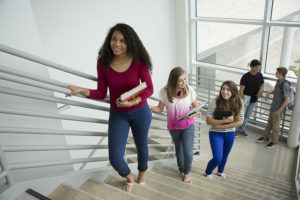
Image: NEC Corporation of America (Flickr)

Image: NEC Corporation of America (Flickr)

In order to extend, you must show proof that you have completed the education requirement no later than 30 days before the end of your first year.

If you are still in the process of completing your education, you must obtain proof from the school stating that the course(s) you are taking will conclude at least 30 days before the end of your year and the number of credits/hours/CEUs that you will earn.

All proof of education must state your name, school attended, course title, and number of credits/hours earned. Completed verification should be given to your community counselor. Your extension request will not be processed without this proof.

Back to School Tips

Jens Rost backpacks

By Christine Connally

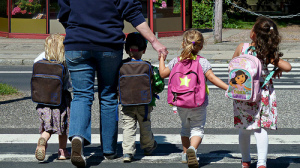
Kids in our cluster will be returning to school soon. This will mean changes to the au pair schedule and possibly to the duties.  It is very important to communicate these changes to avoid problems.

Please discuss the following (if applicable):

  • Au pair’s work schedule.
  • The children’s school and activity schedules.
  • Where the children get dropped off and picked up and who will be doing this.
  • What to do if a child is staying home sick, late to school, does not get off the bus (if they are supposed to).
  • How to tell if school has been cancelled or delayed for bad weather.
  • Add the au pair to your list of people allowed to pick up the kids from school.
  • What to pack for lunch.
  • The routine after school (do they have free time before starting homework, what to give for snack, any chores, where do they put their backpacks & lunchboxes).
  • How to communicate about what’s going on at school.
  • Kids in Care Log Books are available upon request from APIA.

Here are some Printable Fill-in-the-Blank School Notes for parents. You may print these out and use them for times when the kids are absent, late, have early dismissal or you need to give permission for something.

If the au pair will be the one going through the children’s back pack and helping with homework, I suggest you designate an area for putting things that need to be read and/or signed by parents.

Am I Homesick?

Photo Credit: BK (Flickr)It is completely normal to  feel homesick sometimes when we are far from home.  Homesickness comes from feeling disconnected from familiar people, places and routines.  It is an emotion you have to learn how to cope with while you are here. It is an emotion that passes with time.  Here are some tips to help you:

  • Be a tourist, get to know where you live, visit the local sights and explore just as you would if on vacation.  Start a list of favorite places.
  • Try new foods, even if they don’t look good, finding new favorite nibbles is a great way to  enjoy a new country.
  • Take a break from Skype.  If you are skyping for hours every day, it is not helping you.  Find a balance between ties at home and building new relationships here
  • Focus on your new social media networking with other au pairs and American friends.  You don’t need to know what everyone is doing at home every minute.
  • Plan a trip with a friend, a day trip or a weekend, get excited about doing something new with a new friend and before you know it you will be excited and chatting about the trip instead of talking about what you are missing at home.
  • Go to your cluster meeting, This will definitely help you.
  • Send some gifts back home.  Sending gifts gives you something to do, makes you go out, and is a way of sharing your experience, it makes you feel good.
  • Make a Bucket List.  This is  a list of what you hope to do and see during  your year as an au pair.  Keep it on the wall and you will enjoying checking off each thing on the list as you do it.
  • Not everything has to change.  If you loved jogging at home, do it here.  There are some habits you love that you can keep.
  • Create a routine.  Having a routine will help  you feel at home and settle into life here.
  • Do not stay home.  Get out and about, go to the gym, the park, a coffee shop, a movie, staying home alone will not help homesickness
  • Ask you counselor to connect you with another au pair who was also homesick, there’s nothing better than talking to someone who has been in your shoes.
  • Start an old fashioned scrap book with real pictures and mementos from your year.  It will give you something to work on when you  have quiet time alone and as your year progresses you will be able to see what an amazing experience you are having.  You’ll have a wonderful keepsake to take home with you.  You’ll feel so proud of your scrapbook!
  • Most importantly, talk to someone, if you feel sad or homesick, talk to your host family, call me, or a friend.  Being part of a cluster enables us to help and support each other.

A little inspiration from a former au pair… https://www.youtube.com/watch?v=H3IBmRWGnwA

 Have a great year, this is your dream, make the most of it!