Category Archives: Blog

Halloween Safety Tips

Photo Credit: Martin Fisch (Flickr)

Photo Credit: Martin Fisch (Flickr)

Halloween should be a fun time for you and your host family but it is also a time when safety should come first. A few tips from the DC Police.

Costume Safety

Children should:

– Wear clothing that is bright, reflective and flame-retardant; wear short clothing that prevents tripping.

– Wear sneakers or comfortable shoes.

– Use face paint (non-toxic, hypoallergenic) and avoid masks – especially if the eye holes obstruct the child’s vision.

– See well through facemasks, or use make-up.

– Don’t wear floppy hats or wigs that slide over the eyes. Also, children should not wear long, baggy, or loose costumes or oversized shoes.

– Avoid toy weapons – if desired, use costume knives and swords that are flexible, not rigid.

– Stay away from pets. The pet may not recognize the child and become frightened.

Pedestrian Safety

– Children should stay within familiar areas and surroundings. Parents should establish a route for children.

– Children should use flashlights and stay on sidewalks.

– Children should cross the street at corners / crosswalks and not between parked cars.

– Motorists should drive slowly and watch carefully for children.

General Safety

– Many police districts, community groups, business associations and others host Halloween parties. Parents should consider these as a safe alternative to door-to-door “trick-or-treating” for their children.

– Children should never go into homes – stay on the porch or stoop when asking for treats.

– Children should avoid homes that don’t have their outside lights turned on.

– Children should never talk to strangers or get into strangers’ cars.

– Children should travel in small groups and be accompanied by parents or an authorized adult chaperone.

– Children should know their home phone number and their parents’ cell phone numbers, when applicable. They should carry coins for emergency telephone calls or know how to make collect calls.

– Children should have their names and addresses attached to their costumes.

– Children should bring home treats before eating them so parents can inspect them. When children get home, parents should inspect all candy and other treats before they are eaten. Discard all unwrapped or loosely wrapped candy or fruit.

– If you have any questions about suspicious looking treats, call the police department.

– Parents and children should carve pumpkins on a stable, flat surface with good lighting. Small children should never carve pumpkins. Instead, they can help by drawing faces with markers, while a parent does the cutting. Older children carving pumpkins should always be supervised.

– Adults should only give and accept wrapped or packaged candy.

– Adults should keep porch lights on and their driveways illuminated.

– Homeowners should ensure that their walkways are cleared of debris on which children may trip and fall. http://mpdc.dc.gov/

Top 10 Activities for Fall

Photo Credit: Brian Richardson (Fliker)

Photo Credit: Brian Richardson (Fliker)

By Gwen Remy

Summer is over, and in many places the air is turning colder. As the weather changes be sure to take advantage of what the fall season has to offer. Even if you don’t live in a place that sees a lot colorful leaves, there are fun family-friendly ways to get outdoors this fall:

• Go apple picking. Sure, most of us can get apples year-round from the grocery store, but there’s nothing quite like orchard fresh apples, picked straight from the tree during harvest season. That crunchy, tangy, sweet apple flavor is at its peak during this time of year. Many commercial orchards will let you pick your own. It’s not only fun, it’s also a great way to show kids where their food comes from. Get extras for canning applesauce, or making pies. When you’re done, warm up with a delicious mulled cider.

• Go on a nature hike. Bring along a field guide to identify different kinds of trees. Look for wildlife collecting food for winter. Explain to kids how animals are starting to fatten up and grow thick, protective winter coats. Watch for migrating birds.

• Collect fall leaves. Press them into books or preserve them in glycerin. Paste them onto handmade paper to create greeting cards, or glue them between two pieces of wax paper to make an attractive sun catcher. Go lightly on the glue, or substitute crayon shavings to add color; use a warm iron to melt the shavings and hold the paper together.

• Take a hayride. Many farms offer hayrides during the fall. This is a great way to kick back and enjoy nature with smaller kids who may not be up for a long walk.

• Visit the pumpkin patch. Don’t buy your Halloween pumpkin from the grocery store. Go straight to the source. Kids will love wandering around the patch to pick out the perfect pumpkin. Choose a couple of big ones for jack-o-lanterns, and grab a few smaller ones for painting or general household decorations. Smaller pumpkins make great additions to fall centerpieces. Roast the seeds in your oven with a sprinkling of tasty spices, and grab a few to make pumpkin pies.

• Visit a corn maze. Many farms earn extra income for the winter by turning their cornfields into large mazes. Test your directional sense, and get some fresh air in the process. Corn mazes are fun or all ages.

• Stuff a scarecrow. Dig out an old shirt and overalls, and stuff it with leaves until firm. Add a pumpkin head (from your trip to the pumpkin patch) and you’ve got a great fall decoration.

• Fly a kite. The gusty, brisk air makes autumn a great time for flying kites. Buy one from the store, or make your own from two long sticks, strong paper, and string.

• Have a bonfire. Invite some friends over for a backyard bonfire. The chill in the air makes fall the perfect time to sit together by the warmth of a blazing fire with a nice warm mug of cocoa or cider. Be sure to get any necessary permits from your town first.

• Make a leaf pile and jump in!

Rosh Hashanah

Rosh Hashanah begins at sundown on this Sunday October 2nd and ends in the evening of Tuesday October 4th.

The customs and symbols of Rosh Hashanah reflect the holiday’s dual emphasis on both happiness and humility. Customs observed on Rosh Hashanah include the sounding of the shofar (a musical horn) and eating special foods including round challah (bread), which symbolizes the circle of life, and sweet foods for a sweet New Year. It is also customary to extend wishes for a good year. In Hebrew, the simple form of the greeting is “L’shanah tovah!”

Here is a great site for children including information about the holiday traditions, games, word searches, Hebrew vocabulary and crafts.

http://www.akhlah.com/jewish-holidays/roshhashanah/

Want to try cooking for the holiday? Find out how to make Challah, Honey Cakes…and lots more here:

http://www.aish.com/h/hh/r/

Education Requirements for Au Pairs

Photo Credit: CollegeDegrees360 (Flickr)

Photo Credit: CollegeDegrees360 (Flickr)

By Catherine McEaddy-Holmes

Required Credits

Au pairs are required earn at least six academic credits during their year by completing classes/courses at accredited US post-secondary colleges and universities. 

6 academic credits = approximately 8 CEUs = approximately 80 classroom hours 

Universities and colleges use several different systems for credits, and au pairs use any combination of academic credits, CEUs, or hours as long as they add up to the required number of hours. (The absolute minimum is 72 classroom hours.)

Accredited Schools

For a list of classes approved for your DC-area cluster, click on this link.

If you want to take a class from a school not listed on the cluster blog, check with your Community Counselor first to make sure it is accredited. Otherwise, it will not count toward your education requirement.

Choosing Classes

Be flexible. Remember that your childcare responsibilities come first. Class schedules need to be arranged with your host family and around your childcare duties. Your favorite class may not be available when you are. Schools vary in what they offer, but most offer a wide range of choices and offer day, evening, and Saturday classes.

The APIA Advantage UCLA Course is the only State Department approved class with an online component. No other online classes are accepted.

Tuition

Your host family will pay an education allowance of $500 to assist you in completing your education requirement. There are a few ways to get your credits for just your education allowance, but choices are limited. Normally au pairs will contribute some of their own money ($200+) towards their education.

Transportation

Your host family will provide transportation, including gasoline, parking, or public transportation costs, to and from your classes in your community until you complete your education requirement.

Travel Classes

Au pairs should only take one “weekend/travel” course for their education requirement. These courses usually meet for one or several weekends and involve travel. They are clearly marked on the Au Pair Education Options post. Using only “weekend/travel” courses to meet your education requirement could result in the denial of your extension application (should you decide to extend.).

Education Proof

Submit any of the following as proof of your education:

  • Letter from the school on letterhead
  • Completion certificate from the school
  • School transcript

All proof of education must state your name, school attended, course title, start and end date of the course, and number of credits/hours earned. If your community counselor does not have proof that your education requirement has been completed, you will not receive a completion certificate upon your return to your home country and you forfeit the opportunity to extend.

Extending

Image: NEC Corporation of America (Flickr)

Image: NEC Corporation of America (Flickr)

In order to extend, you must show proof that you have completed the education requirement no later than 30 days before the end of your first year.

If you are still in the process of completing your education, you must obtain proof from the school stating that the course(s) you are taking will conclude at least 30 days before the end of your year and the number of credits/hours/CEUs that you will earn.

All proof of education must state your name, school attended, course title, and number of credits/hours earned. Completed verification should be given to your community counselor. Your extension request will not be processed without this proof.

Au Pair Insurance Card

All au pairs starting with the August 15, 2016 arrival last week will be receiving their insurance card, brochure and claim form via email during their orientation week. They will no longer receive paper cards.
We recommend au pairs print down the information when they get to their host home and keep it in a safe place. They should keep the card in their wallet and print an extra copy to keep in their room just in case they lose it.

Photo Credit: Pictures of Money (Flickr)

Photo Credit: Pictures of Money (Flickr)

Au Pairs should contact CISI if they have not received the email with this information. The website address is http://www.culturalinsurance.com/ and by phone 1-800-303-8120.

Driving in Washington, DC

If your Au Pair needs to drive, please carefully read the DC Department of Motor Vehicles website section entitled Driver License for Non-US Citizens also see the Quick Reference Guide that I give each Host Family at our Orientation Meeting and send to each Au Pair by mail so that she has it as soon as she arrives to your home. http://dmv.dc.gov/service/driver-license-for-non-us-citizens

Photo: Glenn3095 (Flickr)

Photo: Glenn3095 (Flickr)

Hints for Success – Homesickness/Culture Shock

By Christine Connally

Photo: Hoang Vy (Flickr)

Photo: Hoang Vy (Flickr)

Almost everyone experiences culture shock when they come to a completely new environment. Everything is different: the language, the food, and the people.

Here are my Top 5 Tips for Dealing with Homesickness

1. Make Friends – Don’t wait for other au pairs to reach out to you, reach out to them. There are other lots of new au pairs who are feeling the same way you are right now. Set a goal to reach out to a few of them each day. Some will respond and some will not. Don’t let that discourage you. No one will ever be mad at you for sending them a message to say hello or ask if they want to do something together. Make friends from various countries and you will also get a chance to practice your English skills together.

2. Stay in touch with your home country, but not too much. Skyping or talking on the phone every day with your family and/or friends back home normally makes homesickness worse. Try emailing instead and reduce the Skype and phone calls to once a week, until you feel stronger. It’s much harder seeing the faces and hearing the voices of those you miss.

3. Get out of the house (or your room specifically) – Go to cluster meetings, have coffee or movies with other au pairs, join a gym, go to the library, go for a walk, visit the mall, get a manicure, visit a museum. If someone invites you out, say “yes.” Also, don’t be afraid to do the inviting. If your host family invites you to do things with them, say “yes.” This will help you get to know each other and contribute to your overall happiness.

4. Realize that it definitely gets better – All au pairs experience homesickness and nearly all of them stay and have a successful year (some stay for two years.) So, it must get better, right? Once you get past the initial homesickness, most au pairs report how quickly the year goes by.

5. Make Plans – Create your own Au Pair Bucket List (places you want to go, new foods to try, new things to experience during your year in the U.S.) and start doing them now. Post on our cluster Facebook group to find others who may want to join you on your adventures.

Heading Home

By Robin Leon

You made it! Your time in the US has flown by, and now it’s time to plan for your return. Think about all of the time and effort you put into preparing for your arrival in the US – interviews, paperwork, training. It makes sense that your return home would also require some thought.

Photo: Skyseeker (Flickr)

Photo: Skyseeker (Flickr)

Of course you expected US culture to be new, but do you anticipate your home culture to be familiar and without difficulties? This is often not the case. In many ways, the experience of returning home can mirror the experience of arriving in the US. Change can be stressful, but thinking about these transitions ahead of time can make them less scary.

For au pairs, the reentry process begins in the eighth month when return flight packets are received. At this time feelings can be mixed, and au pairs may feel very confused as they anticipate the return home but are not ready for the US experience to end. For those returning at the end of the first year, they must select a travel date, deal with questions and excitement from family and friends at home and, with three months left, continue to keep focused on their au pair duties.

As the departure date nears, there is a flurry of activity – you’re trying to get everything done, packing, and seeing all your friends one more time. It can be tempting to disengage from friends and your host family – keep in mind, even if you’re not aware of it, it’s easier to leave angry than it is to leave sad. Be aware of these emotions and remember that they can impact your host family and host kids too. Talk to a trusted friend or your Community Counselor.

Now you’re home! When you first arrive, everyone will be so happy to see you, and you may feel like a visiting celebrity. This will fade though, and your friends and family may no longer be interested in hearing dozens of stories of your adventures in the US or seeing hundreds of photos of you and your new friends. They will move on and be ready for you to do the same, which leads us too…

Reverse Culture Shock – when you first return home, your family and friends may wonder who you are, who you’ve become. You may be thinking about how much you’ve changed, while everything and everyone at home has stayed the same. It may be tempting to romanticize your time in the US – everything was perfect there! There were friends who understood you! You may also experience a “parent problem” – you’ve been independent and had lots of freedom during your time in the US. It can be hard to go back to being someone’s child or following someone else’s rules.

This culture shock is not permanent. It takes time, but eventually, you will get back into the swing of things, and you’ll begin to relax into life in your home country, carrying with you the experiences you had as an au pair.

Tips for Transition:

• Talk to your Community Counselor – we are here to help you with all phases of your au pair experience, including your return home.
• Take some time to really think about your experiences in the US – what did you like most? What will you miss? How have you changed? What recommendations would you make to someone considering becoming an au pair?
• Think about challenges you may face when you return home.
• Think of skills and activities that helped you adapt to the US. These may be strategies that you can use to help you adapt back into your home country.
• Set short term and long term goals for after you return home. Think about ways that you can use the new skills that you gained during your time in America.
• Think about how your Host Family and kids are feeling. What can you do as a group to help with the transition? Think about how you can have a successful closure with them. Also, think about how your return may feel for your friends and family in your home country. What questions and concerns might they have?
• Keep talking – stay in touch with the au pairs and other friends you met along the way – it can be nice to talk with someone who had a shared experience with you.
• Develop ways to continue your exposure to American culture and language.

Summer Safety Reminders

Photo: Pete (Flickr)

Photo: Pete (Flickr)

By Christine Connally

Dehydration The little ones, especially, forget to drink or to tell you that they need to drink. If you find the children not looking well and/or getting cranky toward the afternoon, it might be because they’re tired, or it might be because they’re dehydrated. Remember: By the time a person feels thirsty, he’s already partly dehydrated, so drink to prevent thirst, not to quench it. Common symptoms of dehydration are crankiness, headaches, aches in the joints and weariness. And don’t allow your child to fill up on juice or soft drinks; these are dehydrators. Water or child-appropriate hydrating drinks are best.

However, if you or your child has severe dehydration (dry mouth, sunken eyes, reluctant to drink, unable to pee or cry, high fever, lethargy), call for emergency help and have your child sip an electrolyte-replacement fluid (such as Pedialyte).

Hot Cars: Don’t EVER leave children alone in the car — not even for a moment. Besides the danger of abduction, the temperature in a car can skyrocket in minutes. And, if you see an unattended young child in a vehicle, please call 911, the police or other emergency personnel. Your call could save the child’s life.

Drowning: Always actively supervise children in and around water. Infants and children can drown in bathtubs, swimming pools, ponds or almost any other water. Toddlers aren’t strong enough to lift themselves back out of a toilet, bucket, container or wading pool.

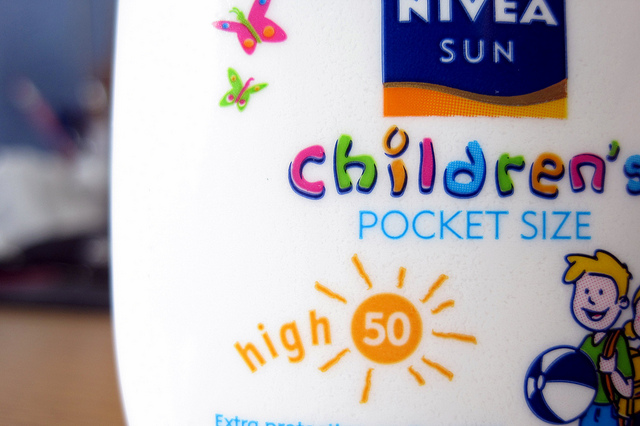
Sun Protection: Children’s skin and eyes are more sensitive to ultraviolet rays. Babies should be protected from direct sun entirely. Toddlers, preschoolers and older children should be covered well in sunscreen (SPF 30 or higher) at least one half hour before going out in the sun. Sunscreen should be reapplied every hour or so, and it should be reapplied after the child has been in water. Don’t forget ears, hands, feet, lips and under the eyes. Also, make sure your child wears a hat and sunglasses when out in the sun for any length of time.