Category Archives: Uncategorized

2011 Sojourner Douglas Weekend courses.

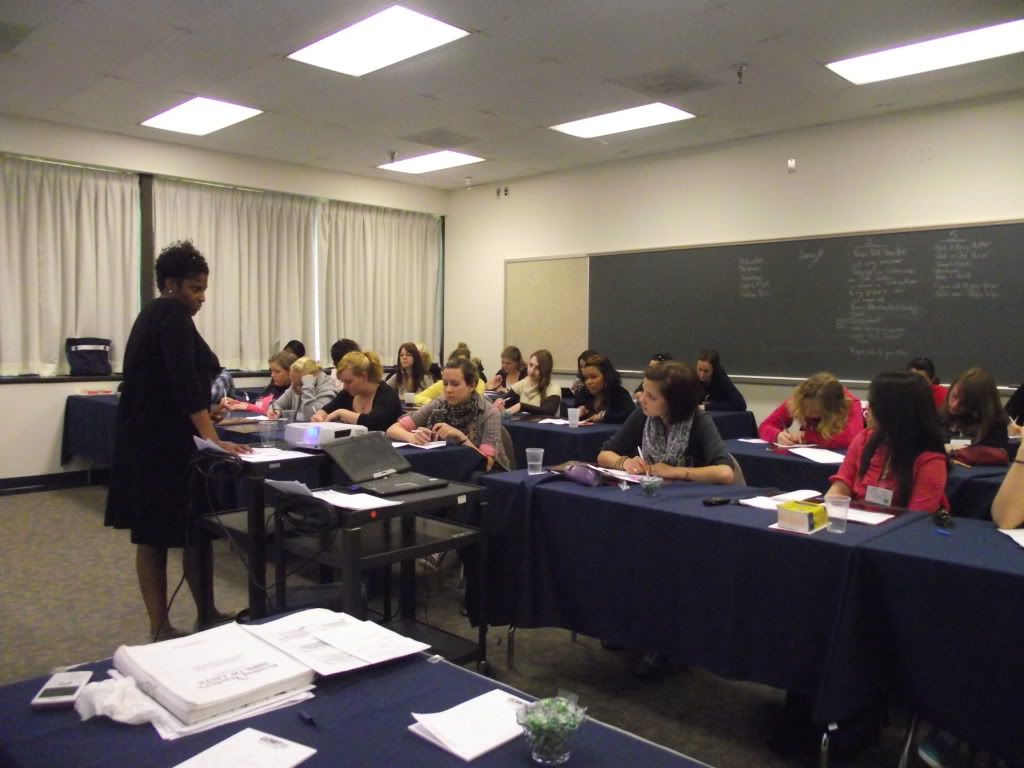
One of the choices available to our au pairs to complete their education component while in the US is the option to take weekend courses at accredited and APIA approved colleges. I have had lots of au pairs take the Sojourner Douglass weekend courses and they have been very pleased.  They have told me that the instructors and staff are helpful and professional, the courses are interesting and the facilities are nice.  Below you will find information on their upcoming course offerings.
Sojourner Douglass College, Division of Professional and Continuing Studies

The full 2011 schedule is available and posted on their website.  The winter courses are filling up quickly.

The following are offered as Two Weekend Programs:

  • Interior Design
  • English as a Second Language (ESL)
  • Foreign Languages
    • Travel Spanish
    • Travel French

  New for 2011, Non-lodging courses:

  • Microsoft Software Certification:
    • Word
    • Excel 
    • PowerPoint
  • Art History Course that occurs in Washington, DC
  • Volunteerism Course 


Registration is ongoing and can be completed online by visiting www.weekendprogram.org Early registration is encouraged. For more information about our courses please visit the website

2011 Schedule of Weekend Classes (subject to change based on enrollment)

January 8-9, 2011 – TOEFL Review Course

January 8-9, 2011 – American Language and Culture,

January 22-23, 2011 – American Government and Personal Development

January 22-23, 2011 – Computer Software/Certification: Word (Non-lodging Course)

January 22-23 and March 12-13, 2011 – Interior Design Two Weekend Program

March 5-6, 2011 – American Culture and Tourism

March 5-6 and May 7-8, 2011 – Hospitality and Tourism Two Weekend Program

March 12-13, 2011 – American Language and Culture

March 12-13 and April 9-10, 2011 – Travel Spanish Two Weekend Course

March 12-13 and April 30-May 1, 2011 – English as a Second Language Two Weekend Course

March 12-13, 2011 – Computer Software/Certification: PowerPoint (Non-lodging Course)

March 12, 19, 26 – Art History (Non-lodging Course), Washington, D.C.

April 2-3, 2011 – Caring for Special Needs Children and American Culture

April 2-3 and June 11-12, 2011 – Child Care Two Weekend Program

April 9-10, 2011 – Understanding American Language Culture and Government 

April 30 and May 1 – Volunteerism in America (Non-lodging Course)

May 7-8, 2011 – American Culture and Personal Development

May 7-8 and June 11-12, 2011 – Travel French Two Weekend Program

May 14, 21, 28 – Art History (Non-lodging Course), Washington, D.C.
  

To register visit our new website:  www.weekendprogram.org

Please note the location of Weekend Courses:

The Conference Center at the Maritime Institute

692 Maritime Boulevard Linthicum, MD 21090-1952

(410)-859-5700 Front Desk ext 0

For questions call Angela Garnett, Program Coordinator at 301-213-2404 or email: info@weekendprogram.org
Check out Education links.

It’s time to start thinking about what you will do for the winter semester (starts in January.)  Don’t wait until the last minute or the class you want could be fully enrolled.

meredith_stdnts190x147

Check out the new links under education options.  There are great options for everyone in our cluster.

Reminder:

Au Pairs and Au Pair Extraordinaires need to complete 6 credit hours or 8 CEUs (continuing education units) or 72-80 classroom hours during their year.

Educare Companions need to complete 12 credit hours or 16 CEUs (continuing education units) or 144-160 classroom hours during their year.

APIA Advantage Course-UCLA Extension program

The next UCLA APIA Advantage Course will run from January 10 – May 16. Registration is already open at www.uclaextension.edu/aupairs
 
The cost of the class is $500 and it satisfies the education requirement for au pairs or half the requirement for EduCare companions.

American Studies Online is a 19-week media-rich, mostly self-paced online course of study. Designed specifically in cooperation with the American Institute For Foreign Study’s Au Pair in America program, UCLA Extension’s course offers successful participants 6 quarter units (4 semester units) and a certificate of completion from UCLA Extension.


Participants will read lessons, engage in activities, write, share resources, network with one another, and even collaborate on special projects – all designed to further their understanding of US culture.

The Community Involvement segment of the program takes the au pairs into face-to-face contact with the community. Au pairs will relate these experiences to their academic coursework in American Studies Online.

The interdisciplinary course of study will include:
• US History
• Arts in the US
• US literature
• Career counseling
• English language study (optional)
• TOEFL preparation (optional)

Each group is assigned a “Course Manager” who acts as an “online concierge” to provide high levels of service to ensure a rewarding and trouble-free educational experience.

For further information call (310) 206-6671 or email online@uclaextension.edu

 Hanukkah_6

Hanukkah, the Festival of Lights, is one of the most joyous times of the Jewish year. The reason for the celebration is twofold (both dating back to c. 165 BC and the miraculous military victory of the small, ill-equipped Jewish army over the ruling Greek Syrians, who had banned the Jewish religion and desecrated the Temple and the miracle of the small cruse of consecrated oil, which burned for eight days in the Temple’s menorah instead of just one.

Hanukkah is often celebrated by:

  • Lighting a menorah for eight nights with olive oil or wax candles; one on the first night and an additional one each succeeding night, so that the last night has eight lights
  • Eating food fried in oil, especially potato pancakes and jelly doughnuts
  • Playing with a dreidle, a four-sided top; the player wins or loses money depending on which side it lands on (each is marked with a different Hebrew letter)
  • Celebrating with family and friends

Here are some websites with activities for the kids:

Hanukkah Coloring Pages

Crafts and Activities

Dreidel Hanukkah Cookies

Holiday Party 2010

To kick off the 2010 Holiday Season, the Bucks County cluster and the Montgomery County Cluster of au pairs had their Holiday Party at Uno’s Pizzaria. A lot of fun and good food was had by all!!

Thanksgiving in the US.

Thanksgiving, a uniquely American holiday, dates back to the first European settlers in North America.

After much hardship, illness and hard work, the Pilgrims were finally able to celebrate a successful harvest which they shared with their Native American friends who had helped them through their difficult beginning in America.

Today this day is set aside to feast and to give thanks-something we can all share, as we too celebrate our cross-cultural friendships.

Some activities to share with the children :

Maple-Nut-Berry Popcorn Balls ( for children ages 3 and older): Add some chopped walnuts and  raspberries, blueberries or blackberries. Add enough melted butter to lightly coat popcorn. Stir. Pour maple syrup over the warm popcorn and stir until all the corn, nuts and berries are covered. Shape the sticky corn into balls and place on a plate to refrigerate until the syrup hardens.

Thanksgiving cards and place cards: Fold a piece of paper in half, place a leaf on the inside and close the card. Use a crayon to rub lightly across the front of the card in the area where the leaf is. The shape of the leaf will appear on the outside. Remove the leaf. Write a name on the front for a place card, or a message inside for a Thanksgiving card. Older children might want to make more sophisticated designs using more than one leaf.

Make a chain of paper doll (adults should do the cutting): Fold a piece of paper back and forth over and over again with a width between folds of 2-3 inches. With the paper folded cut out a shape of a person, make sure that the hands and feet touch the fold, but don’t cut through the fold. When you unfold the paper there will be a line of people holding hands. Children ages 3-10 can color the figures to look like Pilgrims(men wore big white collars, belts with buckles, and buckles on their shoes, pants to their knees; women wore white hats and aprons over solid color dresses) or Native Americans (draw feather headdresses  and brightly colored geometric patterns on their clothes).


Tree of Thanks: This Thanksgiving tree is bound to become a new holiday tradition.

Trace leaves onto autumn colored craft’s paper and cut out. Punch a hole into the stem of each paper leaf. Measure and cut a 2” length of wire or twine for each leaf. Thread it through the hole and bend the ends to make a hook for hanging. Place the tree branches in a pot or vase. Let the children or/and guests choose a leaf or two and ask them to jot down things that they are thankful for.

Thanksgiving Resources

Books

Recipes

Articles

Arts & Crafts

Lesson Plans

Columbus Day.

Columbus Day

Share 50
Christopher Columbus

HRISTOPHER COLUMBUS discovered America in 1492. At least that is what all elementary school children were always taught: “In 1492, Columbus sailed the ocean blue.” Of course, Columbus never did “discover” North America, and the regions he did explore were already inhabited. He only discovered them from the viewpoint of the Europeans. Yet his first voyage did prove one thing for sure, that the earth was not only round, but that it was bigger than he had thought, Eratosthenes notwithstanding.

One of the first known celebrations marking the discovery of the “New World” by Christopher Columbus was in 1792, when a ceremony organized by the Colombian Order was held in New York City honoring Christopher Columbus and the 300th anniversary of his landing in the Bahamas. Then, on October 12, 1866 the Italian population of New York organized the first celebration of the discovery of America. Three years later, in 1869 Italians in San Francisco celebrated October 12 calling it C-Day.

To mark the 400th anniversary of Columbus’ voyage, in 1892, President Benjamin Harrison made a commemorative proclamation. But it was Colorado, in 1905, that became the first state to observe a Columbus Day. Since 1920 the day has been celebrated annually, and in 1937 President Franklin Roosevelt proclaimed every October 12 as Columbus Day. That’s where it remained until 1971 when Congress declared it a federal public holiday on the second Monday in October.

Christopher Columbus (1451 – 1505)

Columbus, the son of a wool merchant and weaver, was born in Genoa, Italy and went to sea at the age of 14. Following a shipwreck off the coast of Portugal in 1470, he swam ashore and settled in that country.

Between 1477 and 1482 Columbus made merchant voyages as far away as Iceland and Guinea. But in 1484, his “Enterprise of the Indies” idea fell on deaf ears when he presented it to King John of Portugal. Shortly thereafter, he moved to Spain, where King Ferdinand and Queen Isabella became more interested in his adventuresome ideas.

To the New World

On August 2, 1492, Columbus set sail in search of the East Indies. The voyage was financed by Ferdinand and Isabella by making the city of Palos pay back a debt to the crown by providing two of the ships, and by getting Italian financial backing for part of the expenses. The crown had to put up very little money from the treasury. The Nina, Pinta, and Santa Maria

Columbus and 90 crewmen boarded the three ships that were to make the first voyage to the New World, the Niña, Pinta, and the flagship, Santa Maria. On October 12, 1492, Columbus first saw the islands of the new world, landing in the Bahamas. Later in the month, he would sail to Cuba, and to Hispaniola (now Haiti). He thought he had reached the East Indies, the islands off Southeast Asia.

Contrary to popular belief, most educated individuals in the 15th century, and especially sailors, already knew that the earth was round. What was not realized by Columbus, however, was just how big a globe it was. Columbus seriously underestimated the size of the planet.

Seaworthy Cuisine

The menu for Spanish seamen consisted of water, vinegar, wine, olive oil, molasses, cheese, honey, raisins, rice, garlic, almonds, sea biscuits, dry legumes such as chickpeas, lentils, beans, salted and barreled sardines, anchovies, dry salt cod and pickled or salted meats (beef and pork), salted flour.

Food, mostly boiled, was served in a large communal wooden bowl. It consisted of poorly cooked meat with bones in it, the sailors attacking it with fervor, picking it with their fingers as they had no forks or spoons. The larger pieces of meat were cut with the knife each sailor carried. Fish was eaten most often. On calm days, the crew would fish and then cook their catch.

Return to Spain and Additional Voyages

On Christmas Day, 1492, the Santa Maria sank off Hispaniola. Columbus departed for Spain on January 16, 1493 on the Niña, arriving there on March 4.

Columbus made three additional voyages to the New World. The second voyage set sail in September, 1493, with 17 ships. During his expeditions, he helped to colonize Hispaniola, and discovered the South American mainland. He did not, however, see mainland North America during any of his voyages.

He returned to Spain for the last time on November 7, 1504. He died at Valladolid, Spain on May 20, 1506, at the age of 55.

Controversy

Much controversy exists over Columbus’ expeditions and whether or not one can “discover” an already-inhabited land. The natives of the Bahamas and other islands on his journey were peaceful and friendly. Yet many of them were later enslaved by the Spanish. Also, it is known that the Vikings explored the North American coast 500 years before Columbus.

Nevertheless, Columbus’ expedition was unique and important in that it resulted in the first intertwining of Europe with the Americas, resulting in the first permanent European colonies in the New World

Handling Expenses

Miscellaneous Expenses

There are different ways to handle the little expenses that may come up.  Things like when an au pair takes the kids out for ice cream or picks up a gallon of milk.  Some families keep a cookie jar fund, a little cash that they set aside weekly or monthly for this kind of expenses.  Here are some suggestions for avoiding problems with that.

Host Families

  • It’s important to be clear about how long this money should last and what types of expenses are approved.
  • Let the au pair know whether or not you expect receipts.

Au Pairs

  • Only spend the money on approved expenses.
  • If it is something you are not sure about, ask first.
  • Put your receipts in the cookie jar in place of the money to avoid any confusion.

Gas and Fare Cards

Host families are responsible for the au pair’s transportation costs:

  • to and from classes and cluster meetings
  • driving the kids

It is a good idea to figure out how much gas an au pair will use for these trips and either put gas in the car or give a gas allowance.   If your au pair is riding to classes or cluster meetings with another au pair, you should offer to share the cost of gas.

Au pairs are responsible for their own transportation at all other times.  You should replace the amount of gas used for personal use.

BASEBALL – America’s National Pastime.

No Comments

Philadelphia_PhilliesPHILADELPHIA PHILLIES – The Philadelphia Phillies won the World Series in 2008.  In 2009 they went to the World Series again; but lost to the NY Giants.  We’ll win that Series this year — I’m betting on it!


Major League Baseball

Baseball is called the “National Pastime” of the United States because it is so popular. There are thirty teams spread across the country, and many people have their own favorite “home team.”

The game is played by two teams. When one team is in the field, the other team takes turns at bat. A baseball player first bats at the ball and then runs around the bases in an effort to score. Points, called “runs,” are scored when a player on the batting team touches all the bases (including home plate) without being tagged or put “out” by a player on the fielding team. The team scoring the greater number of runs in nine “innings” wins the game. Each inning is divided into two halves: top and bottom. Both teams are allowed three outs per half inning.
Each team is part of a league. There are two leagues, the American League and the National League. Each team tries to win the most games in their league. The teams that win each league championship will play each other in the “World Series.”