

With schools starting soon and many new au pairs who have recently arrived, we wanted to remind everyone about what to do in different situations with school buses. If you have questions, please ask us or your host parents.
The rules regarding stopping for school buses are:
It is against the law to pass a stopped school bus while its lights are flashing and its’ stop arm is extended.
On undivided roadways, with no physical barrier or median, vehicles must stop on both sides of the roadway.
Yellow flashing lights indicate that the bus is preparing to load or unload children. Motorists should slow down and prepare to stop their vehicles.
Red flashing lights and extended stop arms indicate that the bus has stopped, and children are getting on or off. Motorists approaching from either direction must wait until the red lights stop flashing before proceeding.
Police, who observe a motorist failing to stop and remained stopped for a school bus, can issue the violator a citation. Drivers failing to stop for pedestrians in a crosswalk and drivers failing to exercise due caution when encountering children can be issued a citation.
Au Pairs – Imagine for a moment that you went to the hospital and you were in the care of doctors and nurses. How would you feel if those doctors and nurses who were there to care for you were more interested in texting or using their personal computer than caring for you? How would that make you feel, about yourself and about them? Would you think that you were getting the treatment you deserved? Would you feel like paying the bill after your stay?
Life as an au pair, it is a fine balance between employee and family member. You live with your host family and participate with them as a member of the family, but you also have clear responsibilities as a childcare provider. Being a childcare provider is truly one of the most important jobs I can think of, because you are helping to shape our next generation. What message are you sending them when you would rather interact with a computer than with them? How will they feel about themselves and about you? Children feel as though everything is about them. They will see this as a rejection of them and they will be more likely to act out.
It also poses a safety concern when you are not paying enough attention to the children in your care. Accidents happen, but when an adult care giver is close by and appropriately supervising the chances of a major injury dramatically reduce.
During work hours, the following would not be considered acceptable: -Texting -Talking to friends on the phone -Chatting with friends online -Using Skype -IMing -Emailing -Updating your status on Facebook -Checking in on Orkut, Studivz, SiempreGente or any other social media site -Watching videos on YouTube (even my really fabulous ones) -Tweeting on your Twitter -Uploading photos -Anything else on the computer unless it is going to Nickjr.com together with your host children
Think about this — even if you work 45 hours a week, that leaves you 123 hours per week for all of that other stuff, or about 70 hours (if you are getting the recommended 7-8 hours of sleep per night.)
Host Parents – You need to be clear about what you consider acceptable during work hours to avoid misunderstandings. Also, please understand that you are dealing with a new generation of people who are very accustomed to being plugged in at all times. Their intention is not to be rude, they don’t necessarily realize how their actions will be perceived. Please use this information as an opportunity to begin a dialogue on the issue.
If you have a hard day, feel homesick or lonely, please listen to this wonderful song written by a German au pair who had a tough time but successfully completed her year. She recorded this song with the help of her host child.
Almost everyone experiences culture shock when they come to a completely new environment. Everything is different: the language, the food, and the people.
Here are some Tips for Dealing with Homesickness
1. Make Friends – Don’t wait for other au pairs to reach out to you, reach out to them. There are other lots of new au pairs who are feeling the same way you are right now. Set a goal to reach out to a few of them each day. Some will respond and some will not. Don’t let that discourage you. No one will ever be mad at you for sending them a message to say hello or ask if they want to do something together. Make friends from various countries and you will also get a chance to practice your English skills together.
2. Stay in touch with your home country, but not too much. Skyping or talking on the phone every day with your family and/or friends back home normally makes homesickness worse. Try emailing instead and reduce the Skype and phone calls to once a week, until you feel stronger. It’s much harder seeing the faces and hearing the voices of those you miss.
3. Get out of the house (or your room specifically) – Go to cluster meetings, have coffee or movies with other au pairs, join a gym, go to the library, go for a walk, visit the mall, get a manicure, visit a museum. If someone invites you out, say “yes.” Also, don’t be afraid to do the inviting. If your host family invites you to do things with them, say “yes.” This will help you get to know each other and contribute to your overall happiness.
4. Realize that it definitely gets better – All au pairs experience homesickness and nearly all of them stay and have a successful year (some stay for two years.) So, it must get better, right? Once you get past the initial homesickness, most au pairs report how quickly the year goes by.
5. Make Plans – Create your own Au Pair Bucket List (places you want to go, new foods to try, new things to experience during your year in the U.S.) and start doing them now. Post on our cluster Facebook group to find others who may want to join you on your adventures. Try volunteering, there are so many opportunities in the area.
6. Tell your Host Family- they want to know how you are doing, and it helps to let them know.
When the weather is nice, we spend more time outdoors with the children. Playing in the back yard, at the playground or walking on nature trails are great ways to get fresh air and exercise.
What are ticks? – Ticks are small mites that attach themselves to skin and suck blood. Click HERE to see examples of ticks.
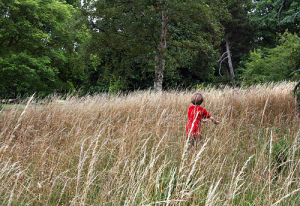
Where are ticks commonly found? – Ticks are normally found in areas with trees, bushes or tall grass. This includes back yards, parks, nature areas and most places you would be spending time with the children outdoors in the nice weather.
What needs to be done? – When you return home from areas where ticks might live, carefully check the children (their skin and scalp) for ticks.
Most ticks do not carry diseases, and most tick bites do not cause serious health problems. But it is important to remove a tick as soon as you find it. Removing the tick completely may help you avoid diseases such as Lyme Disease that the tick may pass on during feeding, or a skin infection where it bit you.
Click HERE for Instructions on Removing a tick from WebMD.com.
Washington DC is a spectacular place to celebrate July 4th! The National Mall is the center of all of the Independence Day Celebrations in DC. There are events all day, beginning with a parade along Constitution Avenue and ending with a fireworks display over the Washington Monument.
The 4th of July celebrations in Washington, DC are among the most attended events of the year and many people arrive early to stake out a seat on the lawn. There are plenty of activities scheduled throughout the day to keep the whole family busy.
Washington, DC’s Independence Day Parade
Parade Start Time: 11:45 a.m.
Parade Route: Constitution Avenue and 7th to 17th Sts. See a map of the parade route
Washington, DC’s 4th of July Parade features marching bands, military and specialty units, floats, and VIP’s. The parade draws a large crowd, so plan to arrive early to stake out a good viewing spot. Read more about the National Independence Day Parade
A Capitol Fourth Concert
Time: 8 – 9:30 p.m. (Admittance begins at 3 p.m.)
Location: West Lawn of the U. S. Capitol
A 4th of July tradition in the nation’s capital includes a live concert by the National Symphony Orchestra and several pop artists performing patriotic music on the West Lawn of the U.S. Capitol Building. The concert and show is followed by a spectacular display of fireworks over the Washington Monument. The concert is free and open to the public. No tickets are necessary. The annual event will be broadcast live on WETA TV 26 with a repeat airing at 10:00 p.m. See photos of the performers for A Capitol Fourth 2015.
4th of July Fireworks on the National Mall
Fireworks Time: At dark, usually around 9:15 p.m. Rain Date: July 5th
Launch Location: The fireworks are launched from the Lincoln Memorial Reflecting Pool and light up the sky over the Washington Monument. See Photos of the Fireworks
Spectacular views of the fireworks can also be seen from the Marine Corps War Memorial (Iwo Jima) in Arlington, Virginia near the Rosslyn Metro station and areas along the Virginia side of the Potomac River that can be reached from George Washington Memorial Parkway. You may park at the Gravelly Point parking lot, which is about a quarter mile from the 14th Street Bridge. Another great place to watch the fireworks is from the Air Force Memorial on Columbia Pike. An all day festival will be held at Long Bridge Park in Arlington providing a prime location to view the National Mall fireworks.
Getting to the National Mall
The best way to get to the National Mall is to take the Metro. Stations nearby include Smithsonian, Metro Center, Gallery Place-Chinatown, Judiciary Square, Federal Triangle and L’Enfant Plaza.The Smithsonian Metro station will be open all day! It typically takes 1 ½ to 2 hours to clear the Mall after the fireworks.
Information above is from About.com. Visit their website HERE for much more information about the DC July 4th celebrations, including the best places to view the fireworks.
If you’d prefer to avoid the crowds of the city, there are plenty of alternative places to watch fireworks. For Fireworks in Virginia click here
The Folklife Festival will take place June 27-July 1 and July 4-8.
The annual Smithsonian Folklife Festival is an international exhibition of living cultural heritage. Attracting more than one million visitors yearly, the two-week long celebration is the largest annual cultural event in the United States.
The Festival is held outdoors on the National Mall in Washington, D.C., between the Smithsonian museums. There is no admission charge. Visitors should dress for hot and humid weather. Parking around the Mall is extremely limited, so visitors are advised to use public transportation. L’Enfant Plaza is the closest Metro station to the Festival site. National Archives, Smithsonian, and Federal Center stations are within a half-mile. For assistance planning how to get around, visit www.goDCgo.com. For general Smithsonian visitor information, http://www.si.edu/Visit or call 202.633.1000 (voice).
Festival hours are 11:30 a.m. to 6 p.m., with special events taking place most evenings beginning at 6:30 p.m. View the schedule here.
Father’s Day is celebrated each year in the U.S. on the third Sunday in June. This year that is June 18.
It would be a nice gesture to do something for your host dad. You could help the children make a surprise for him or give him a card yourself. Don’t forget to send a special message to your own father, back home.
Memorial Day was officially proclaimed on 5 May 1868 by General John Logan, national commander of the Grand Army of the Republic, and was first observed on 30 May 1868, when flowers were placed on the graves of Union and Confederate soldiers at Arlington National Cemetery. The first state to officially recognize the holiday was New York in 1873. By 1890 it was recognized by all of the northern states then others followed. It is now celebrated on the last Monday in May (passed by Congress with the National Holiday Act of 1971 to ensure a three day weekend for Federal holidays).
Americans honor those who have lost their lives for their country by visiting cemeteries, placing flags and flowers on graves, flying the U.S. flag at half-staff until noon and attending parades.Children can be a part of Memorial Day too. Here are some links to children’s activities: