Category Archives: Uncategorized

Thanksgiving in the USA

Thanksgiving – What is it and why is it celebrated?

November 20, 2013 – 7:16 pm

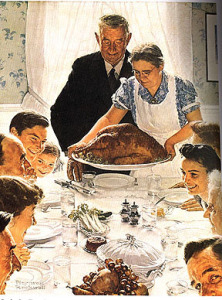
What is the History of Thanksgiving in United Starockwelltes?The initial “Thanksgiving” feast, held in 1621, was really a traditional English harvest celebration. The Pilgrims shared it with the Native Americans because they had taught the colonists to plants crops and hunt wild game. Without the Native Americans, the Pilgrims may not have survived the harsh winter and been able to celebrate their first harvest of plentiful crops in the New World. The colonists’ first harvest feast lasted for three days. Food was served all at once, instead of in courses, so people ate whatever they pleased in the order that they desired. The more important members at the feast were given the best pieces of meat, while the rest of the diners ate whatever was closest to them. Since the Pilgrims didn’t use forks or plates, they ate their meal straight off the table with spoons, knives or their fingers. They used large napkins to wipe their hands and also wrapped it around food when it was too hot to hold.

Nowadays, the day before the third Thursday of the month is the busiest travel day of the year (even more than Christmas). In America people of all religions, races etc. celebrate this holiday and they bring to it the foods that they enjoy at celebrations from their home countries. Turkey, mashed potatoes, sweet potatoes, pumpkin pie, stuffing, cranberry sauce are all traditional parts of a current Thanksgiving meal. It is a very important occasion for families to gather together from all over the country.

A fun movie to rent at this time of year is “Planes, Trains and Automobiles” a comedy about a man trying to get home for his Thanksgiving meal. Lots of laughs.


Au Pairs please note: While host parents and other workers are off for the day, it is NOT an Au Pair holiday off of work unless an Au Pair is given that day off by the Host Family…Au Pairs are to help the family in whatever way is needed as it is a busy day but, more importantly, Au Pairs should be part of this very American holiday! This may be your only time to join in a true American Thanksgiving!  Offer to help with the preparation of food or decoration, this will help to feel a part of the day. Enjoy.
– Victoria Paton


Thanksgiving story Posted by Silga Vasilevsky on N765e_turkey1ov 5, 2 009

The A B Cs of a Successful Au Pair Year!

ABC’s of a Successful Year as an Au Pair
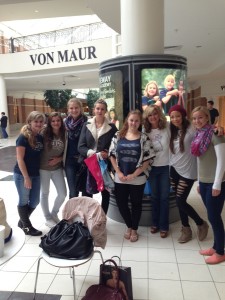
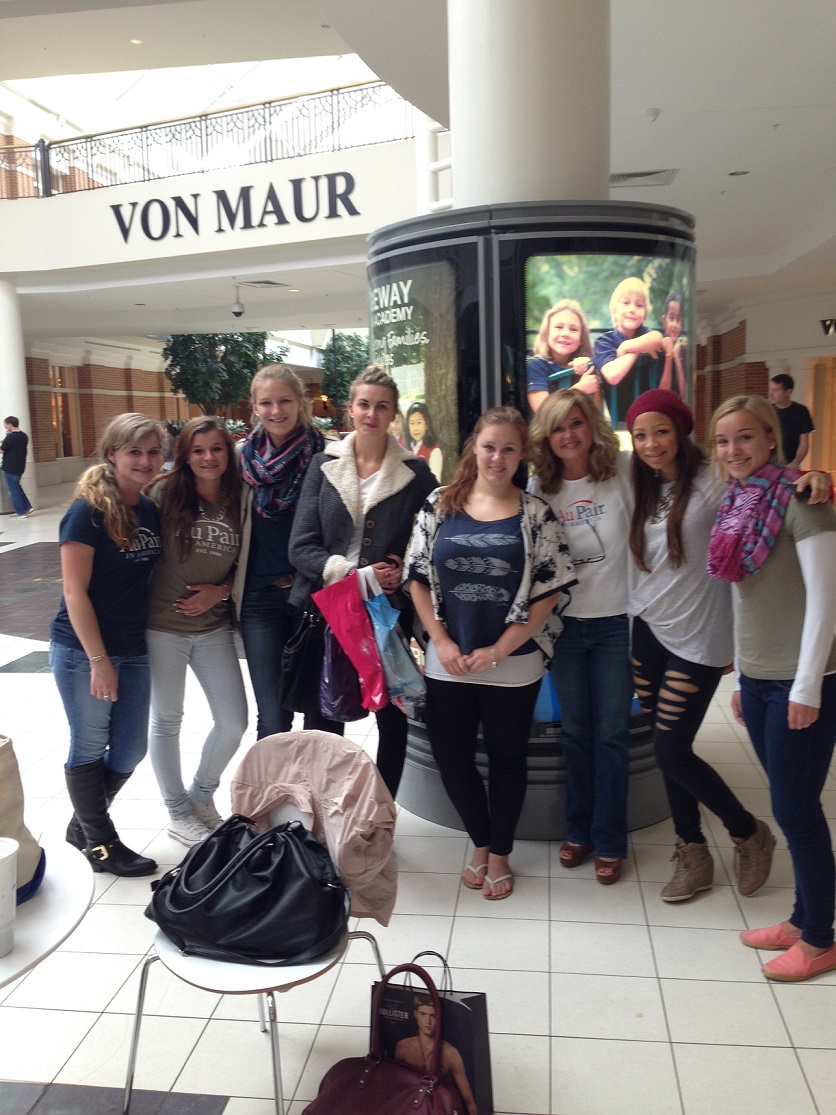
Au Pairs at the Mall with CC


Alcohol – The drinking age in most states is 21. Yes, you used to be able to drink in your country – but you can’t drink here if you are under 21. If you are supposed to get a ride home with someone who has had too much to drink – find another way! If you get caught drinking and driving you have to go home!


Boyfriends – Some host families will not like the idea of you having a boyfriend – they will feel threatened by the time he takes away from them. It is best to be honest and find out about their rules regarding your boyfriend picking you up at their home (they may not want him to even have their home phone number – let alone their address). Don’t ever expect your host family to allow your boyfriend to spend the night.


Buddy – Be a buddy to the new au pairs that arrive! Please remember how it felt for you in those first days! Call new au pairs to say hello, take them out for coffee or to bring them to their first cluster meeting.


Car – The car is a privilege not a right. Please do not demand the car – there may be times when you do not have access to one (bad weather, other car not working, au pair car being repaired). Do not drive and use a cell phone at the same time! Never, ever – leave the children unattended in the car!!


Community Counselor – Your community counselor is here to help you to have a wonderful year. If you need advice about anything – call! Remember you can talk to your counselor on the phone. Many au pairs feel they need to discuss something – face to face – that is not necessary. Sometimes it is more important to talk immediately – than to wait for a convenient time for both of you to meet.


Cluster Meetings – A successful au pair will come to the monthly cluster meetings and stay connected to her counselor and the other au pairs. If you don’t come to the meetings – I don’t get to know you and there may be a time during your year that it is critical to you that I do know you!!


Downloading – Do not download anything on to your host family’s computer without their permission.


Eating – Au Pairs complain about gaining weight during their year here – portions are much larger – and it’s easy to gain weight. Be careful, eat right and make sure you get enough exercise.


Friends – Unbelievable as it may sound friends can cause problems. Make sure that they are respectful of your host family’s rules, too.


Grooming – Silly as it may seem to you – Americans shower everyday and change their clothes everyday. You will be expected to do the same.


Homesickness- It is very normal to feel homesick! The first 2 weeks to a month can be very challenging for you! Give yourself time and understand that your feelings are very normal!


Internet – You should never be on the internet when you are taking care of the host children. They deserve your undivided attention. Ask your host family when it is convenient for you to be on the internet. For some families you will be tying up their phone line – please be respectful and don’t stay on for hours and hours. Never give out information about yourself or your host family in a CHAT ROOM – it is very dangerous!!


Jerks – You will meet a lot of jerks while you are here in the United States. Don’t trust everyone you meet – don’t give out your host family’s number until you truly know the person – and with your host family’s permission.


Listening – Listen to the needs of your host children and your host parents. Keep the lines of communication open.


Money – Don’t spend all of your money every week! It is not a good idea to live paycheck to paycheck, ever! Have money on hand for unexpected expenses – insurance deductibles (medical and car – in case of illness or a car accident), extra college costs, clothes, Starbucks, phone bills – the list can go on and on.


Negotiate – If you are unhappy with anything – you must communicate this to your host family. You many not want to do this when you have just arrived to their home – but after you have earned their trust and respect. Remember – if you want a rule to change – even after discussion it may not change. Some things are not negotiable!


Overwhelmed – If ever you are feeling overwhelmed – speak up immediately. Some times you just need to talk about it – and you will feel better.


Phone – You should never be on the phone during your work hours. Don’t monopolize your host family’s telephone line for hours at a time. If they have call waiting – answer it – if it is for your host family get off the phone and let them know they have a call. Take good messages if you answer the phone and your host family is not available.


Quiet – Be respectful of the hours that your host family is putting the children to bed and when they are going to bed, too. Noise should be kept to a minimum and no calls should come in after 9:00.


Responsible – Your host family has given you the responsibility for their children. Please take good care of them and always put their needs above yours during your working hours.


School – You are required to attend classes for six semester hours or its equivalent (80 hours) at an accredited U.S. post secondary institution.


Trustworthy – Be honest with your host family – if you feel you must lie to them – it is not a good match. Talk to your counselor about your feelings.


United States of America – May this year here be one of the best of your life. You are responsible for your destiny here. This year is what you make it. Don’t sit around and complain to other au pairs – and do nothing about your unhappiness. Sometimes it is just a change of attitude that is necessary.


Vacation – Vacations need to be mutually agreed upon. Talk to your host family about when a good time for you to vacation will be.


Work/Study/Play – The best au pairs find a balance between their work as an au pair, their school and their free time. Obviously, your host family’s primary concern is that their children are being cared for by a responsible adult.


X-Rated – Attitudes regarding sex may be very different in your country. Please be aware of what is appropriate viewing for children in America.


Yo Yo – This year will be filled with ups and downs. If you understand that – it will make things a lot easier.


ZZZZ – Make sure you get enough sleep! You need to be on top of your game everyday!!

stonemountain

Halloween in the USA ( information and safety tips)

Halloween in the USA!            Happy_halloween_design_background

Halloween, the last day of October, has a special significance for children, who dress in funny or ghostly costumes and knock on neighborhood doors shouting “Trick or Treat!” Pirates and princesses, ghosts and witches all hold bags open to catch the candy or other goodies that the neighbors drop in.

Since the 800’s November 1st is a religious holiday known as All Saints’ Day. The Mass that was said on this day was called Allhallowmas. The evening before became known as All Hallow e’en, or Halloween. Like some other American celebrations, its origins lie in both pre-Christian and Christian customs.

Today school dances and neighborhood parties called “block parties” are popular among young and old alike. More and more adults celebrate Halloween. They dress up as historical or political figures and go to masquerade parties. In larger cities, costumed children and their parents gather at shopping malls early in the evening. Stores and businesses give parties with games and treats for the children. Teenagers enjoy costume dances at their schools and the more outrageous the costume the better! Certain pranks such as soaping car windows and tipping over garbage cans are expected. But partying and pranks are not the only things that Halloweeners enjoy doing. Some collect money to buy food and medicine for needy children around the world.

Symbols of Halloween

Halloween originated as a celebration connected with evil spirits. Witches flying on broomsticks with black cats, ghosts, goblins and skeletons have all evolved as symbols of Halloween. They are popular trick-or-treat costumes and decorations for greeting cards and windows. Black is one of the traditional Halloween colors, probably because Halloween festivals and traditions took place at night. In the weeks before October 31, Americans decorate windows of houses and schools with silhouettes of witches and black cats.

Pumpkins are also a symbol of Halloween. The pumpkin is an orange-colored squash, and orange has become the other traditional Halloween color. Carving pumpkins into jack-o’-lanterns is a Halloween custom also dating back to Ireland. A legend grew up about a man named Jack who was so stingy that he was not allowed into heaven when he died, because he was a miser. He couldn’t enter hell either because he had played jokes on the devil. As a result, Jack had to walk the earth with his lantern until Judgment Day. The Irish people carved scary faces out of turnips, beets or potatoes representing “Jack of the Lantern,” or jack-o’-lantern. When the Irish brought their customs to the United States, they carved faces on pumpkins because in the autumn they were more plentiful than turnips. Today jack-o’-lanterns in the windows of a house on Halloween night let costumed children know that there are

goodies waiting if they knock and say “Trick or Treat!”   HallHallow halloween buckets

Information obtained: http://usa.usembassy.de/holidays-halloween.htm

Halloween Safety Tips:

Safety is a very important issue for Halloween.   This is the most popular holiday for children who are able to go from door to door showing off their choice of costume for this year, collecting candy from the neighbors. For au pairs there are issues to consider that may not have been encountered before. I have put together some reminders to help make this holiday fun and safe. HAPPY HALLOWEEN!! 

-Children should always be supervised by an adult when going “Trick or Treating”.

-Only go to those homes that are known in the neighborhood to be safe participants.

-Never let a child go inside the neighbor’s home unless you know the person.

-Always check the candy before letting children eat it. Make sure that anything that has been unwrapped, home made or just does not look safe is thrown away. Ask the parents about this.

-When driving please slow down, as there will be a lot of children out in the dark. They may not be visible.

-Talk to the children about safety during Halloween. (crossing the street, talking to strangers and waiting until their candy is checked before they eat it).

-Children may want to use a flashlight to see in the dark, this is also a good way for them to be seen by drivers.

-If you have any safety concerns, talk to the parents.  

-Ask the parents about rules for candy consumption for the children. Most parents will not want their children to gorge themselves with a lot of candy at one time. Usually parents will let children have a couple of pieces a day.

-Enjoy yourself.   Halloween is a fun holiday for adults too! You may want to dress up with the children. Don’t forget to take lots of photos.

Fun Halloween Snacks!

Monster Mouths

Youngsters will go batty over these apple-and-peanut butter treats, perfect for Halloween parties.

Big mouth recipe

What you will need:

  • 2 medium green or red apples
  • 1/3 cup peanut butter
  • 1/3 cup candy corn

Directions

Core apples; cut each into 8 thick slices. Make each mouth by spreading about 1 teaspoon of the peanut butter on an apple slice. Add about 5 pieces candy corn for teeth.

Spread another apple slice with about 1 teaspoon peanut butter; press on top of first apple slice. Makes 4 servings.

A mobile App for information about your Au Pair insurance!

myCISI iPhone app is free for our insureds and provides instant access to many features. This works for android phones as well.CISI Mobile APP Flyer

sick

Options for care- What an au pair needs to know!

Au pairs can go to mini clinics for a number or illnesses:

Colds, flu, Cold sores, ear infections

Coughs, headaches, migraines, insect bites, head lice

Urinary tract infections, Sinus infections, rash, Ringworm,

Upper respiratory infections, Pink eye, skin irritations

Stomach aches, diarrhea, nausea and vomiting

Seasonal Allergies

Some examples of mini clinics are:

Urgent Care Center

Walk in clinic

CVS Minute Clinics

Walgreens Take Care Clinics

Walmart Clinics

Target Clinics

Kroger Clinics

Primary Care Physician office (This is will require an appointment and might not be available on the same day or after hours)

Mini clinics are open after hours and late hours and do not require an appointment. When visiting these clinics or physicians office please direct receptionist to look on back of card for details of your net work. You are a part of the First Health Network.

To Search for a doctor or clinic in your immediate area go to www.culturalinsurance.com and use the U.S Search Provider Tool.

The Customer Service department is available Monday-Friday 9am-5pm Standard Time at 1-800-303-8120 or Claimhelp@culturainsurance.com

For emergencies outside normal hours Team Assist is available at 312-935-1703

Au Pairs should avoid using the Emergency Room if the condition is not life threatening.

Three Reasons you should avoid using the Hospital emergency Room for non-threatening illnesses:

  1. A 500.00 deductible will be charged if you seek medical care in an Emergency room for an illness that is not deemed to be an emergency. This 500.00 deductible will be charged whether you have the upgraded insurance or the basic insurance. Basic insurance already has a 100.00 deductible, so this would make a 600.00 charge for basic insurance users.
  2. Typically the wait for treatment in an emergency room will be long.
  3. Hospital emergency rooms are for those with true life threatening injuries or illness. It is important to keep medical coverage available for those who need this care.

Of course, if you are experiencing a true, life threatening emergency, treatment should be sought in an emergency room!

Information was obtained at
www.culturalinsurance.com

English For International College – Au Pair English Program.

Au Pair English Program

All Au Pairs in Metro Atlanta and beyond are welcome to participate in these classes.  The Au Pair English Program is offered in the morning and evening.  We offer the required CEUs and credit hours for Au Pairs who complete our English program successfully.  CEUs and credit hours are earned in two terms (4 months). Call to find out when the next placement test is given and when classes will start.

Contact Information:

This School is authorized under federal law to enroll nonimmigrant students
Copyright © 2013 English for Internationals
575 Colonial Park Drive | Roswell, GA 30075 | (p)770-587-9640 | (f)770-587-0427

http://eng4intl.com/

We offer two schedules:

2 Days/Week

  • Monday/Wednesday     9:00am – 11:15am
  • 1 Class:  Grammar

2 Nights/Week 

  • Tuesday and Thursday            7:45pm – 10:00pm
  • 1 Class:  Grammar

Placement test/Levels

Classes are divided into levels and each student takes a placement test before classes begin to determine their level.  Seven levels are offered from Beginner to the Advanced level.   Each level is completed in 8 weeks.

Cost

The cost of the Grammar class is $250 and approximately $60 for books.

An online option for class through UCLA.

picture of teacher

APIA Advantage includes American Studies Online, an academic program offered by UCLA Extension, as well as a community involvement component developed and monitored by Au Pair in America

This is a super option for an Au pair whose schedule is not a good fit for traditional classes. It is also great to avoid the stress of driving at rush hour traffic for your class! This class provides the full 80 hours of education and costs $500.00. There is a short presentation to a young child’s class room called a Global Awareness presentation. This is an easy 15 minute presentation about your country. Au Pair In America provides coaching and resources for this presentation.

The next UCLA class – American Studies Online –  will run from September 19, 2016 – February 13th, 2017.

Registration is currently open 

How to Enroll: Visit www.uclaextension.edu/aupairs

For more information read the flyer link below.

APIA Advantage flyer

**This class requires a high level of  English skill.

Free ESL classes offered through Lanier Technical College

Lanier Technical College also offers Free ESL and GED classes. Call the number below for information about the next placement exam and the locations for the classes. Not all classes will be taught at the testing location.

There is no tuition charge for Adult Education and ESL classes. Books are provided free for classroom use. There is a $160 fee for the GED Tests. For further information on Adult Education, call 770.531.6363 between 8:00 a.m. and 6:00 p.m. Monday through Thursday or call one of our eight county locations:

Placement Testing Sites. ( may not be where the actual class is taught. )

  • Dawson County Adult Education Center
    408 Highway 9 North
    Dawsonville, GA 30534
    706.265.1690
  • Forsyth County Adult Education Center
    3410 Ronald Reagan Blvd
    Cumming, GA 30041
    770.781.6987 (Lanier Technical College Forsyth Campus)
  • Gainesville-Hall County Adult Education Center (ESL only)
    4 1/2 Stallworth St.
    Gainesville, GA 30501
    770.531.6410
  • Wood’s Mill Adult Education Center (GED only)
    719 Woodsmill Road
    Gainesville, GA 3050
  • Lumpkin County Adult Education Center
    150B Johnson Street
    Dahlonega, GA 30533
    706.867.2862


Free ESL classes in Milton (North Alpharetta)

For more information about the registration dates for the Free ESL classes offered through Gwinnett Tech, please see the link below. This is a great option for a first class. This will give you a chance to improve your English skills and think about what you would like to take next. Count up the number of hours you spend in class and that is the number of hours you can deduct from the 72 minimum hours required by the State Department for your Au Pair program.

ESL Locations
Gwinnett Technical College
Lawrenceville Campus
5150 Sugarloaf Pkwy
Lawrenceville, GA 30043
Monday, Tuesday, Wednesday choose from one of the following time slots:
9 a.m.-12 p.m.
12:30-3:30 p.m.
6:00-9:00 p.m.
Friday or Saturday
9 a.m.-3:30 p.m.

Milton Center (North Fulton) 86 School Drive Alpharetta, GA 30009

Monday, Wednesday, Friday 9 a.m.–12:30 p.m. or Monday, Tuesday, Wednesday 6:00–9:00 p.m

2016-0029 esl fall classes flyer (oct)_072915 revised

Sun and Water Safety Tips

quickpoolfun3.bmp

Sun and Water Safety Tips


Keep your family safe this summer by following these tips from the American Academy of Pediatrics (AAP).

Click here for the Spanish Version.

FUN IN THE SUN

Babies under 6 months:

  • The two main recommendations from the AAP to prevent sunburn are to avoid sun exposure, and to dress infants in lightweight long pants, long-sleeved shirts, and brimmed hats that shade the neck to prevent sunburn. However, when adequate clothing and shade are not available, parents can apply a minimal amount of sunscreen with at least 15 SPF (sun protection factor) to small areas, such as the infant’s face and the back of the hands. If an infant gets sunburn, apply cool compresses to the affected area.

For All Other Children:

  • The first, and best, line of defense against harmful ultraviolet radiation (UVR) exposure is covering up. Stay in the shade whenever possible, and limit sun exposure during the peak intensity hours – between 10 a.m. and 4 p.m.
  • Wear a hat with a three-inch brim or a bill facing forward, sunglasses (look for sunglasses that provide 97% -100% protection against both UVA and UVB rays), and clothing with a tight weave.
  • On both sunny and cloudy days use a sunscreen with an SPF 15 or greater that protects against UVA and UVB rays.
  • Be sure to apply enough sunscreen — about one ounce per sitting for a young adult.
  • Reapply sunscreen every two hours, or after swimming or sweating.
  • Use extra caution near water and sand (and even snow!) as they reflect UV rays and may result in sunburn more quickly.


HEAT STRESS IN EXERCISING CHILDREN

  • The intensity of activities that last 15 minutes or more should be reduced whenever high heat or humidity reach critical levels.
  • At the beginning of a strenuous exercise program or after traveling to a warmer climate, the intensity and duration of outdoor activities should start low and then gradually increase over 7 to 14 days to acclimate to the heat, particularly if it is very humid.
  • Before outdoor physical activities, children should drink freely and should not feel thirsty. During activities less than one hour, water alone is fine. Kids should always have water or a sports drink available and take a break to drink every 20 minutes while active in the heat.
  • Clothing should be light-colored and lightweight and limited to one layer of absorbent material to facilitate evaporation of sweat. Sweat-saturated shirts should be replaced by dry clothing.
  • Practices and games played in the heat should be shortened and there should be more frequent water/hydration breaks. Children should promptly move to cooler environments if they feel dizzy, lightheaded or nauseous.


HEAT STRESS IN INFANTS

Infants and small children are not able to regulate their body temperature in the same way that adults do. Every year, children die from heat stroke from being left in a hot car, often unintentionally, with the majority of these deaths occurring in children 3 and under. Here are a few tips for parents when traveling in a car with infants or young children:

  • Always check the back seat to make sure all children are out of the car when you arrive at your destination.
  • Avoid distractions while driving, especially cell phone use.
  • Be especially aware of kids in the car when there is a change from the routine, ie. someone else is driving them in the morning, you take a different route to work or child care.
  • Have your childcare provider call if your child has not arrived within 10 minutes of the expected arrival time.
  • Place you cell phone, bag or purse in the back seat, so you are reminded to check the back seat when you arrive at your destination.

POOL SAFETY

  • Never leave children alone in or near the pool or spa, even for a moment; close supervision by a responsible adult is the best way to prevent drowning in children.
  • Whenever children under age 5 are in or around water, an adult – preferably one who knows how to swim and perform CPR – should be within arm’s length, providing “touch supervision.”
  • Install a fence at least 4 feet high around all four sides of the pool. The fence should not have openings or protrusions that a young child could use to get over, under, or through.
  • Make sure pool gates open out from the pool, and self-close and self-latch at a height children can’t reach. Consider alarms on the gate to alert you when someone opens the gate. Consider surface wave or underwater alarms as an added layer of protection.
  • The safest fence is one that surrounds all 4 sides of the pool and completely separates the pool from the house and yard. If the house serves as the fourth side of the fence, install an alarm on the exit door to the yard and the pool. For additional protection, install window guards on windows facing the pool. Drowning victims have also used pet doors to gain access to pools. Keep all of your barriers and alarms in good repair with fresh batteries.
  • Keep rescue equipment (a shepherd’s hook ­– a long pole with a hook on the end — and life preserver) and a portable telephone near the pool. Choose a shepherd’s hook and other rescue equipment made of fiberglass or other materials that do not conduct electricity.
  • Avoid inflatable swimming aids such as “floaties.” They are not a substitute for approved life vests and can give children and parents a false sense of security.
  • Children over age 1 may be at a lower risk of drowning if they have had some formal swimming instruction. However, there is no evidence that swimming lessons or water survival skills courses can prevent drowning in babies younger than 1 year of age.
  • The decision to enroll a child over age one in swimming lessons should be made by the parent based on the child’s developmental readiness and exposure to water, but swim programs should never be seen as “drown proofing” a child of any age.
  • Avoid entrapment: Suction from pool and spa drains can trap a swimmer underwater. Do not use a pool or spa if there are broken or missing drain covers.  Ask your pool operator if your pool or spa’s drains are compliant with the Pool and Spa Safety Act. If you have a swimming pool or spa, ask your pool service representative to update your drains and other suction fitting with anti-entrapment drain covers and other devices or systems. See PoolSafely.gov for more information on the Virginia Graeme Baker Pool and Spa Safety Act.
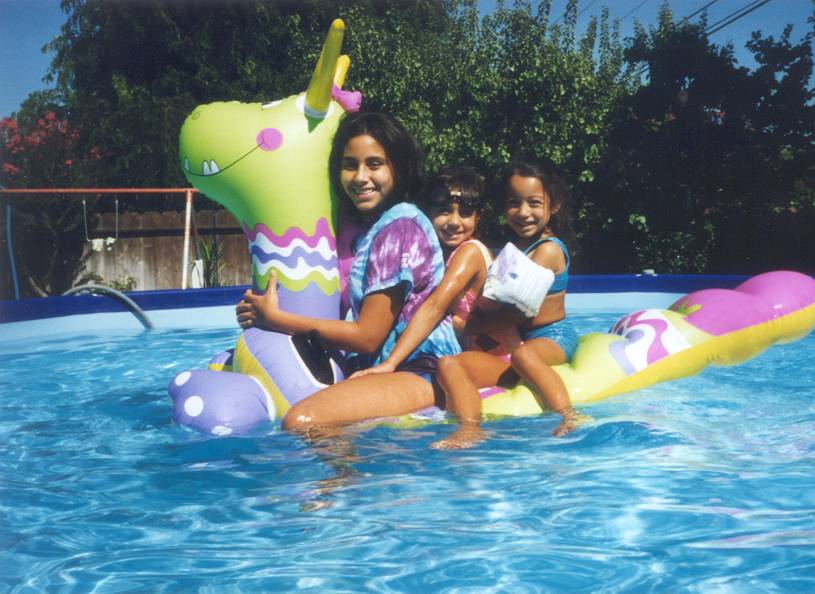
  • Large, inflatable, above-ground pools have become increasingly popular for backyard use. Children may fall in if they lean against the soft side of an inflatable pool. Although such pools are often exempt from local pool fencing requirements, it is essential that they be surrounded by an appropriate fence just as a permanent pool would be so that children cannot gain unsupervised access.
  • If a child is missing, look for him or her in the pool or spa first.
  • Share safety instructions with family, friends and neighbors.

– See more at: https://www.aap.org/en-us/about-the-aap/aap-press-room/news-features-and-safety-tips/Pages/Sun-and-Water-Safety-Tips.aspx#sthash.dmJsgr9D.dpuf