
Category Archives: Child Care

Helping Young Children Learn Language

Being an au pair is an important role in a child’s life. When you are caring for a young child up to 45 hours per week, there are lots of opportunities to help them learn language. Many host parents are eager for their children to be exposed to foreign language. If this is true of your host parents, you can try the suggestions below, in both English and your native language.
Below are a few tips to start with, for more ideas, check out Ready at Five.

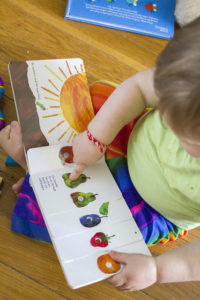
  • Read – Read to them daily, point out pictures and ask questions. Even if they can’t answer the questions, this is still modeling conversation.
  • Talk – Point out objects around them, names of their body parts, explain what you are doing and places you are going. Long before babies can speak, they benefit greatly from being spoken to.
  • Sing – You can sing childhood classics or make up your own silly songs. If you are looking for song ideas, HERE is a great website with lists of songs, lyrics and links to YouTube videos* of the songs.  Children’s music is also available at the public library and even on iTunes.
  • Words – As children move from toddlers to preschoolers begin to point out written language.
  • Writing – Toddlers and preschoolers can begin to learn pre-writing skills by drawing with crayons or doing finger paints.

*The American Academy of Pediatrics recommends no screen time for babies under 18 months of age. For children 18 months to 5 years they recommend no more than 1 hour of high quality content. You can play the songs on youtube for the audio and not necessarily show the screen to the child.

Photo: Quinn Dombrowski (Flickr)

Handling Expenses

Host parents often ask for suggestions on how best to handle common expenses that occur as au pairs are caring for the children.

Miscellaneous Expenses

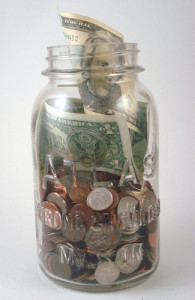
There are different ways to handle the little day to day expenses that come up.  Things like when an au pair takes the kids out for ice cream or picks up a gallon of milk.  Some families keep a cookie jar fund, a little cash that they set aside weekly or monthly for these types of expenses. Others give their au pair a prepaid debit card for this purpose. Below are some suggestions for avoiding problems with expenses.

Host Families

  • It’s important to be clear about how long this money should last and what types of expenses are approved.
  • Let the au pair know whether or not you expect receipts.

Au Pairs

  • Only spend the money on approved expenses.
  • If it is something you are not sure about, ask first.
  • Put your receipts in the cookie jar in place of the money to avoid any confusion.

Gas and Fare Cards 

Host families are responsible for the au pair’s transportation costs: to and from classes, cluster meetings and when driving the kids.

It is a good idea to figure out how much gas an au pair will use for these trips and either put gas in the car or give a gas allowance.   If your au pair is riding to classes or cluster meetings with another au pair, you should offer to share the cost of gas.

Au pairs are responsible for their own transportation at all other times.  You should replace the amount of gas used for personal use.

Photo: Andrea Travillian

Homework

Homework Hassles

Once school begins, children of all ages have homework.  Some children complete their homework without any adult help while other children need lots of help.

Homework is very important because it helps children practice and strengthen academic skills, teaches time management, initiative, self-reliance, and resourcefulness.  Homework also teaches children responsibility, the sense of accountability for mistakes and successes, and it gives them a sense of autonomy as teachers assign tasks to them rather than the parents or the Au Pair.

Support, encouragement and guidance are key in helping a child finish homework assignments.  What works for one child may not work for another.  Here are a few ideas that might be useful when dealing with homework:

*Decide on a quiet place to do homework.

*Check with host parents if the television or stereo can be on while studying.

*Talk about a reasonable homework schedule.  Should homework be done after school or after dinner?

*Should privileges be removed from a child that procrastinates?

*Can the child talk on the telephone or play with friends before they work on homework?

*Give the child a reasonable break.  Some children can sit for an hour and do homework while others can only concentrate for fifteen minutes.

*Are there consequences for not doing homework?

*How much assistance should the au pair provide if the child asks for help?

Also:

*Be patient.  Homework situations can be frustrating for the child and au pair especially if the situation turns into a power struggle.

*Do NOT get angry with the child.  Discuss your frustrations with the host parents.

*Let host parents know if the quantity of the homework is overwhelming for the child.

*Show enthusiasm when the child puts forth a good effort.

*Do NOT do the homework for the child.

With these in mind, helping a child do homework should be much easier and more productive.

Please remember:  Most of you have been trained in British English rather than American English.  You may encounter words that are spelled differently here than what you originally learned – such as color (colour), pajamas (pyjamas), plow (plough) and harbor (harbour).  When in doubt, check a dictionary.

Children's Spring Craft


Handprint Lilies

Age 5+ can do this project pretty much solo (you may want to help them form cones from the handprints, depending on how crafty they are).  Any age from baby on up can contribute handprints for the project.

Materials:

  • construction paper  (green for leaves and a flower color)
  • straw
  • scissors
  • pencil
  • scotch tape
  • OPTIONAL:  pipecleaner

Instructions:

  • trace child’s hand onto a piece of construction paper, rounding out the palm
  • cut out the handprint

  • roll the palm into a cone and tape.  Don’t worry about the hole being too small, we can snip it open a bit if needed.

  • Cut pipecleaner into 1/4s.
  • Fold into a V shape
  • Push V into end of straw and put a piece of tape around.
  • Curl a bit.

  • Put end of straw into flower and push through so the pipecleaner is inside the flower.
  • Wrap each finger around a pencil to curl.

  • Cut a long leaf shape out of green construction paper and tape onto the straw.  Curl the leaf like you did the fingers.
  • We put two leaves on each stem.
  • An odd number of flowers always seem to look nicer in a vase.

Back to School Tips

Back to School Tips

School has started again. It is time to go over a few, simple rules.

School_Bus_Cartoon_1

Going back to school often means changing schedules and duties for au pairs.   It’s a good idea to sit down with your host family and talk about the new year’s schedule.

Make sure you understand the host family’s expectations for school lunches and homework.

If necessary, get familiar with the busing system and the car line rules at school.  Please never let children walk between the cars.  If you drive, please make sure you know the directions and how long it takes to get there.  It might be good to practice the drive before school starts.  Please make sure to observe the speed limit in school zones.  Never pass a school bus when traveling in either direction when it is stopped and the bus stop sign is out.

Children bring home papers and information every day.  Please make sure you have a designated place to put them so that your host parents can see them when they come home.