Author Archives: Christine Connally

Car Seat Safety is a Shared Responsibility

By Christine Connally

In Maryland, Washington DC and Virginia the laws state that children under age 8 must be secured in a car seat or booster seat that is appropriate for their age, weight and height. Children over age 8 must be properly secured in a vehicle seat belt. (That is more lax than best practice recommendations which suggest children ride in a booster seat until they fit safely into a vehicle seat belt and their feet touch the vehicle floor. This will vary by child and vehicle more than age.)

Car seats and booster seats save lives, there is no doubt about it. But, just having the car seat in the car is not enough.  Car seats and booster seats can only save lives if they are properly installed and used.

Host Parents

  • It is your responsibility to show the au pair how to properly use your car seats and/or booster seats.
  • If you expect her to change seats to different vehicles, show her how to install them properly.
  • If you do not want her to remove and re-install car seats, make that expectation clear.
  • Even if the au pair has a separate car that she is the only one driving the kids in, please check the installation of the seats periodically.

Au Pairs

  • You are responsible for making sure that you understand how to buckle the children safely in their seats and be sure that they are safely buckled in every time you take them in the car with you.
  • The car should not move unless everyone is buckled.
  • Make it a habit to check the seats each time you put the children in to see that the seat is secure and not too loose.
  • If the seat is not working properly or you cannot figure out how to get it tight, ask your host parents as soon as possible.
  • If your host parents have asked you not to remove the car seat(s), please follow that rule.
  • If you need to remove the seat for some reason, ask them for help putting the seat back in.

If you need help installing car seats, find a car seat inspection station near you: http://www.nhtsa.dot.gov/cps/cpsfitting/index.cfm

Image: Parents Central

Image: Parents Central

Healthy Eating

Your orientation trainer probably spoke of the 5 kilos au pairs typically gain during the year. If you feel your jeans getting too tight, try these simple tips

  • Eat breakfast – it’s the best way to start the day, things like eggs and oatmeal are filling and healthy.
  • Snack with fruits, vegetables or protein and fiber power bars.
  • Drink water – 6 glasses or more a day, more when it is hot or when you are active.
  • Downsize your portions – how much you eat is as important as what you eat.
  • Avoid highly-processed foods.
  • Walk or jog with friends, sign up for a dance class, find a sports league, join a YMCA or gym.
  • Avoid going shopping for larger-sized clothes.

    Photo: torbakhopper (Flickr)

    Photo: torbakhopper (Flickr)

DC Metro Area Cultural Fair – Mega Success!

By Victoria Patton

A Cultural Fair is considered a success when over 200 Au Pairs have a fantastic time representing their countries by hosting a country table, performing or face painting. It is considered a mega-success, however, when an additional 1000 guests (host parents and children, general public and VIP’s) attend and walk away having really enjoyed themselves amongst the energy that brings people together through the Au Pair in America program.

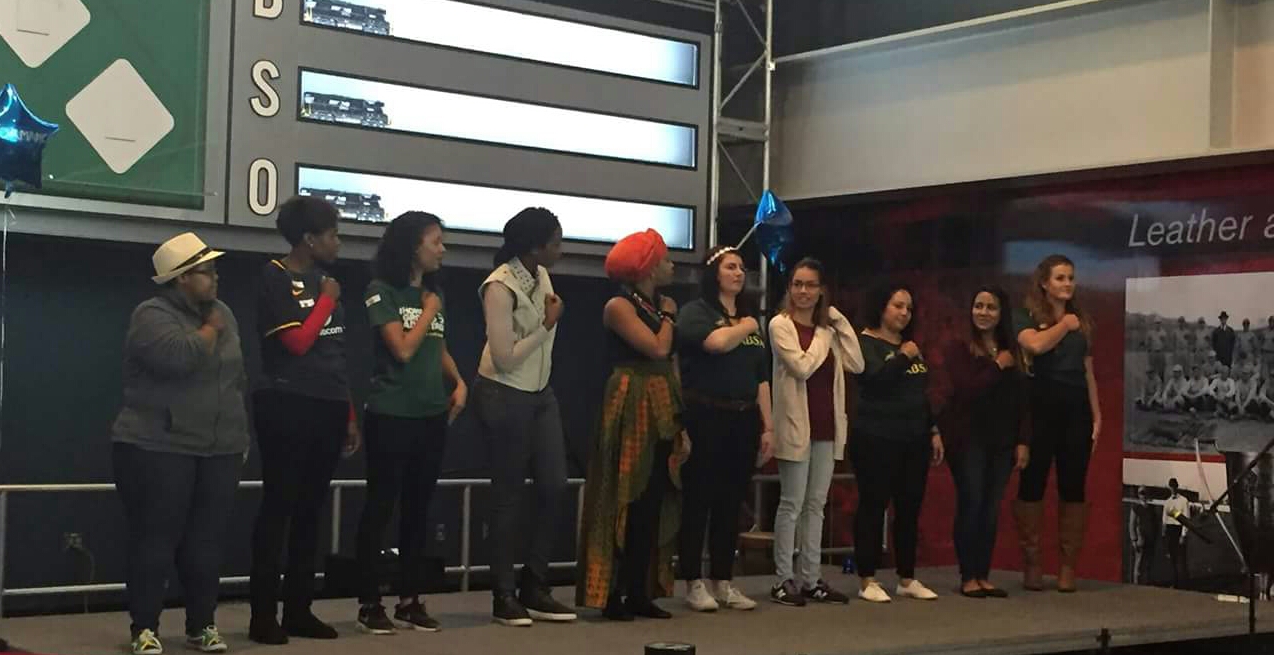
On Sunday, May 1st, Au Pairs from 36 countries, enthusiastically welcomed all those who stopped at their tables. The energy was palpable for all 3-hours of the DC Metro Area Cultural Fair 2016 at Nationals Park.

Throughout the afternoon we were treated to wonderful performances too:southe Africa

perf 4Costa Rican Au Pairs sang in Spanish “Beautiful Costa Ricans,” and “Sugar Cane”.  performance 1perf 2


performance


Thai Au Pairs danced in their national perucostumes to “Fawn Thai” a traditional Thai folk dance

Singer Marion Raffin of France performed a solo of the classic “La Vie En Rose”.

Lillian Tshabalala of South Africa sang several solos in Zulu including: “Qongqothwane – Beetle”, “Mama Thembu – a Wedding Song”, and “Malaika – My Angel”.

Zane Feldmane from Latvia presented “Bedu Manu Lielu Bedu or Trouble My Grefacepaintingat Trouble”.

Two singers from Poland gave us “Nie Mam Nic – I Have Nothing” and “Czas Nas Uczy Pogody – Time Teaches Us Serenity”.

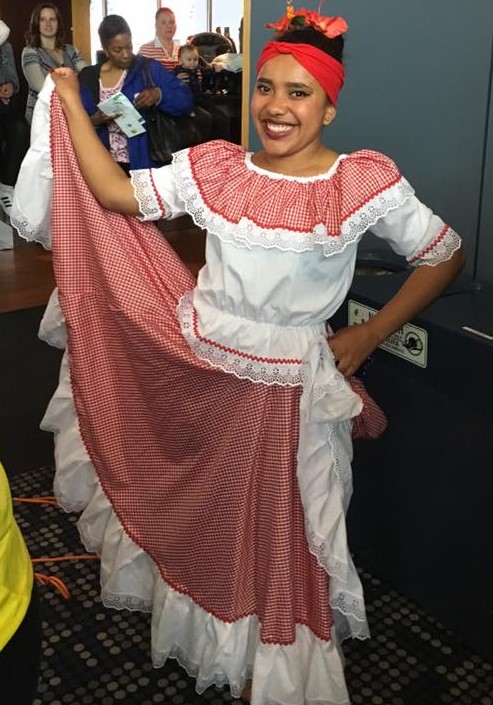
Colombia rounded-off the performances with “Checumbia” a traditional Colombian folk dance and several songs.perf 3

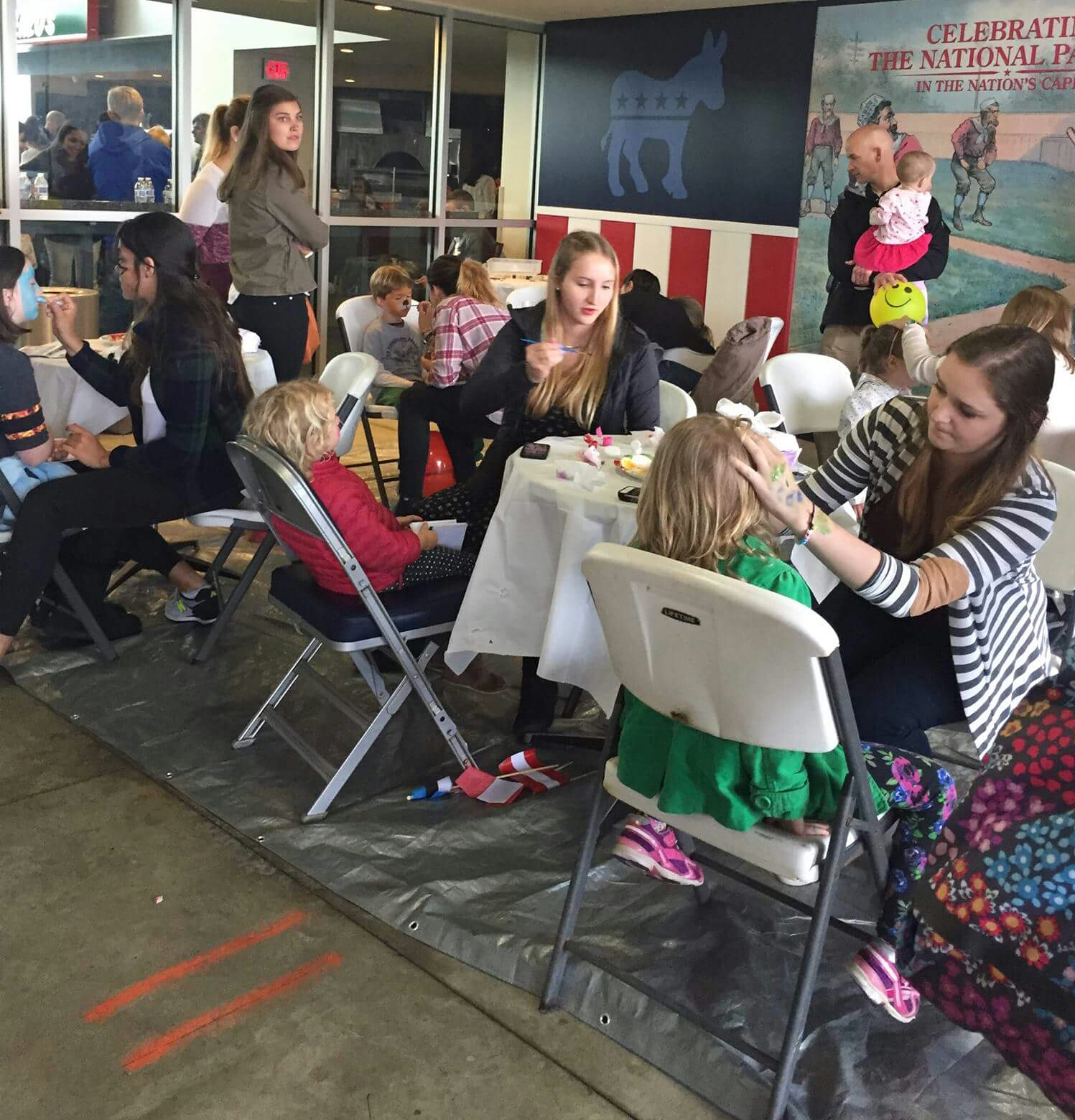
Children visiting each received a passport anlqtviad it was quickly filled with country, flag stickers as they “traveled the world”.  Some kids colored place mats to take home and others, still, wore home some fun face painting designs and globe tattoos.

poland

Over 30 DC Metro area Community Counselors (from Richmond to Baltimore, Cabin John to Virginia Beach) worked from March to May to organize all the pieces that went into the Fair. On this cool May afternoon, they all posed for a quick group photo having made a significant contribution to a fun event and the spirit of international understanding.

ccs


Holiday and Vacation Reminders

With Memorial Day almost here, I wanted to remind everyone about program rules on holidays and vacations.

Holidays

  • Host families are NOT REQUIRED to give au pairs any specific holidays.
  • Each host family will make different arrangements on holidays, some au pairs will be off and others will be required to work.
  • Au pairs should NOT make plans for holidays without checking with your host family FIRST.

luggage maliasVacation

  • Au pair earns 2 weeks of paid vacation during the course of her year.
  • The host family can pick a week and the au pair can pick a week, if an agreement is not reached.
  • All vacation should be preplanned (at least 4 weeks in advance.)
  • All au pair’s friends and/or family visits/vacations should be pre-approved prior to purchasing a ticket.
  • If an au pair travels with their host family, it should be discussed UP FRONT whether this is the au pair’s vacation or if she is working.
  • If an au pair travels with the host family to work, the host family is required to pay for her transportation, lodging and meals.

Important: An au pair MUST have her DS2019 signed PRIOR to her departure from the US. More information about this can be found by selecting the Resources tab on the top of this page and looking under “Travel Links for Au Pairs.”

By Christine Connally

Interested in learning about hosting an au pair?

Interested in learning more about hosting an au pair? Join Au Pair in America on May 1st from 1-4 PM at Nationals Park as we celebrate their 30th anniversary at a DC Regional Cultural Fair.
You’re invited to a fun afternoon of educational country displays, performances by au pairs, a photo-op, face painting, and other fun activities for children. Au pairs from over 30 countries will be participating!
Visit Au Pair in America’s Cultural Fair page to RSVP and learn more information. Free event and free parking. ‪#‎aupairnats‬

What To Do In A Car Accident

By Christine Connally

Whether you are you new to driving in the US or a seasoned driver, never drive without your drivers license and remember to keep other essential documents in the car glove box. These items will be necessary if you are stopped by a police officer or have an auto accident. Not having these items can result in your receiving a ticket (citation) from a police officer. If you are involved in an accident, call the police and your Host Family immediately.

Car accident

Photo: Morgan (Flickr)

Essential Documents

If you have an accident: (from Edmunds.com)

  1. Keep Safety First. Drivers involved in minor accidents with no serious injuries should move cars to the side of the road and out of the way of oncoming traffic. Leaving cars parked in the middle of the road or busy intersection can result in additional accidents and injuries. If a car cannot be moved, drivers and passengers should remain in the cars with seatbelts fastened for everyone’s safety until help arrives. Make sure to turn on hazard lights and set out cones, flares or warning triangles if possible.
  2. Exchange Information. After the accident, exchange the following information: name, address, phone number, insurance company, policy number, driver license number and license plate number for the driver and the owner of each vehicle. If the driver’s name is different from the name of the insured, establish what the relationship is and take down the name and address for each individual. Also make a written description of each car, including year, make, model and color — and the exact location of the collision and how it happened. Finally, be polite but don’t tell the other drivers or the police that the accident was your fault, even if you think it was.
  3. Photograph and Document the Accident. Use your camera to document the damage to all the vehicles. Keep in mind that you want your photos to show the overall context of the accident so that you can make your case to a claims adjuster. If there were witnesses, try to get their contact information; they may be able to help you if the other drivers dispute your version of what happened.

Sticking around? The in’s and out’s of extension

By Ann Robertson

You’ve been here for a while now, – you know your way around town, you’ve gone to school, made friends, and are having a great American experience. And then . . . the question:

Would you like to extend?

If you have time for it in your life, and you meet the requirements, the extension program might be the right option for you.

The basics: You can choose to extend for 6, 9, or 12 months, and you may choose to extend with your current host family (if they are interested, of course), or with a new family – some au pairs dream of seeing another part of the country, finding different education options, or just experiencing another American family.


Frequently Asked Questions:

MEDICAL INSURANCE:

Your medical policy expires for the first year, and you start your new policy during the year you extend.

For example:

-If your first year began February 2013, your insurance policy is the 2013 policy until Feb 2014.

-If you start your extension in February 2014, you start the 2014 policy in February. (be aware of the changes in the policy look on the blog for the brochure).

Your insurance card expires after one year, so you should receive a printable card when you start your extension year. If you do not receive it call the agency for a new card.

If you purchased the upgrade insurance in your first year, you must purchase it again in the second year.

If you purchased the sports insurance in your first year, it lasts only 12 months from the time you bought it. Depending on when you bought it, you will probably need to purchase it again.

EDUCATION

If you extend for 9 or 12 months you must earn  6 credits again or 72 hours of education to complete the program requirements.

If you extend for 6 months you only need 3 credits or 36 hours of education.


DRIVERS LICENSE

Check on the expiration of your driver’s license, you must renew it before it expires (DO NOT LET YOUR LICENSE EXPIRE). Most likely you will need to renew it before you start your extension year. Check with your new host family for laws in your new destination state.

VACATION

Vacation for a 6 month extension is 6 days.

Vacation for a 9 and 12 month is 2 weeks.

TRAVEL

Check on the expiration date of your visa. If it expires before your second year starts then you should not travel outside of the USA – there is a risk of not being able to return (Canada, and Mexico and contiguous islands are okay to travel to). With the exception that if you return home during your first year after your approval for extension, you can get your visa renewed for another year. You must ask the agency (contact Evelyn Blum) for the paperwork required for this renewal.

Photo: Dafne Cholet (Flickr)

Photo: Dafne Cholet (Flickr)

Childcare Focus: Supervision

Photo: SmartSign (Flickr)

Photo: SmartSign (Flickr)

Whether you are at the park, in the backyard or in the playroom, stay with the children at all times! If you are on duty the safety and well being of the children is your job. If you have a middle-schooler, who is able to walk to and from school, or play outside with friends, you still need to know where he/she is and whether an adult is present. Make plans for when he/she will call you, where you can find him/her, and what time you expect him/her home.

APIA’s 30th Anniversary Cultural Fair

Screen Shot 2016-03-04 at 2.36.22 PM

This year Au Pair in America is 30 years old! As part of our year-long celebration, we are hosting a CULTURAL FAIR at Nationals Park on Sunday, May 1 from 1-4 pm. Bring the kids, friends, neighbors for a day of fun at the Ballpark!  Learn all about different countries and explore the Ballpark when a game isn’t taking place. The event is FREE and Parking is FREE! More details to come.

APIA au pairs from around the world will present cultural information about their home countries through exhibits, costumes, music and dancing, and much more. This video from APIA’s 25th Anniversary Cultural Fair gives you a glimpse of our amazing au pairs and their many countries.