Author Archives: Christine Connally

Daylight Savings Time

During Daylight Savings Time, clocks are turned forward an hour, effectively moving an hour of daylight from the morning to the evening. Today, approximately 70 countries worldwide utilize Daylight Savings Time in at least some portion of the country.  If you don’t come from one of those countries, I am guessing that the idea may seem strange. Before you go to bed on March 13, be sure to set the clocks forward one hour.

Travel Safety Tips

By Christine Connally

As warmer weather comes our way and Spring Break approaches, many of you may have vacation plans. Please consider these tips:  Always leave a number with your host family where you can be reached. If you haven’t made photocopies of your most important documents (passport and visas), remember to do so before you take those documents on a trip. In case of loss or theft, the photocopies cannot substitute for originals, but they may help you get replacement papers sooner.

  • Always have the APIA 24 hour emergency number with you 1 800 928 7247
  • Travel with other au pairs or friends as there is safety in numbers
  • If traveling outside the US get your DS-2019 Travel Validation Form signed
  • Call the consulate of the country you are visiting in case you need a tourist visa
  • Let your counselor know you will be traveling, especially if going outside the US
  • Stay alert
  • Never leave your luggage unattended
  • Don’t put any valuables in luggage that you check
  • Keep your travel tickets, passport and visa in a safe closed bag or pocket, not sticking out of an outer pocket
  • Never carry a large amount of cash
  • Carry your cash separate from your wallet. Keep both in an inner or front pocket
  • Carry handbags and cameras close to you, not hanging by a long strap
  • Don’t put valuables in an easy-to-reach backpack
  • If you are bumped or distracted by a stranger, be aware that a pickpocket may be targeting you.
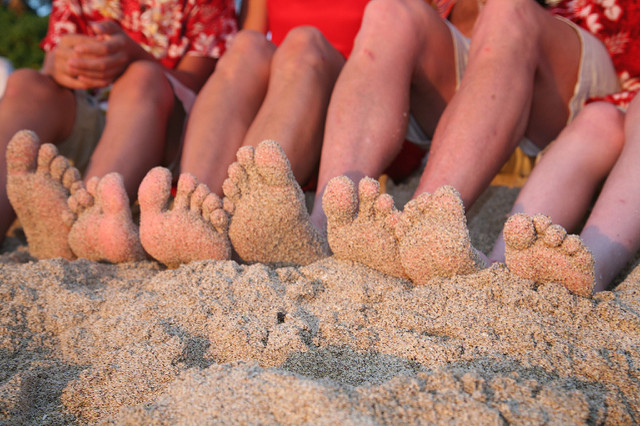
  • Call 911 for police assistance.Family with Sandy Feet

Handling Expenses

Host parents often ask for suggestions on how best to handle common expenses that occur as au pairs are caring for the children.

Miscellaneous Expenses

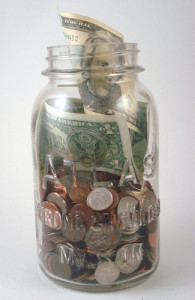
There are different ways to handle the little day to day expenses that come up.  Things like when an au pair takes the kids out for ice cream or picks up a gallon of milk.  Some families keep a cookie jar fund, a little cash that they set aside weekly or monthly for these types of expenses. Others give their au pair a prepaid debit card for this purpose. Below are some suggestions for avoiding problems with expenses.

Host Families

  • It’s important to be clear about how long this money should last and what types of expenses are approved.
  • Let the au pair know whether or not you expect receipts.

Au Pairs

  • Only spend the money on approved expenses.
  • If it is something you are not sure about, ask first.
  • Put your receipts in the cookie jar in place of the money to avoid any confusion.

Gas and Fare Cards 

Host families are responsible for the au pair’s transportation costs: to and from classes, cluster meetings and when driving the kids.

It is a good idea to figure out how much gas an au pair will use for these trips and either put gas in the car or give a gas allowance.   If your au pair is riding to classes or cluster meetings with another au pair, you should offer to share the cost of gas.

Au pairs are responsible for their own transportation at all other times.  You should replace the amount of gas used for personal use.

Photo: Andrea Travillian

President’s Day

President's Day

Photo: uhurul1701 (Flickr)

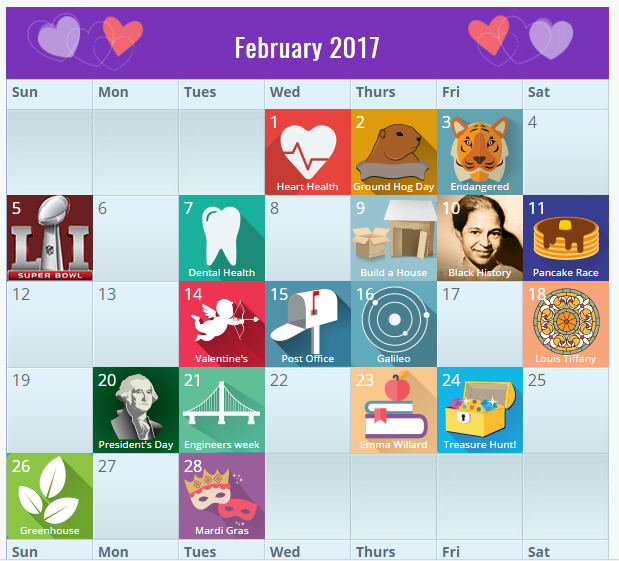
Presidents’ Day is an American holiday celebrated on the third Monday in February. Originally established in 1885 in recognition of President George Washington, it is still officially called “Washington’s Birthday” by the federal government. Traditionally celebrated on February 22 ~ Washington’s actual day of birth ~ the holiday became popularly known as Presidents’ Day after it was moved as part of 1971’s Uniform Monday Holiday Act, an attempt to create more three-day weekends for American workers. While several states still have individual holidays honoring the birthdays of Washington, Abraham Lincoln and other figures, Presidents’ Day is now popularly viewed as a day to celebrate all U.S. presidents past and present.

Things to do with children:

  • The United States has had more than 40 presidents. How many can the children name?How many presidents have you had in your own country?
  • Who has been president during their lifetime? Who has been president during your lifetime?
  • Take a look at American coins and bills; who are the Presidents pictured on each coin and bill? Show your kids coins and bills from your own country.

Will my au pair be able to drive in the US?

State Farm Teen Driver

Photo credit: State Farm (Flickr)

From kidnotes APIA’s Host Family Blog

By Mmendez

This is a common question host families ask, because many are looking for help getting children to and from various appointments and activities. The good news is: Yes, your au pair can drive!

Au Pair in America requires every au pair to have a valid home country driver’s license and requests that each au pair obtains an International Driving Permit (IDP) before leaving for America (IDPs are only available in an au pair’s home country).

Host parents that know they will have an au pair driving their children often include an Au Pair in America exclusive AAA driving course for au pairs as part of orientation and training. This course is designed specifically for international drivers with safety instruction for driving with children.

We’re always looking for ways to help au pairs and host families have safe and rewarding experiences together. In addition to information about insurance requirements and driving rules and restrictions for au pairs, resources for au pair driving include an American Road Signs test, information about car safety kits and driving tips for hazardous weather. If you have useful suggestions or questions about au pairs driving, we welcome your comments.

A note from your counselor: Each state in the US, including the District of Columbia, has special driving requirements.  Please click here to learn about what your au pair needs specifically to be able to apply for a DC drivers license.


Choosing between a Drivers License or Non Driving ID

Photo Credit: Eric Chu (Flickr)

Photo Credit: Eric Chu (Flickr)

Since Washington, DC is such a pedestrian-friendly city and has such a vast public transportation system, many au pairs may not be required to drive for their host families.  Non- driving au pairs often ask what is the best official identification they can get since their passports and Social Security cards have to be kept safely at home and not in their wallets.  Generally, I encourage all au pairs to get a DC Drivers License so they can:

  • drive in the event of an emergency;
  • be more easily matched in case they go into rematch because they would be ready to drive immediately for a new host family; and
  • simply to have the option to drive on road trips during their vacation and travel month.

If an au pair is convinced that driving is not for her and that she will not have to drive at all during her au pair year, then she can request a Non-Driver Identification Card also called a REAL ID Card at the DC Department of Motor Vehicles.

For more information on this topic, see http://dmv.dc.gov/service/driver-licenses

Childproofing

By Gwen Remy

With shorter days and colder weather, you and the children are probably spending more time inside the house.  Please be sure that the house is “childproof” with these simple tips:

Photo Credit: Macnetize.com (Flickr)

Photo Credit: Macnetize.com (Flickr)

  • Children are curious; many small children put everything into their mouths. Be sure no small objects are within the child’s reach.
  • Many cosmetic items and toiletries, such as mouthwash, perfume, nail polish, and hair spray, are poisonous. Keep them out of children’s reach.
  • Plastic bags, long cords and very soft pillows can be dangerous to children.
  • If a toy gets broken and has sharp edges, keep it away from children!
  • Be sure that laundry soap and other cleaners are out of reach of the children.
  • Don’t leave any medicines in reach of children, not even vitamins.
  • Keep scissors and knives out of reach.
  • Store the toys that belong to older children out of reach of babies and toddlers.

Winter Sports & Sports Insurance

Is it risky to do winter sports without the sports insurance?

Photo: Snow Snow (Flickr)

                                                     Photo: Snow Snow (Flickr)

Yes. If you have to pay your own hospital bills for a broken bone, you might be shocked at how much that would cost. I checked this website for some cost estimates. Here are a couple examples:

  • Without medical coverage, to treat a broken arm or leg (that does not require surgery) it could cost up to $2,500.
  • Without medical coverage, to treat a broken arm or leg (requiring surgery) it could cost $16,000 or more.

Please ensure you understand how your medical coverage works for sports related injuries. There is a list of “high-risk sports/activities” that are not covered with the basic or upgrade medical insurance plans. Those activities are only covered with the Sports Insurance Package (also known as Option A.)

The Sports Insurance Package was available pre-departure and may also be purchased at any time during your year. It takes effect within 48 hours of your enrollment and it is good for 12 months. The cost will be the same ($85) whether you have a month left or your whole year ahead of you. I recommend you pay for it early on, if you didn’t already purchase it. You never know when an opportunity might present itself and you don’t want to miss out on an adventure. You also don’t want to take a risk on getting injured and being responsible for the bill on your own.

Below is a partial list of sports that are only covered with the sports insurance package:
Football, Rugby, Scuba diving, Ski-doo,  Wakeboarding, Skydiving, Parachuting, Rock climbing, Zip line, Skate boarding, Rollerblading, Roller skating,  Ice Skating, SkiingSnowboardingSnowmobiles & Snowshoeing.  View the full list on page 3 of the insurance brochure HERE(2015 arrival au pairs) & HERE for (2016 arrival au pairs)
Note: Injuries sustained while partaking in these sports are covered with purchase of the Sports Insurance ONLY.

How to register for the Sports Insurance
Contact your counselor to get a copy of the Sports Insurance Enrollment Form. It takes a few days for your coverage to begin. If you think you will be doing any of these sports, you should get it now.

By Christine Connally

Special Webinars for Au Pairs

By: Kidsnotes APIA’s Host Family Blog

au pair webinars au pair education au pair in america

At Au Pair in America we offer monthly webinars for our au pairs. Why? These webinars, led by our Orientation Team, help au pairs learn about and manage life in America, and provide useful activities, insight and advice about children and child care. And au pairs can sign up for as many as they would like!

South African au pair Dezi shared with us why she enjoyed the webinars, why she recommends them to other au pairs, and her top three webinars!

Hey everyone! My name is Dezi Henning, and I am from South Africa and lived in Massachusetts for 18 months. I had some amazing experiences during my year and one of things that helped me with that was the webinars for au pairs. My friends from orientation, Jody, Joan and Sandee, are super cool and very helpful.

Why did I continue to join the webinars? The answer is pretty simple: I always learned something, and not just from them. The great thing is that you learn from the other au pairs too. I really encourage you to join the great webinars they offer so I will share my top three webinars with you!

3. 100 Activities You Can Do With School Age Children

Why? It is always helpful to have creative ideas for things to do with the kids, especially in summer. Again, other au pairs are on the webinar and share their own ideas as well.

2. Homesickness

For those times of the year when you really miss mommy, food or your room back home! Everyone gets some sort of homesickness at some point and it’s helpful to talk about it, especially with other au pairs. Even if you are not feeling homesick, you never know when you or a friend will need it!

1. It’s Up to You: Making the Most of Your Au Pair Year

This is an amazing webinar to help you make the best of your stay! Orientation Trainer Joan discusses managing your free time, your money and your circle of friends.

Questions? Contact us at (800) 928-7247