Category Archives: Host Family Tips

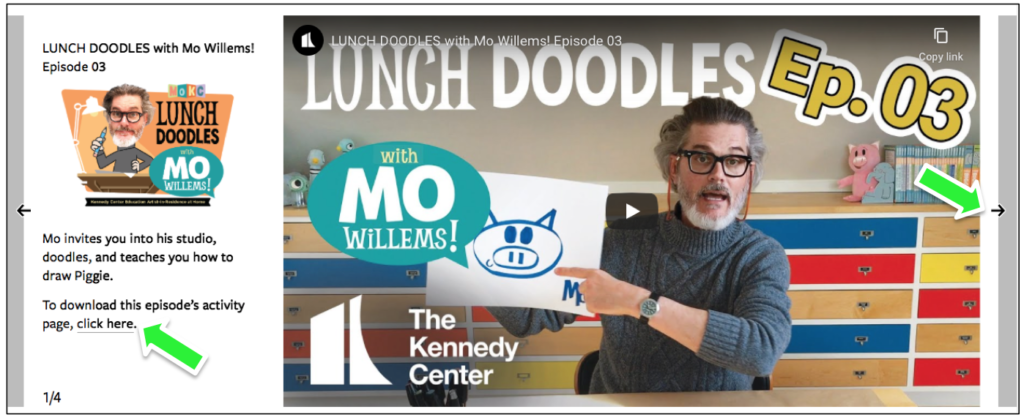
Social Distancing: 5 Online Adventures for Kids

Reading, playing, and doing art projects are always great ways to entertain children and keep them physically active and learning. It’s a good idea to limit screen time. But, in this time of social distancing, technology can play an important role in allowing kids to see and connect with the world outside of their homes. Many online resources are popping up to create those opportunities.

Here are five to get you started:

And if kids have questions about the coronavirus, Live Science has created an ultimate kids’ guide to the new coronavirus that has lots of information and is appropriate for school-aged kids.

Making Thanksgiving Memories Together

Thanksgiving is a public holiday celebrated on the fourth Thursday in November every year in the United States. It started as a harvest festival and has been celebrated nationally on and off since 1789.  The most important part of Thanksgiving for American families is to spend family time together.

Martin Cathrae

 “My favorite holiday was Thanksgiving. Firstly, it was my first holiday with the whole family in America. Secondly, the whole family came together. All aunts and uncles and their kids came to grandma’s. We played football with all of them, including grandma and grandpa. It was the first time I played it and it was so much fun for all. We had a great dinner with all the typical things you can imagine … it was deeeelicious! It was so great to be with such a big family and I really enjoyed that day. I will remember it my whole life, I hope.” – Swantje from Germany

Here are a few tips to help you have a terrific Thanksgiving experience.

Host Parents
Please plan to include your au pair in your Thanksgiving celebration, if at all possible. If you are traveling or will not be able to invite your au pair to join you for Thanksgiving, give her plenty of notice and help her make alternate plans. You don’t want to leave your au pair alone over the holiday.

Au Pairs
If you are invited to attend dinner, please let your family know within 5 days of the invitation, whether you are planning to attend, so they may make plans. If your host family is unable to include you in their Thanksgiving plans, please let me know if you have trouble making other plans, so I can assist.

Make sure to discuss time off during this holiday weekend. Many host families work the Friday after Thanksgiving so do not assume you have this day off or the entire weekend. Talk to your host family, BEFORE you make any plans.

Bonus Tip for the Kids
If you are looking for a fun recipe to make with your au pair, check out these turkey cookies. Find more fun activities and recipes on the Au Pair in America Fall Holidays pinboard.


Three Ways for Au Pairs to Stay Red Cross Ready

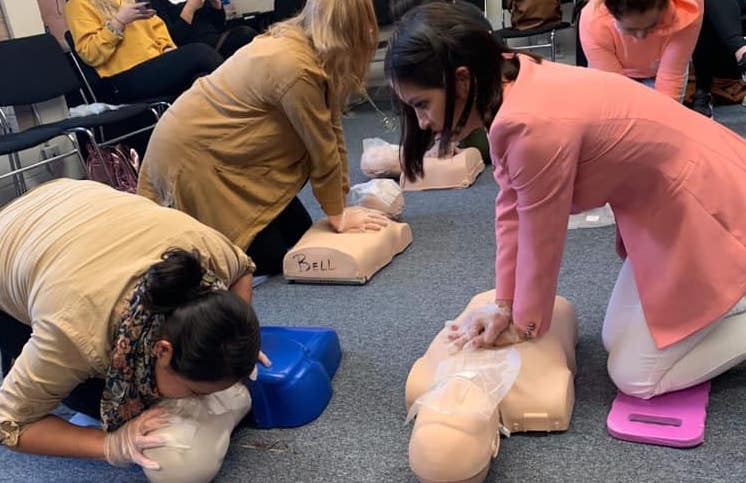
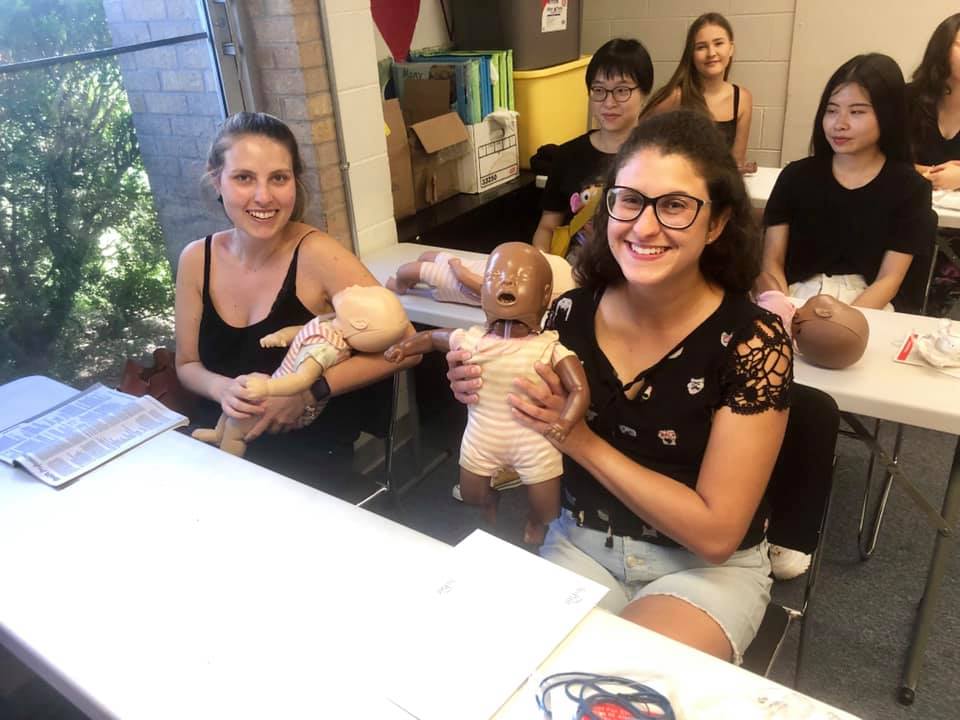
Being knowledgeable in basic first aid and CPR is important for au pairs (and anyone else caring for children). Au Pair in America’s commitment to infant/child safety begins before au pairs arrive to the U.S., with pre-arrival training and continue throughout the au pair year.

#1 Training At Orientation

Our orientation includes seminars by American Red Cross instructors who provide hands-on demonstrations in infant/child CPR and safety. Printed materials are provided that reinforce the safety information and can be used to review from time to time.

#2 Enroll in a Red Cross Certification Class

After settling into their host community, all au pairs are encouraged to complete an Infant/Child CPR and First Aid certification program. Au Pair in America will pay for this training through the American Red Cross.

Classes are available through the Red Cross. Au Pair in America will pay for the cost of a class providing an au pair has at least six months left on her visa and is taking one of several approved childcare/child safety-related classes, such as Adult and Pediatric First Aid/CPR/AED. Au pairs should check with their community counselor and host family before signing up. Au Pair in America will register the au pair directly.

To locate a class, visit www.redcross.org/takeaclass. For step-by-step instructions on how to locate a class and have Au Pair in America complete enrollment, click here.

#3 Stay Current on Safety Information

The Official American Red Cross First Aid app puts expert advice for everyday emergencies in your hand. Available for iPhone and Android devices, this app gives you instant access to the information you need to know to handle the most common first aid emergencies. With videos, interactive quizzes and simple step-by-step advice, it’s never been easier to know first aid. Download the app for free from the American Red Cross website or in your app store.

Photos: Robin Leon

Back to School Planning

Back to school time is here. This can mean changes to the au pair schedule and possibly to the duties.  It is very important to communicate these changes to avoid problems.

Here is a list of topics to consider discussing:

  • Au pair’s work schedule
  • The children’s school and activity schedules
  • Where the children get dropped off and picked up and who will be doing this
  • What to do if a child is staying home sick, late to school, does not get off the bus (if they are supposed to)
  • Driving laws regarding stopping for school buses
  • How to tell if school has been canceled or delayed for bad weather
  • Add the au pair to your list of people allowed to pick up the kids from school and explain the process
  • What to pack for lunch
  • The routine after school (do they have free time before starting homework, what to give for a snack, any chores, where do they put their backpacks & lunchboxes)
  • How to communicate about what’s going on at school. Your Kids in Care logbook from Au Pair in America can be a great two-way communication tool for keeping track of schedules, afterschool activities and day to day info that needs to be transferred between host parents and au pair.
  • If your au pair will be the one going through the children’s backpack and helping with homework, consider designating an area for putting things that need to be read and/or signed by parents.

Here are some Printable Fill-in-the-Blank School Notes for parents. You can print these out and have them ready for times when the kids are absent, late, have an early dismissal or you need to give permission for something.

Check out Au Pair in America’s Pinterest School Tips and Ideas pinboard for things like organization ideas, back to school traditions, printable lunch box notes, and fun lunch recipes.


Au Pairs and American Diets

As we all know, American diets can be a big change for au pairs. Many au pairs are afraid they will gain weight while they are here. Here are some tips from a host mother, who runs the realfoodrn blog (https://realfoodrn.com/)

In order to maintain a healthy weight while in the United States:

– don’t eat the sugary foods we have here – there is hidden sugar in almost everything we eat. Read the nutrition label on the packaging of any food to see how many grams of sugar it contains.

– don’t eat late at night – try to keep from eating for a couple of hours before bedtime, to give your body time to use the energy in what you’ve already eaten.

– don’t eat fast food – McDonald’s or Burger King may be convenient, but they put all kinds of extra, unnecessary additives in the food. Plus, it’s largely empty calories and unhealthly fat. Look at the calorie counts posted on the menu before you order.

– drink tons of water – the more water you drink, the better you will feel. Water helps you flush unneeded things out of your system.

– remain active – even if it’s cold outside, find a way to get some exercise. The Mall of America is about half a mile around, so if you go two times around each level, you just walked 3 miles. Edinborough Park in Edina is an indoor park with a big playground for kids. There are lots of other choices. Plus when it’s nice out, you can easily rent a bike and ride around the chain of lakes in Minneapolis, or you can go swimming in one of the many lakes around here.

– whenever possible structure meals like this: healthy meat, lots of veggies, healthy fat, spices (no breads, sugars, sauces, rice, etc) – try to make your meals as healthful as you can.

And this is from Jennifer: don’t worry so much about your weight as about your health. If you eat healthy food and keep active, you will feel great!

20 Things To Do in Minnesota in Winter from the Sierra Club

I found this and though it sounded like something helpful at this time of year – all the fun holidays of winter are past, and we have a lot of time left to look at the snow.

I’m not sure about ho to credit this, so here’s the original link: https://www.sierraclub.org/minnesota/blog/2015/02/20-things-do-minnesota-winter

Get out there and do something (when it’s not toooo cold!)

20 Things to Do in Minnesota in Winter

Photo Credit: Jack Davis (pixures.tumblr.com)

Photo Credit: Jack Davis (pixures.tumblr.com)

It’s February – the holidays are well behind us, but winter is far from releasing its grip. This is the time of year in which the luster of cold-weather activities begins to wear off, winter carnivals and events wind down, and you find yourself dreaming about warm spring afternoons. Though you may be tempted to spend the rest of the season in bed, here are our top 20 snow-compatible activities to help you beat the cold and stay positive in the closing weeks of winter.

1. Spend the day ice skating

You can’t move in Minnesota without tripping over a frozen lake – they’re our greatest treasures! Strap on your skates and enjoy your local watering hole in its solid form. If you don’t have your own blades, many rinks offer rental skates. Lake of the Isles in Minneapolis, Minnesota rents them for free in all sizes.

2. Visit the Marjorie McNeely Conservatory

If the only green thing you’ve seen in months is your Christmas tree, consider visiting the Marjorie McNeely Conservatory in Como Park, St Paul and immersing yourself in lush foliage from around the world. Step into the Tropical Encounters exhibit and feel your skin react with joy to the long-forgotten sensation of humidity. The Fern Room, the Bonsai exhibit, and the North Garden – with its collection of plants that have changed human history – are beautiful, educational, and guaranteed to be over 70° Fahrenheit. There are no entrance fees, only small suggested donations ($3 for adults, $2 for children).
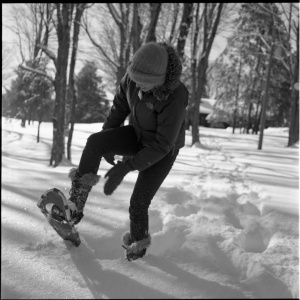
Snowshoer

Photo Credit: Jack Davis (pixures.tumblr.com)

3. Explore Minnesota’s parks on snowshoe

If you’ve always wished you could glide buoyantly across the snow and explore places inaccessible to hiking, snowshoeing might be for you. Whitewater State Park outside of Rochester, Minnesota hosts guided Snowshoe Saturdays twice a month. But if you prefer solo adventuring dozens of Minnesotan parks provide snowshoe rentals to the public. Afterwards you’ll want to warm up your extremities with some fancy hot chocolate.

4. Visit an art museum

There’s nothing better than exploring an art museum on a gray, sleety day, and we have two excellent ones here in the Twin Cities. The Walker Art Center and the Minneapolis Institute of Arts both have extensive collections, the latter of which is largely free to the public. Of particular interest is the ongoing “Nature of Nature” exhibition at the MIA’s Target Wing. The Walker Sculpture Garden takes on a completely different aspect in winter, and is worth a look on a sunny day.

5. Indoor or ice climbing

If you’re not ready to commit to a gym membership, your local rock gym should offer climbing day passes, which are fun ways to stay active even on the coldest days. Midwest Mountaineering in St. Paul has a free bouldering cave for customers, and is definitely worth a look when you’re outfitting your next expedition. If your passion for climbing outdoors can’t be contained by the cold, Vertical Endeavors offers monthly Ice Climbing courses in Sandstone, Minnesota. Then, get your crampons over to Casket Quarry in Duluth (don’t let the name deter you) and practice your newfound skills!

6. Build a bonfire and roast s’moresbonfire
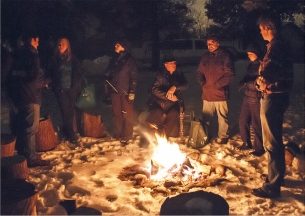
Turn a weeknight into a camping trip by roasting s’mores over a fire pit or grill. If you don’t have a space for a bonfire, you can still make s’mores over a gas-lit stove!

7. Go ice fishing

If you’ve ever thought to yourself, “I like to fish, but I sure hate standing in the cold,” ice fishing is still the sport for you. You can rent a shanty on Lake Mille Lacs (yes, that does mean Lake “One Thousand Lakes”) near Brainerd for the day and plumb the frozen depths for trout. Some of these “shanties” come equipped with central heating and WiFi, but you can adjust the modern convenience level to your comfort.

8. Treat yourself to some maple taffy

This sticky snow day treat had a cameo in Laura Ingalls Wilder’s book about pioneer life in Minnesota, Little House in the Big Woods. It’s made by pouring boiled maple syrup over fresh snow and it couldn’t be yummier (see recipe here).

9. Cross-country ski

Minnesota may not have as many downhill skiing opportunities as other northern states, but our cross-country scene is on point. The leisurely pace of cross-country skiing facilitates wildlife encounters, conversation and photo opportunities, and most of our parks have well-groomed trails waiting to be explored. For a romantic twist, try a candlelit ski trip with your significant other (BYOB).
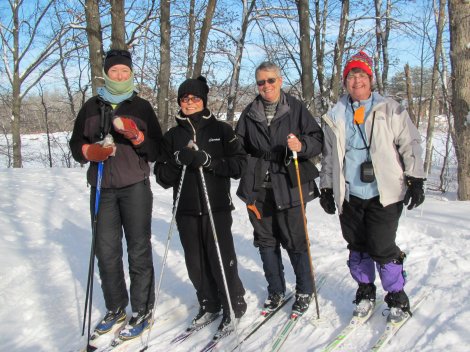
Sierra Clubbers on an outing at Lebanon Hills. Photo Credit: Joyce Icardo

Sierra Clubbers on an outing at Lebanon Hills. Photo Credit: Joyce Icardo

10. Tour a brewery

Learn about how beer is made, taste some delicious (and free!) local brews, and support your neighborhood businesses by registering for a brewery tour near you (make sure you have a designated driver or public transportation plan in place). Check out this list of breweries across the state that are open for tours. Afterwards, take what you learned and try crafting your own brew at home – you can buy all the supplies you need at any of these stores.

11. Grow indoor vegetables

The earth outside is frozen, but you don’t have to give up on your fresh vegetable game completely. Some veggies that do well in partial sunlight can be grown indoors in the winter without a UV lamp. You can find instructions and a list of good plant candidates for windowsills here. For beginner gardeners, sprouts are easy to grow in even the smallest kitchen!

12. Dash through the snow on a dog sled

You don’t have to own 12 purebred huskies to enjoy the thrill of dog sledding. Plenty of lodges near Duluth, Ely and the Boundary Waters offer guided day trips and longer camping trips. If you’re not quite ready to take charge of your own wolf pack, there are plenty of opportunities to watch dogsled races around the state, such as Mush for a Cure on Gunflint Lake, Minnesota or Wolftrack Classic in Ely, Minnesota.
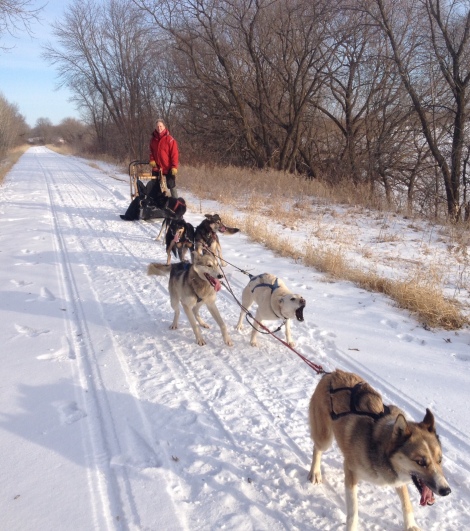
Tom Roos Dog Sledding

Minnesota musher, Tom Roos, and his dogs on the Data Trail in Alexandria, MN

13. Rock an evening at a roller derby

With all the grace of an ice dancing show and all the violence of a monster truck rally, roller derby is a sport unlike any other. Ladies, the waitlist to join a beginner’s league can be over a year long, but in the meantime you can catch bouts every month at the Roy Wilkins auditorium.

14. Ride the Alpine Roller Coaster at Spirit Mountain

If you can’t wait until Valley Fair opens up again in May, check out the Midwest’s only alpine roller coaster, located on Spirit Mountain in Duluth, Minnesota. Spirit Mountain hosts a variety of wintery analogs to typical summer activities, like fat tire mountain biking and snow tubing, so it’s definitely worth a visit!

15. Check out the Minneapolis Home and Garden Show

The Home and Garden Show at the Minneapolis Convention Center runs from February 25th to March 1st and will include an assortment of domestic exhibits, including models of sustainable living and design, “upcycled” furniture, cooking demonstrations and indoor feature gardens to get you in the mood for planting season.
Lynx running in Snow

Photo Credit: Michael Shoop

16. Explore winter wildlife watching

Not everything hibernates or flies south in the winter – some species (particularly overwintering birds) are especially active in the colder months. This is a great time to practice identifying animal tracks in the snow, and the wintry landscape can be a beautiful setting for wildlife photography. The DNR has compiled some useful winter wildlife viewing tips and events here.

17. Steam up in an Urban Sauna

Originally a Finnish winter tradition, the sauna lifestyle is currently blowing up in the Twin Cities and beyond. Sauna advocates tout their health benefits, and sitting in a hot, steamy room for hours certainly makes you appreciate the icy breezes outside. Although we still lack a public sauna, groups such as the 612 Sauna Society are dedicated to improving access with mobile and pop-up saunas around the twin cities. Not comfortable using someone else’s sauna, and you’re good with your hands, considerbuilding your own this winter!

18. Join a broomball league

Broomball is an exciting sport that requires minimal equipment and offers the chance to see your friends and coworkers fall down a lot, so what’s not to love? You can start your own league or join an existing one here.

19. Go to a concert

The music won’t stop just because it’s below freezing out – check out this list of upcoming concerts in the state.

20. Fantasize about Spring

Okay, so you’ve done everything on this list and… it’s still cold outside. There’s nothing left to do but plan your summer vegetable garden, draft invites to grilling parties, imagine trips to the lake, and gaze at your collection of jorts in despair. As much as we love Minnesota winters, they do tend to overstay their welcome – but how could we appreciate summer without them?


Spring Calm

Make Your Own Play Dough

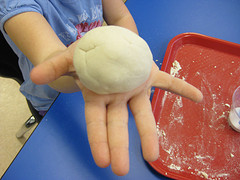
Play dough is the perfect modeling material for children. Their small hands can pat, poke, pinch, roll and knead it into many shapes. Keep it in an airtight container to use another day, or let it air dry into favorite shapes.

8640007416_3170564961_m

Measure 2 cups of flour, one cup of salt and 4 teaspoons of cream of tartar into a bowl. Add 1/4 cup of oil to one cup of water in a separate bowl then add the mixture to the dry ingredients. For colored play dough, squeeze 10-20 drops of food coloring into the water before you add it to the mixture. Cook the dough at low heat in a wide pan, stirring constantly until it becomes rubbery. Remove the dough from the heat and knead it for a few minutes. When it cools the kids can play too!

Photo: Kevin Jarrett (Flickr)

10 Tips for Summer Safety

  1. Remember to bring along drinks, especially water. Try to get children to drink water every 20 minutes, when they are outside in hot weather.
  2. Pay attention to surfaces that can be hot against children’s skin, such as metal slides and other playground equipment in the sun.
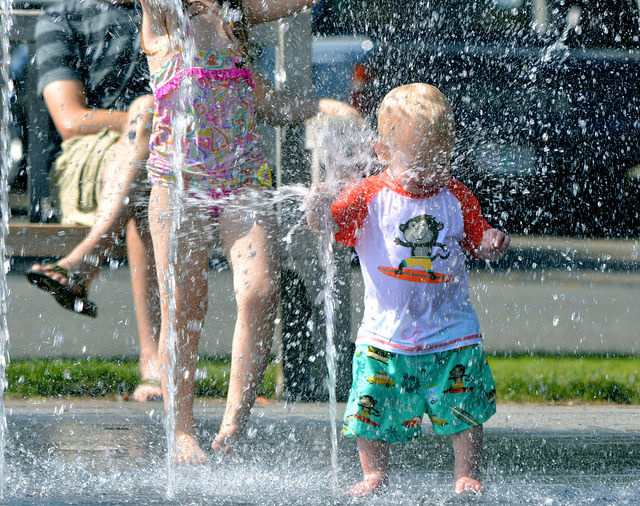
  3. Safety around water is particularly important. A child can drown in just a few inches of water. Whenever you are near water you must never leave a child alone – if the phone rings, take them with you or let it ring! Always stay within arm’s reach when the children are in or near water.
  4. Young babies should be kept out of direct sunlight. Keep the baby in the shade or under a tree, umbrella or stroller canopy.
  5. Dress babies in lightweight clothing and use brimmed hats.
  6. Apply sunscreen 30 minutes before going outside, even if it appears overcast (cloudy).
  7. Try to keep children out of the sun in the middle of the day when the sun is strongest.
  8. Learn what poison ivy looks like and keep children out of it. A good rule to teach the children is “leaves of three, let it be.”
  9. Use insect repellent spray to keep away mosquitos and ticks. Ask your host parents before applying.
  10. Check for ticks when you bring children in from playing outside, especially if you’ve been in tall grass or the woods.

Photo: Scott97006 (Flickr)

SaveSave

Severe Weather Awareness Month in Minnesota

April is Severe Weather Awareness Month and it’s important to be ready. Late spring is when we see a large number of severe thunderstorms and tornadoes, so here’s how to handle that.

A severe thunderstorm is one which may include any or all of the following: frequent lightning strikes (which can be extremely dangerous,) high winds, hail, and heavy rain with street flooding.

A tornado is a specific kind of storm where winds and air pressure combine to create a funnel cloud. This spins around in a circle and creates crazy wind speed. Depending on the severity, trees can be knocked into houses, houses can be blown down, windows can shatter and strew broken glass everywhere.

If a severe thunderstorm watch or a tornado watch is announced, that means  that conditions are right for bad weather to develop, but nothing is happening yet. Mainly, just be aware of what’s going on outside at this point – maybe don’t get too far from shelter. I would turn the TV on or listen to the radio to see if there is anything near me.

If a severe thunderstorm warning or a tornado warning are announced, that means they have identified an actual storm in your area. Sirens will go off and they will definitely break into programming to give you information. If the warning is for a thunderstorm, keep everyone inside and away from windows – sometimes hail can break a window, or lightning can strike right through it.

If the warning is for a tornado, DROP EVERYTHING, Grab the kids and go to a safe part of the basement – away from windows, and also in a sturdy place – under the staircase can be perfect. Stay there until you hear that things are all clear – sometimes tornadoes can come in waves, so just because one has gone by doesn’t mean the danger is over. Try to keep the kids calm by singing or reading to them.

Families probably want to have things like a battery-powered radio, flashlights, and maybe a blanket ready in the basement in case of severe weather.

I’ll be going over all this with the au pairs at our April cluster meeting.

Rainy Spring Days

Image by Tilda Rice

Rainy days and Minnesota spring go together like hot dish and tater tots. You can count on cold, windy, rainy, muddy weather well into May. So it’s best to have a plan ready. Otherwise, kids can get pretty squirrelly stuck inside!

Think about the kids you are caring for when thinking up activities. You can’t expect a super active child to sit for hours doing a jigsaw puzzle. But there are a lot of different ideas out there.

Some activities to consider:
* Teach kids a new skill. Depending on the age and interests of your kids, teach kids something they haven’t tried before. Some ideas include watercolor painting, bread baking, doing a maze, or trying yoga (go to the Cosmic Yoga YouTube channel for some great kid-oriented yoga.)
* Acting in a play. Take a favorite book and adapt it to your own use. Costumes and props are fun to create. Even if it’s just for yourselves, it’s still a fun activity.
* Go on a scavenger hunt. Make a series of clues that lead from one to another, with some kind of small prize at the end. Little kids can decode easier clues, like “Look where the eggs are kept;” older kids can be given more complicated puzzles.
* Movie and popcorn time. It can be fun to recreate the experience of going to the movies at home. Make a big bowl of popcorn and pick a fun movie, and everyone can snuggle on the couch and relax.
* Get out and play in the puddles. Dress kids in waterproof jackets and boots, grab umbrellas, and splash around out there. You can learn a lot from watching how rain falls, how puddles develop, or how raindrops fall off of leaves. Obviously, you can’t go out in a thunderstorm!

Our Pinterest page has many, many more ideas. Keep the kids occupied while the rain is falling and everyone will be in a better mood when you can finally get outside into the beautiful Minnesota springtime.