Category Archives: Blogs

Health and Safety – What are ticks?

When the weather is nice, we spend more time outdoors with the children. Playing in the back yard, at the playground or walking on nature trails are great ways to get fresh air and exercise.

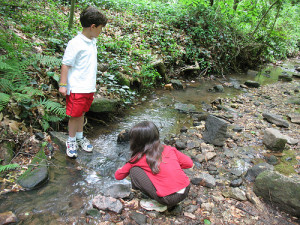
kids in woods

What are ticks? – Ticks are small mites that attach themselves to skin and suck blood. Click HERE to see examples of ticks.

Where are ticks commonly found? – Ticks are normally found in areas with trees, bushes or tall grass. This includes back yards, parks, nature areas and most places you would be spending time with the children outdoors in the nice weather.

What needs to be done? – When you return home from areas where ticks might live, carefully check the children and yourself (clothing, skin and scalp) for ticks. If you find a tick on one of your host children, notify your host parents immediately.

Most ticks do not carry diseases, and most tick bites do not cause serious health problems. But it is important to remove a tick as soon as you find it. Removing the tick completely and cleaning the area with soap and water or antiseptic spray, may help avoid diseases such as Lyme Disease that the tick may pass on during feeding, or a skin infection where it bit you.

Click HERE for Instructions on Removing a tick from WebMD.com.

How do you reduce risk of tick bites?  – Use a repellent with DEET on skin. Repellents containing 20% or more DEET can protect up to several hours. Always follow product instructions. Adults should apply this product to their children, avoiding the hands, eyes, and mouth. When you come back in from outside, it’s best to wash the repellent off of skin with soap and water. For detailed information about using DEET on children, see recommendations from the American Academy of Pediatrics.

Screen Time for Toddlers

Research shows that screen time affects toddlers sleep. If screen time (even iPads or iPhones) begins to interfere with daily living and sleeping, you know it is time to cut back. For example, if your toddler refuses to eat without a screen in front of him, or if they have to watch before bedtime and it delays getting to sleep. Caregivers should model good habits with screens and not eat in front of the TV and should put down their phone at mealtimes with the family.

Here is a research study on this phenomenon.

Daily Touchscreen Use in Infants and Toddlers Is Associated With Reduced Sleep and Delayed Sleep Onset


Celeste H. M. Cheung, Rachael Bedford, Irati R. Saez De Urabain, Annette Karmiloff-Smith & Tim J. Smith
Scientific Reports


Traditional screen time (e.g., TV and videogaming) has been linked to sleep problems and poorer developmental outcomes in children. With the advent of portable touchscreen devices, this association may be extending down in age to disrupt the sleep of infants and toddlers, an age when sleep is essential for cognitive development. However, this association has not been demonstrated empirically. This study aims to examine whether frequency of touchscreen use is associated with sleep in infants and toddlers between 6 and 36 months old. An online survey was administered to 715 parents reporting on child media use (daily exposure to TV and use of touchscreens), sleep patterns (night-time and daytime sleep duration, sleep onset—time to fall asleep, and frequencies of night awakenings). Structural equation models controlling for age, sex, TV exposure, and maternal education indicated a significant association between touchscreen use and night-time sleep, daytime sleep, and sleep onset. No significant effect was observed for the number of night awakenings. To our knowledge, this is the first report linking the use of touchscreen with sleep problems in infants and toddlers. Future longitudinal studies are needed to clarify the direction of effects and the mechanisms underlying these associations using detailed sleep tracking.

Media Report: “Touchscreen-Toddlers” Sleep Less, Researchers Say

Overcoming Homesickness


Almost everyone experiences homesickness and culture shock to some degree, when they come to live in a completely new environment. So much is different and it takes time to adjust.

It is normal to miss your own family, at home. Try to remember that they support you and want you to make the most of this experience. They will enjoy learning more about the U.S., through your eyes, as you share your adventures with them.

Top 4 Tips for Dealing with Homesickness

1. Make Friends – Don’t wait for other au pairs to reach out to you, reach out to them. There are other lots of new au pairs who are feeling the same way you are right now. Set a goal to reach out to a few of them each day. Some will respond and some will not. Don’t let that discourage you. No one will ever be mad at you for sending them a message to say hello or ask if they want to do something together. Make friends from various countries and you will also get a chance to practice your English skills together.

2. Stay in touch with your home country, but not too much. Skyping or talking on the phone every day with your family and/or friends back home normally makes homesickness worse. Try emailing instead and reduce the Skype and phone calls to once a week, until you feel stronger. It’s much harder seeing the faces and hearing the voices of those you miss.

3. Realize that it definitely gets better – All au pairs experience homesickness and the vast majority of them get through it, stay and have a successful year (some even extend for a second year!) So, it must get better, right? Once you get past the initial homesickness, most au pairs report how quickly the year goes by.

4. Make Plans – Create your own Au Pair Bucket List (places you want to go, new foods to try, new things to experience during your year in the U.S.).

Photo by:  Shimelle Laine (Flickr)

Returning Home

airplane-clip-art-3

You made it! Your time in the US has flown by, and now it’s time to plan for your return. Think about all of the time and effort you put into preparing for your arrival in the US – interviews, paperwork, training. It makes sense that your return home would also require some thought. Of course you expected US culture to be new, but do you anticipate your home culture to be familiar and without difficulties? This is often not the case. In many ways, the experience of returning home can mirror the experience of arriving in the US. Change can be stressful, but thinking about these transitions ahead of time can make them less scary.

For au pairs, the reentry process begins in the eighth month when return flight packets are received. At this time feelings can be mixed, and au pairs may feel very confused as they anticipate the return home but are not ready for the US experience to end. For those returning at the end of the first year, they must select a travel date, deal with questions and excitement from family and friends at home and, with three months left, continue to keep focused on their au pair duties.

As the departure date nears, there is a flurry of activity – you’re trying to get everything done, packing, and seeing all your friends one more time. It can be tempting to disengage from friends and your host family – keep in mind, even if you’re not aware of it, it’s easier to leave angry than it is to leave sad. Be aware of these emotions and remember that they can impact your host family and host kids too. Talk to a trusted friend or your Community Counselor.

Now you’re home! When you first arrive, everyone will be so happy to see you, and you may feel like a visiting celebrity. This will fade though, and your friends and family may no longer be interested in hearing dozens of stories of your adventures in the US or seeing hundreds of photos of you and your new friends. They will move on and be ready for you to do the same, which leads us too…

Reverse Culture Shock – when you first return home, your family and friends may wonder who you are, who you’ve become. You may be thinking about how much you’ve changed, while everything and everyone at home has stayed the same. It may be tempting to romanticize your time in the US – everything was perfect there! There were friends who understood you! You may also experience a “parent problem” – you’ve been independent and had lots of freedom during your time in the US. It can be hard to go back to being someone’s child or following someone else’s rules.

This culture shock is not permanent. It takes time, but eventually, you will get back into the swing of things, and you’ll begin to relax into life in your home country, carrying with you the experiences you had as an au pair.

Tips for Transition:

• Talk to your Community Counselor – we are here to help you with all phases of your au pair experience, including your return home.
• Take some time to really think about your experiences in the US – what did you like most? What will you miss? How have you changed? What recommendations would you make to someone considering becoming an au pair?
• Think about challenges you may face when you return home.
• Think of skills and activities that helped you adapt to the US. These may be strategies that you can use to help you adapt back into your home country.
• Set short term and long term goals for after you return home. Think about ways that you can use the new skills that you gained during your time in America.
• Think about how your Host Family and kids are feeling. What can you do as a group to help with the transition? Think about how you can have a successful closure with them. Also, think about how your return may feel for your friends and family in your home country. What questions and concerns might they have?
• Keep talking – stay in touch with the au pairs and other friends you met along the way – it can be nice to talk with someone who had a shared experience with you.
• Develop ways to continue your exposure to American culture and language.

Happy 4th of July!

Known  as the Fourth of July and Independence Day, July 4th has been a federal holiday in the United States since 1941, but the tradition of Independence Day celebrations goes back to the 18th century and the American Revolution (1775-83). In June 1776, representatives of the 13 colonies then fighting in the revolutionary struggle weighed a resolution that would declare their independence from Great Britain. On July 2nd, the Congress voted in favor of independence, and two days later its delegates adopted the Declaration of Independence, a historic document drafted by Thomas Jefferson. From 1776 until the present day, July 4th has been celebrated as the birth of American independence, with festivities ranging from fireworks, parades, family gatherings and barbecues.

-2

This weekend you can count on enjoying traditional favorites such as hamburgers and hot dogs, chicken, ribs, potato salad, chips and watermelon.  

 4thFunFacts-300x200

A few facts about this Holiday!

·            Fourth of July is the federal holiday marking the Colonies’ adoption of the Declaration of Independence on July 4, 1776,

·            The Fourth of July was not declared a national holiday until 1941.

·            The oldest, continuous Independence Day celebration in the United States is the 4th of July Parade in Bristol, Rhode Island; it began in 1785.

·            The Pennsylvania Evening Post was the first newspaper to print the Declaration of Independence.

·            Benjamin Franklin proposed the turkey as the national bird but was overruled by John Adams and Thomas Jefferson, who wanted the bald eagle.

·            The “Star Spangled Banner” was written by Francis Scott Key during the War of 1812 and not decreed the official national anthem of the United States until 1931.

·            In 1776, there were 2.5 million people living in the new nation. (Today there are over 311 million.)

·            here are more than 30 towns nationwide that have the word “Liberty” in their names.

·            Approximately 150 million hot dogs are consumed on this day. It’s the biggest hot dog holiday of the year.


Have fun with the children too, visit the link below for fun coloring pages, craft ideas, puzzles and games to celebrate the 4th of July holiday

-3

Have a wonderful 4th of July!

Happy Summer


Now that school is out (or almost out), please sit down with your au pair and discuss what her hours will be for the Summer.  The best thing about hosting an au pair is the flexibility of the schedule.  Try to give your au pair as much time as possible when the schedule will be changing to avoid any conflicts with school or vacations, keeping in mind the government requirement that the au pair work NO MORE THAN 10 hours in one day and 45 hours per week.  A work week for the au pair is 7 days and during those 7 days, she must have one FULL day off and one day where she does not work more than 5 hours, with no split schedule on the 5 hour day.

Each month, your au pair must have a weekend off.  This means a Friday when she would normally get off work until Monday morning when she would normally go back to work, she must be off.  This is essential to the happiness of the girls and gives them the ability to go away with friends for the weekend, or take a weekend class if their work week does not allow time to take a class.

The au pairs are not permitted to work hours over and above the 45 hours each week, even for extra pay.  We don’t want the girls to “burn out”.  It’s not safe, and the safety of our children is the most important.  If you find you are at or above 45 hours each week, perhaps a part time day camp or a baby sitter for the extra hours is needed.  Your au pair should only be caring for your children.

Taking a class while the au pairs are here is a program requirement.  It’s not an option.  The au pairs come on a J-1 visa that requires the au pairs to achieve 6 credits or it’s equivalent (72 class hours) during their year here.  This requirement must be completed to meet the terms of the visa.  Please work with your au pair and the schedule to ensure she has time to attend class.  Make sure you are not waiting until the last few months to cram in classes.  That never works.   While there are very few summer classes, the fall schedule is online and I suggest registering for a class as soon as possible in the event it is canceled and you have to make another choice.  A list of schools the au pairs may attend is on our cluster blog.

One final note, if you are going to be traveling away from Northern Virginia with your au pair for more than 4 days, please let me know.  Especially if you will be leaving the country, ie, Mexico, Caribbean, cruise, etc.   There are forms that must be filled out so there are no issues with the au pair reentering the country.

I hope you have a safe and fun summer!

Summer Safety Tips

-2

During the summer months we need to take some added precautions to keep children safe in the sun and by the water.  Here are some good tips.

  • Avoid long periods of sun exposure especially between 10.00am and 4.00pm
  • Apply sunscreen of at least  15 SPF that protects against both UVA and UVB rays should be worn on sunny and cloudy days.
  • Infants should be dressed in lightweight clothing covering as much skin as possible and brimmed hats to shade the face
  • Stay hydrated, drink water throughout the day
  • Intense activities and sports should be reduced whenever high heat and humidity reach critical levels
  • Never leave children or animals in a car unattended.


-1

  • Actively supervise children in and around the water, giving them your undivided attention. Appoint a designated “water watcher,” taking turns with other adults. Be very clear who is in charge.
  • When in the water there should be an adult at arms length from young children at all times
  • Children who cannot swim or who are not strong swimmers should wear water wings or life jackets when in the water
  • Swim in designated areas supervised by lifeguards.
  • Always swim with a buddy; do not allow anyone to swim alone. Even at a public pool or a life-guarded beach, use the buddy system!
  • If you go boating, wear a life jacket! Most boating fatalities occur from drowning.
  • Avoid alcohol use. Alcohol impairs judgment, balance and coordination; affects swimming and diving skills; and reduces the body’s ability to stay warm.

As well as the host parents numbers, au pairs should have the phone number of the community counselor and the Au Pair in America 800 number saved to their phones.  This way if they need assistance they can quickly and easily dial the number.  Remind you au pairs to call immediately if there is any issue with a child in their care.  Host families should make sure that au pairs know what to do if there is an emergency situation while they are in charge of the children,  this is a good time of year to review any family rules that apply to summer activities especially by the pool and while at the beach.

Enjoy the summer and be safe!

Memorial Day

happy-memorial-day1

Memorial Day is a patriotic holiday in the United States of America, celebrated on the last Monday in May.  It is a celebration of remembrance for the brave service of men and women who gave their lives for their country. Memorial Day was declared a federal holiday in 1971. We now, designate this day to remember loved ones who have passed on, as well as remembering our service men and women. Flowers and flags are placed on graves in remembrance of them. Parades and dedications of memorials usually are part of the day’s activities. Boy Scouts, Girl Scouts, local marching bands, members of the armed service, fire departments, police departments, and fraternal orders often march in parades and attend ceremonies to commemorate the day.  

Here are a couple of links to website that have activities you can do with the children in honor of Memorial Day.

http://www.apples4theteacher.com/holidays/memorial-day/

http://www.enchantedlearning.com/crafts/memorialday/

Vacation and Holiday Reminders

“Rest and be thankful.” – William Wordsworth

Holidays and vacations are a great opportunity to rest, recharge and explore the U.S.

Memorial Day Weekend is the unofficial start of summer travel season. Here are some reminders about program rules regarding holidays and vacations.

Photo: torbakhopper (Flickr)

Holidays

  • Host families are not required to give au pairs any specific holidays.
  • Each host family will make different arrangements on holidays, some au pairs will be off and others will be required to work.
  • Au pairs should not make plans for holidays without checking with your host family first.

Vacations

  • Au pairs earns 2 weeks of paid vacation during the course of her year.
  • Vacation time should be mutually agreed upon.
  • All vacation should be pre-planned (at least 4 weeks in advance.)
  • All au pair’s friends and/or family visits/vacations should be pre-approved prior to purchasing tickets.
  • If an au pair travels with her host family, it should be discussed in advance whether this is the au pair’s vacation or if she is working.
  • If an au pair travels with the host family to work, the host family is required to pay for her transportation, lodging and meals.

Important: If an au pair is traveling outside of the U.S., she must have her DS2019 signed (travel validation) PRIOR to her departure from the US. More information about this may be found here on the Au Pair in America website.

By Christine Connally – Community Counselor in Maryland