Category Archives: Kids

Back to School Planning

Back to school time is here. This can mean changes to the au pair schedule and possibly to the duties.  It is very important to communicate these changes to avoid problems.
Here is a list of topics to consider discussing:

  • Au pair’s work schedule
  • The children’s school and activity schedules
  • Where the children get dropped off and picked up and who will be doing this
  • What to do if a child is staying home sick, late to school, does not get off the bus (if they are supposed to)
  • Driving laws regarding stopping for school buses
  • How to tell if school has been canceled or delayed for bad weather
  • Add the au pair to your list of people allowed to pick up the kids from school and explain the process
  • What to pack for lunch
  • The routine after school (do they have free time before starting homework, what to give for a snack, any chores, where do they put their backpacks & lunchboxes)
  • How to communicate about what’s going on at school. Your Kids in Care logbook from Au Pair in America can be a great two-way communication tool for keeping track of schedules, afterschool activities and day to day info that needs to be transferred between host parents and au pair.
  • If your au pair will be the one going through the children’s backpack and helping with homework, consider designating an area for putting things that need to be read and/or signed by parents.

Here are some Printable Fill-in-the-Blank School Notes for parents. You can print these out and have them ready for times when the kids are absent, late, have an early dismissal or you need to give permission for something.

Check out Au Pair in America’s Pinterest School Tips and Ideas pinboard for things like organization ideas, back to school traditions, printable lunch box notes, and fun lunch recipes.
 

Focus on Play: New Ideas for Some Classic Toys

It is good to offer kids a balance of independent play time and play where you are actively engaging with them. You can make toys they may be bored with, feel new and exciting, by suggesting different ways to play with them. Try some of the ideas below as a starting point.

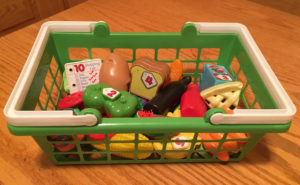
Play Food/Dishes

  • Teach your host children how to say the names of some of the food and dishes in your language.
  • Using English and/or your language play games where you are ordering food like in a restaurant. Take turns with who will be the waiter and who is the customer.
  • Come up with silly food combinations.  For example: Who wants pickles on their slice of cake?
  • Play a guessing game where the children have to figure out what food you are talking about.  For example: I grow under the ground in the dirt.  People eat me fried, mashed and baked.  What am I? (a potato)
  • Play a game with setting the table using your language to ask for the different items (plate, spoon, etc.)
  • Ask the children to divide the foods up into the different food groups (vegetables, meat, dairy, etc.)

Lego Blocks and Other Building Toys

  • Divide up all of the blocks between the people playing, by taking turns for each person to select block by block.
  • Suggest specific things to build (robots, houses, mountains etc.) and build together.
  • Challenge everyone to use all of their blocks.
  • Sort the blocks by color or shape and make patterns with them (red, blue, red, blue or square, triangle, rectangle.)  You can create a pattern and ask the child to fill in what comes next to continue the pattern.
  • Make the tallest block tower you can and let them knock it down (over and over again, if like most kids, they like destroying things.)

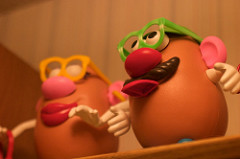
Mr. Potato Head

  • Teach your host children the names of the different parts in your language and play a game asking them to put on the body parts by name.
  • Play Hide and Seek with Mr. Potato Head. Have the children cover their eyes and count, while you hide Mr. Potato Head, then they go looking for him. Switch things up by letting them hide Mr. Potato Head and then you are the one to locate him.
  • Play the same game above, but using Simon Says.  Simon Says is a game where the leader gives commands by saying “Simon says” first. For example, “Simon says, put on the nose.”  The players are only to follow the commands when the leader says “Simon says.”  If the leader doesn’t say “Simon says” first and just says, “put on the nose,”  and the player follows the command, they are out of the game.  Repeat the game multiple times, so all kids get a turn to be the leader at least once.

Photos:  Lisa Maxwell (top) & Tom Smalls (bottom)

Avoiding Homesickness this Holiday Season

Homesickness can be a problem during the holidays, even if it hasn’t been at any other time of the year. Au pairs often miss their friends and family, familiar places and their own traditions and customs. The holiday activities in the United States seem, and may actually be, different just at a time when an au pair would welcome something familiar. 
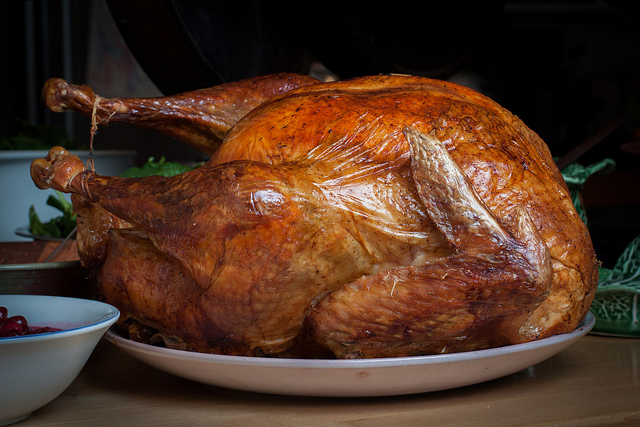
It is common for au pairs’ emotions to be close to the surface during the holidays. Her highs are higher, her lows are lower. The enormity of what she has done–actually living in another country (which is an amazing thing when you think about it!)–hits her and throws her into a self-protective mode.

Host parents can help her through this unfamiliar territory by talking to her about what your specific family activities will be (gifts, meals, visitors, religious services, in-home traditions, or none of these, as the case may be.) In the spirit of cultural exchange, ask her if she has any favorite holiday traditions or foods that you might be able to incorporate into your family’s celebration of the season. Let her know what you will be doing, when you will be doing it, and what she can expect. Talk to her about what has to be accomplished and get her involved and interested. Don’t expect her to just “know” what needs to be done. Give her some clear, agreed upon assignments. Make her feel a part of things. And, let her know her contribution is needed and appreciated.

Photo: Sheila Sund (Flickr)

5 Thanksgiving Tips for Au Pairs & Host Parents

Thanksgiving is celebrated on the fourth Thursday of November each year. Even though a few other countries also celebrate Thanksgiving, it’s still considered a uniquely American holiday, one that the au pairs look forward to experiencing. You can learn more about it here.

I really enjoyed Thanksgiving with my host family. It was as I imagined! So much food to try. Everyone got dressed up and shared what they were thankful for. It was so warm and special. The next day we began to prepare for Christmas. It was magical.” Selina from Germany

Below you will find some tips to help you have a terrific Thanksgiving experience.


Host Parents

1.  Please plan to include your au pair in your Thanksgiving celebration, if at all possible. Thanksgiving with an au pair offers an opportunity to consider the relevance of the history and meaning of Thanksgiving as you compare the hospitality offered by the Native Americans to the recently arrived Pilgrims and the hospitality you offer your au pair.

2.  If you are traveling or will not be able to invite your au pair to join you for Thanksgiving, give her plenty of notice and help her make alternate plans. You don’t want to leave your au pair alone over the holiday.

Au Pairs

3.  If you are invited to attend dinner, please let your family know within 5 days of the invitation, whether you are planning to attend. It is considered rude in America to accept the invitation for dinner and then change your mind later in the month. Please be thoughtful.

4.  Make sure to discuss time off during this holiday weekend. Many host families work the Friday after Thanksgiving so do not assume you have this day off or the entire weekend. Talk to your host family, BEFORE you make any plans.

5.  If your host family is unable to include you in their Thanksgiving plans, please let me know if you have trouble making other plans. You may be able to join a friend and their host family for the holiday dinner.

Bonus Tip for the Kids

If you are looking for a fun recipe to make with your au pair, check out these turkey cupcakes. Find more fun activities and recipes on the Au Pair in America Fall Holidays pinboard.

Photo: Tim Sackton (Flickr)

It’s national pizza month!

Pizza is easy and fun to make and can be a nutritious meal for the children. Buy ready made pizza dough (in the refrigerated or freezer section at the supermarket) or a ready-made crust (in the bread department). Buy shredded mozzarella cheese and a jar of pizza sauce. If you want meat on the pizza you can cook a small amount of ground beef in a pan until it is brown. If you would like vegetables, sauté some sliced peppers, onions or mushrooms in a little bit of oil. You and the children can then make the pizza. First the dough or crust goes on a cookie sheet or pizza pan if you have one. Then spread the sauce, add the other toppings, and last of all, sprinkle the cheese. Bake as directed for the crust. Be careful, as the oven must be very hot to make a nice crusty pizza.

Just add water!

How to Play 15 Fun Water Games thumbnail

On a hot day nothing is more refreshing than water, for both drinking and playing. Toddlers and pre-schoolers might enjoy a wading pool (never be more than an arm’s length away from a child in a wading pool); children of any age can enjoy running through a sprinkler. School age children would enjoy shooting targets with a water gun, or a water gun fight. For children up to about age six, a large paintbrush and a pail of water can keep them happy and busy as they ‘repaint’ the house. If you have a sandbox, adding some water to it creates new options for pre-schoolers.

Find more water fun at  http://www.ehow.com/how_2324761_play-fun-water-games.html

Cool off with some indoor games!

Here are two simple games to play with young children when it is too hot out to be very active.

I Spy – To play this game simply choose an object within eyeshot and state the color of the object (or with older children say the first letter that the name of the object begins with). For example, if your object is a banana you say “I spy with my little eye, something yellow (or beginning with ‘B’)” Each person takes turns guessing what object you spied. Whoever guesses the object gets to go next.

Hide It – Hide an object in an obvious place. For example, place your portable telephone on top of the television. The first person to find the telephone gets to pick the next object and hide it. The only rule is that the object cannot actually be “hidden”, it must be in a visible place and not hidden from view.

http://www.ehow.com/list_6718041_easy-play-kids-inside-outside.html

Preventing Dehydration in Hot Weather

Dehydration means that the body lacks the necessary amount of fluid. Infants and small children are more likely to become dehydrated than older children or adults, because they can lose relatively more fluid quickly.
Here are some steps to take to make sure children remain hydrated in the summer months:

  • Encourage your child to drink plenty of water. On hot days, children should drink significantly more water than usual, as they are losing more due to the heat.
  • Do not wait until your child is thirsty to give him water. By the time they feel thirsty, they are already becoming dehydrated.
  • If your child is resistant to drinking enough water, have other liquids on hand for your child to drink throughout the day.
  • Be alert to changes in behavior. A child may act confused or more irritable when they are becoming dehydrated/overheated. Get them into cooler temperatures and drinking more fluids.
  • Dress your child in lightweight clothing in the summer months, particularly if she’ll be playing outdoors in warm weather. You may also consider clothes that are well ventilated as they do not trap heat close to the body.
  • When there are heat and/or air quality advisories because the weather is dangerously hot, you should avoid taking the children outdoors. Check with your host parents for further guidance on this topic.

Remember to follow these tips for yourself too, so you stay well hydrated.

Photo: Darwin Bell (Flickr)

Fun indoor activities!

Fishing at home (for children over 3)

Look around the house and spend some time with the child finding things that will stick to a magnet. Tie a piece of string to a stick. At the other end of the string tie a magnet. Put paper clips and other things that are magnetic in the “pond.” Or cut out paper fish and put a paper clip on each one.


Make a life-size paper doll (for children over 3)

Have the child lie down on a large piece of brown wrapping paper and draw an outline around the child. Let the child use crayons, markers or paint to put clothes and a face on the “doll.” It can also be a collage by cutting out fabric pieces for the clothes and yarn, string or even styrofoam pieces for the hair. In warm weather go outside and trace the child on the sidewalk with chalk and then color in clothes and hair.


Paper Butterflies: Fold a piece of paper in half. Open the paper and drop small amounts of paint on half of the paper. Fold the paper in half again and rub your hand across the paper to spread the paint colors that are inside the folded paper together. With the paper still folded, cut out the shape of one side of a butterfly. Unfold the paper to see both sides of the butterfly. Allow the paint to dry, then draw the body and add antennae if you wish.


Children as young as three would love a Secret Hideout. This can be created out of a corner of the yard, under some branches, in a large appliance box, or by constructing a hiding place with blankets. Eat lunch in the hideout for a special treat. Imagine you are being discovered by pirates, or that your hideout is on a desert island. The same structure can be used in many different ways. School age children might enjoy building a hideout themselves (with your help). Cut a swinging door and windows into a large box from a refrigerator or a stove. Decorate with paint or markers. Furnish with small furniture or pillows. If there’s some extra fabric around you could even add curtains

Photo from disneyweddingblog.com

Handling Expenses

Host parents often ask for suggestions on how best to handle common expenses that occur as au pairs are caring for the children.

Miscellaneous Expenses

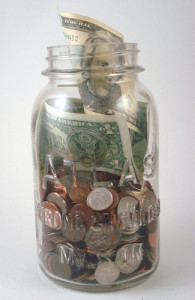
There are different ways to handle the little day to day expenses that come up.  Things like when an au pair takes the kids out for ice cream or picks up a gallon of milk.  Some families keep a cookie jar fund, a little cash that they set aside weekly or monthly for these types of expenses. Others give their au pair a prepaid debit card for this purpose. Below are some suggestions for avoiding problems with expenses.

Host Families

  • It’s important to be clear about how long this money should last and what types of expenses are approved.
  • Let the au pair know whether or not you expect receipts.

Au Pairs

  • Only spend the money on approved expenses.
  • If it is something you are not sure about, ask first.
  • Put your receipts in the cookie jar in place of the money to avoid any confusion.

Gas and Fare Cards 

Host families are responsible for the au pair’s transportation costs: to and from classes, cluster meetings and when driving the kids.

It is a good idea to figure out how much gas an au pair will use for these trips and either put gas in the car or give a gas allowance.   If your au pair is riding to classes or cluster meetings with another au pair, you should offer to share the cost of gas.

Au pairs are responsible for their own transportation at all other times.  You should replace the amount of gas used for personal use.

Photo: Andrea Travillian