Tag Archives: au pair

Building positive self esteem in your children

Most American parents want their children to be independent and responsible, and have a positive image of themselves. A child’s self image is based on how the child sees himself or herself. This is called self-esteem. It is defined by the judgments children make about their own self worth. Self-esteem can be positive or negative. In America, positive self-esteem is very important.

A child may have positive or high self-esteem at different points in his/her life and negative or low self-esteem at other times. Most preschool-aged children typically have very high self-esteem. As children get older, their peers become more critical of each other and can affect a child’s self-esteem. As children move into the elementary school and middle school their self-esteem can decrease for a period of time due to the criticism from their friends.

There are several ways for parents and au pairs to build positive self-esteem in children and have them feel good about themselves. The suggestions include:

  1. Providing warmth, support and praise
  2. Using positive discipline
  3. Being responsive to a child’s needs
  4. Having reasonable, age-appropriate expectations of a child
  5. Developing and enforcing consistent limits
  6. Providing opportunities for a child to make choices
  7. Providing opportunities for a child to explore, investigate and problem-solve
  8. Encouraging a child to be responsible for their actions
  9. Expressing interest in a child and his or her activities.
  10. Helping a child handle disappointment and failure.
  11. Providing opportunities for a child to succeed.
  12. Providing opportunities for a child to help other people.

Take time to read a book today!

It is never too early to start reading to children.  Children of all ages enjoy having stories read to them.  Reading, cuddling up on a couch or reading before a child takes a nap or goes to sleep at night, is comforting for the child.  This special time together builds a bond, take the time to read to the children in your life.

  • Read slowly, this gives children time to think about what you are reading.
  • Change your voice for different characters, or read in a softer voice from some characters, louder for others.   A sing song voice is fun for young children.
  • family-reading_300
  • Share a picture book with a child and have them tell you a story from the pictures!
  • Read every day!
  • Children have favorites, so don’t worry if they want the same story every day, but add a few others so they can develop new favorites.
  • Talk about the story, ask the children what was their favorite part.  Let them share the story back to you or their parents!
  • Do arts and crafts about the story.  Have them draw you a picture about the story.
  • If the children are old enough to read themselves, have them read you a story.  Alternate, you read, they read.  This will encourage them to read more!
  • Have fun, read stories about subjects you and the children enjoy!
  • Turn off the TV and computer and read!


Celebrate National Bubble Day!

Celebrate National Bubble Day! Kids and adults of all ages enjoy the colors, shapes and possibilities of bubbles.

Create a beautiful portrait or just make homemade bubbles for an afternoon of fun and adventure.

Bubble Burst Paintings

Blowing bubbles never seems to lose its charm for little kids, but here’s a colorful way to make a good thing even better. To start, stir 2 tablespoons of tempera paint or 15 drops of food coloring into a 1/2-cup of bubble solution. Then tape a large piece of paper to a fence or between two trees and have your child blow the bubbles against it. The end result will likely be more about the process than the final product, but he’ll love watching the bubbles hit the paper and burst into vibrant circles and splatters.

Homemade Bubble Recipe

This recipe is a winner. It’s easy to mix up–and inexpensive to boot. Simply stir together 6 parts water, 2 parts Joy dishwashing liquid (this brand works the best), and 3/4 part corn syrup. Store in a covered container.

Have your kids try experimenting with a variety of homemade bubble wands: pipe cleaners bent into interesting shapes, cookie cutters, yogurt lids with the centers cut out, and so on. For a giant bubblemaker, cut off the top and bottom of a large metal can with a can opener and hammer the inside edges until they are smooth (a parent’s job). Dip either end in the solution and wave through the air.

For more fun, try these additional bubble-making techniques.

ABC’s of Winter Fun

snowflake

A is for Art – try drawing, painting or gluing
B is for Baking – bake a dessert together for dinner
C is for Clay – Use non-hardening clay or play dough to shape and mold
D is for Dance – put on a lively tape
E is for Exercise – be sure to get some everyday
F is for Friends – invite some over
G is for Greenhouse – find a local greenhouse to visit to enjoy the sights and smells
H is for House – make a playhouse from a large appliance box
I is for Ice skating – take the children to a local rink
J is for Jigsaw puzzle – be sure to pick one that isn’t too difficult
K is for Kitchen science – try a safe experiment
L is for Library – borrow some new books
M is for Movie – make one with a video camera, or watch one
N is for Necklace – make one out of cereal or macaroni
O is for Origami – learn to make simple paper creations
P is for Puppets – socks make easy and fun puppets – put on a show!
Q is for Quiet Time – everyone needs some of this
R is for Reading aloud – choose a good book and a comfortable place to sit
is for Seeds and Suet – put out food for the birds and watch them eat
T is for Tent – make one from old blankets and chairs
U is for Unplugged – do a day with no TV
V is for Variety – try something new everyday
W is for Walk – take one in any weather (be sure to dress appropriately)
X is for Xylophone – make your own with glasses, water and a metal spoon
Y is for Year – make a calendar or scrapbook to remember the year
Z is for Zoo – visit the animals

Welcome winter!

Animals handle cold winter weather in a variety of ways. Some travel to a warmer climate. Others grow thicker fur coats so they can stay warm and active during the winter. Many animals hibernate during the coldest weather – they spend the warmer months eating and storing as much body fat as they can and then live off this extra weight as they sleep. Learn about hibernation as winter starts:

At the library!

  • The Story of Jumping Mouse: A Native American Legend by John Steptoe
  • Time to Sleep by Denise Fleming
  • When Will It Be Spring? By Catherine Walters
  • The Valentine Bears by Eve Bunting
  • Bearymore by Don Freeman
  • Bernard Bear’s Amazing Adventure by Hans de Beer
  • Wake Me in Spring by James Preller
  • Every Autumn Comes the Bear by Jim Arnosky
  • Chipmunk Song by Joanne Ryder

Play “hibernation” – pretend to be one of the animals you have researched. Curl up and “sleep,” then wake up HUNGRY for snack time!

Why should you choose an au pair?

Tips for Host Families

Why do families choose to use the services of an au pair? There are lots of reasons.

First of all, au pairs provide experienced, loving, live-in childcare. Every au pair has hours and hours of experience caring for children. Families can look at their applications and see exactly what ages and what kind of care and match that experience with their needs.

Second, au pairs bring cultural awareness and diversity to American families. Many families enjoy learning about different cultures and traditions. It is also common for people to want their children to be comfortable with people of different backgrounds, particularly in today’s international business world.

Third, au pairs can be much more economical than traditional childcare, particularly for families with multiple children.

Au pairs coming through Au Pair in America are carefully vetted, go through a state-of-the-art orientation upon their arrival in the US, and have ongoing, local support in the person of a local Community Counselor. The CC also provides ongoing support to the host families from their initial contact with the agency, through the selection process, and during the year. Our counselors have an average of about 12 years experience and are very familiar with the visa requirements, the educational opportunities in the area, and how to deal with possible issues, such as homesickness. The agency provides health insurance and liability insurance, and 24 hour emergency support.

Having live-in childcare is definitely not the right option for every family, but if your family is considering it, look into having an au pair. It could be the answer you’re looking for!

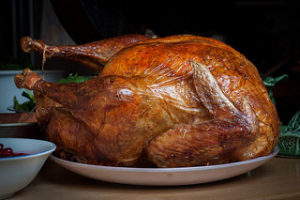
Happy Thanksgiving!

8218985089_5bc55ec863_n

Thanksgiving is a public holiday celebrated on the fourth Thursday in November every year in the United States. It started as a harvest festival and has been celebrated nationally on and off since 1789.  The most important part of Thanksgiving for American families is to spend family time together.


Here are some fun facts about this special holiday:

  • The first Thanksgiving was held in the autumn of 1621 and included 50 Pilgrims and 90 Wampanoag Indians and lasted three days.
  • The first Thanksgiving was eaten with spoons and knives — but no forks! Forks weren’t even introduced to the Pilgrims until 10 years later and weren’t a popular utensil until the 18th century
  • Thanksgiving is the reason for TV dinners! In 1953, Swanson had so much extra turkey (260 tons) that a salesman told them they should package it onto aluminum trays with other sides like sweet potatoes — and the first TV dinner was invented
  • Presidential pardon of a turkey: Each year, the president pardons a turkey and spares it from being eaten for Thanksgiving dinner. The first turkey pardon ceremony started with President Truman in 1947. President Obama pardoned a 45-pound turkey named Courage, who has flown to Disneyland and served as Grand Marshal of the park’s Thanksgiving Day parade!
  • Why is Thanksgiving the fourth Thursday in November? President Abe Lincoln said Thanksgiving would be the fourth Thursday in November, but in 1939 President Roosevelt moved it up a week hoping it would help the shopping season during the Depression era. It never caught on and it was changed back two years later.
  • How did the tradition of watching football on Thanksgiving start? The NFL started the Thanksgiving Classic games in 1920 and since then the Detroit Lions and the Dallas Cowboys have hosted games on Turkey Day. In 2006, a third game was added with different teams hosting
  • About 90 % of Americans eat turkey on Thanksgiving Day
  • The ‘wishbone’ of the turkey is used in a good luck ritual on Thanksgiving Day.

Photo: Tim Sackton

Winter driving safety tips

Driving safely on icy roads

  1. Decrease your speed and leave yourself plenty of room to stop. You should allow at least three times more space than usual between you and the car in front of you.
  2. Brake gently to avoid skidding. If your wheels start to lock up, ease off the brake.
  3. Turn on your lights to increase your visibility to other motorists.
  4. Keep your lights and windshield clean.
  5. Use low gears to keep traction, especially on hills.
  6. Don’t use cruise control or overdrive on icy roads.
  7. Be especially careful on bridges, overpasses and infrequently traveled roads, which will freeze first. Even at temperatures above freezing, if the conditions are wet, you might encounter ice in shady areas or on exposed roadways like bridges.
  8. Don’t pass snow plows and sanding trucks. The drivers have limited visibility, and you’re likely to find the road in front of them worse than the road behind.
  9. Don’t assume your vehicle can handle all conditions. Even four-wheel and front-wheel drive vehicles can encounter trouble on winter roads.

It’s John Philip Sousa’s birthday!

John Philip Sousa was born in 1854 and is famous for composing over 100 marches – classic American patriotic music. Make a marching band with the children (you might need to invite some friends) and have a parade. Children love to make noise, so you don’t need fancy instruments. Try two pot lids as cymbals, a stick and an empty cardboard or plastic container as a drum. Sandpaper rubbed together makes a great noise too! Homemade flags or paper hats would dress up your parade even more.