

Category Archives: Au Pair Tips

Hints for Success – Overcoming Homesickness

Almost everyone experiences homesickness and culture shock to some degree, when they come to live in a completely new environment. So much is different and it takes time to adjust.

It is normal to miss your own family, at home. Try to remember that they support you and want you to make the most of this experience. They will enjoy learning more about the U.S., through your eyes, as you share your adventures with them.

Top 5 Tips for Dealing with Homesickness

1. Make Friends – Don’t wait for other au pairs to reach out to you, reach out to them. There are other lots of new au pairs who are feeling the same way you are right now. Set a goal to reach out to a few of them each day. Some will respond and some will not. Don’t let that discourage you. No one will ever be mad at you for sending them a message to say hello or ask if they want to do something together. Make friends from various countries and you will also get a chance to practice your English skills together.

2. Stay in touch with your home country, but not too much. Skyping or talking on the phone every day with your family and/or friends back home normally makes homesickness worse. Try emailing instead and reduce the Skype and phone calls to once a week, until you feel stronger. It’s much harder seeing the faces and hearing the voices of those you miss.

3. Get out of the house (or your room specifically) – Go to cluster meetings, have coffee or movies with other au pairs, join a gym, go to the library, go for a walk, visit the mall, get a manicure, visit a museum. If someone invites you out, say “yes.” Also, don’t be afraid to do the inviting. If your host family invites you to do things with them, say “yes.” This will help you get to know each other and contribute to your overall happiness.

4. Realize that it definitely gets better – All au pairs experience homesickness and the vast majority of them get through it, stay and have a successful year (some even extend for a second year!) So, it must get better, right? Once you get past the initial homesickness, most au pairs report how quickly the year goes by.

5. Make Plans – Create your own Au Pair Bucket List (places you want to go, new foods to try, new things to experience during your year in the U.S.) and start doing them now. Post on our cluster Facebook group to find others who may want to join you on your adventures.

Photo by:  Shimelle Laine (Flickr)

SaveSaveSaveSaveSaveSaveSaveSave

Preventing Dehydration in Hot Weather

Dehydration means that the body lacks the necessary amount of fluid. Infants and small children are more likely to become dehydrated than older children or adults, because they can lose relatively more fluid quickly.

Here are some steps to take to make sure children remain hydrated in the summer months:

  • Encourage your child to drink plenty of water. On hot days, children should drink significantly more water than usual, as they are losing more due to the heat.
  • Do not wait until your child is thirsty to give him water. By the time they feel thirsty, they are already becoming dehydrated.
  • If your child is resistant to drinking enough water, have other liquids on hand for your child to drink throughout the day.
  • Be alert to changes in behavior. A child may act confused or more irritable when they are becoming dehydrated/overheated. Get them into cooler temperatures and drinking more fluids.
  • Dress your child in lightweight clothing in the summer months, particularly if she’ll be playing outdoors in warm weather. You may also consider clothes that are well ventilated as they do not trap heat close to the body.
  • When there are heat and/or air quality advisories because the weather is dangerously hot, you should avoid taking the children outdoors. Check with your host parents for further guidance on this topic.

Remember to follow these tips for yourself too, so you stay well hydrated.

Photo: Darwin Bell (Flickr)

Holiday & Vacation Reminders

“Rest and be thankful.” – William Wordsworth

Holidays and vacations are a great opportunity to rest, recharge and explore the U.S.

Memorial Day Weekend is the unofficial start of summer travel season. Here are some reminders about program rules regarding holidays and vacations.

Holidays

  • Host families are not required to give au pairs any specific holidays.
  • Each host family will make different arrangements on holidays, some au pairs will be off and others will be required to work.
  • Au pairs should not make plans for holidays without checking with your host family first.

Vacations

  • Au pairs earns 2 weeks of paid vacation during the course of her year.
  • Vacation time should be mutually agreed upon.
  • All vacation should be preplanned (at least 4 weeks in advance.)
  • All au pair’s friends and/or family visits/vacations should be pre-approved prior to purchasing tickets.
  • If an au pair travels with her host family, it should be discussed in advance whether this is the au pair’s vacation or if she is working.
  • If an au pair travels with the host family to work, the host family is required to pay for her transportation, lodging and meals.

Important: If an au pair is traveling outside of the U.S., she must have her DS2019 signed (travel validation) PRIOR to her departure from the US. More information about this may be found here on the Au Pair in America website.

Photo: torbakhopper (Flickr)

Helping Young Children Learn Language

Being an au pair is an important role in a child’s life. When you are caring for a young child up to 45 hours per week, there are lots of opportunities to help them learn language. Many host parents are eager for their children to be exposed to foreign language. If this is true of your host parents, you can try the suggestions below, in both English and your native language.
Below are a few tips to start with, for more ideas, check out Ready at Five.

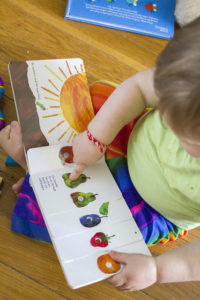
  • Read – Read to them daily, point out pictures and ask questions. Even if they can’t answer the questions, this is still modeling conversation.
  • Talk – Point out objects around them, names of their body parts, explain what you are doing and places you are going. Long before babies can speak, they benefit greatly from being spoken to.
  • Sing – You can sing childhood classics or make up your own silly songs. If you are looking for song ideas, HERE is a great website with lists of songs, lyrics and links to YouTube videos* of the songs.  Children’s music is also available at the public library and even on iTunes.
  • Words – As children move from toddlers to preschoolers begin to point out written language.
  • Writing – Toddlers and preschoolers can begin to learn pre-writing skills by drawing with crayons or doing finger paints.

*The American Academy of Pediatrics recommends no screen time for babies under 18 months of age. For children 18 months to 5 years they recommend no more than 1 hour of high quality content. You can play the songs on youtube for the audio and not necessarily show the screen to the child.

Photo: Quinn Dombrowski (Flickr)

Handling Expenses

Host parents often ask for suggestions on how best to handle common expenses that occur as au pairs are caring for the children.


Miscellaneous Expenses

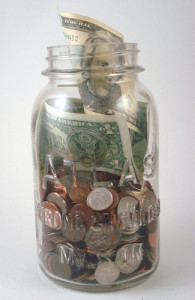
There are different ways to handle the little day to day expenses that come up.  Things like when an au pair takes the kids out for ice cream or picks up a gallon of milk.  Some families keep a cookie jar fund, a little cash that they set aside weekly or monthly for these types of expenses. Others give their au pair a prepaid debit card for this purpose. Below are some suggestions for avoiding problems with expenses.

Host Families

  • It’s important to be clear about how long this money should last and what types of expenses are approved.
  • Let the au pair know whether or not you expect receipts.

Au Pairs

  • Only spend the money on approved expenses.
  • If it is something you are not sure about, ask first.
  • Put your receipts in the cookie jar in place of the money to avoid any confusion.

Gas and Fare Cards 

Host families are responsible for the au pair’s transportation costs: to and from classes, cluster meetings and when driving the kids.

It is a good idea to figure out how much gas an au pair will use for these trips and either put gas in the car or give a gas allowance.   If your au pair is riding to classes or cluster meetings with another au pair, you should offer to share the cost of gas.

Au pairs are responsible for their own transportation at all other times.  You should replace the amount of gas used for personal use.

Photo: Andrea Travillian

Trick or Treat: Gluten Free Candy Guide

halloween-candy

As many of you already know Halloween is almost here! Halloween is a favorite among many Americans, although it isn’t a nationally recognized holiday and we still have to go to work or school, Halloween is celebrated for its many elaborate traditions. The origin of Halloween dates back to Europe in the eighth century and has since become a secular community-based event characterized by child-friendly activities like trick- or- treating and carving spooky faces into pumpkins. The “treat” part of Halloween is not to be taken lightly. Children will come home from a night of trick- or- treating with buckets of candy. For many children, eating too much candy can lead to sugar high or a just stomach ache, but for those with a gluten intolerance eating too much of the wrong candy can lead to severe consequences.

pumpkinvomit2

Many parents believe that avoiding candy in general is the best way to keep a child safe from their allergy. However, there are many candies on the U.S market that are actually gluten free! I have attached a great article to share with your host family to assist in learning about safe candy choices. This will help your host kids partake in the joys of trick or treating and will protect them from the awful effects of their gluten intolerance.  Read this article for the Gluten Free Candy list: https://www.verywell.com/gluten-free-candy-list-562806.

  • Remember to always double check the labels for ingredients to insure your child’s safety

To learn more about Halloween and some safety tips for Au pairs, look at my older blog posts found in  the archive.

Vacation Information for Au Pairs

Vacation Information For Au Pairs

Begin to think about your holiday astravels soon as you have settled in with your family, in most cases about a month. Every Au pair has 11 days of holiday, unless you were in rematch. An Au pair in her second family will have her vacation pro-rated between the two families. If she did not take any vacation with her first family, she will be paid for those earned days. The total 11 days will be lessened by this amount for the second family. It is usually best to take two smaller vacations instead of one long vacation. You can think of one holiday per every six months. You will plan to back up your five days off with your weekend off, giving you a longer holiday.

Start talking with other Au pairs about their travel plans. A group trip can be a great way to travel and save money. Trek America, and Cultural Highway have wonderful pre-planned trips.  You can also find great deals through the internet, especially on cruise lines. Try www.mytravelco.com or www. vacationstogo.com. As soon as you have an idea, you will want to talk it over with your host family. They will need time to arrange for alternate childcare or to arrange their vacation at the same time. It might not be possible for the family to accommodate a certain date. Often, a family will know in advance when they want you to take your vacation. This works well, if everyone knows in advance, at least three months.

There are special papers and in some cases visas that will be needed, if you plan to travel outside the United States. These can take up to four weeks, so plan ahead. Refer to the Au Pair In America website for more details about travel outside the USA. There is even a link to your country’s consulate if you have special questions. Canada and Mexico travel is discussed on the web site. You will also need to get your DS-2019 form signed by Au Pair In America for travel outside the USA. You can learn how to go about this on the web site. When mailing your DS-2019 form to Au Pair in America, you need to use UPS or Fed Ex. These mailing services can track a letter and find where it is, in case it gets lost. If you send it regular mail, you cannot “find” it if it gets lost. An Au Pair in the thirteenth month or in an extension term cannot travel outside the USA.

Sometimes vacationing can be confusing. If you go on your host family’s vacation with them, it is not your vacation. It should be thought of as a regular work week with a schedule. All travel and hotel expenses should be paid for by the family. If you have time off during the vacation, your personal expenses are your responsibility. Taking a separate vacation from your family is an important break for you. This allows everyone to benefit. A little fun time away should leave you refreshed and once again ready to give your best to the children in your charge.

Options for care. What an Au pair needs to know!

Options for care- What an au pair needs to know!

Sick too

Au pairs can go to mini clinics for a number or illnesses:

Colds, flu, Cold sores, ear infections

Coughs, headaches, migraines, insect bites, head lice

Urinary tract infections, Sinus infections, rash, Ringworm,

Upper respiratory infections, Pink eye, skin irritations

Stomach aches, diarrhea, nausea and vomiting

Seasonal Allergies

Some examples of mini clinics are:

Urgent Care Center

Walk in clinic

CVS Minute Clinics

Walgreens Take Care Clinics

Primary Care Physician office (This is will require an appointment and might not be available on the same day or after hours)

Mini clinics are open after hours and late hours and do not require an appointment. When visiting these clinics or physicians office please direct receptionist to look on back of card for details of your net work. You are a part of the First Health Network.

To Search for a doctor or clinic in your immediate area go to use the U.S Search Provider Tool.

https://www.aetna.com/dsepublic/#/contentPage?page=providerSearchLanding&site_id=passport

The Customer Service department is available Monday-Friday 9am-5pm Standard Time at

1-800-303-8120 prompt 5 or 203-399-5130 Claimhelp@culturainsurance.com

For emergencies outside normal hours Team Assist is available at 312-935-1703

Au Pairs should avoid using the Emergency Room if the condition is not life threatening.

Three Reasons you should avoid using the Hospital emergency Room for non-threatening illnesses:

1. A 500.00 deductible will be charged if you seek medical care in an Emergency room for an illness that is not deemed to be an emergency. This 500.00 deductible will be charged whether you have the upgraded insurance or the basic insurance. Basic insurance already has a 100.00 deductible, so this would make a 600.00 charge for basic insurance users.

2. Typically the wait for treatment in an emergency room will be long.

3. Hospital emergency rooms are for those with true life threatening injuries or illness. It is important to keep medical coverage available for those who need this care.

Emergency Room picture

Of course, if you are experiencing a true, life threatening emergency, treatment should be sought in an emergency room!

Information was obtained at
www.culturalinsurance.com


Stay Healthy During This Cold and Flu Season!

Stay Healthy During This Cold and Flu Season!

flu

This time of year is common for sickness. The Flu this year in Georgia is particularly dangerous. . This strand of flu affects young people and children more than older adults. . Fox news reported many people in Georgia have already been hospitalized with the flu. If you haven’t gotten a flu shot, you still have time. A flu shot does not give you the flu! This is a myth. Actually, with a flu shot you have a 70% less chance of getting the flu. http://www.cdc.gov/flu/

 I got mine this year! You can go to any CVS, Kroger, Publix or Walgreens stores to purchase a flu shot.


Here are some great tips to help keep you healthy and happy while you are here in the USA!

Eat five servings of fruits and vegetables each day.

heart of vegs and fruits.


Drink at least four glasses of water each day.

Have three good laughs each day. This keeps your immune system primed!

 Jo, Renee and Lumen

Limit computer, TV or phone texting time to less than two hours each day.

texting.

Get one hour of physical activity each day.

Get eight of more hours of sleep.


Host families are usually very supportive of an au pair who gets sick. However, if you are staying up late, going out a lot and generally not taking care of yourself, their reaction may be different. 

Don’t forget to wash your hands. Say the alphabet song or count to 26. This is how long you must wash to ” wash” away a flu bug.

Wash your hands after being out in public places.   germs on hands

Have your school age children wash their hands when arriving home from school.

Do you part to keep yourself healthy. This will help to make your au pair stay in the USA the best it can be!