Category Archives: Au Pair Tips

Big Kids Need Interaction Too

Just because a child is old enough to occupy themselves, doesn’t mean that they should be expected to do so the majority of the time.  Host families have a certain expectation of activity and involvement for their children. Get the kids engaged and active. You can be more fun than the TV or a video game.


Problem:
But, my kids don’t want to do anything but watch TV or play video games.

Solution:
Instead of saying,  “Would you like to (fill in the blank with any activity)?  The answer will often be, “No.”

Try this, “Now we are going to (fill in the blank with any activity.) or “Would you rather do  _____ or ______?”  Make sure both the choices are good options.
Your chances of co-operation are greatly increased. Even kids who are reluctant to try new things will usually get in the spirit of things and have fun, if you pick a good activity.

Problem:
I don’t know what to do with school age kids.

Solution:
Look for ideas online. Google “activities school age kids” or “activities tweens”. Below is a list of some ideas to get you started.

  • Cooking
  • Making things (check craft stores like Michael’s for kits and models that are age appropriate)
  • Going fun places (pottery painting, jewelry making, farms, museums, mini-golf, go-karts)
  • Sports (soccer, tennis, swimming, bicycling, roller skating, ice skating)
  • Let them teach you to do something they enjoy. Kids this age love being the expert.
  • Get outdoors and visit local parks.  You can even make a project of reviewing all the local parks (what kind of equipment they have, is there shade, water fountain?)  They can write this up and keep, so they remember which ones they want to go to again and which ones to skip in the future.
  • Let them help you search and plan some activities.
  • Check on the APIA Pinterest page and here on our cluster blog for ideas.
  • If you have a GPS, try taking them geocaching. Here is a website with all the details.

Note: Always get permission from your host parents before taking the kids places.

Photo: Killian77

Privacy & Personal Information Online

We live in a time of constant sharing through social media. We often share pictures, plans of somewhere we are going or rants about problems, without thinking much about who will see it and what could be the consequences.

Before clicking “post”, stop to think:

  • Am I violating someone’s privacy?
  • Am I sharing personal info. that could put me in danger?
  • Would I want my current or a future employer to see this?

This will help protect your privacy and safety as well as that of your host family. It is important to respect your host family’s privacy and not share personal details and information.  This applies to all kinds of situations, including: personal conversations, email and social websites.

For your own safety, it is a good idea to be careful what personal information you share about yourself as well. You should not give out information like your telephone number and address to people you don’t know. Safer to meet a new friend in a public place, than to give them your address before knowing them.

Once you post something on the internet (even if you later delete it), it can show up elsewhere.  Unless you have specific permission from your host family, you should never post pictures of them, their children or their home on the internet.

If you have a blog or website where you post in your native language, remember there is translation software. So, even if you say it in your native language, be sure it is not something that might be misinterpreted in translation or something you will regret saying.

Thanksgiving in the USA

Thanksgiving Day, is a holiday celebrated in the United States on the fourth Thursday in November. It has officially been an annual tradition since 1863, when, during the Civil War, President Abraham Lincoln proclaimed a national day of “Thanksgiving and Praise to our beneficent Father who dwelleth in the Heavens.”  Thanksgiving, a uniquely American holiday, dates back to the first European settlers in North America.  After much hardship, illness and hard work, the Pilgrims were finally able to celebrate a successful harvest which they shared with their Native American friends who had helped them through their difficult beginning in America.  Today this day is set aside to feast and to give thanks. This is something we can all share, as we too celebrate our cross-cultural friendships. Enjoy the turkey and all the trimmings!

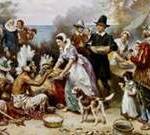
                                                                                                                                               The early settlers at Thanksgiving:Thanksgiving


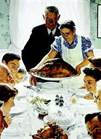
The most recognized American Thanksgiving by Norman Rockwell

Norman Rockwell Thanksgiving


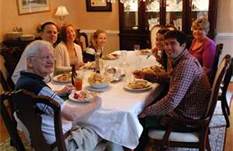
A modern day Thanksgiving. Modern Day Thanksgiving


Some activities to share with the children :

Maple-Nut-Berry Popcorn Balls ( for children ages 3 and older): Add some chopped walnuts and raspberries, blueberries or blackberries. Add enough melted butter to lightly coat popcorn. Stir. Pour maple syrup over the warm popcorn and stir until all the corn, nuts and berries are covered. Shape the sticky corn into balls and place on a plate to refrigerate until the syrup hardens

Looking For A Low Cost Halloween Costume?

Have fun on Halloween or at your Halloween party. Dress in a low cost costume!

Consider some of these ideas:

Use a black make-up pencil and draw cat whiskers and a black cat nose.

cat makeup for Halloween

Pin socks on an all white outfit and goes as dryer lint

Halloween makeup can be purchased at most stores like Target, Walmart and drug stores. Use the makeup to look like a scary creature dressed in black. halloween witch makeup

Read on for more great ideas from   http://www.essortment.com/halloween-costume-ideas-50-funny-ideas-52248.html

Looking for a cheap, easy, fast, funny costume this Halloween? Try one of these ideas, sure to be a hit when trick-or-treating or at parties.

1) Dress up as you normally do. If someone asks what you are, tell them you’re a werewolf. If they ask why you have no hair or fangs, explain that it’s not a full moon.

2) Get a bag of white balloons and a box. Put the box over your head and cut out holes for your arms. Paint the box a bright color and the word “soap” across it. Then tape the bubbles to the top of the box around your shoulders and head.

3) Tape a bunch of green or purple balloons all over yourself (wear green or brown clothing underneath). Go as a bunch of grapes.

4) Wear brown clothes. Get a package of fall silk leaves for decorating (you can get 50 in a pack for about a dollar at craft stores). Tape them all over your arms and on a hat. Get a stuffed bird and perch it on your head. Go as a tree.

5) Wrap yourself in a roll of orange felt. Cut armholes and put an orange ski cap on your head. Go as a carrot stick.

6) Safety-pin a bunch of cheap watches and costume jewelry on the inside of your coat. Go as a con man.

7) Get a large box and paint it white, green or tan. Make a hole at the top for your head and armholes. Glue on some magnets and some post-it notes with shopping lists and phone numbers. Go as a refrigerator.

8) Get a roll of orange yarn and a few bags of roasted pumpkin seeds. Glue them all over a cheap orange sweat suit. Go as pumpkin guts.

9) Wear a t-shirt displaying your favorite brand of soda. Get a foil pie plate, punch two holes in it at either end, and run string through it. Put it on your head like a hat and tie it. You’re a bottle of your favorite drink.

10) Glue some (clean) garbage all over a sweat suit. Go as a trash heap.

11) Throw a white sheet over your head, and cut a hole for your head to come through. Wear a yellow hat and paint your face yellow with make up. Go as a fried egg.

12) Get a poster board, make up a funny advertisement and paint it on. Hang it around your neck and go as a billboard.

13) Put on your rattiest clothes and get a toy shopping cart. Fill it with junk. Go as a shopping cart/bag lady.

14) Dress like a mailman. Get a stuffed dog and sew it’s mouth to your pant leg.

15) Get an gorilla costume. Get one of those headbands with the springs on it, but remove the silver balls from the end and glue on tiny toy air planes. Carry a little Barbie doll in an evening gown and you’re King Kong.

16) Get a large box. Cut a hole for your head and arms. Wrap it with gift wrapping paper and put a big bow on your head. Make a large gift tag out of construction paper that says, “To: Women, From: God.” This year, you can honestly say you’re God’s gift to women.

17) Wear all black and a pair of dark sunglasses, or glasses with a rubber nose. Get a strip of fabric you can fashion into a sash (like a beauty queens) and use fabric paint markers to write, “Bless you,” across it. You’re a blessing in disguise.

18) Get a box and paint it white. Make holes for your head and arms. Paint or draw black spots on it and go as a die. If you have a partner, make two and go as a pair of dice.

19) Get an old black sweat suit. Get yellow fabric paint and paint a double-line down the middle, vertically, front and back. Glue some tiny toy cars up and down your front and back and go as a highway.

20) Get a clear plastic bag, and a bag of assorted colored balloons. Step into the bag and make leg holes and arm holes. Fill it with balloons half-blown up, while you’re still in it. Tie it off at the neck. Get a piece of paper as a label and write,”Jellybeans” across the front. You’re a bag of jellybeans.

21) Get a bunch of Barbie dolls and a black sweat suit. Attach the dolls randomly all over the sweat suit. You’re a babe magnet.

22) Get a medium sized box. Cut a hole at the bottom for your head, and a large, square opening in the front. Put pipe cleaners as antennas and glue soda bottle caps on as knobs. Put it over your head and wear all black. You’re a TV announcer.

23) Wear a black sweat suit and randomly attach single socks all over your clothes. You’re the sock thief from the drier.

24) Get some yellow yarn and brown pom-poms. Glue them all over an old sweat suit. Put an old colander over your head as a hat. Go as spaghetti and meat balls.

25) Wear a clown costume top and paint your face. Get a large box and paint it a bright color. Make a hole for your waist and put it on as if the bottom of a skirt. Go as a jack-in-the-box.


26) Glue a bunch of newspapers to old clothes. Go as paper mache in progress.

27) Get a bunch of small, single-serving sized cereal boxes. Glue them all over some old clothes and bring a big, rubber knife. Go as a cereal killer.

28) Get a box, cut arm holes and a hole for your head. Wrap it in pretty patterned gift paper. Stick a bunch of tissues coming out of the neck, and put on a hat covered with tissues glued all over it. Go as a box of tissues.

29) If you’re very pregnant, paint your belly with orange face paint and draw a pumpkin face on the front. Wear a shirt that opens in front and just fasten it above the belly so the pumpkin protrudes. When you put your arms down around your belly, you’ll look like you’re carrying a jack-o-lantern.

30) Paint your car or bicycle tires with black paint. Lay old clothes front-down on the street and drive over them. Let them dry, put them on and go as road kill.

31) Tie a sneaker to the top of your head, wear all pink and paint your face pink. Go as a piece of gum.

32) Get two large pieces of foam and strap them to your shoulders so one hangs in front, the other in back. Stuff some lettuce leaves coming out of them (or green felt), and on the underside of one glue a big, round, red or brown piece of felt that sticks out of the sides. Go as a sandwich.

33) Get a round piece of cardboard and cut a hole in the center of it. Get a large foil tray and cut a hole in it, as well as a table cloth with a hole in it. Put the cardboard over your head, then the table cloth so it hangs over your body, then the tray. Place lettuce leaves coming out from around the neck hole. You’re a head on a platter.

34) Wear a raggedy old pair of shorts and t-shirt, and go unshaven if your a man. Mess your hair up. Get a garden tiki torch from the party supply store. Go as a recent loser from Survivor.

35) Dress as a dog and put a cardboard cone around your neck to keep you from scratching for fleas.

36) .

37) Glue cotton all over a light blue outfit and carry a water gun to squirt people. You’re a rain cloud.

38) Get a pair of angle wings and put them on your back, dressed in your pajamas, fuzzy slippers and bathrobe. Carry around a coffee cup. Your the “Angel Of The Morning.”

39) Cut out a cardboard shape like a surf board and cover it with fake spider webs. You’re a web surfer.

40) Dress in a business suit and carry around a big jar filled half way up with thumb tacks. Go as the “tacks collector.”

41) Get a devil costume and throw over it the ugliest thrift-store blue dress you can find. Be the, “Devil In A Blue Dress.”

42) Tape a bunch of white colored balloons to a a skin-colored body suit. Wear a shower cap and carry a scrub brush.

43) Wrap your body in aluminum foil and top your head with a beret. You’re a french kiss.

44) Get a rubber pig’s nose and wrap yourself in a blanket. Go as a pig in a blanket.

45) Make a green pumpkin shape out of felt and hang it over yourself. Paint a face on it. Go as Jack O’ Lantern.

46) Get a bag of moss from the craft store’s floral isle. Glue it all over some old clothes and hat and go as a chia pet.

47) Pin underwear to your torso and go as a chest of drawers.

48) Dress like a cat; carry a black bag stuffed with fake jewels overflowing. You’re a cat burglar.

49)Attach gum wrappers, small pieces of pink clay to represent gum, soda cups and popcorn bags and a few kernels of popcorn to a black sweat suit, and go as a theater floor.

Plaster yourself with name tags, using a different name on each, and go as a someone having an identity crisis.

Why do I lose an hour on November 4th? Interesting facts about Daylight Savings Time


Daylight Saving Time ends on 4 November 2018.   
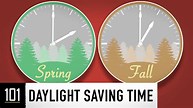
Clocks will go back one hour on Sunday 4 November at 02:00. This means your devices will automatically reverse an hour at the strike of 2:00 a.m.,making it 1:00 a.m.

This information was obtained in an article entitled Daylight Saving Time 2018: A Guide to the When, Why, What and How (https://www.livescience.com/56048-daylight-saving-time-guide.html)

On Sunday, Nov. 4, most Americans will set their clocks back an hour, as daylight saving time (sometimes erroneously called daylight savings time) comes to a close, and most of the United States will “lose” an hour of daylight. These spring and fall clock changes continue a long tradition started by Benjamin Franklin to conserve energy. (This year, however, the Sunshine State is aiming to stop the change and remain in DST year-round, according to a Senate bill and news reports.)

Below is a look at when daylight saving time starts and ends during the year, its history, why we have it now and some myths and interesting facts about the time change.

How Did It Start?          

Benjamin Franklin takes the honor (or the blame, depending on your view of the time changes) for coming up with the idea to reset clocks in the summer months as a way to conserve energy, according to David Prerau, author of “Seize the Daylight: The Curious and Contentious Story of Daylight Saving Time” (Thunder’s Mouth Press, 2005). By moving clocks forward, people could take advantage of the extra evening daylight rather than wasting energy on lighting. At the time, Franklin was ambassador to Paris and so wrote a witty letter to the Journal of Paris in 1784, rejoicing over his “discovery” that the sun provides light as soon as it rises.

Even so, DST didn’t officially begin until more than a century later. Germany established DST in May 1916 as a way to conserve fuel during World War I. The rest of Europe came onboard shortly thereafter. And in 1918, the United States adopted daylight saving time.

Though President Woodrow Wilson wanted to keep daylight saving time after WWI ended, the country was mostly rural at the time and farmers objected, partly because it would mean they lost an hour of morning light. (It’s a myth that DST was instituted to help farmers.) And so daylight daylight saving time was abolished until the next war brought it back into vogue. At the start of WWII, on Feb. 9, 1942, President Franklin Roosevelt re-established daylight saving time year-round, calling it “War Time.” [Learn more about the crazy history of Daylight Saving Time]

After the war, a free-for-all system in which U.S. states and towns were given the choice of whether or not to observe DST led to chaos. And in 1966, to tame such “Wild West” mayhem, Congress enacted the Uniform Time Act. That federal law meant that any state observing DST — and they didn’t have to jump on the DST bandwagon — had to follow a uniform protocol throughout the state in which daylight saving time would begin on the first Sunday of April and end on the last Sunday of October.

Then, in 2007, the Energy Policy Act of 2005 went into effect, expanding the length of daylight saving time to the present timing.

Why do we still have daylight saving time?

Fewer than 40 percent of the world’s countries observe daylight saving time, according to timeanddate.com. However, those who do take advantage of the natural daylight in the evenings. That’s because the days start to get longer as Earth moves from the winter season to spring and summer, with the longest day of the year on the summer solstice. During the summer, Earth, which revolves around its axis at an angle, is tilted directly toward the sun (at least its top half).
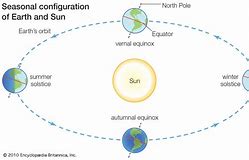
As Earth orbits the sun, it also spins around its own imaginary axis. Because it revolves around this axis at an angle, different parts of our planet experience the sun’s direct rays at different times of the year, leading to the seasons.

Credit: BlueRingMedia / Shutterstock.com

Regions farthest away from the equator and closer to the poles get the most benefit from the DST clock change, because there is a more dramatic change in sunlight throughout the seasons.

Research has also suggested that with more daylight in the evenings, there are fewer traffic accidents, as there are fewer cars on the road when it’s dark outside. More daylight also could mean more outdoor exercise (or exercise at all) for full-time workers.

Energy savings

The nominal reason for daylight saving time has long been to save energy. The time change was first instituted in the United States during World War I, and then reinstituted again during World War II, as a part of the war effort. During the Arab oil embargo, when Arab members of the Organization of Petroleum Exporting Countries (OPEC) stopped selling petroleum to the United States, Congress even enacted a trial period of year-round daylight saving time in an attempt to save energy.

But the evidence for energy savings is slim. Brighter evenings may save on electric lighting, said Stanton Hadley, a senior researcher at Oak Ridge National Laboratory who helped prepare a report to Congress on extended daylight saving time in 2007. But lights have become increasingly efficient, Hadley said, so lighting is responsible for a smaller chunk of total energy consumption than it was a few decades ago. Heating and cooling probably matter more, and some places may need air-conditioning for the longer, hotter evenings of summer daylight saving time.

Hadley and his colleagues found that the four weeks of extra daylight saving time that went into effect in the United States in 2007 did save some energy, about half of a percent of what would have otherwise been used on each of those days. However, Hadley said, the effect of the entire months-long stretch of daylight saving could very well have the opposite effect. A 1998 study in Indiana before and after implementation of daylight saving time in some counties found a small increase in residential energy usage. Temporary changes in Australia’s daylight saving timing for the summer Olympics of 2000 also failed to save any energy, a 2007 study found.

Part of the trouble with estimating the effect of daylight saving time on energy consumption is that there are so few changes to the policy, making before-and-after comparisons tricky, Hadley told Live Science. The 2007 extension of daylight saving time allowed for a before-and-after comparison of only a few weeks’ time. The changes in Indiana and Australia were geographically limited.

Ultimately, Hadley said, the energy question probably isn’t the real reason the United States sticks with daylight saving time, anyway.

“In the vast scheme of things, the energy saving is not the big driver,” he said. “It’s people wanting to take advantage of that light time in the evening.”

Who observes daylight saving time? (and who doesn’t)

Most of the United States and Canada observe DST on the same dates. But of course, there are exceptions. Hawaii and Arizona are the two U.S. states that don’t observe daylight saving time, though Navajo Nation, in northeastern Arizona, does follow DST, according to NASA.

And, every year there are bills put forth to get rid of DST in various states, as not everyone is keen on turning their clocks forward an hour. This year, Florida’s Senate and House passed legislation called the Sunshine Protection Act that would ask the U.S. Congress to exempt the state from the federal 1966 Uniform Time Act. If approved, Florida would remain in DST year-round. In order to allow Florida’s year-round DST, however, the U.S. Congress would have to amend the Uniform Time Act (15 U.S.C. s. 260a) to authorize states this allowance, according to The New York Times.

And in California, voters may get to decide: In this fall’s statewide ballot, voters can vote for or against Proposition 7 that would attempt to repeal the annual clock changes. If the Prop gets approved, that would mean the Legislature can act to eliminate the time changes, possibly leading to year-round DST, according to Land Line magazine.

Other states have also proposed exemptions from the federal time act. For instance, Sen. Ryan Osmundson, R-Buffalo, introduced Senate Bill 206 into the Senate State Administration Committee in February 2017, which would exempt Montana from daylight saving time, keeping the state on standard time year-round, according to the bill. Three bills put forth last year in Texas aimed to abolish DST for good: House Bill 2400, Senate Bill 238 and House Bill 95, according to the broadcast company kxan. Nebraskans may be off the hook for clock changes as well. In January 2017, state Sen. Lydia Brasch, a Republican of Bancroft, proposed a bill called LB309 to eliminate daylight saving time in the state, according to the bill.

Some regions of British Columbia and Saskatchewan don’t change their clocks. These include the following areas in British Columbia: Charlie Lake, Creston (East Kootenays), Dawson Creek, Fort St. John, and Taylor; In Saskatchewan, only Creighton and Denare Beach observe DST, according to NASA.

Most of Europe currently observes daylight saving time, called “summer time,” which begins at 1 a.m. GMT on the last Sunday in March and ends (winter time) at 1 a.m. GMT on the last Sunday in October. However, even the European Union may propose an end to clock changes, as a recent poll found that 84 percent of 4.6 million people surveyed said they wanted to nix them, the Wall Street Journal reported.

If the lawmakers and member states agree, the EU members could decide to keep the EU in summer time or winter time, according to the WSJ.

The United Kingdom moved their clocks forward on March 26, 2017, and back again to standard time on Oct. 29, 2017, according to the U.K. government. They performed this same ritual on March 25, and will again on Oct. 28, 2018.

The DST-observing countries in the Southern Hemisphere — in Australia, New Zealand, South America and southern Africa — set their clocks an hour forward sometime during September through November and move them back to standard time during the March-April timeframe.

Australia, being such a big country (the sixth-largest in the world), doesn’t follow DST uniformly: New South Wales, Victoria, South Australia, Tasmania and the Australian Capital Territory follow daylight saving, while Queensland, the Northern Territory (Western Australia) do not, according to the Australian government. Clocks in the observing areas spring forward an hour at 2 a.m. local time on the first Sunday in October and push back an hour at 3 a.m. local daylight time on the first Sunday in April.

Russia instituted year-round daylight saving time in 2011, or permanent “summer time,” which seemed dandy at first. But in the depths of winter, sunrise occurred at 10 a.m. in Moscow and 11 a.m. in St. Petersburg, Prerau, author of “Seize the Daylight: The Curious and Contentious Story of Daylight Saving Time,” said. This meant Russians had to start their days in the cold, pitch-dark. The permanent summer is coming to an end, however, as now Russian president Vladimir Putin abolished DST in 2014, according to BBC News. As such, the country will remain in “winter time” forever, or until another law is passed.

Myths and Interesting Facts

  • Turns out, people tend to have more heart attackson the Monday following the “spring forward” switch to daylight saving time. Researchers reporting in 2014 in the journal Open Heart, found that heart attacks increased 24 percent on that Monday, compared with the daily average number for the weeks surrounding the start of DST.
  • Before the Uniform Time Act was passed in the United States, there was a period in which anyplace could or could not observe DST, leading to chaos. For instance, if one took a 35-mile bus ride from Moundsville, West Virginia, to Steubenville, Ohio, he or she would pass through no fewer than seven time changes, according to Prerau. At some point, Minneapolis and St. Paul were on different clocks.
  • A study published in 2009 in the Journal of Applied Psychologyshowed that during the week following the “spring forward” into DST, mine workers got 40 minutes less sleepand had 5.7 percent more workplace injuries than they did during any other days of the year.
  • Pets notice the time change, as well. Since humans set the routines for their fluffy loved ones, dogs and cats living indoors and even cows are disrupted when, say, you bring their food an hour late or come to milk them later than usual, according to Alison Holdhus-Small, a research assistant at CSIRO Livestock Industries, an Australia-based research and development organization.
  • The fact that the time changes at 2 a.m. at least in the U.S., may have to do with practicality. For instance, it’s late enough that most people are home from outings and setting the clock back an hour won’t switch the date to “yesterday.” In addition, it’s early enough not to affect early shift workers and early churchgoers.

Editor’s Note: This article was first published on Sept. 9, 2016, and then updated by Stephanie Pappas with information about energy use during daylight saving time. It was also updated in March 2017 to include bills put forth in the United States to eliminate DST in certain states, and again in 2018.

Do you have the desire to teach English?

If you have the desire to teach English to speakers of other languages, enhance your career with Global TESOL Certificate program

Teacher

The Global TESOL (Teaching English to Speakers of Other Languages) Certificate is a training program designed for individuals who want to teach English in a non-public school setting within or outside of the United States. Unlike basic TESOL courses available online, this is an in-depth program that includes observing TESOL classrooms and practicing with other students.

The course modules in this classroom program will give you a solid theoretical foundation for teaching English, as well as hands-on classroom experience and job-searching skills. You will learn about intercultural communication, linguistics, and curriculum and lesson plan development. Successful completion of the program will prepare you to work as a teacher, trainer, tutor or cross-cultural communicator both at home and abroad.

Many au pairs have used the TESOL certificate to enhance their future careers or to begin a career once returning home. picture of teacher

Learn more about TESOL by going to the continuing education menu of the college or university closest to your host family.

Kennesaw College has a classroom format that is taught on 16 Saturdays from 9am to 4pm

https://kennesaw.augusoft.net/index.cfm?method=course.classinformation&coursenumber=QLAN3102


This is what au pair Danni has said about her experience earning her TESOL Certificate:

Danni T.jpg revised for blog

“I have been taking the TESOL course from the UGA university since last November and it has been wonderful for me. I think the program encourages students to think about practical application of learning not just about understanding of course materials by doing case studies or analysis on target subjects. Throughout the program the assignments involve both individual and group study so that it prepares the students not only work alone but also work together. I also appreciate the fact that the program teaches technical aspects of teaching English as a second language but also ethical aspects which cannot be ignored. The program is well organized with all requirements made clear from the start and it is evident that a great deal of thought and energy are put into the instruction of each course. I really recommend this course to all girls that wish to have more knowledge in the teaching field.

Besides, the professors within the TESOL program are extremely knowledgeable professionals within the field who offer students a well-rounded education through their various areas of interest. Currently, I am taking my last module on Saturdays and I have found the TESOL course to be both informative and fun. This course gives you all the tools needed to become an effective teacher plus you’ll have a lot of fun at the same time.”

Danni T. fromBrazil

Au pair In America

Daylight Saving Time Begins March 11

What is Daylight Saving Time?

During Daylight Saving Time, clocks are turned forward one hour, effectively moving an hour of daylight from the morning to the evening. Today, approximately 70 countries worldwide utilize Daylight Saving Time, in at least some portion of the country. The U.S. started observing it in 1918, so it celebrates it’s 100th birthday, this year.

In March, we move the clock forward one hour, losing an hour of sleep. In November, we move the clock back one hour, regaining that extra hour of sleep.

An easy way to remember it is: Spring forward, Fall back.

Before you go to bed on March 10, be sure to set the clocks forward one hour!

Photo: Mark Lee

Focus on Play: New Ideas for Some Classic Toys

It is good to offer kids a balance of independent play time and play where you are actively engaging with them. You can make toys they may be bored with, feel new and exciting, by suggesting different ways to play with them. Try some of the ideas below as a starting point.

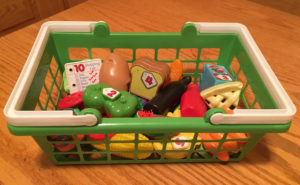
Play Food/Dishes

  • Teach your host children how to say the names of some of the food and dishes in your language.
  • Using English and/or your language play games where you are ordering food like in a restaurant. Take turns with who will be the waiter and who is the customer.
  • Come up with silly food combinations.  For example: Who wants pickles on their slice of cake?
  • Play a guessing game where the children have to figure out what food you are talking about.  For example: I grow under the ground in the dirt.  People eat me fried, mashed and baked.  What am I? (a potato)
  • Play a game with setting the table using your language to ask for the different items (plate, spoon, etc.)
  • Ask the children to divide the foods up into the different food groups (vegetables, meat, dairy, etc.)

Lego Blocks and Other Building Toys

  • Divide up all of the blocks between the people playing, by taking turns for each person to select block by block.
  • Suggest specific things to build (robots, houses, mountains etc.) and build together.
  • Challenge everyone to use all of their blocks.
  • Sort the blocks by color or shape and make patterns with them (red, blue, red, blue or square, triangle, rectangle.)  You can create a pattern and ask the child to fill in what comes next to continue the pattern.
  • Make the tallest block tower you can and let them knock it down (over and over again, if like most kids, they like destroying things.)

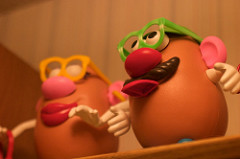
Mr. Potato Head

  • Teach your host children the names of the different parts in your language and play a game asking them to put on the body parts by name.
  • Play Hide and Seek with Mr. Potato Head. Have the children cover their eyes and count, while you hide Mr. Potato Head, then they go looking for him. Switch things up by letting them hide Mr. Potato Head and then you are the one to locate him.
  • Play the same game above, but using Simon Says.  Simon Says is a game where the leader gives commands by saying “Simon says” first. For example, “Simon says, put on the nose.”  The players are only to follow the commands when the leader says “Simon says.”  If the leader doesn’t say “Simon says” first and just says, “put on the nose,”  and the player follows the command, they are out of the game.  Repeat the game multiple times, so all kids get a turn to be the leader at least once.

Photos:  Lisa Maxwell (top) & Tom Smalls (bottom)

Avoiding Homesickness this Holiday Season

Homesickness can be a problem during the holidays, even if it hasn’t been at any other time of the year. Au pairs often miss their friends and family, familiar places and their own traditions and customs. The holiday activities in the United States seem, and may actually be, different just at a time when an au pair would welcome something familiar. 
It is common for au pairs’ emotions to be close to the surface during the holidays. Her highs are higher, her lows are lower. The enormity of what she has done–actually living in another country (which is an amazing thing when you think about it!)–hits her and throws her into a self-protective mode.

Host parents can help her through this unfamiliar territory by talking to her about what your specific family activities will be (gifts, meals, visitors, religious services, in-home traditions, or none of these, as the case may be.) In the spirit of cultural exchange, ask her if she has any favorite holiday traditions or foods that you might be able to incorporate into your family’s celebration of the season. Let her know what you will be doing, when you will be doing it, and what she can expect. Talk to her about what has to be accomplished and get her involved and interested. Don’t expect her to just “know” what needs to be done. Give her some clear, agreed upon assignments. Make her feel a part of things. And, let her know her contribution is needed and appreciated.

Photo: Sheila Sund (Flickr)

5 Thanksgiving Tips for Au Pairs & Host Parents

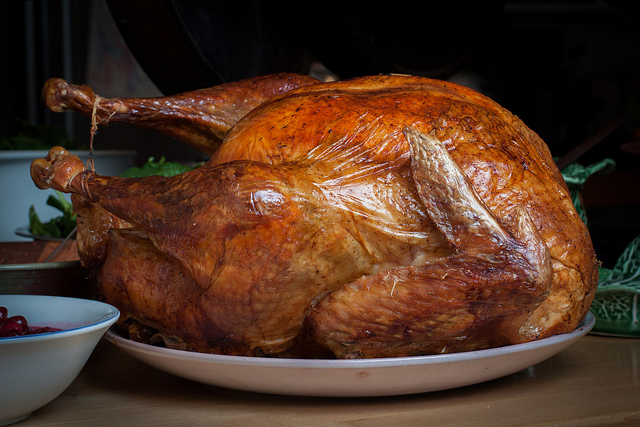
Thanksgiving is celebrated on the fourth Thursday of November each year. Even though a few other countries also celebrate Thanksgiving, it’s still considered a uniquely American holiday, one that the au pairs look forward to experiencing. You can learn more about it here.

I really enjoyed Thanksgiving with my host family. It was as I imagined! So much food to try. Everyone got dressed up and shared what they were thankful for. It was so warm and special. The next day we began to prepare for Christmas. It was magical.” Selina from Germany

Below you will find some tips to help you have a terrific Thanksgiving experience.


Host Parents

1.  Please plan to include your au pair in your Thanksgiving celebration, if at all possible. Thanksgiving with an au pair offers an opportunity to consider the relevance of the history and meaning of Thanksgiving as you compare the hospitality offered by the Native Americans to the recently arrived Pilgrims and the hospitality you offer your au pair.

2.  If you are traveling or will not be able to invite your au pair to join you for Thanksgiving, give her plenty of notice and help her make alternate plans. You don’t want to leave your au pair alone over the holiday.

Au Pairs

3.  If you are invited to attend dinner, please let your family know within 5 days of the invitation, whether you are planning to attend. It is considered rude in America to accept the invitation for dinner and then change your mind later in the month. Please be thoughtful.

4.  Make sure to discuss time off during this holiday weekend. Many host families work the Friday after Thanksgiving so do not assume you have this day off or the entire weekend. Talk to your host family, BEFORE you make any plans.

5.  If your host family is unable to include you in their Thanksgiving plans, please let me know if you have trouble making other plans. You may be able to join a friend and their host family for the holiday dinner.

Bonus Tip for the Kids

If you are looking for a fun recipe to make with your au pair, check out these turkey cupcakes. Find more fun activities and recipes on the Au Pair in America Fall Holidays pinboard.

Photo: Tim Sackton (Flickr)