
Yearly Archives: 2016

Volunteering in Washington, DC

By Catherine McEaddy Holmes

We encourage volunteering to be able to share your culture and learn more about American culture through the experience.

Photo Credit: DC Central Kitchen (Flickr)

Photo Credit: DC Central Kitchen (Flickr)

Au Pair in America’s Global Awareness Volunteer– is a program for APIA Au Pairs to volunteer in local classrooms to share your culture with American students.

General Volunteer Guidelines:

You can volunteer anywhere you like as long as it does not interfere with your work schedule.

Volunteer hours do not count towards education hours or credits (unless you are enrolled in the UCLA Extension course).

Ask your Host Family for opportunities in their children’s schools, their church, synagogue, or other house of worship, and neighborhood organizations.

Spanish-language volunteer opportunities:

Spanish Education Development Center

Teacher’s Aide Volunteer Description

Latin American Youth Center

CARECEN Latino Resource and Justice Center

Washington English Center

Other volunteer opportunities:

Martha’s Table– provides healthy food and clothing for DC families

Dreams for Kids DC– activities for children with physical or mental disabilities

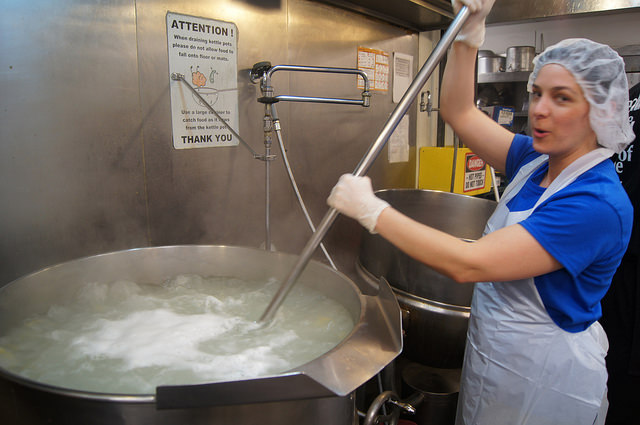
DC Central Kitchen– city food bank

Dress for Success– career development and professional clothing for women

KEEN (Kids Enjoy Exercise Now)

Citywide volunteer opportunities:

Serve DC

DC Government Service Opportunities and Resources


Rosh Hashanah

Rosh Hashanah begins at sundown on this Sunday October 2nd and ends in the evening of Tuesday October 4th.

The customs and symbols of Rosh Hashanah reflect the holiday’s dual emphasis on both happiness and humility. Customs observed on Rosh Hashanah include the sounding of the shofar (a musical horn) and eating special foods including round challah (bread), which symbolizes the circle of life, and sweet foods for a sweet New Year. It is also customary to extend wishes for a good year. In Hebrew, the simple form of the greeting is “L’shanah tovah!”

Here is a great site for children including information about the holiday traditions, games, word searches, Hebrew vocabulary and crafts.

http://www.akhlah.com/jewish-holidays/roshhashanah/

Want to try cooking for the holiday? Find out how to make Challah, Honey Cakes…and lots more here:

http://www.aish.com/h/hh/r/

Going Unplugged During Work Hours

By Christine Connally

Au Pairs – Imagine for a moment that you went to the hospital and you were in the care of doctors and nurses.  How would you feel if those doctors and nurses who were there to care for you were more interested in texting or using their personal computer than caring for you?  How would that make you feel, about yourself and about them?  Would you think that you were getting the treatment you deserved?  Would you feel like paying the bill after your stay?

Life as an au pair, it is a fine balance between employee and family member. You live with your host family and participate with them as a member of the family, but you also have clear responsibilities as a childcare provider. Being a childcare provider is truly one of the most important jobs I can think of, because you are helping to shape our next generation.  What message are you sending them when you would rather interact with a computer than with them? How will they feel about themselves and about you? Children feel as though everything is about them. They will see this as a rejection of them and they will be more likely to act out.

It also poses a safety concern when you are not paying enough attention to the children in your care.  Accidents happen, but when an adult care giver is close by and appropriately supervising the chances of a major injury dramatically reduce.

During work hours, the following would not be considered acceptable:
-Texting
-Talking to friends on the phone
-Chatting with friends online
-Using Skype or FaceTime
-IMing
-Emailing
-Updating your status on Facebook
-Using Snapchat, WhatsApp or any other app or social media site
-Watching videos on YouTube
-Tweeting on Twitter
-Uploading photos on Instagram
-Anything else on the computer unless it is going to Nickjr.com together with your host children (and you have your host family’s permission to do so).

Think about this — even if you work 45 hours a week, that leaves you 123 hours per week for all of that other stuff, or about 70 hours (if you are getting the recommended 7-8 hours of sleep per night.)

Host Parents – You need to be clear about what you consider acceptable during work hours to avoid misunderstandings.  Also, please understand that you are dealing with a new generation of people who are very accustomed to being plugged in at all times.  Their intention is not to be rude, they don’t necessarily realize how their actions will be perceived.  Please use this information as an opportunity to begin a dialogue on the issue.

Education Requirements for Au Pairs

Photo Credit: CollegeDegrees360 (Flickr)

Photo Credit: CollegeDegrees360 (Flickr)

By Catherine McEaddy-Holmes

Required Credits

Au pairs are required earn at least six academic credits during their year by completing classes/courses at accredited US post-secondary colleges and universities. 

6 academic credits = approximately 8 CEUs = approximately 80 classroom hours 

Universities and colleges use several different systems for credits, and au pairs use any combination of academic credits, CEUs, or hours as long as they add up to the required number of hours. (The absolute minimum is 72 classroom hours.)

Accredited Schools

For a list of classes approved for your DC-area cluster, click on this link.

If you want to take a class from a school not listed on the cluster blog, check with your Community Counselor first to make sure it is accredited. Otherwise, it will not count toward your education requirement.

Choosing Classes

Be flexible. Remember that your childcare responsibilities come first. Class schedules need to be arranged with your host family and around your childcare duties. Your favorite class may not be available when you are. Schools vary in what they offer, but most offer a wide range of choices and offer day, evening, and Saturday classes.

The APIA Advantage UCLA Course is the only State Department approved class with an online component. No other online classes are accepted.

Tuition

Your host family will pay an education allowance of $500 to assist you in completing your education requirement. There are a few ways to get your credits for just your education allowance, but choices are limited. Normally au pairs will contribute some of their own money ($200+) towards their education.

Transportation

Your host family will provide transportation, including gasoline, parking, or public transportation costs, to and from your classes in your community until you complete your education requirement.

Travel Classes

Au pairs should only take one “weekend/travel” course for their education requirement. These courses usually meet for one or several weekends and involve travel. They are clearly marked on the Au Pair Education Options post. Using only “weekend/travel” courses to meet your education requirement could result in the denial of your extension application (should you decide to extend.).

Education Proof

Submit any of the following as proof of your education:

  • Letter from the school on letterhead
  • Completion certificate from the school
  • School transcript

All proof of education must state your name, school attended, course title, start and end date of the course, and number of credits/hours earned. If your community counselor does not have proof that your education requirement has been completed, you will not receive a completion certificate upon your return to your home country and you forfeit the opportunity to extend.

Extending
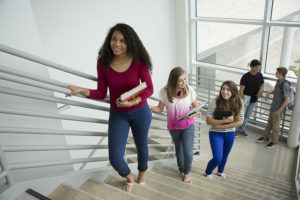
Image: NEC Corporation of America (Flickr)

Image: NEC Corporation of America (Flickr)

In order to extend, you must show proof that you have completed the education requirement no later than 30 days before the end of your first year.

If you are still in the process of completing your education, you must obtain proof from the school stating that the course(s) you are taking will conclude at least 30 days before the end of your year and the number of credits/hours/CEUs that you will earn.

All proof of education must state your name, school attended, course title, and number of credits/hours earned. Completed verification should be given to your community counselor. Your extension request will not be processed without this proof.

Back to School Tips

Jens Rost backpacks

By Christine Connally

Kids in our cluster will be returning to school soon. This will mean changes to the au pair schedule and possibly to the duties.  It is very important to communicate these changes to avoid problems.

Please discuss the following (if applicable):

  • Au pair’s work schedule.
  • The children’s school and activity schedules.
  • Where the children get dropped off and picked up and who will be doing this.
  • What to do if a child is staying home sick, late to school, does not get off the bus (if they are supposed to).
  • How to tell if school has been cancelled or delayed for bad weather.
  • Add the au pair to your list of people allowed to pick up the kids from school.
  • What to pack for lunch.
  • The routine after school (do they have free time before starting homework, what to give for snack, any chores, where do they put their backpacks & lunchboxes).
  • How to communicate about what’s going on at school.
  • Kids in Care Log Books are available upon request from APIA.

Here are some Printable Fill-in-the-Blank School Notes for parents. You may print these out and use them for times when the kids are absent, late, have early dismissal or you need to give permission for something.

If the au pair will be the one going through the children’s back pack and helping with homework, I suggest you designate an area for putting things that need to be read and/or signed by parents.

Am I Homesick?

Photo Credit: BK (Flickr)It is completely normal to  feel homesick sometimes when we are far from home.  Homesickness comes from feeling disconnected from familiar people, places and routines.  It is an emotion you have to learn how to cope with while you are here. It is an emotion that passes with time.  Here are some tips to help you:

  • Be a tourist, get to know where you live, visit the local sights and explore just as you would if on vacation.  Start a list of favorite places.
  • Try new foods, even if they don’t look good, finding new favorite nibbles is a great way to  enjoy a new country.
  • Take a break from Skype.  If you are skyping for hours every day, it is not helping you.  Find a balance between ties at home and building new relationships here
  • Focus on your new social media networking with other au pairs and American friends.  You don’t need to know what everyone is doing at home every minute.
  • Plan a trip with a friend, a day trip or a weekend, get excited about doing something new with a new friend and before you know it you will be excited and chatting about the trip instead of talking about what you are missing at home.
  • Go to your cluster meeting, This will definitely help you.
  • Send some gifts back home.  Sending gifts gives you something to do, makes you go out, and is a way of sharing your experience, it makes you feel good.
  • Make a Bucket List.  This is  a list of what you hope to do and see during  your year as an au pair.  Keep it on the wall and you will enjoying checking off each thing on the list as you do it.
  • Not everything has to change.  If you loved jogging at home, do it here.  There are some habits you love that you can keep.
  • Create a routine.  Having a routine will help  you feel at home and settle into life here.
  • Do not stay home.  Get out and about, go to the gym, the park, a coffee shop, a movie, staying home alone will not help homesickness
  • Ask you counselor to connect you with another au pair who was also homesick, there’s nothing better than talking to someone who has been in your shoes.
  • Start an old fashioned scrap book with real pictures and mementos from your year.  It will give you something to work on when you  have quiet time alone and as your year progresses you will be able to see what an amazing experience you are having.  You’ll have a wonderful keepsake to take home with you.  You’ll feel so proud of your scrapbook!
  • Most importantly, talk to someone, if you feel sad or homesick, talk to your host family, call me, or a friend.  Being part of a cluster enables us to help and support each other.

A little inspiration from a former au pair… https://www.youtube.com/watch?v=H3IBmRWGnwA

 Have a great year, this is your dream, make the most of it!

Au Pair Insurance Card

All au pairs starting with the August 15, 2016 arrival last week will be receiving their insurance card, brochure and claim form via email during their orientation week. They will no longer receive paper cards.
We recommend au pairs print down the information when they get to their host home and keep it in a safe place. They should keep the card in their wallet and print an extra copy to keep in their room just in case they lose it.

Photo Credit: Pictures of Money (Flickr)

Photo Credit: Pictures of Money (Flickr)

Au Pairs should contact CISI if they have not received the email with this information. The website address is http://www.culturalinsurance.com/ and by phone 1-800-303-8120.

Driving in Washington, DC

If your Au Pair needs to drive, please carefully read the DC Department of Motor Vehicles website section entitled Driver License for Non-US Citizens also see the Quick Reference Guide that I give each Host Family at our Orientation Meeting and send to each Au Pair by mail so that she has it as soon as she arrives to your home. http://dmv.dc.gov/service/driver-license-for-non-us-citizens

Photo: Glenn3095 (Flickr)

Photo: Glenn3095 (Flickr)

Hints for Success – Homesickness/Culture Shock

By Christine Connally

Photo: Hoang Vy (Flickr)

Photo: Hoang Vy (Flickr)

Almost everyone experiences culture shock when they come to a completely new environment. Everything is different: the language, the food, and the people.

Here are my Top 5 Tips for Dealing with Homesickness

1. Make Friends – Don’t wait for other au pairs to reach out to you, reach out to them. There are other lots of new au pairs who are feeling the same way you are right now. Set a goal to reach out to a few of them each day. Some will respond and some will not. Don’t let that discourage you. No one will ever be mad at you for sending them a message to say hello or ask if they want to do something together. Make friends from various countries and you will also get a chance to practice your English skills together.

2. Stay in touch with your home country, but not too much. Skyping or talking on the phone every day with your family and/or friends back home normally makes homesickness worse. Try emailing instead and reduce the Skype and phone calls to once a week, until you feel stronger. It’s much harder seeing the faces and hearing the voices of those you miss.

3. Get out of the house (or your room specifically) – Go to cluster meetings, have coffee or movies with other au pairs, join a gym, go to the library, go for a walk, visit the mall, get a manicure, visit a museum. If someone invites you out, say “yes.” Also, don’t be afraid to do the inviting. If your host family invites you to do things with them, say “yes.” This will help you get to know each other and contribute to your overall happiness.

4. Realize that it definitely gets better – All au pairs experience homesickness and nearly all of them stay and have a successful year (some stay for two years.) So, it must get better, right? Once you get past the initial homesickness, most au pairs report how quickly the year goes by.

5. Make Plans – Create your own Au Pair Bucket List (places you want to go, new foods to try, new things to experience during your year in the U.S.) and start doing them now. Post on our cluster Facebook group to find others who may want to join you on your adventures.