Category Archives: Kids

Big Kids Need Interaction, Too

Just because a child is old enough to occupy themselves, doesn’t mean that they should be expected to do so the majority of the time.  Host families have a certain expectation of activity and involvement for their children. Get the kids engaged and active. You can be more fun than the TV or a video game.

Problem:
But, my kids don’t want to do anything but watch TV or play video games.

Solution:
Instead of saying,  “Would you like to (fill in the blank with any activity)?  The answer will often be, “No.”

Try this, “Now we are going to (fill in the blank with any activity.) or “Would you rather do  _____ or ______?”  Make sure both the choices are good options.
Your chances of co-operation are greatly increased. Even kids who are reluctant to try new things will usually get in the spirit of things and have fun if you pick a good activity.

Problem:
I don’t know what to do with school-age kids.

Solution:
Look for ideas online. Google “activities school-age kids” or “activities tweens”. You can also take part in an au pair webinar on this topic. Below is a list of some ideas to get you started.

  • Cooking
  • Making things (check craft stores like Michael’s for kits and models that are age-appropriate)
  • Going to fun places (pottery painting, jewelry making, farms, museums, mini-golf, go-karts)*
  • Sports (soccer, tennis, swimming, bicycling, roller skating, ice skating)*
  • Let them teach you to do something they enjoy. Kids this age love being the expert.
  • Get outdoors and visit local parks.* You can even make a project of reviewing all the local parks (what kind of equipment they have, is there shade, water fountain?)  They can write this up and keep it so they remember which ones they want to go to again and which ones to skip in the future.
  • Let them help you search and plan some activities.
  • Check on the APIA Pinterest page and here on our cluster blog for ideas.
  • If you have a GPS, try taking them geocaching. Here is a website with all the details.
  • Use technology to get them off the couch and sneak in some exercise. The phone app Pokémon Go includes activities that are unlocked by taking steps. There are Pokéstops and gyms at many places they might enjoy going for walks like parks, nature trails, walk/bike paths, and downtown areas.

*Always get permission from your host parents before taking the kids places and remember to follow social distancing and mask-wearing protocols.


Helping Young Children Learn Language

Being an au pair is an important role in a child’s life. When you are caring for young children up to 45 hours per week, there are lots of opportunities to help them learn language. Many host parents are eager for their children to be exposed to more than just English. If this is true of your host parents, you can try the suggestions below, in both English and your native language.

Below are a few tips to start with, for more ideas, check out Ready at Five.
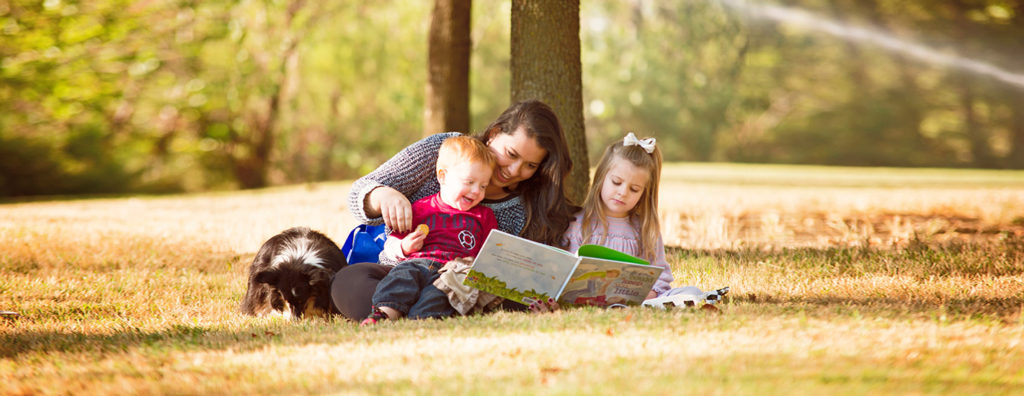
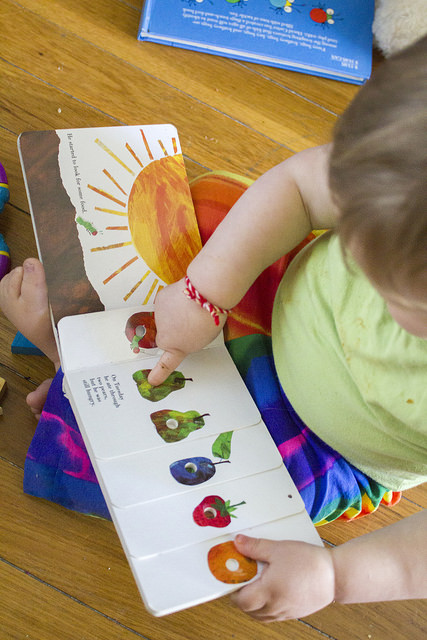
  • Read – Read to them daily, point out pictures and ask questions. Even if they can’t answer the questions, this is still modeling conversation.
  • Talk – Point out objects around them, names of their body parts, explain what you are doing and places you are going. Long before babies can speak, they benefit greatly from being spoken to.
  • Sing – You can sing childhood classics or make up your own silly songs. If you are looking for song ideas, HERE is a great website with lists of songs, lyrics, and links to youtube videos* of the songs.  Children’s music is also available at the public library and even on iTunes.
  • Words – As children move from toddlers to preschoolers begin to point out written language.
  • Writing – Toddlers and preschoolers can begin to learn pre-writing skills by drawing with crayons or doing finger paints.

*The American Academy of Pediatrics recommends no screen time for babies under 18 months of age. For children 18 months to 5 years, they recommend no more than 1 hour of high-quality content. You can play the songs on youtube for the audio and not necessarily show the screen to the child.

Photo: Quinn Dombrowski (Flickr)

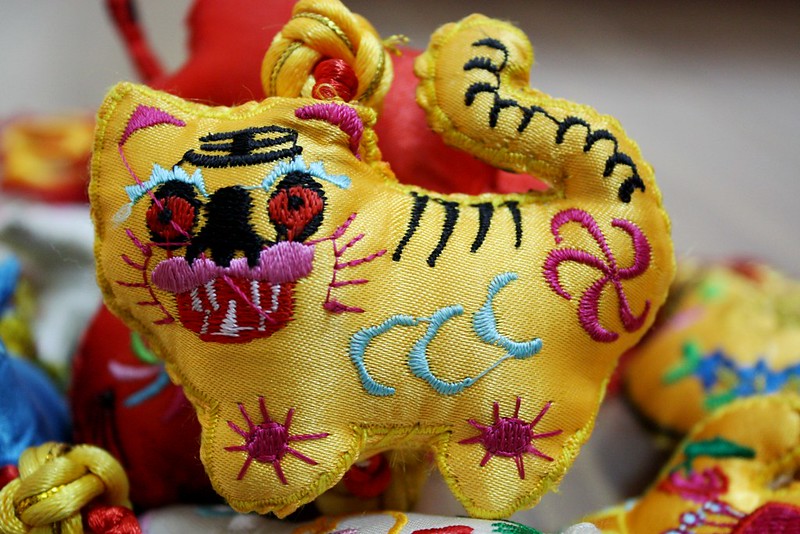
Celebrating Lunar New Year – 2022 Year of the Tiger

Lunar New Year is the most important holiday in China. Tied to the Chinese lunar calendar, the holiday began as a time for feasting and honoring ancestors as well as deities. Lunar New Year celebrations begin on February 1st.

The year 2022 is slated to be the year of the tiger. The tiger is known as the king of all beasts in China and the zodiac is associated with strength and bravery.

Chinese people celebrate Lunar New Year with the traditional greeting, “Kung hei fat choi”  Sounds like (gung – hay – fah – choy) in Cantonese!

Lunar New Year covers a long span, not just one day. Two weeks is the typical time frame. Traditionally this time is used to celebrate with family and friends. It’s important to start the new year with a clean home. Red envelopes are handed out to others, typically children or young people, containing Lucky Money. Foods are important in the celebration and have meaning. Long noodle dishes, for instance, represent longevity or long life, while dumplings represent wealth. Interestingly, fortune cookies are not authentic Chinese treats, though enjoyable and fun, you can read more about their unique history here.

You can read more about Lunar New Year here.

Crafts, recipes, activities, and games related to Lunar New Year can be found on the APIA Winter Pinterest board. Try some of these great ideas!

Arts & Crafts:

Kids in the Kitchen:

Virtual Field Trips can be a great way for kids to learn and have new experiences. Here are a couple of virtual field trips that fit this theme:

Videos – Online you can find many examples of celebrations. Please review the content for appropriateness for your own host kids before watching with the children.

Webcams – You can do a google search for Lunar New Year celebrations with webcams. Here is a popular one for the upcoming season:

Books – Check out your local library or bookseller for books to order / reserve and pick up /read online:

Post Courtesy of Cynthia Chan (Au Pair in America)

Photo: Jimmie Quick 

Valentine’s Day Activities

Valentine’s Day (February 14) is a time of love, friendship, giving, and caring. Americans use Valentine’s Day as an opportunity to tell friends and family how much they care.  Children usually exchange cards at school.
Are you looking for Valentine’s day activity and craft ideas?

Look no further…  Au Pair in America has a Pinterest pinboard devoted to Valentine’s Day:

APIA Valentine’s Day Pinboard

Photo: Clever Cupcakes (Flickr)

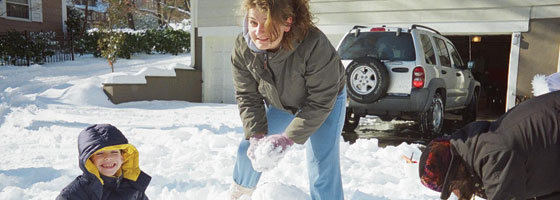
Planning Ahead for Future Snow Days

Looking for ideas to keep the kids busy on a snow day (when they are home from school for winter weather?)

Here is a simple snow day game plan…

  • Play in the snow.  Pro Tip:  Remind your kids go to the bathroom before you get them all bundled up to go outside. 

  • Come inside and warm up with hot chocolate (don’t forget the marshmallows.) Pro Tip: Shake the snow off of the kids boots and snow clothes. Hang them up to dry or put them in the dryer, so they are ready for round 2 out in the snow. 
  • Make your own play dough.

  • Play board games or legos together.
  • Play in the snow again.

  • Warm up inside and make paper snowflakes.

  • Bake cookies together or make some other fun recipe.
  • Make a blanket fort.

Stay warm & have fun!

Photo: Tony Crider (Flickr)

Recipes, Crafts & Activities for Winter Fun

If you are looking for fun things to do with your host kids to celebrate the winter season, check out Au Pair in America on Pinterest. You’ll find recipes, crafts, games and winter traditions from a variety of countries to share with your host children.

If you have some fun winter traditions from your home country, share those with your host family. This beautiful season is a great time for culture sharing.

Winter Fun &  Winter Holidays


Fall Traditions: Decorating Pumpkins

A treasured fall/Halloween tradition in the United States is pumpkin carving or making “jack-o’-lanterns”. Whether this is your first time decorating a pumpkin or you are a seasoned pro, these videos have a few tips and ideas you may find helpful.

How do I make it safe for the children? If you are carving a pumpkin with your host child(ren), remember to be very careful with them around sharp tools. You can purchase kid-safe pumpkin carving tools that cut without a sharp blade. If you don’t have those, let kids help with all of the tasks that don’t involve a knife such as: picking the pumpkin, scooping out the insides, choosing the design and adding any other decorative touches. You can buy or print pumpkin templates online and school aged kids can use a thumbtack to mark the pattern on the pumpkin. Here you can find a free template and instructions on how to do this.

How long do they last? Carved jack-o-lanterns begin to deteriorate after just a few days outside (depending on the weather). Temperatures over 60˚F (15˚C), rain, and freezing then thawing all make them rot more quickly. So, if you want your pumpkin to be fresh on the big night, don’t carve it more than a few days before Halloween and/or keep it in a cool place.

Check out Au Pair in America’s Halloween Fun Pinterest board and our Fall Bucket List for more fall traditions and activities to try.

Here are video readings of two of my favorite pumpkin stories.

Image: Jeff Kramer

Fun Fall Activity Ideas

Looking for fun fall activities to do with your kids?

Check out Au Pair in America’s Halloween FunFall Holidays pinboards on Pinterest.

Looking for even more fun fall activities, to do on your own, with friends, and/or with your host family?

Print out our Fall Bucket List full of fun fall traditions and activities to try.

pumpkin patch

Photo: Angela Severn (Flickr)

Camp Au Pair – Art Experiences

This week’s Camp Au Pair theme is Art Experiences.

Crafts, recipes, activities, and games related to art can all be found here on the Camp Au Pair – Art Experiences pinboard.

Field Trips can be a great way for kids to learn and have new experiences. Get permission from your host parents before any outings and be sure to take all social distancing precautions. Some museums are requiring advanced tickets or have reduced hours due to the pandemic.

  • National Gallery of Art in DC has resources and programs for kids and families.
  • Renwick Art Gallery in DC was featured in this blog post  with great information on visiting the museum with kids.
  • American Visionary Art Museum in Baltimore is not your typical art museum. You can tell that when you see the school bus covered in mosaic glass or the mural on the sidewalk outside.
  • Other Art Museums
  • Paint Your Own Pottery Studio
  • Clay and Ceramics Studio

Online Art FunHere is a great website with lots of art activities including ones for older kids.

Webcams – You can do a google search for art websites with webcams. Here are a few to get you started:

Pottery & Ceramics webcam
Glass Blowing webcam

Videos – Look for fun videos on YouTube about drawing and all kinds of art.

Books – Stop by your local library and look for books on famous artists and art.

Check YouTube for books on art being read aloud:

https://youtu.be/PA_yQPDV43w

Image: teachkidsart.com

Camp Au Pair – Summer Olympics

This week’s Camp Au Pair theme Summer Olympics. The 2021 Summer Olympics are taking place in Tokyo, Japan, July 23-Aug 8.

Crafts, recipes, activities, and games related to the Summer Olympics can be found here on the Camp Au Pair Summer Olympics pinboard.

Videos – On YouTube you can find many great videos of about the Olympics.

Books – Stop by your local library and look for books about the Olympics.

Some good ones include: Olympig!, G is for Gold Medal: An Olympic Alphabet, How to Train with a T-Rex and Win 8 Gold Medals, Wilma Unlimited, America’s Champion Swimmer: Gertrude Ederle, Way to Go Alex!, Touch the Sky, Pele: King of Soccer, A Picture Book of Jesse Owens & Babar’s Celestville Games.

You may also find some of these books read aloud on YouTube.

Fun Fact: The Olympic symbol consists of five interlaced rings of equal dimensions, used alone, in one or in five different colors, which are, from left to right, blue, yellow, black, green and red. The Olympic symbol (the Olympic rings) expresses the activity of the Olympic Movement and represents the union of the five continents and the meeting of athletes from throughout the world at the Olympic Games.

Image: Project Nursery